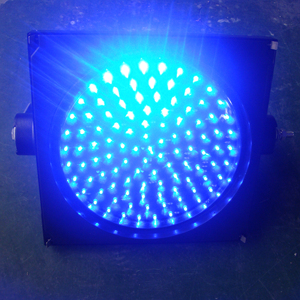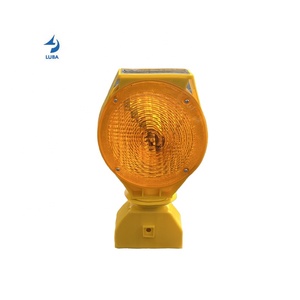
Wholesale Custom Safety and Road Construction Solar Signal Road Warning Led Traffic Light
Industrial-grade optical system designed for highway diversions. High-efficiency monocrystalline solar assembly with IP65 weather-sealed driver enclosure.
Precision-engineered solar and hybrid LED flashing signal solutions built for Italian highway concessions, urban arterial work zones, and regional infrastructure upgrades.
Industrial-grade optical system designed for highway diversions. High-efficiency monocrystalline solar assembly with IP65 weather-sealed driver enclosure.
ECE R65 approved beacon delivering high-candela strobe signaling for asphalt paving machines, recovery vehicles, and road maintenance convoys.
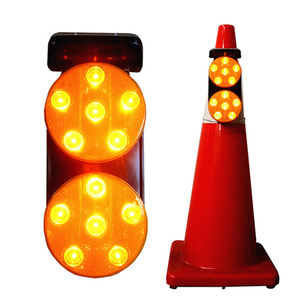
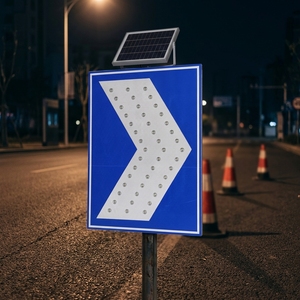
High-grade retroreflective film combined with synchronized amber LED arrows. Maximizes perimeter warning along tight Apennine mountain turns.
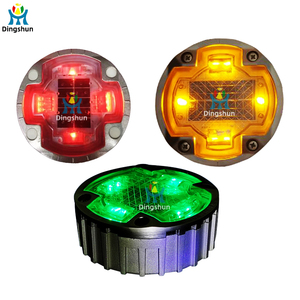
Die-cast aluminum casing withstands 30-ton static vehicular loads. Features supercapacitors engineered to maintain cycle stability in freezing fog zones.
Designed for alternating one-way construction zones (senso unico alternato). Reliable encrypted radio communication operates without trenching.
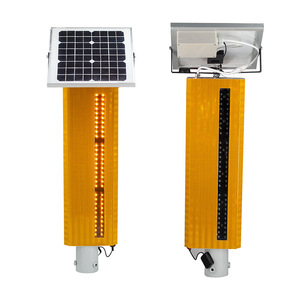
Autonomous cascading wave flashing establishes a unified luminous perimeter around highway maintenance bays, preventing optical confusion.
Integrated internal GPS modules synchronize kilometer-long taper lines without inter-device wiring or external controllers.
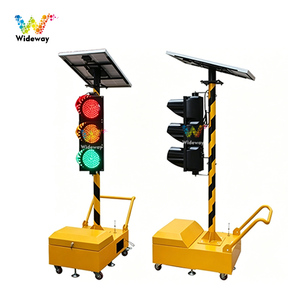
Specialized 300 mm aperture beacon for emergency bypass alerts, toll plaza lanes (Caselli Autostradali), and sensitive municipal zones.
Deploying solar traffic flashers across Italy requires careful consideration of its varied geography and strict traffic laws. Road maintenance contractors working under ANAS (Azienda Nazionale Autonome delle Strade) mandates or regional concessionaires like Autostrade per l’Italia (ASPI) must navigate unique terrain conditions, coastal air, and microclimates.
Hairpin turns on steep mountain routes (such as the Passo dello Stelvio or Brenner corridor) experience extreme temperature drops and extended snow cover. Standard grid installations can be cost-prohibitive. Solar flashers with low-temperature LiFePO4 batteries and anti-icing optical visors deliver consistent warning cycles even under heavy snow cover.
Winter along the A4 and A21 motorways frequently brings heavy fog that reduces visibility below 50 meters. Concessionaires utilize EN 12352 Class L8H yellow LED flashing beacons, tuned to peak amber light wavelengths (590 nm), giving approaching vehicles high-candela warning signals well ahead of stationary obstacles.
Along the SS16 Adriatica and coastal highways in Sicily and Sardinia, solar flashers operate under high humidity, direct sunlight, and salt spray. Units are built with marine-grade aluminum or UV-stabilized polycarbonate enclosures, preventing salt mist corrosion and maintaining clear optical lenses over years of service.
Procuring traffic safety equipment in Italy requires adherence to both the Nuovo Codice della Strada (D.Lgs. 285/1992), the execution guidelines of D.P.R. 495/1992, and the European standard UNI EN 12352 (Traffic control equipment - Warning and safety light devices). The modernization of Italy's roadway operations is driving three clear technical transitions:
Traditional static road signage is increasingly replaced by sequential dynamic tapers (cantieri stradali). Highway maintenance teams deploy flashers that establish self-synchronizing visual guide arrays using GPS or encrypted RF mesh networks, improving perimeter safety around high-speed lane closures.
In line with Italian green procurement guidelines (Criteri Ambientali Minimi - CAM), transport bodies specify zero-emission traffic safety devices. Solar blinkers eliminate the need to run diesel generators for temporary signals, supporting corporate ESG compliance and keeping operating overhead low.
Unattended work zones on provincial roads (Strade Provinciali) require durable equipment. Municipalities prioritize integrated, low-profile designs that house batteries, solar modules, and control circuitry within a tamper-resistant enclosure, deterring theft and reducing field maintenance visits.
| Performance Criterion | Standard Requirement (UNI EN 12352) | Our Manufacturing Delivery Benchmark |
|---|---|---|
| Luminous Intensity | Class L2H (Day: 50–200 cd) / Class L8H (Day: 1500–5000 cd) | Certified Osram/Bridgelux LEDs delivering >2500 cd with automatic photocell dimming at twilight |
| Color Chromaticity | Yellow/Amber (585 - 595 nm), Red (615 - 635 nm) | Optical grade lenses with tight wavelength tolerance compliant with EN 12352 chromaticity charts |
| Enclosure Protection | IP44 Minimum for outdoor use | IP65 to IP68 rating, featuring silicone seal rings and UV-resistant polycarbonate or die-cast aluminum |
| Operating Temperature | Class T1 (-15°C to +55°C) | Class T2 (-40°C to +85°C) rated circuits, equipped with cold-climate LiFePO4 battery management |
| Solar Autonomy | Sufficient for regional winter minima | 5 to 7 days continuous operation without solar input (sized for Northern Italy's winter sun-hours) |
With an advanced manufacturing plant based in GIDC Phase-1, Vatwa, Ahmedabad, India, our facility produces high-performance road safety systems designed for international deployment. We build equipment to rigorous engineering tolerances, serving national transport agencies and private infrastructure contractors in over 20 countries.
From SMT LED driver fabrication to lens moulding and photometrics, every unit undergoes quality checks before dispatch.
We run solar insolation calculations based on your deployment coordinates (from Bolzano down to Palermo) to ensure reliable battery performance.
Our hardware accommodates customized brackets, specific DIN post sizes (48mm, 60mm, 76mm), and variable optical apertures.
We handle full shipping logistics to Italian container terminals (Genoa, La Spezia, Trieste) complete with MSDS and UN38.3 battery certifications.
Essential guidance on importing, installing, and certifying solar warning signals for civil engineering projects.
Yes. Our flashers can be configured to comply with European standard UNI EN 12352 classes, including Class L2H (low-intensity continuous warning) and Class L8H (high-intensity daylight warning). We share third-party test reports covering luminous output, beam divergence angles, effective intensity ratios, and climatic chamber tests upon receipt of tender specifications.
For installations in the Po Valley or mountain districts where winter sun hours (insolation) drop below 1.5 kWh/m²/day, we supply systems with higher-capacity mono-crystalline solar panels (15W to 40W) paired with 12V LiFePO4 or low-temp gel storage batteries. This provides 5 to 7 days of continuous reserve power (120+ hours) without direct sun, preventing outages during heavy overcast or fog.
Yes. We offer two synchronization architectures: wireless 2.4 GHz RF mesh modules for distances up to 300 meters, and integrated GPS satellite clock sync for deployments over multiple kilometers. This enables sequenced visual cascading patterns across highway taper lines, guiding approaching vehicles in compliance with Art. 30 of the Italian road code enforcement guidelines.
Our mounting systems accommodate standard European circular post diameters including 48 mm, 60 mm, and 76 mm. We also supply custom cantilever brackets, universal U-bolt clamps, and transportable skid-frames with integrated ballast trays for temporary worksite barricades and directional arrow sign arrays.
All export consignments include standard commercial paperwork: Commercial Invoices, Packing Lists with HS Code classifications (8530.80), Certificates of Origin, CE compliance documentation, and UN 38.3 test summaries with MSDS reports for lithium battery shipments. We work with sea freight lines calling at Genoa, La Spezia, and Trieste, as well as air freight forwarders serving Milan Malpensa (MXP) and Rome Fiumicino (FCO).