


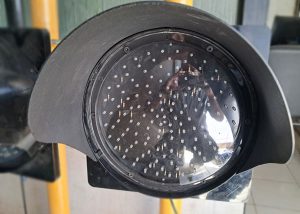
Procurement Trends & Technological Evolutions in Solar Red Warning Systems
How forward-thinking Ministries of Transportation and concessionaires are transitioning to next-generation roadside safety assets.
1. Lithium Iron Phosphate (LiFePO4) Dominance
Traditional Sealed Maintenance Free (SMF) lead-acid batteries, while economical, suffer from sulfation and accelerated capacity degradation in tropical climates where internal enclosure temperatures exceed 50°C. Global procurement is shifting aggressively to integrated LiFePO4 cells with smart BMS (Battery Management Systems), offering 4x longer operational lifespans (8+ years), 100% depth of discharge capability, and significant weight reduction for easier pole-top installation.
2. IoT Telemetry & RF Multi-Blinker Synchronization
Modern highway tenders increasingly demand synchronized flashing where multiple beacons on median tips, roundabouts, or bridge approaches flash either in unison or sequential cascade. Modern solar red blinker lights now integrate sub-1GHz wireless RF mesh modules or NB-IoT/4G cellular modems. Concessionaires can monitor battery health, LED failure alarms, and solar current remotely via centralized road management dashboards.
3. Smart Dimming & Adaptive Radar Triggering
To optimize power budgets and eliminate nocturnal glare that temporarily blinds night drivers, leading-edge blinkers incorporate automatic PWM lux-level dimming. In addition, integration with integrated Doppler radar allows solar red flashers to remain in low-power idle mode until a vehicle exceeds speed thresholds or approaches a stop line too rapidly, triggering a high-intensity strobe burst.
Total Cost of Ownership (TCO) Shift: Infrastructure concessionaires and municipal clients are moving away from evaluating solar blinkers purely on initial unit acquisition cost. Lifecycle studies demonstrate that premature battery replacement, yellowed polycarbonate lenses, and moisture ingress on low-cost alternatives cause maintenance expenses exceeding 300% of the capital expenditure within 24 months. Purchasing verified, specification-compliant units delivers substantial lifetime savings.