
Precision-engineered visual guidance units equipped with MPPT low-lux harvesting, ultra-low-loss solid-state flash drivers, and structural defense against snow-plow vibration and road salt abrasion.
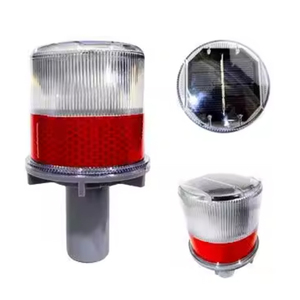
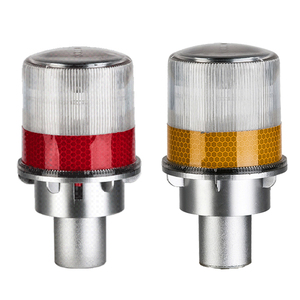
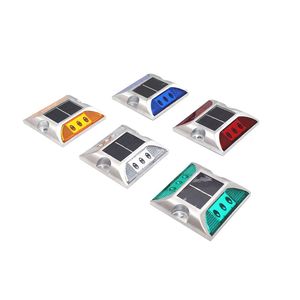
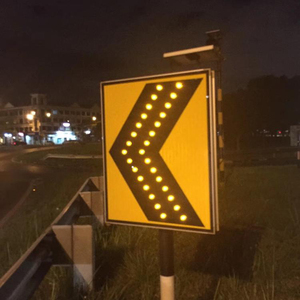
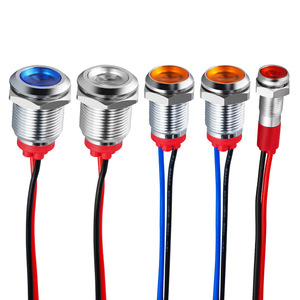
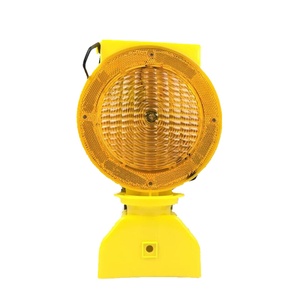
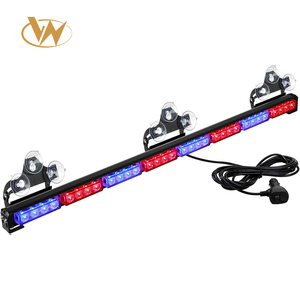
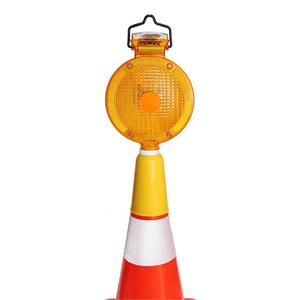
An engineering overview of cold-climate photovoltaic design, optical penetrative mechanics, and regulatory compliance under EN 12352 standards for the Finnish road network.
Deploying autonomous, solar-powered active road warning signage in Fennoscandia demands a fundamental departure from standard low-latitude engineering assumptions. Across regions such as Lapland, Kainuu, and North Ostrobothnia, civil infrastructure experiences extreme seasonal variations in solar irradiation. Between late November and mid-January, Finnish roads navigate through the Kaamos—the polar night phenomenon—where solar elevation remains either below or immediately tangent to the horizon. Concurrently, solar irradiance collapses below 0.15 kWh/m²/day, accompanied by sustained ambient temperatures dropping past -30°C.
Traditional solar flashers configured with Pulse-Width Modulation (PWM) and baseline lead-acid or standard lithium-ion chemistries quickly fail in this environment. Chemical electrolyte kinetics stall, internal resistance surges exponentially, and standard solar cells fail to register the shallow 0.4V threshold needed to trigger charging. Our engineering approach integrates wide-spectrum Mono-Si photovoltaic cells layered under hydrophobic, textured, low-iron tempered glass. This glass structure resists rime ice accretion and accelerates thermal snow clearing through latent heat absorption.
Energy storage units utilize ultra-pure lithium iron phosphate (LiFePO4) chemistries with integrated heating films, or specialized wide-temperature nickel-metal hydride (Ni-MH) and supercapacitor hybrid banks. This architecture delivers over 15 to 20 days of non-charging autonomy (360+ operational hours at a standard 60 flashes-per-minute duty cycle) while maintaining battery lifespan across 3,000+ deep-discharge cycles without thermal runaway risks.
A critical failure mode of low-grade LED flashing systems in northern climates is optical diffusion caused by atmospheric ice crystal suspension (diamond dust) and dense advection freezing fogs. Under standard EN 12352 testing parameters, roadside flashers are verified in clean laboratory tunnels; however, real-world deployment across Finnish national highways (Valtatie 4, E75, and Valtatie 8) presents severe back-scatter interference from road spray mixed with sodium chloride (NaCl) and calcium chloride (CaCl2) brine.
Our optical assemblies utilize specific amber (590–595 nm) and signal red (620–630 nm) chromatic binnings, paired with custom internal total internal reflection (TIR) collimators and Fresnel outer poly-carbonate matrices. By maintaining an narrow beam profile combined with high luminous intensity (exceeding EN 12352 Class L8H standards with peak daytime candela ratings over 1,500 cd), the optical waveform pierces through blinding snow churn and blizzard conditions without creating driver-disorienting halo blooms during pitch-black Nordic nights.
| Engineering Vector | Standard Commercial Grade | Enpowers Arctic Industrial Build | Operational Impact in Finland |
|---|---|---|---|
| Operating Temp Margin | -10°C to +50°C | -40°C to +75°C (Validated) | Eliminates electronics failure during Arctic deep freezes. |
| Solar Controller Architecture | Basic PWM (Lossy) | Solid-State MPPT (Low-Lux Tuned) | Captures up to 34% more energy in diffuse, overcast snow conditions. |
| Enclosure Integrity | Molded ABS / Thin PVC (IP54) | Cast ADC12 Alloy + GE Lexan (IP68, IK10) | Resists direct impacts from snow-plow slush and road stones. |
| Optical Compliance | Generic Non-Binned LEDs | EN 12352 Class L8H / L8L Strict Binned | Guarantees 1,000+ meter sight-distance along unlit E-roads. |
| Corrosion Resistance | Standard Steel Fixtures | Electrophoretic Coating + 316 Marine Stainless | Withstands heavy winter road salting and chemical anti-icing sprays. |
Autonomous road flasher units solve complex safety and engineering challenges for both municipal authorities (kunnat) and regional ELY-keskukset (Centres for Economic Development, Transport and the Environment). These specialized units deploy across six main use cases:
Unsignalized rural junctions and median islands along secondary routes (kantatiet & seututiet) where grid trenching through bedrock is cost-prohibitive.
Temporary dynamic chevron warning arrows and barrier flashers that guide traffic smoothly through snow-covered road geometry changes and bridge rehabilitation sites.
High-visibility optical triggers paired with perimeter sensors that activate instantly to alert motorists along northern forestry highways during twilight wildlife crossings.
High-intensity amber warning beacons on blind curves where 76-tonne high-capacity timber trucks merge from gravel forest trails onto main trunk roads.
Off-grid red and amber solar flashers providing fail-safe warning alerts at private, rural railway grade crossings without existing electrical infrastructure.
Directing commercial cargo traffic at winter ferry checkpoints (Vuosaari, Naantali, Turku) under aggressive sea-salt moisture and freezing fog conditions.
Finland's Transport and Communications Agency (Traficom) and the Finnish Transport Infrastructure Agency (Väylävirasto) continue to advance toward the national Vision Zero initiative, which targets zero road fatalities by 2050. Achieving this goal requires modernizing physical safety infrastructure to adapt to evolving climate patterns and connected mobility standards.
1. Shorter Freezing Cycles and Slush Hazards: Climate shifts in Southern and Western Finland (around the Uusimaa and Southwest Finland regions) have increased the frequency of freeze-thaw cycles. Roads alternate rapidly between wet slurry and sheet black ice. Flashing road delineators must withstand accelerated corrosion from heavier chemical de-icing brine while providing high visual contrast on wet, light-absorbing asphalt surfaces.
2. Integration with C-ITS (Cooperative Intelligent Transport Systems): The future of roadside signalling is connected. We are engineering solar road flashers equipped with low-power V2X (Vehicle-to-Everything) transmission modules and Bluetooth Low Energy (BLE) beacons. These units flash visually for human drivers while simultaneously transmitting real-time digital hazard alerts directly to in-vehicle displays and autonomous navigation systems during sudden whiteouts.
3. Carbon-Neutral Infrastructure Roadmaps: With Finland aiming for carbon neutrality by 2035, civil contractors face strict limits on the embodied emissions of their projects. Solar-powered, standalone optical infrastructure removes the carbon footprint, heavy diesel excavation equipment, and raw material costs associated with laying extensive underground copper cables across hundreds of kilometers of rural terrain.
With international manufacturing facilities in Ahmedabad, India, Enpowers International delivers factory-direct engineering expertise to infrastructure contractors, government departments, and civil consortia across 20+ countries. By managing the complete manufacturing lifecycle in-house—from precision optical tooling to surface-mount SMT placement, robotic sealing, and automated burn-in stress tests—we deliver reliable, documented quality directly to European project sites without intermediary trading markups.
Our equipment operates reliably across high-altitude roads managed by the Border Roads Organisation (BRO), vast national highways under the National Highways Authority of India (NHAI), and demanding transit corridors worldwide. We engineer our optical warning systems to satisfy the most stringent public works tenders.

Detailed technical, logistics, and compliance answers for Finnish traffic engineers, municipal buyers, and civil contractors.
Consult directly with our technical export engineering department. Share your project drawings, compliance requirements, or bill of quantities for direct factory pricing, photometric data sheets, and custom autonomous power calculations.
Send an Inquiry