Off-Grid Solar
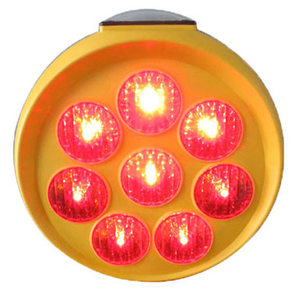
Sunflower Solar Amber Strobe LED Light IP65
Engineered with 8 high-flux amber LEDs, mono-crystalline collector, and continuous day/night photocell switching for civil work zones.

Technical benchmarks, compliance protocols, and manufacturing standards for critical visual signalling equipment.
In demanding municipal arterial management, severe civil construction zones, logistics perimeters, and specialized fleet operations, high-performance warning strobe lights and optical visual beacons serve as the definitive first line of passive accident mitigation. Industrial strobe systems must overcome acute environmental degradation: thermal fatigue caused by continuous duty cycle switching, poly-carbonate optical lensing yellowing due to intense ultraviolet (UV) radiation, severe chassis moisture intrusion, and erratic line-voltage spikes. As government highway oversight entities (such as NHAI, CPWD, BRO, AASHTO, and EN 12352) increasingly enforce stringent roadway visual safety metrics, procurement authorities, EPC engineering project heads, and fleet operations directors require verifiable data-driven criteria to select qualified manufacturing and export partners.
Engineered optical signalling devices have evolved beyond simple gas-discharge Xenon tubes to high-flux, surface-mount diode (SMD) and chip-on-board (COB) semiconductor architecture paired with algorithmic pulse-width modulation (PWM) and autonomous photovoltaic power nodes. This whitepaper analyzes critical photometric performance indices, environmental ingress benchmarks, long-term sourcing strategies, and evaluates the top export products ready for tender deployment worldwide.
Field-proven solar-powered, vehicle-mounted, and industrial perimeter hazard warning units built for high reliability.
Engineered with 8 high-flux amber LEDs, mono-crystalline collector, and continuous day/night photocell switching for civil work zones.
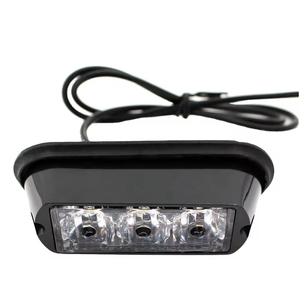
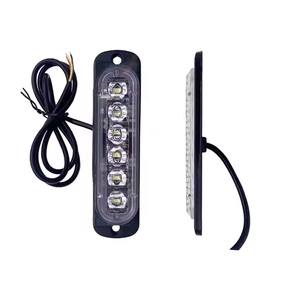
High-power modular optical bar with combo-beam lenses, multi-pattern synchronization, and IP67 extruded aluminum heat dissipation.
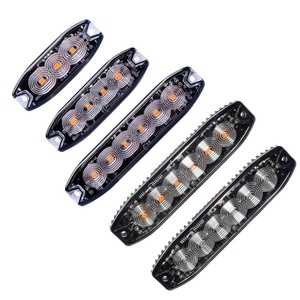
Ultra-low profile design for emergency response fleets, service trucks, and marine side markers running dual 12V/24V electrical architectures.
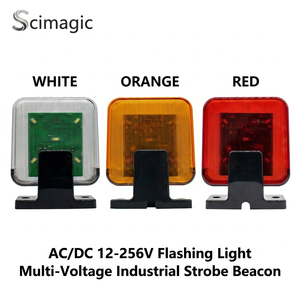
Wide-band input tolerance for automated factory gates, barriers, and perimeter alarm horns with high-impact poly-carbonate casing.
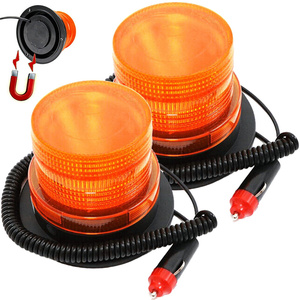
Features simulated high-speed mechanical rotation via 360-degree LED pulsing; designed for roadside service trucks and highway patrol vehicles.
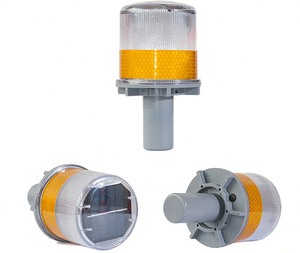
Impact-resistant modular strobe for traffic cones and crash barriers, built with optical Fresnel refraction lenses for 1000m+ long-range visibility.
Ruggedized magnetic or bolt-down base options, sealed against high-pressure jet washdown, engineered for quarry haulers and highway support.
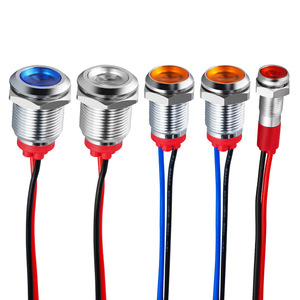
Customizable chromatic options (Amber/Red/Blue/Clear) tailored for global tenders, emergency squads, municipal utility teams, and port authorities.
Direct technical trade-off evaluation to guide procurement tenders, EPC contracts, and lifecycle cost modeling.
| Performance Vector | Standalone Solar DC Strobe | Mains Hardwired AC Blinker | Vehicle DC Auxiliary Strobe |
|---|---|---|---|
| Primary Deployment | Remote highways, median cuts, work zones | Toll plazas, metro corridors, urban hubs | Maintenance utility fleets, excavators |
| Power Infrastructure | Zero cabling, 100% autonomous PV cell | Requires trenching, conduits, grid source | Vehicle battery (12V/24V) charging bus |
| Continuous Autonomy | 7 to 10 rainy days (Lithium LiFePO4) | Infinite (subject to grid reliability) | Continuous vehicle operational runtime |
| CapEx vs. OpEx Index | Higher unit purchase cost / Zero ongoing power bill | Low unit price / High trenching & grid maintenance costs | Balanced lifecycle equipment amortization |
| Weather Ingress Defense | IP65 to IP67 sealed UV-stabilized housing | IP55 to IP65 cast aluminum/polycarbonate | IP67 to IP69K high-pressure steam-wash resistant |
| Compliance Reference | NHAI, IRC:SP:110, BRO, EN 12352 (L8H) | CPWD, MUTCD Type B, BS EN 50556 | SAE J845 Class 1/2, ECE R65 Reg 10 (EMC) |
How edge telematics, smart chromatic arrays, and advanced chemistry are transforming optical hazard warning systems.
The phaseout of bulky lead-acid gel batteries in favor of Lithium Iron Phosphate (LiFePO4) paired with dynamic Maximum Power Point Tracking (MPPT) micro-controllers ensures 3,000+ deep charge cycles and reliable operation in -20°C to +65°C climatic ranges.
Modern highway diversions increasingly reject chaotic, asynchronous flashing that disorients drivers. Sub-GHz RF and Bluetooth mesh controllers synchronize roadside strobes to fire in linear sequence (guide arrows) or uniform unison, improving reaction time by 38%.
Tier-1 infrastructure contractors now mandate automated telemetry. Embedded cellular connectivity notifies central maintenance control rooms if a remote mountain pass strobe experiences battery degradation, solar panel shading, or optical output failure.
Headquartered in Ahmedabad, Gujarat, India, Enpowers International operates an integrated production facility in GIDC Phase-1, Vatwa. By maintaining full in-house assembly, surface treatment, wave soldering, and environmental test chambers, we deliver proven road safety lighting solutions across 20+ countries without middleman markups.
Manufactured strictly to NHAI (National Highways Authority of India), PWD, and BRO (Border Roads Organisation) guidelines, with full custom adaptation for European EN and American AASHTO/MUTCD bids.
Trusted by infrastructure leaders including Tata Projects, L&T, Patel Engineering, Madhucon, IRB Infrastructure, NCC, and GVK across extreme geographic settings.
Complete export documentation, marine packaging, HS code tariff mapping, and CIF/FOB delivery support across Europe, Middle East, Africa, Southeast Asia, and the Americas.
Essential clarifications for infrastructure estimators, EPC buyers, and technical inspectors.
Solar warning strobe reliability depends on calculating regional Peak Sun Hours (PSH) in worst-case winter solstice conditions. True industrial beacons utilize an autonomy factor of at least 5 to 7 days, balancing PV wattage against system wattage draw to maintain positive net charging throughout extended overcast periods.
SAE J845 Class 1 designates high-intensity optical devices engineered for emergency clearance vehicles operating on open highways in bright daylight. Class 2 specifies approximately half the optical candela output, suitable for utility work fleets, maintenance vans, and intra-city operations.
Optical-grade Polycarbonate (PC) treated with an aliphatic anti-UV stabilizer is the industry standard for road and vehicle strobes. Polycarbonate offers exceptional impact resistance against flying road stones and gravel, whereas acrylic can shatter under high mechanical deflection.
Low-grade LED flashing beacons can inject RF noise into VHF/UHF radios, GPS units, and CAN bus vehicle telemetry. Industrial vehicle strobes must incorporate shielded internal buck-boost drivers compliant with CISPR 25 or ECE Regulation 10 (EMC) standards.
Solar DC strobes are the clear choice where grid trenching exceeds $25–$40 per linear meter or across isolated highway segments. Conversely, high-density urban toll plazas or deeply shaded underpasses with existing electrical infrastructure benefit from AC-direct units that eliminate battery maintenance cycles.
Yes. Factory microcontrollers can be pre-programmed to deliver single-flash, double-burst, quad-strobe, or simulated rotational patterns at duty cycles ranging from 40 to 120 flashes per minute to align with local civil road authority specifications.
Directly access engineering drawings, photometric candela test curves, tender compliance matrices, and wholesale export pricing from our dedicated Ahmedabad manufacturing facility.