Road Flare
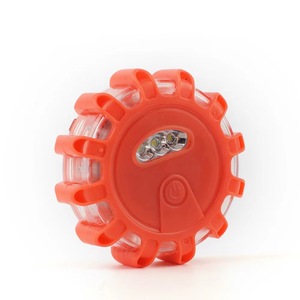
Smart LED Traffic Warning Strobe Road Flare
Constructed with 12 Red + 3 SMD White LEDs. Highly visible roadside safety beacon operating on replaceable AAA batteries.

Purpose-engineered optical warning solutions featuring premium UV-stabilized polycarbonate lens assemblies, autonomous MPPT solar controllers, and industrial solid-state electronics.
Constructed with 12 Red + 3 SMD White LEDs. Highly visible roadside safety beacon operating on replaceable AAA batteries.
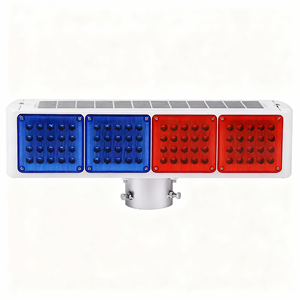
Cast aluminum alloy housing for highway construction nighttime warnings and critical intersection barrier demarcation.
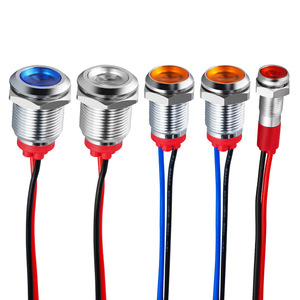
Custom amber/red/blue optical flasher tailored for heavy construction plant vehicles, maintenance trucks, and industrial utility fleets.
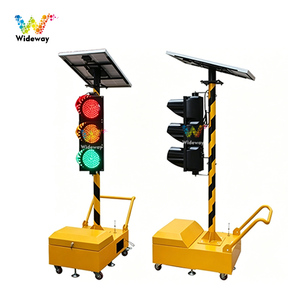
Features wireless operational distance of 200–800 meters. Rapid setup for temporary traffic diversion and priority flow management.
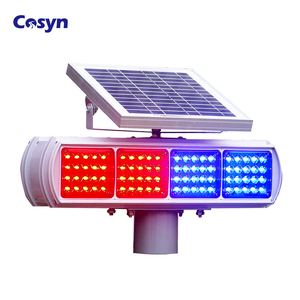
High-burst optical warning system with solar power harvesting circuit, engineered specifically for highway barricades and work zones.
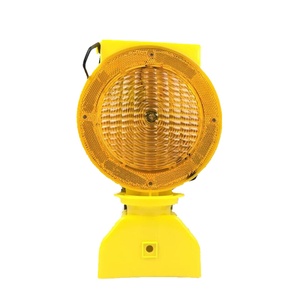
Universal road cone and barricade amber flashing beacon, rigorously CE-certified for compliance with European road safety regulations.
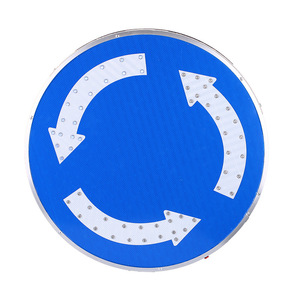
UV-printed heavy-gauge aluminum board equipped with synchronized yellow perimeter flashers for high-speed approaches.
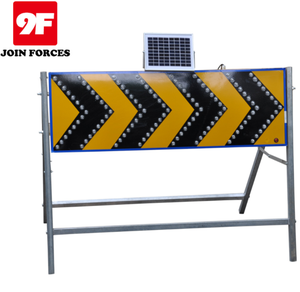
Dynamic sequential chevron alignment signals indicating dangerous curvature, median splits, and unexpected civil bypass routes.
The global infrastructure sector is transitioning from standalone incandescent flashers to intelligent, energy-harvesting, connected road safety infrastructure.
Traditional Sealed Lead-Acid (SLA) batteries are being phased out by civil authorities worldwide due to rapid sulfation under high-temperature cycling. Modern project procurement mandates Lithium Iron Phosphate (LiFePO4) storage combined with Maximum Power Point Tracking (MPPT) logic, yielding an operating lifespan exceeding 8 to 10 years even under continuous cloud cover and sub-zero conditions.
Next-generation yellow blinkers incorporate short-range RF mesh networking and cellular NB-IoT transceivers. Instead of uncoordinated asynchronous flash cycles, entire highway corridors now leverage synchronous pulse timing (cascading chevron effects) to drastically reduce driver disorientation, align with Cooperative Intelligent Transport Systems (C-ITS), and automatically notify maintenance crews of battery voltage drops.
Regulatory frameworks such as EN 12352 (Classes L2H, L8H, L8M) set stringent guidelines for luminance intensity and beam dispersion. Modern manufacturing replaces generic injection tooling with multi-tier annular Fresnel optics molded from Makrolon® UV-stabilized polycarbonate, guaranteeing consistent 590nm amber chromaticity across an 800-meter line of sight without causing blinding glare.
A rigorous checklist for traffic engineers, infrastructure concessionaires, and procurement officers to audit yellow blinker bids.
| Evaluation Parameter | Commercial Grade / Standard Offerings | Enpowers CE Industrial Specification | Impact on Long-Term Project TCO |
|---|---|---|---|
| Photometric Class (EN 12352) | Class L2L (Nominal luminous intensity < 50 cd) | Class L8H (> 1500 cd peak luminous output) | Guarantees visibility across > 800m in bright midday daylight and dense coastal fog. |
| Lens Material & UV Rating | Recycled Polystyrene (PS) or Standard PC | Covestro Makrolon® 2807 UV-Stabilized Polycarbonate | Prevents yellowing, surface crazing, and micro-fracturing under intense tropical solar flux. |
| Energy Storage Tech | Lead-Acid Gel (300-500 cycles at 50% DOD) | Grade-A LiFePO4 Cells (> 2500 cycles at 80% DOD) | Eliminates costly bi-annual battery replacements on remote highway corridors. |
| Solar Harvest Efficiency | Polycrystalline (14-16% conversion efficiency) | A-grade Monocrystalline Silicon (> 21.5% conversion) | Rapid autonomous charging during heavily overcast, rain-heavy monsoon seasons. |
| Ingress Protection (IP) | IP54 (Basic dust and splashing water tolerance) | IP65 / IP67 Fully Sealed Silicone Gasket Profile | Protects drive electronics from salt spray, industrial particulate, and pressure washing. |
| Electronic Drive Circuitry | Analog 555-timer oscillator circuit | Micro-controller with Dynamic Pulse Width Modulation | Ensures precision duty-cycle stability (50–60 flashes/min) regardless of battery discharge state. |
Operating from our dedicated industrial facility at GIDC Phase-1, Vatwa, Ahmedabad, Enpowers International maintains complete sovereignty over the design, SMD pick-and-place assembly, optical mold verification, and environmental stress screening of each traffic flasher.
By bypassing third-party trading intermediaries, EPC contractors receive comprehensive documentation packages: traceable material certificates, spectrophotometer optical output tests, solar charging autonomy calculations, and structural test validation complying with NHAI, PWD, BRO, and international CE / EN safety codes.


Direct technical answers addressing system autonomy, regulatory compliance, optical sizing, and environmental durability.