
Engineered for municipal DOTs, commercial highway contractors, and petrochemical freight corridors across the Greater Houston Metropolitan Area.
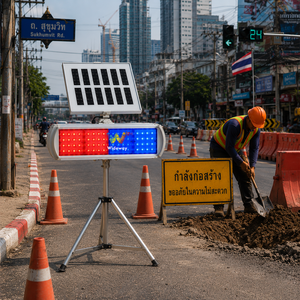
High-visibility emergency strobe system encased in impact-resistant, UV-stabilized polycarbonate. Built for emergency response vehicles, road construction perimeter safety, and Houston freeway maintenance zones.
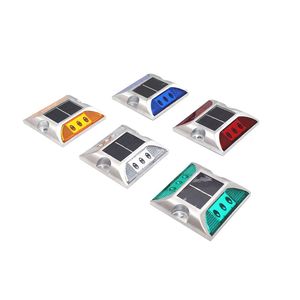
Heavy-duty die-cast aluminum road stud housing with prism-refracted LED optics. Engineered to withstand 30+ ton dynamic axle weights along busy port corridors like the Houston Ship Channel.
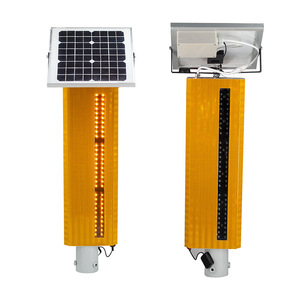
Sequential flashing beacon enclosure with integrated GPS master timing sync. Eliminates visual clutter and guides motorists smoothly through expansive lane merges on I-10 and Loop 610.
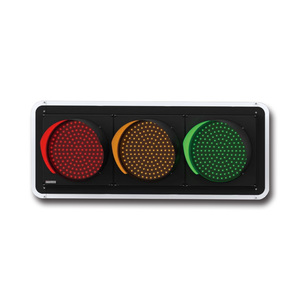
Modular 200mm / 300mm signal head enclosure assembly. Precision aluminum or reinforced polycarbonate construction designed to house full-aspect optics, turn arrows, and transit priority displays.
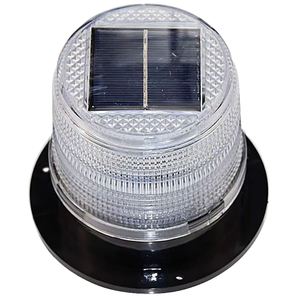
Self-contained industrial polycarbonate beacon housing with high-flux neodymium magnetic mounting. Impervious to salt air, chemical vapor, and torrential Gulf storms for work trucks and heavy plant machinery.
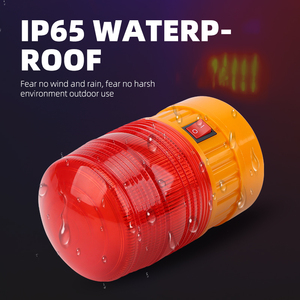
Compact, high-luminescence flashing warning luminaire housing. Features an IP66 silicone sealed perimeter gasket and corrosion-resistant fasteners suited for Gulf Coast municipal public works utility teams.
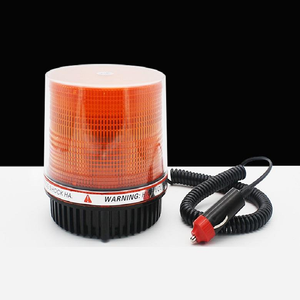
Versatile 12/24V dual-circuit vehicle flasher housing engineered for industrial fleet safety, heavy wreckers, oversize transport escorts, and hazardous chemical zone perimeter traffic warnings.
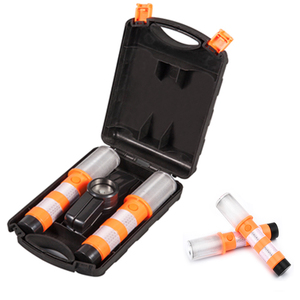
High-tensile ABS ergonomic handle and optical diffuser tube with multi-mode directional flash logic. Essential gear for Houston METRO transit controllers, event marshals, and night construction crews.
The Greater Houston transportation network combines massive freight tonnage, extreme subtropical heat, rapid urban sprawl, and acute hurricane vulnerability. Our traffic signal enclosures and blinker systems are tailored for these precise operating conditions.
Heavy heavy-vehicle vibration and ambient airborne chemical compounds along Highway 225, Baytown, and Pasadena rapidly degrade inferior plastics. Our enclosures use copper-free marine aluminum and UV-stabilized GE Lexan polycarbonate, sealed to NEMA 4X / IP66 specifications to block corrosive sulfurous and maritime moisture ingress.
Complex diverging diamond interchanges (DDIs) and multi-lane arterials along Beltway 8, I-10 Katy Freeway, and TX-99 Grand Parkway demand crisp optical cutoffs and anti-glare tunneling visors. Our signal housings prevent ambient visual bleed across adjacent lanes under glaring Texas mid-day sun conditions exceeding 100,000 lux.
Houston's coastal proximity necessitates fail-safe operation during Catastrophic Storm Events on designated evacuation corridors (I-45 North, US-290, and US-59/I-69). Our solar blinker systems feature 7 to 10 days of continuous battery autonomy, maintaining warning flash operations through severe grid outages and protracted monsoon cloud cover.
City of Houston street grid revitalization and METRORail expansion along Downtown, Midtown, and the Texas Medical Center require low-profile, aesthetic signal assemblies. Our slim-line modular polycarbonate enclosures blend clean architectural styling with rugged structural resilience against repetitive vibration.
With intense flash-flood potential across Houston's bayou drainage systems (Buffalo, Brays, White Oak Bayous), low-water crossings require automated, sensor-triggered flashing beacons. Our solar assemblies integrate seamlessly with water-level sensors to deliver instant warning signals without buried wiring susceptible to ground faults.
Rapid master-planned expansion across Fort Bend, Montgomery, and Brazoria Counties calls for rapid-procurement traffic control hardware. Factory-direct availability of standardized 1-way, 3-section, and 4-section enclosures allows civil engineers to maintain aggressive turnkey infrastructure timelines.
Transportation authorities in Southeast Texas are re-evaluating traditional hardware standards in light of extreme weather intensification, connected vehicle integration, and lifecycle cost analysis.
Historically, TxDOT municipal specifications leaned heavily toward cast aluminum for roadside signal heads. However, data from coastal Harris and Galveston counties demonstrates that UV-stabilized, injection-molded structural polycarbonate significantly outperforms metal in salt-fog corrosive atmospheres. Polycarbonate eliminates external electrolytic corrosion, resists denting from hurricane debris impact, and reduces mast-arm dead-weight loading by over 45%, translating to smaller pole foundations and lower installation labor.
Our enclosures feature premium Bayer/SABIC resin formulations reinforced with hindered amine light stabilizers (HALS), preserving chromaticity and impact tensile strength through 15+ years of intense subtropical sun exposure.
Houston’s regional Intelligent Transportation Systems (ITS) roadmaps prioritize V2I (Vehicle-to-Infrastructure) rollouts. Modern traffic signal enclosures are no longer passive housings; they must accommodate radar sensors, optical camera arrays, and DSRC/C-V2X radio antennas without electromagnetic interference.
Our custom-molded signal light enclosures provide internal architectural channeling for segregated low-voltage sensor cabling, dedicated thermal heatsinks for embedded edge-AI controllers, and non-metallic radio-transparent visor canopies optimized for 5.9 GHz ITS communications band transceivers.
Recent winter storm disruptions (Uri) and major hurricane grid failures across the CenterPoint Energy service footprint have accelerated municipal demand for decentralized, solar-powered warning systems. Houston civil engineers now routinely specify isolated solar blinker assemblies for all mid-block crosswalks (RRFBs), school zones, and roundabout approaches.
By eliminating utility trenching across concrete highways (which typically adds $18,000–$35,000 per crossing in Houston right-of-way permitting and traffic disruption costs), turnkey solar LED warning lights provide instant ROI and total storm-proof redundancy.
| Engineering Parameter | Standard Commercial Spec | Enpowers Houston-Grade Specifications | Operational Impact for TxDOT / Houston Field Operations |
|---|---|---|---|
| Housing Material | Standard recycled aluminum / low-grade ABS | 100% Virgin UV-Stabilized Polycarbonate or A380 Copper-Free Aluminum | Prevents galvanic blistering in Galveston/Houston Ship Channel salt fog. |
| Wind-Load Capability | Tested to 90 MPH static loads | Engineered to AASHTO 140+ MPH gust thresholds with reinforced serrated locking rings | Prevents head rotation and bracket shear during Gulf Category 3–5 storms. |
| Weather Sealing | Standard EPDM sponge foam | Continuous closed-cell neoprene gasket with UV-inhibited silicone barrier (IP65/IP66) | Zero water penetration during sideways hurricane rains and industrial pressure washing. |
| Color Fastness & Finish | Basic wet paint surface coating | Mass-pigmented Highway Yellow / Federal Green / Traffic Black resin with HALS inhibitors | Will not flake, peel, chalk, or fade under brutal South Texas UV index 11+ summers. |
| Thermal Range | -10°C to +50°C | -40°C to +80°C continuous operating threshold | Safely dissipates internal heat generated by 12-inch LED aspects in hot metal housings. |
| Mounting Versatility | Fixed bracket lugs only | Universal 72-tooth serrated hub fittings compatible with Pelco, Astro-Brac, and TxDOT hardware | Enables rapid retrofit onto existing span wire, mast arms, and side-of-pole mounts. |
Combining world-class manufacturing scale with rigorous international engineering quality. We provide North American distributors, municipal contractors, and civil EPC firms with unprecedented direct-from-factory value.
Headquartered in Ahmedabad, India, our state-of-the-art facility features in-house precision die-casting, injection molding presses, and automated SMT LED assembly lines. You avoid tier-3 trading distributor markups while securing pristine product consistency.
Our traffic signal light enclosures and blinker modules are built to meet rigorous global criteria, spanning NHAI, PWD, and BRO certifications, easily configured to meet AASHTO, ITE (Institute of Transportation Engineers) VTCSH, and TxDOT DMS specifications.
Need custom mounting bracket spacing, proprietary visor hoods (cap, tunnel, or full-circle), or custom pre-drilled backplate alignments? Our internal tooling department creates custom molds, punch patterns, and branding inserts with minimal tooling lead times.
With established maritime supply routes shipping to 20+ countries, our logistics team coordinates seamless ocean freight directly into Port Houston (Barbours Cut / Bayport Container Terminals) with complete customs documentation and palletized export protection.
Key technical, regulatory, and purchasing answers for public works buyers, traffic operations teams, and civil infrastructure estimators.
Yes. Our signal light housings are engineered with standardized 72-tooth serrated locking rings (1.5-inch NPS pipe fitting interfaces) that integrate seamlessly with industry-standard hardware, including Pelco, Astro-Brac, mast-arm clamp assemblies, span-wire hangers, and post-top mounts used extensively throughout the City of Houston, Harris County, and TxDOT Houston District operations.
All aluminum models are cast using high-purity, copper-free aluminum alloys subjected to conversion pre-treatment and electrostatic thermoset TGIC polyester powder-coating (tested to ASTM B117 salt spray standards for over 1,000 continuous hours). For our polycarbonate models, the resin is inherently immune to coastal rust, electrolytic galvanic oxidation, and industrial atmospheric acid vapor typical along the Houston Ship Channel and Pasadena industrial districts.
Absolutely. We program our solid-state flash controllers to exact tender parameters: MUTCD standard 50-60 flashes per minute, rapid rectangular flashing beacon (RRFB) WW+S (Wig-Wag) patterns, or custom astronomical clock schedules for Houston school zone warning installations. Optical LED aspects conform strictly to ITE chromaticity and luminous intensity distribution standards.
Due to the risk of extended overcast periods and post-hurricane localized grid blackouts, we recommend a minimum of 7 to 10 days of non-sun autonomy for Houston emergency evacuation routes. Our engineering team calculates exact monocrystalline solar panel wattage and high-capacity LiFePO4 or sealed VRLA gel battery sizing based on historical solar insolation values (kWh/m²/day) for Harris, Fort Bend, and Montgomery counties.
For standard polycarbonate signal enclosures and solar beacon kits, production runs are dispatched within 15–20 business days. Full container load (FCL) shipments transiting to Port Houston typically require 28–34 days ocean freight. For urgent project phases or pilot testing samples, express air freight options directly into George Bush Intercontinental Airport (IAH) are readily coordinated.
Yes. We regularly supply major roadside ITS equipment manufacturers and prime contractors with custom OEM housing configurations. We offer internal mold engraving for brand logos, custom housing colors (Federal Yellow, Highway Luster Green, Black, or custom RAL specifications), and custom wiring harnesses pre-terminated with terminal blocks or quick-disconnect plugs.
Planning an upcoming highway bid, municipal intersection overhaul, or industrial yard safety installation in Greater Houston? Connect directly with our international infrastructure engineering desk for comprehensive mechanical drawings, photometric reports, and factory quotes.