
Export Sales: +91 96012 58123 [email protected] Exporting to 20+ Countries

Traffic Flash Light Supplier & Exporters for Egypt

Precision-Engineered Solar LED Blinkers, Hazard Beacons & Intelligent Active Warning Systems Built for Extreme Desert Climates and National Infrastructure Corridors.

Export-Grade Product Systems

Industrial-Grade Traffic Flash Lights Configured for Egyptian Roadways

Tested for ultra-high ambient operating temperatures (+55°C), high UV degradation resistance, and IP68 ingress protection against microscopic Saharan sand drift.
20+
Countries Exported Worldwide
55°C+
Thermal Resistance Certified
IP68
Maximum Hermetic Ingress Seal
100%
In-House Manufacturing & Testing
Localized Infrastructure Engineering

High-Priority Application Scenarios Across Egypt’s Transportation Network

From the New Administrative Capital's smart arterial networks to long-range desert expressways connecting the Nile Delta, the Red Sea, and Upper Egypt, active solar flashing beacons resolve critical visibility and safety challenges.

Desert & Trans-Regional Corridors

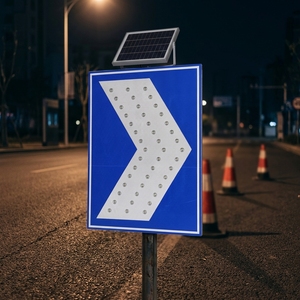
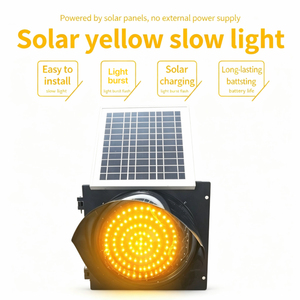
On high-speed, off-grid stretches like the Cairo-Alexandria Desert Road, the Regional Ring Road, and the Al Galala Highway, sandstorms (Khamaseen) reduce driver visibility to near-zero. High-flux amber solar blinkers and chevron arrays punch through dense airborne particulates, preventing catastrophic rear-end and run-off-road collisions.

Mega Construction Zones & NAC Infrastructure

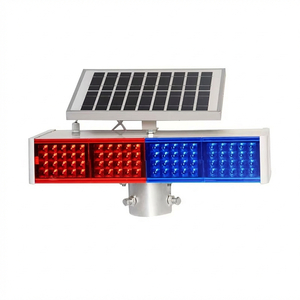
With thousands of kilometers of new urban bypasses and bridges under rapid execution across Greater Cairo and the New Administrative Capital, our portable solar barricade flashers and high-intensity chevron systems provide self-sustaining, 24/7 warning markers that require zero trenching, cabling, or auxiliary diesel generator sets.

Suez Canal Economic Zone (SCZone) & Ports

Heavy industrial corridors, container terminals, and petrochemical hubs at Ain Sokhna, Port Said, and Damietta require corrosion-proof, explosion-resistant traffic signal hardware. Our marine-grade anodized aluminum enclosures withstand aggressive saline atmospheres while guiding heavy freight haulers safely through loading bays and interchanges.

The Modernization of Egypt's Road Network: Engineering for Vision 2030

Under Egypt's ambitious Vision 2030 sustainable development plan and the National Roads Project, the General Authority for Roads, Bridges and Land Transport (GARBLT) has expanded the national highway network by over 7,000 kilometers while upgrading thousands of kilometers of auxiliary road links. However, the geometric expansion of multi-lane expressways has introduced significant operational hurdles: higher approach speeds, expansive junction layouts, and elevated collision frequencies at rural intersection tapers and high-speed bypass ramps.

Historically, infrastructure engineers in Egypt relied heavily on passive road signage (reflective sheeting) and incandescent AC-powered junction blinkers. These legacy solutions consistently exhibit structural vulnerabilities under local deployment realities: dust accumulation degrades reflective luminance by up to 60% within weeks, while persistent grid voltage fluctuations and remote power dropouts leave hazardous intersections dark when illumination is needed most.

Technical Insight: Autonomous solar LED blinkers designed for Egypt must incorporate Maximum Power Point Tracking (MPPT) architectures calibrated to extreme solar irradiation levels (DNI exceeding 2,400 kWh/m² annually) without thermally throttling or drying out battery electrolytes.

Current Trends in Egyptian Traffic Safety & ITS Procurement

Procurement criteria among leading Egyptian EPC contractors (such as Arab Contractors, Hassan Allam Holding, Petrojet, and Orascom Construction) have decisively pivoted from low-cost, disposable warning devices toward life-cycle costed, heavy-duty road safety systems:

  • ✦ Shift to High-Temperature Chemistry (LiFePO4): Conventional Valve Regulated Lead Acid (VRLA) batteries fail prematurely in Upper Egypt and Western Desert installations due to internal heat dry-out. Modern specifications demand Lithium Iron Phosphate (LiFePO4) storage capable of continuous cycling at ambient temperatures exceeding 55°C without capacity degradation.
  • ✦ Aerodynamic and Micro-Dust Sealing: Microscopic silica dust particles generated during desert sandstorms penetrate standard IP54 traffic enclosures, clouding polycarbonate lenses and insulating PCB electronics until thermal failure occurs. Current project tenders mandate die-cast aluminum housings with silicone gasket seals rated to IP65 or IP68.
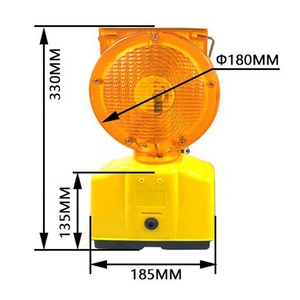
  • ✦ Standardized 200mm & 300mm Aspect Dimensions: Alignment with the Egyptian Traffic Code, Vienna Convention signage principles, and international AASHTO guidelines requires accurate luminous output, precise 590nm amber chromaticity, and standard optical diameters that integrate smoothly onto highway overhead cantilevers and central median poles.
Technical Benchmarking

Engineering Matrix: Standard Commercial vs. Desert-Grade Systems

Direct technical comparison illustrating why export-calibrated signal heads outperform conventional roadside markers in North African operating environments.

Parameter Standard Commercial Flasher Our Egyptian Desert-Grade Specification Operational Advantage in Egypt
Housing Material Recycled ABS / Thin Polycarbonate Die-Cast ADC12 Aluminum + Electrostatic Powder Coat Prevents UV brittleness, structural distortion, and solar thermal warping.
Optical Lens Single-layer Clear Acrylic UV-Stabilized Polycarbonate with Fresnel Focusing Optics Maintains 1,000m+ visibility even during active daytime desert sun glare.
Ingress Rating IP54 to IP55 IP65 to IP68 Hermetic Compression Gasket Completely stops ultra-fine airborne sand grains from penetrating PCB chambers.
Battery System Standard Lead-Acid (VRLA) Grade-A Lithium Iron Phosphate (LiFePO4) Battery Pack 3,000+ cycle life; operates reliably from -10°C to +65°C without explosion risk.
Autonomous Run Time 24 to 48 Hours 120+ Hours (5–7 Rainy / Heavily Overcast Days) Guarantees uninterrupted operation during rare North Coast storms and sand overcast.
Flash Rate & Duty Fixed 30 FPM analog pulse MCU Microprocessor Controlled (50–60 FPM, 10%–20% Duty) Maximizes driver alert response while conserving critical battery reserve capacity.
Enterprise Authority & Manufacturing Rigor

Why International EPC Contractors & Road Agencies Rely on Our Production

Operating a dedicated, advanced manufacturing facility in Ahmedabad, Gujarat, India, Enpowers International delivers factory-direct engineering integrity without intermediary markups, backed by exhaustive quality management protocols.

In-House Manufacturing Plant

Fabricated, assembled, and photometrically tested in our specialized plant at GIDC Phase-1, Vatwa, Ahmedabad, ensuring absolute quality control over every diode, lens array, and charge controller.

Global Standards Compliance

Engineered to satisfy stringent Indian NHAI, PWD, and BRO highway standards, easily configurable to Egyptian GARBLT, American AASHTO, or European EN 12352 project tender parameters.

Export Logistics to Egypt

Proven export documentation workflows for Egyptian customs clearing, including ACID numbers under the Advance Cargo Information system, Certificate of Origin, and container packing for Alexandria, Damietta, and Sokhna ports.

Bespoke Project Engineering

Full customization flexibility covering lens aspect sizing (200mm/300mm), housing powder-coating shades, bracket clamp diameters, dual-color sequences, and external SCADA integration.


Supplied to Premier Infrastructure Developers & National Agencies Globally
National Highways Authority of India Border Roads Organisation Central Public Works Department Tata Projects IRB Infrastructure GVK NCC Limited
Procurement Knowledge Base

Frequently Asked Questions by Project Engineers & Contractors in Egypt

Clear, direct answers regarding customs procedures, climate survivability, technical configurations, and container shipping to Egyptian destinations.

How do your solar flash lights withstand Egypt's extreme summer temperatures and sandstorms?
Our solar blinker systems are specifically designed for harsh desert climates like Upper Egypt, Sinai, and the Western Desert. We utilize ADC12 die-cast aluminum shells that dissipate heat rapidly, UV-stabilized Bayer polycarbonate lenses that will not yellow or embrittle under solar index UV-11+, and high-durability LiFePO4 batteries protected by thermal cut-off sensors. All mechanical seals feature industrial-grade closed-cell neoprene gaskets achieving IP65 to IP68 ratings to completely lock out microscopic sand particles.
Are your products compatible with Egyptian Ministry of Transport (GARBLT) specifications?
Yes. Our standard systems match or exceed the requirements of Egypt's General Authority for Roads, Bridges and Land Transport (GARBLT). We manufacture in both 200mm (8-inch) and 300mm (12-inch) optical apertures with certified 590nm amber and 625nm red wavelengths. Upon tender review, we supply complete compliance submittals including photometric test data, salt spray corrosion test certifications, and thermal cycle reports required by engineering consultants.
Can you handle Egyptian Advance Cargo Information (ACI) and CargoX documentation?
Absolutely. Having exported industrial road safety equipment to more than 20 countries worldwide, our logistics department is thoroughly versed in the Egyptian Nafeza platform and CargoX blockchain document transfer requirements. We provide compliant commercial invoices, packing lists, factory Certificates of Origin, and test certificates tagged with your assigned 19-digit ACID (Advance Cargo Information Declaration) number to ensure seamless customs clearance at Port Said, Alexandria, Damietta, or Ain Sokhna.
What is the lead time for container orders delivered to Egypt?
Standard manufacturing turnaround for high-volume orders (500 to 2,000 units) typically ranges between 15 and 20 business days at our Ahmedabad plant. Sea freight transit time from Mundra or Nhava Sheva port in Western India directly to Port Said or Sokhna Port takes approximately 10 to 14 days, offering Egyptian contractors exceptional project agility compared to East Asian supply routes.
Should we specify autonomous solar DC blinkers or grid-connected AC units for our Egyptian project?
Solar DC blinkers are optimal for highway interchanges, median cuts, desert bypasses, bridge approaches, and work zones because they eliminate the substantial costs of ground trenching, underground electrical cabling, transformer stations, and diesel generator upkeep. For densely built urban intersections in downtown Cairo or Alexandria where adjacent high-rise buildings cast continuous shade on solar arrays, we provide 220V/230V AC mains-powered LED blinkers within identical heavy-duty aluminum enclosures.
Do you offer customized mounting hardware for specific pole configurations?
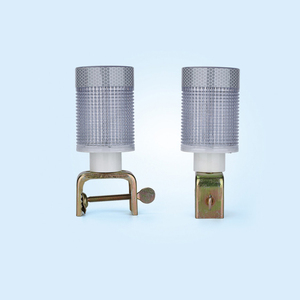
Yes. We supply comprehensive modular mounting assemblies engineered to fit standard cylindrical steel poles (ranging from 2-inch to 4.5-inch outer diameters), square structural steel tubing, overhead sign gantry brackets, and concrete barricade bases. All brackets are hot-dip galvanized or electrostatic powder-coated to prevent galvanic corrosion when deployed along coastal Mediterranean or Red Sea corridors.

Accelerate Your Project Delivery with Certified Highway Safety Hardware

Whether you are outfitting a major highway concession, a desert infrastructure corridor, or an industrial port facility in Egypt, our engineering sales desk provides full technical datasheets, photometric analyses, and competitive direct-factory CIF quotations.

Inquire Now
Online Enquiry Contact Sales