
Precision-engineered solar blinkers, direction turn beacons, hazard arrows, and barricade warning lights configured for immediate dispatch to Accra, Kumasi, Takoradi, and cross-border West African routes.

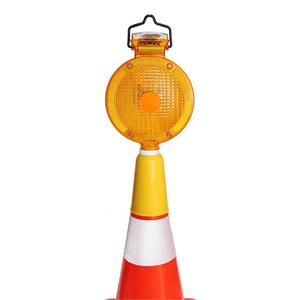
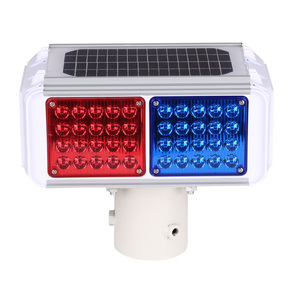
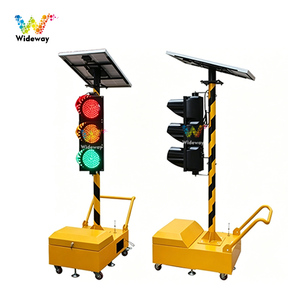
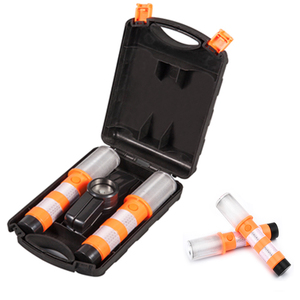
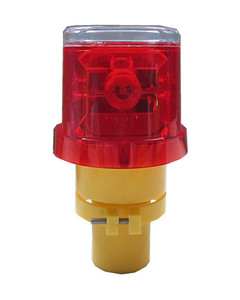
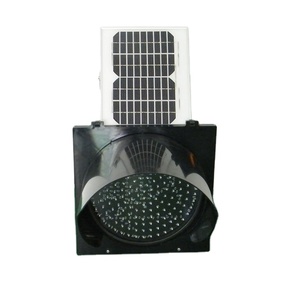
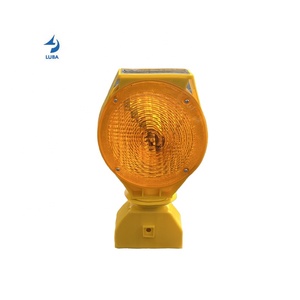
The Republic of Ghana represents one of the most rapidly transforming infrastructure corridors in West Africa. Under the supervision of the Ministry of Roads and Highways (MRH), the Ghana Highway Authority (GHA), the Department of Urban Roads (DUR), and the National Road Safety Authority (NRSA), major strategic road networks are undergoing systematic rehabilitation. Corridors including the N1 Trans-West African Highway (Aflao-Accra-Elubo), the heavily traversed N6 Accra-Kumasi Arterial, the Tema Motorway Expansion, and the Western Corridor Resource Haulage Routes carry substantial commercial freight alongside dense transit volumes.
However, roadside safety audits across Ghanaian transit networks continue to underline acute risks: high incidence of fatal nighttime rear-end impacts with stalled heavy haulage vehicles, high collision rates at non-illuminated rural peri-urban intersections, unannounced roadwork diversions, and abrupt highway median openings. Conventional grid-powered signaling (mains 230V AC) faces widespread logistical constraints outside major municipal boundaries, exacerbated by power transmission drops, cable vandalism, and rural non-electrification.
In accordance with the National Road Safety Authority Act (Act 993) and modern roadside engineering best practices, self-sustaining Solar-Powered LED Traffic Caution Lights (Solar Blinkers) provide the primary technical solution. Operating autonomously on 12V/24V DC systems powered by high-efficiency monocrystalline PV modules and long-lifecycle lithium iron phosphate (LiFePO4) or deep-cycle gel batteries, our warning signals ensure perpetual 24/7/365 active warning regardless of local electrical grid availability.
How specialized LED warning beacons and directional flashers mitigate accident hotspots across regional topography, climatic zones, and transport corridors.
Deployed at hazardous curve approaches, crest vertical curves, and unlit pedestrian crossings between Suhum, Nsawam, and Nkawkaw. Amber flashers give high-speed long-distance freight drivers up to 800 meters of advance optical warning to de-accelerate.
Heavy bauxite, gold, and timber transit routes across the Western and Ashanti regions (Tarkwa, Prestea, Obuasi corridor) experience frequent conflict between slow articulated dumpers and local commuter traffic. Strobe warning clusters demand immediate right-of-way awareness.
Continuous ingress and egress of container trailers at the Tema Port Meridian Corridor and peripheral bonded logistics yards require 24/7 directional guidance. Dual-sided amber and red-blue strobes eliminate queuing bottlenecks at control gates.
Contractors working under Ghana Road Fund financing require rapid, portable warning illumination. Wireless solar portable traffic signals and LED barricade beacons protect both civil workers and motorists during temporary single-lane diversions.
Where trunk roads bisect agricultural communities and villages in the Eastern, Volta, and Central regions, solar amber blinkers placed above speed humps and pedestrian zebra demarcations drastically curb high-speed run-off-road collisions.
Deploying traffic hardware in Ghana requires rigorous adaptation to two severe environmental conditions: the dry, dust-laden Harmattan season (November to March) emanating from the Sahara, and the intense coastal saline humidity characterizing the Gulf of Guinea shoreline (Accra, Tema, Cape Coast, Sekondi-Takoradi). Sub-standard imported blinkers routinely fail in West Africa due to yellowing optics, overheated lead-acid batteries, and gasket failure that admits abrasive red laterite dust into optical chambers.
Our factory manufactures luminaires specifically customized to West African field realities:
1. Anti-Static, Non-Yellowing Polycarbonate (PC): Optical Fresnel lenses and housing shells are molded with high-grade optical Bayer/Sabic polycarbonate integrated with German UV-stabilizers. The anti-static external finish repels airborne dust settlement during Harmattan haze, maintaining optimal luminous intensity without requiring constant manual washing.
2. High-Temperature Battery Sizing with Intelligent BMS: Tropical road asphalt ambient temperatures regularly exceed 42°C in Northern and Central Ghana. We employ LiFePO4 chemistry and wide-temperature industrial Gel batteries capable of operating stably up to 65°C, managed by smart MPPT/PWM solar charge controllers with low-voltage disconnect (LVD) and deep discharge preservation.
3. Coastal Saline & Torrential Ingress Proofing (IP66): Enclosures feature molded silicone sealing gaskets, marine-grade A2/A4 stainless steel external fasteners, and electrostatically applied UV-polyester powder-coated galvanized steel bracketry to counteract extreme humidity and salt fog corrosion along the coastal corridor.
Critical engineering parameters recommended for Ministry of Roads and Highways tenders, EPC contractors, and private estate developments.
| Parameter | Solar 300mm Caution Beacon | Mains LED Strobe Arrow | Mobile Work-Zone Signal | Ghana Standard Compliance |
|---|---|---|---|---|
| Operating Voltage | 12V DC (Solar autonomous) | 100–265V AC, 50/60Hz | 12V / 24V DC Rechargeable | ECG Grid & Standalone PV |
| Luminous Flux / Candela | ≥ 400 cd (High-intensity Amber) | ≥ 600 cd (Arrow Pattern) | ≥ 500 cd (Red / Yellow / Green) | GSA / MRH Certified Visual Arc |
| Solar PV Module | 15W – 30W Monocrystalline | N/A (Mains Direct Feed) | 50W – 80W Mono Array | A-Grade IEC 61215 Spec |
| Battery Chemistry | LiFePO4 (12.8V 18Ah–24Ah) | Surge-Protected Driver | Deep-Cycle Gel / Lithium | UN38.3 & CE Certified |
| Autonomous Operation | > 120 Hours (5–7 Rainy Days) | Continuous Grid / UPS link | > 72 Hours Continuous | Harmattan / Monsoon Redundancy |
| Housing Protection | IP65 / IP66 Ingress Protected | IP65 Industrial Grade | IP55 Chassis / IP65 Heads | Dust & Tropical Downpour Proof |
| Visibility Distance | ≥ 800 Meters | ≥ 1,000 Meters | ≥ 600–800 Meters | High-Speed Highway Reaction Time |
Direct manufacturer capabilities ensuring turnkey compliance, containerized sea freight to Tema Port, and rigorous pre-shipment quality verification.
Eliminate multiple middleman markups. We engineer, mold, surface-mount, and assemble every traffic beacon in-house, offering substantial project margin advantages for local bidding.
Our mounting systems are designed to fit standard Ghanaian circular galvanized tubular steel poles (50mm–89mm diameter) as well as concrete highway gantry structures without modification.
Comprehensive export documentation including Bill of Lading, Form M / CTN compliance, GSA Conformity documentation, Certificate of Origin, and container packing optimization.
Built strictly to international CE, RoHS, ISO 9001 quality systems, and adapted to national specifications recognized by NHAI, BRO, and FIDIC-governed highway tenders worldwide.
Connect immediately with our senior export technical sales team. We offer rapid photometric calculations, custom tender specification mapping, and guaranteed factory FOB/CIF quotes to Port of Tema or Port of Takoradi.
Everything procurement officers, project managers, and road contractors need to know about purchasing, shipping, and installing traffic warning lights in Ghana.
Our solar caution beacons utilize specialized electrostatically neutralized, UV-stabilized polycarbonate lenses that prevent dust adherence. Furthermore, solar panels are engineered with a steep 15° to 30° seasonal tilt bracket option that allows normal ambient breezes to clear settled red laterite dust, while the monocrystalline cell matrix maintains exceptional low-light absorption even under diffused haze.
We routinely execute sea freight shipments under Incoterms 2020 on FOB, CFR, or CIF Tema/Takoradi basis. Typical production lead time for standard volumes (50 to 500 units) is 10 to 15 business days. Maritime ocean transit from major industrial shipping terminals to Tema Port typically takes 25 to 35 days, with full shipping documentation provided in advance for smooth ICUMS (Integrated Customs Management System) clearance.
Yes. We frequently customize lens diameters (200mm / 300mm), housing materials (Virgin UV-resistant Polycarbonate or die-cast aluminum), optical flashing frequencies (50 to 60 flashes per minute), flash duty cycles, and internal battery reserve days to fulfill precise consultant specifications for MRH, DUR, and GHA funded initiatives.
For Ghanaian ambient temperature profiles, we strongly advocate Lithium Iron Phosphate (LiFePO4) batteries. Unlike traditional SLA batteries that experience rapid plate degradation when operating above 35°C, LiFePO4 delivers over 2,000 to 3,000 cycles at 80% depth of discharge, withstands elevated operating temperatures, and possesses a lifespan exceeding 5 to 7 years with zero maintenance.
Vandalism is a critical issue on remote highway stretches. Our export models offer integrated anti-theft designs: internal battery compartments housed directly inside the locked signal head or elevated tamper-resistant pole-top battery boxes secured with anti-shear security bolts. Solar panels feature rear-clamped security frames that prevent quick unbolting from ground level.
Yes. For legitimate civil contracting companies, municipal assemblies (MMDAs), and project consulting engineers preparing highway tender submittals, we offer rapid air freight delivery of evaluation samples via DHL/FedEx directly to Accra or Kumasi within 5 to 7 working days.
Accelerate road safety compliance on your highway developments in Ghana. By purchasing directly from an established manufacturing plant exporting across 20+ countries, you gain authenticated technical performance, verifiable optical specifications, and direct access to production engineers capable of modifying housing designs, battery configurations, and optical arrays.