
Precision-engineered optical beacons, solar barricade flasher units, high-luminance LED road flares, and heavy-duty die-cast aluminum signal heads tailored for highway concessionaires, municipal civil contractors, and regional arterial distributors.
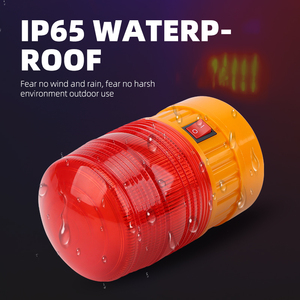
Neodymium heavy-grip magnetic base with omni-directional high-flux strobe illumination. Suited for utility rapid-response vehicles and temporary road barriers.
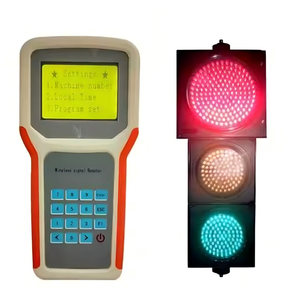
Long-range RF remote control frequency transmitter, modular housing, high-intensity polycarbonate optics for rapid single-lane alternating flow management.
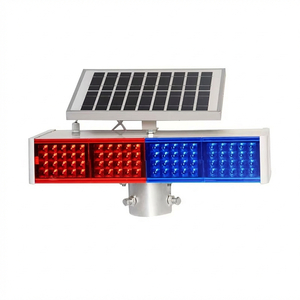
Corrosion-resistant aviation aluminum shell, monocrystalline solar charging, dual prism retroreflective sheeting for high-speed highway hazard zones.
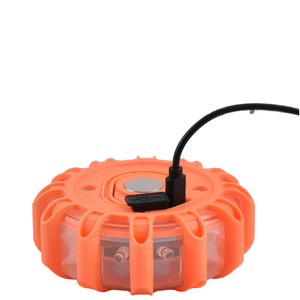
Impact-proof crush-resistant elastomer casing capable of withstanding vehicle runover, multi-pattern flashing modes, foldable hook, and magnetic mount.
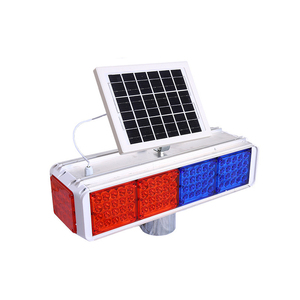
Dual-color alternating warning beacons with high-gain photovoltaic cell and integrated deep-cycle battery for roadside construction site delineation.
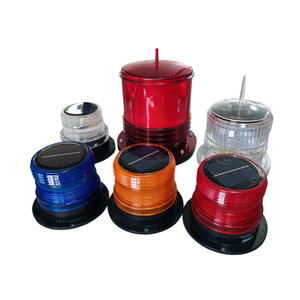
Dual-purpose IP67 navigation flasher for bridge piers, inland waterway crossings, river canals, and harbor terminal barricades with 360-degree Fresnel lens.
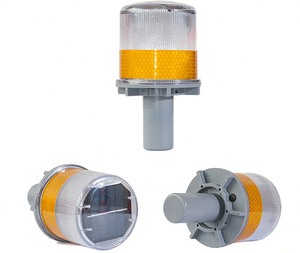
Universal mounting bracket compatible with Russian standard road cones and steel barricades. Photocell automatic dusk-to-dawn actuation.
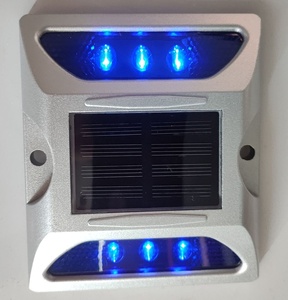
Extreme mechanical compression resistance (>30 tons). High-temperature epoxy potting, hermetically sealed against severe snowplow operations and freeze-thaw cycles.
Navigating the intersection of severe continental winter climates, high-traffic throughput on federal trunk routes, and rigorous national regulatory standards (GOST R and EAC TR CU).
The Moscow transportation corridor represents one of the highest-density, most infrastructurally demanding logistics hubs in Eurasia. Incorporating critical arterial ring networks—including the Moscow Ring Road (MKAD), the Third Transport Ring (TTK), the North-East and North-West Chords, and the Central Ring Road (TsKAD)—this market demands physical warning systems that perform without failure under environmental conditions that regularly disable conventional consumer-grade signaling equipment.
For infrastructure procurement authorities, municipal utilities (such as GBU «Gormost» and GBU «Avtodory»), and civil engineering EPC contractors operating within Moscow Oblast, procuring industrial traffic warning lights requires strict alignment with climatic and operational factors. Unlike tropical or moderate maritime environments, equipment deployed across the Moscow urban agglomeration faces four severe engineering bottlenecks: extended low-temperature endurance down to -40°C, low ambient solar irradiance during winter solstices, pervasive chemical corrosion caused by chloride-based anti-icing reagents, and intense mechanical vibration caused by heavy commercial vehicle transit.
Standard Lithium Cobalt Oxide (LiCoO2) and basic lead-acid batteries lose up to 70% of their operational charge capacity when temperatures plunge below -15°C. For the Moscow market, our factory incorporates custom-engineered low-temperature Lithium Iron Phosphate (LiFePO4) cells equipped with integrated thermal management insulation, or specialized Nickel-Metal Hydride (NiMH) and supercapacitor arrays tested to operate reliably at -40°C.
Between November and February, Moscow averages less than 1.2 peak sun hours per day, compounded by frequent snow cover and cloudiness. Our solar warning units employ high-efficiency monocrystalline silicon panels with photon absorption ratings exceeding 22.5%, paired with smart MPPT (Maximum Power Point Tracking) micro-controllers programmed to maintain continuous flashing for up to 120 hours without direct sun exposure.
The extensive deployment of calcium chloride and multi-component de-icing fluids on Moscow highways rapidly deteriorates untreated aluminum and standard ABS plastics. Our product housings utilize virgin Bayer/Sabic UV-stabilized polycarbonates and ADC12 die-cast aluminum treated with multi-stage anodization and electrostatic powder coating, rated IP67/IP68 to eliminate moisture ingress and corrosion.
Detailed engineering benchmarks illustrating the technical divergence between temperate-zone traffic warning devices and our industrial systems configured for the Russian Central Federal District.
| Engineering Parameter | Conventional Commercial Grade | Our Factory-Engineered Moscow Series | Operational Significance in Moscow |
|---|---|---|---|
| Operating Temperature | -10°C to +50°C | -45°C to +65°C | Prevents controller freeze, lens embrittlement, and electrolyte failure during cold snaps. |
| Optical Dispersion & Visibility | Standard 3mm LEDs, ~300m range | Epistar/Osram High-Intensity SMD, >1000m | Penetrates heavy continental snow blizzards, freezing fog, and autumnal sleet storms. |
| Enclosure Material | Recycled ABS / standard acrylic | GE Lexan Polycarbonate + Anodized ADC12 | Withstands direct snowplow blast impacts and de-icing road reagent mist without clouding. |
| Ingress Protection | IP54 / splash-proof | Hermetic IP65 / IP67 / IP68 (Road Studs) | Eliminates internal water condensation during rapid daily freeze-thaw cycles. |
| Autonomous Battery Backup | 24 to 48 hours without solar input | 120 to 180 continuous hours (5-7 days) | Essential for surviving prolonged sub-Arctic overcast cloud cover and snow accumulation. |
| Tender & Regulatory Conformance | General domestic conformity | GOST R 52282, GOST 33385, EAC TR CU 014 | Enables fast-track technical documentation approval for state municipal contracts. |
From radial expressways to urban streetscapes, our warning beacon systems provide reliable road safety illumination across mission-critical infrastructure projects.
The outer rings handle tens of thousands of heavy freight units daily. During emergency maintenance or structural bridge repairs, high-visibility warning lights—such as our aluminum-cased solar flashers and magnetic LED beacons—are deployed along lane transitions to alert high-speed drivers at distances exceeding 1,000 meters, even in blinding blizzard conditions.
Every winter, emergency district heating pipelining requires open trench work across Central Administrative Okrug streets. Portable solar barricade blinkers and wireless remote-controlled traffic warning beacons facilitate single-lane diversions without relying on volatile fuel-powered diesel generators, ensuring zero emissions and low noise in residential areas.
Our dual-use marine navigation and road warning lights provide critical clearance marking on lock gates, bridge abutments, and pier pylons along the Moscow River and Moscow Canal during commercial shipping and seasonal de-commissioning periods, with hermetic IP67 water seals.
Extensive mega-distribution centers supporting regional e-commerce demand around-the-clock traffic management. IP68 steel solar road studs and magnetic vehicle warning lights guide internal forklift and freight movements safely across unlit yard crossings, icy apron roads, and loading docks.
Integrating red and amber flashing strobes at non-signalized pedestrian crossings across dedicated tramway tracks (e.g., along Sokolniki or Shchukino routes) prevents vehicle-tram collisions during early winter twilight and low-visibility weather.
Compact magnetic LED road flares and high-power strobes allow public works crews and emergency response teams to deploy instant perimeter safety corridors around multicar collisions on ice-affected bridges and flyovers.
Strategic shifts in the Moscow Smart Transportation Network (ITS) are driving demand for connected, low-power, and ecologically durable roadside hardware.
The Moscow Department of Transport and Road Infrastructure Development has positioned the capital as a leading testbed for Intelligent Transportation Systems (ITS). As this framework advances, warning lights are evolving from static flashers into responsive, networked road-safety units. Key trends shaping technical specifications include:
Next-generation lane closure arrow boards and chevron warning lights now integrate GLONASS/GPS satellite modules to synchronize pulse frequencies across arrays. This creates a moving wave effect that gives motorists clearer direction and depth perception through blizzard conditions.
Addressing the low irradiance of deep northern winters, new prototypes incorporate dual-source charging: high-yield bifacial photovoltaic glass coupled with inductive charging or micro-wind kinetics for permanent highway barriers and toll plaza dividers.
To meet stringent municipal light pollution policies in residential Moscow, smart warning systems now feature onboard ambient lux sensors. These automatically dial up output during bright snowy daylight and dim output at night to avoid blinding drivers.
As an established manufacturer exporting to more than 20 countries, our facility bridges the gap between customized product engineering and competitive, factory-direct supply. Unlike trading intermediaries, we control the entire production pipeline—from SMT surface-mount automated LED placement and precision mold injection to temperature-controlled chamber testing down to -45°C.
We work closely with Russian road construction companies, municipal concessionaires, and regional equipment wholesalers. Every production batch is backed by comprehensive technical documentation, full material traceability, and tailored customization to meet local project requirements.
Every lot undergoes 72-hour burn-in, thermal shock testing (-45°C to +65°C), and IP68 water submersion verification prior to export palletizing.
Custom flash patterns, specific wavelength amber/red LEDs, company branding, and custom-length brackets configured directly on the line.
Solid export crating and complete documentation for customs clearance, including technical data sheets, declarations, and testing reports.
Direct factory procurement gives infrastructure contractors a strong pricing edge in competitive tender bids.
Direct, practical answers addressing common regulatory, technical, and logistical questions from engineers, buyers, and import specialists.
Yes. Our industrial traffic warning lights are manufactured to satisfy the optical, environmental, and mechanical specifications outlined in GOST R 52282-2004 (Technical means of traffic management: Traffic signals) and GOST 33385-2015 (Road lighting safety standards). When preparing export documentation for Russian customers, we supply comprehensive photometric curves, luminous intensity reports (cd/m²), and environmental lab certifications that streamline EAC declaration and regional homologation processes.
We specifically configure units destined for Moscow and northern latitudes with oversized monocrystalline solar modules (rated for high conversion even under diffuse ambient light) paired with low-leakage MPPT charge controllers. Furthermore, our energy-saving pulsed driver circuits draw minimal quiescent current, giving our systems 120 to 180 hours of continuous autonomous operation on a single full charge—allowing them to run smoothly through extended periods of heavy winter cloud cover.
Our aluminum-bodied models are fabricated from high-grade ADC12 aluminum and undergo a multi-step chemical pre-treatment, followed by architectural-grade electrostatic polyester powder coating. Optical housings are molded from pure Bayer Makrolon or Sabic polycarbonate, which is naturally impervious to calcium chloride and magnesium chloride road de-icers, preventing surface etching, yellowing, or environmental stress cracking.
Yes, as an original equipment manufacturer, we routinely customize internal microcontroller firmware to deliver specific flash rates (e.g., single flash, double flash, or 60/90 FPM strobe rates) per municipal tender specifications. We also produce custom-machined mounting brackets tailored to standard Russian steel posts, crash barriers, or temporary portable concrete blocks, complete with custom housing colors and branded silkscreening.
Standard lead times for full pallet or container-load orders generally run 15 to 25 working days, depending on custom housing and battery specifications. Shipments are packaged in multi-ply honeycomb cartons with moisture-resistant desiccant packaging, ready for rail or multimodal freight transport to Moscow logistics hubs. We coordinate smoothly with your appointed freight forwarders or provide door-to-terminal shipping proposals.
We provide a comprehensive standard manufacturer warranty ranging from 24 to 36 months across all industrial-tier products. In addition, we maintain dedicated spare parts availability (including modular LED boards, replacement battery packs, and optical front lenses) to ensure long-term, low-cost maintenance throughout the product life cycle.
Whether you require tender-ready technical documentation, sample units for cold-chamber testing, or direct volume wholesale pricing for an upcoming highway project, our engineering and export team is standing by to assist.