
Standardized, weather-hardened solar and hardwired LED strobe modules configured for expressways, tunnel portals, civil work zones, and specialized heavy fleet deployments.
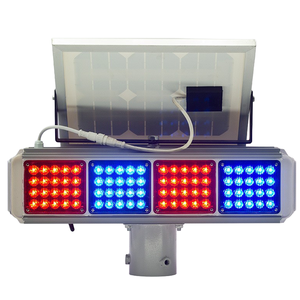
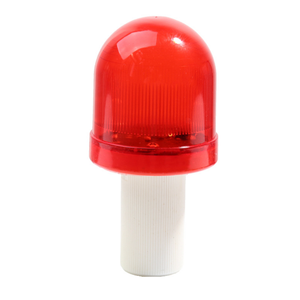
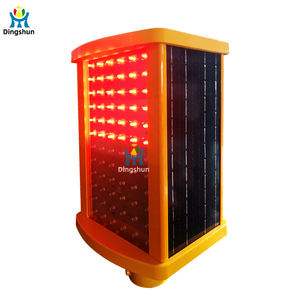
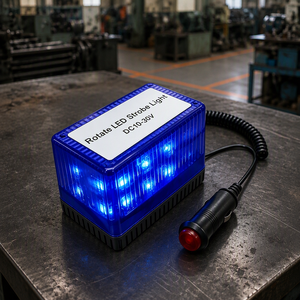
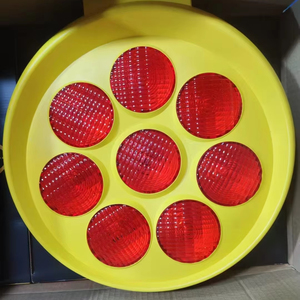
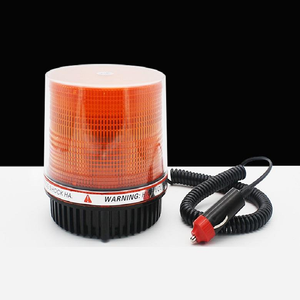
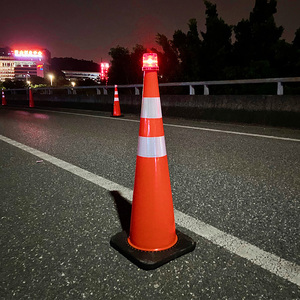
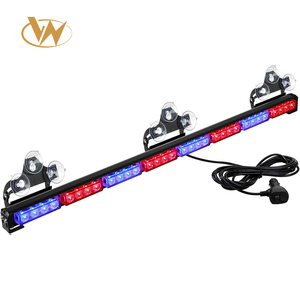
Procuring traffic warning strobe systems for South Korean roadway projects requires thorough navigation of the strict statutory technical codes enforced by the Ministry of Land, Infrastructure and Transport (MOLIT / 국토교통부) and the operational procurement mandates issued by Korea Expressway Corporation (EX / 한국도로공사). Unlike generic consumer illumination products, optical delineation and emergency warning beacons deployed across the Gyeongbu, Yeongdong, and Sejong corridors must satisfy precise criteria regarding luminous intensity distribution, chromaticity coordinates defined in the KS C standards, and structural resistance to violent typhoon conditions.
At the center of Korean highway safety compliance is KS C 7708 (Traffic Signal Luminaires) and the specialized guidelines for temporary and permanent road delineators. The optical efficiency requirements mandate that amber warning strobe lights achieve daylight punch-through visibility from an angle of not less than 15 degrees horizontal sweep, while sustaining night-time candela outputs that do not cause flash blindness to approaching drivers travelling at 110 km/h. To eliminate disabling glare while maximizing twilight alertness, optical systems must utilize Pulse Width Modulation (PWM) multi-stage dimming, automatically dropping luminance levels by 50% to 70% once ambient lux drops beneath twilight thresholds.
A critical technical differentiator when exporting to Korean infrastructure developers (such as Hyundai E&C, DL E&C, and POSCO E&C) is adherence to winter operational endurance. In the northern territories of Gangwon-do and Gyeonggi-do, winter ambient temperatures regularly plunge below -20°C, precipitating sharp terminal voltage collapses in inferior sealed lead-acid (SLA) batteries and conventional lithium NMC cells. Reliable factory engineering requires chemically stable Lithium Iron Phosphate (LiFePO4) or specialized low-temperature nickel-metal hydride battery configurations, combined with thermal runaway cutoff circuitry and high-transmittance Sabic UV-stabilized polycarbonate lenses that resist freeze embrittlement.
| Compliance Parameter | Korean Statutory Reference (MOLIT / EX) | Factory Specification Standard | Engineering Validation Metric | Procurement Status |
|---|---|---|---|---|
| Luminous Chromaticity | KS C 7658 / CIE 1931 Boundary (Amber/Red) | Strict Dominant Wavelength Binning (±2.5nm) | Konica Minolta Spectroradiometer Verified | Approved |
| Flash Frequency & Duty | MOLIT Work Zone Manual (50–60 or 120 FPM) | Microcontroller Quartz-Locked Solid-State Pulse | Oscilloscope & Photocell Waveform Audit | Approved |
| Hermetic Seal | KS C IEC 60529 (IP65 / IP68 Minimums) | Dual-Gasket Silicone Ultrasonic Fusion Welds | Continuous Submersion & Dust Pressure Tests | Approved |
| Sub-Zero Battery Float | EX Standard Workstation Protocol (-20°C) | Wide-Temp LiFePO4 with Integrated BMS Protection | Climate Chamber 72-Hour Freeze Discharge Cycle | Approved |
| Structural Aerodynamics | MOLIT Structural Design Criteria (Wind 45m/s) | Die-Cast ADC12 Aluminum & Heavy Wall PC | Wind Tunnel Simulated Dynamic Pressure Stress | Approved |
In accordance with the Korean Road Traffic Authority (KoROAD) safety guidelines, visual strobe units must not emit dispersed blue-white artifact fringes that can distort driver distance perception under severe maritime precipitation or dense Hwangsa (yellow dust) conditions. Our precision-molded polycarbonate Fresnel collimators channel maximum radiant intensity along the driver’s central line-of-sight while mitigating upward optical pollution. By restricting spatial divergence to targeted horizontal cones, we ensure optical warning recognition from distances exceeding 1,000 meters in high-speed expressway environments.
Analyzing the operational contexts where engineered strobe illumination directly addresses systemic transit risks, severe topography, and stringent urban infrastructure mandates.
Deployments along key thoroughfares like the Gyeongbu Expressway require synchronized portable strobes that alert motorists moving at over 100 km/h far ahead of active lane closures. Self-charging solar arrays eliminate cumbersome gasoline generator lines and localized carbon footprints in confined civil construction sectors.
Operating over treacherous passes along the Taebaek Mountain Range exposes road hardware to freezing moisture, snowdrifts, and dense valley fog. High-penetration amber LED strobes deliver the visual authority needed to guide drivers across steep curves where grid infrastructure is inaccessible.
High-capacity container freight terminals and intermodal yards require robust 12/24V magnetic strobe beacons and terminal gate warning units. Our corrosion-proof housings withstand caustic salt air, industrial vibrations, and heavy operational shock loads from non-stop straddle carrier operations.
South Korea’s proactive traffic initiatives (such as the Minsik-i Law) demand ultra-reliable, solar-assisted strobe units at crosswalks and eldercare perimeters. Dual-flash amber signals alert urban drivers well in advance, even during the heavy monsoonal cloud cover of the summer Jangma season.
Rapid transitions from brilliant open daylight to dark subterranean road corridors (the "black hole effect") require high-candela strobe delimiters mounted at tunnel portals. These fixtures cut through localized exhaust soot, guiding drivers safely into complex bore geometries.
From Korea Highway Corporation patrol vehicles to emergency recovery rigs, 36-inch and low-profile mini LED traffic advisor lightbars deliver unmistakable directional cues. High-strength neodymium mounts hold firm under emergency dispatch maneuvers on high-speed express routes.
South Korea stands at the global forefront of Cooperative Intelligent Transport Systems (C-ITS), building an integrated digital transit fabric along its national highway grid. This modernization drive has fundamentally shifted visual alerting requirements from simple flashing beacons to intelligent, synchronized, low-power warning arrays capable of interacting with automated operations.
1. RF-Mesh Synchronized "Optical Wave" Tapers: In advanced construction setups overseen by the Korea Expressway Corporation, unsynchronized, chaotic flashing creates visual fatigue and depth confusion for high-speed motorists. Modern procurement contracts prioritize strobe lights equipped with 2.4 GHz wireless transceivers that self-organize into unified traveling pulse waves. These synchronized directional sweeps clearly outline lane tapers, leading to measurable drops in work-zone intrusion incidents.
2. Maximum Power Point Tracking (MPPT) & Bifacial Solar Miniaturization: The Korean monsoon (Jangma) delivers weeks of unbroken overcast skies, quickly draining poorly engineered solar warning lights. Next-generation factory configurations integrate solid-state MPPT controllers that harvest ambient solar radiation even in low light, achieving over 98% tracking efficiency. Combined with low-iron tempered glass coatings, these units maintain continuous warning performance through up to seven consecutive days of overcast conditions without mains power.
3. Advanced Thermal Dissipation and Driver Protection: High-candela strobes generate localized thermal spikes within compact, hermetically sealed housings. Using high thermal conductivity die-cast aluminum heat sinks coupled directly to metal-core printed circuit boards (MCPCB), junction temperatures are kept well below 65°C under continuous duty. This thermal engineering preserves luminous efficacy and prevents the chromaticity shifts that commonly compromise inferior plastic fixtures over years of field exposure.
Direct manufacturing execution based in our state-of-the-art facility, producing tested, certified, and project-customized traffic strobe equipment exported to over 20 countries worldwide.
We eliminate trading intermediary costs by handling optical tooling, SMT circuit populating, aluminum casting, and final photometric verification directly at our dedicated facility.
Every unit can be tailored to meet MOLIT, EX, NHAI, or American/European tender drawings—including custom solar wattages, mounting clamps, lens sizes (200mm/300mm), and distinct flash patterns.
We match solar panel dimensions and battery reserves to your project's specific latitude, ensuring uninterrupted flash operations through extended monsoon periods and dark winter cycles.
Exporting to more than 20 countries, our logistics team provides secure wooden crating, complete factory acceptance test (FAT) documentation, and dependable shipping into major Korean ports like Busan and Incheon.
Straightforward answers addressing engineering criteria, local homologation, shipping logistics, and custom configurations for Korean civil construction contracts.
Our solar modules are built with oversized monocrystalline solar arrays paired with wide-temperature LiFePO4 batteries and dedicated MPPT charge controllers. Instead of relying on peak direct sunlight, our circuitry harvests charge from diffuse ultraviolet and infrared wavelengths during heavy cloud cover. This configuration delivers an autonomy ratio of 120 to 160 continuous hours—guaranteeing steady, reliable flash operation even across 5 to 7 consecutive days of rain.
Yes. As an established direct manufacturing plant, we regularly customize optical output parameters, mounting brackets, and signaling patterns. We can tune firmware to match official EX flash frequencies (such as 60 or 120 single/double pulses per minute) and build customized galvanized bracket fixtures suited to South Korean guardrails, safety barrels, and square support poles.
Standard lithium NMC batteries risk irreversible copper plating when charged in sub-zero environments. For installations facing severe sub-zero cold, we supply cold-rated LiFePO4 or low-temp NiMH energy storage systems managed by internal Battery Management Systems (BMS). The BMS limits low-temperature charge currents to safe parameters while allowing full strobe discharges down to -30°C without risk of voltage collapse.
Yes. Outdoor metal housings use marine-grade ADC12 aluminum treated with an anti-corrosion chromate conversion coat, followed by an architectural-grade polyester powder finish. Hardware fasteners are made of 304 or 316 stainless steel, and optical lenses are molded from high-impact Sabic polycarbonate with anti-UV coatings to prevent clouding, yellowing, or salt-fog crazing over years of service.
Every commercial export order includes a full shipment document suite: clean bills of lading, detailed packing lists, commercial invoices, Certificates of Origin (COO), and factory batch test reports covering photometric output, IP65/IP68 waterproof seals, and burn-in performance. These records help Korean importers and project engineers confirm project compliance without import delays.
We routinely supply functional evaluation samples to verified civil engineering contractors, government authorities, and industrial distributors. Sample units are shipped via express air freight (DHL/FedEx/EMS) directly to your engineering offices in Seoul, Busan, Daegu, or other centers, letting your technical team conduct comprehensive bench testing and field validation before committing to bulk manufacturing orders.
Submit your tender documentation, mounting specifications, or custom optical flash requirements. Our export engineering department will provide complete photometrics, battery autonomy profiles, and factory-direct commercial terms within 24 hours.
Send an Inquiry