
Engineered for seamless deployment across national expressways, mountainous corridors, high-altitude urban centers, and off-grid arterial roadways.
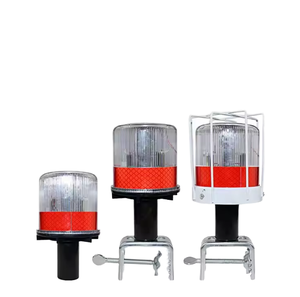
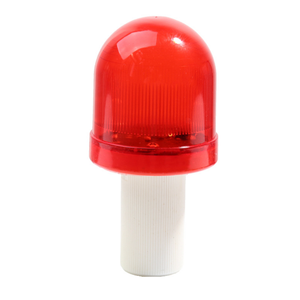
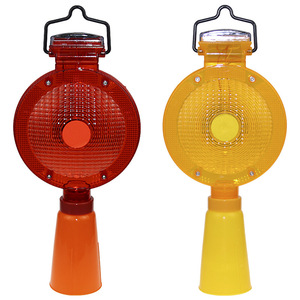
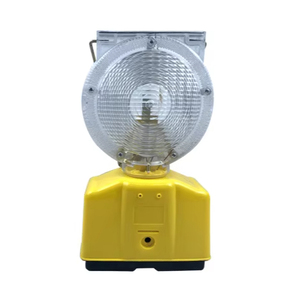
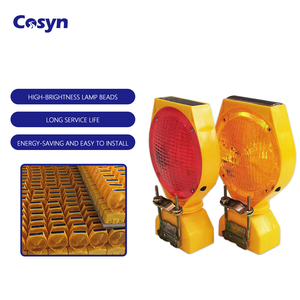
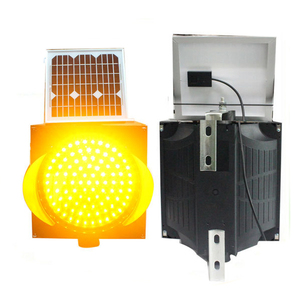

The Federal Democratic Republic of Ethiopia represents one of East Africa’s most dynamic transit landscapes. Driven by the national Growth and Transformation strategies and major capital road corridors administered by the Ethiopian Roads Administration (ERA), highway networks are expanding across extreme elevations, deep Rift Valley escarpments, and expanding urban metropolitan perimeters such as Addis Ababa, Hawassa, Adama, and Dire Dawa. However, expanding transit networks across severe topographic profiles—ranging from altitudes exceeding 2,500 meters down into arid lowlands—demands an uncompromising standard of traffic safety engineering.
Road safety signals and hazard flashers deployed along Ethiopian federal corridors must operate without failure under harsh environmental realities: high diurnal temperature swings, intense UV radiation at high altitudes, seasonal monsoonal downpours (Kiremt), fine volcanic silt, and vast remote regions lacking dependable electrical grid access. Enpowers International leverages specialized Indian manufacturing capabilities (Ahmedabad, Gujarat) to engineer, calibrate, and supply ultra-resilient solar traffic flashers, solar warning beacons, and hazardous-curve arrow blinkers specifically configured for the logistical realities of Ethiopia and the wider Horn of Africa.
Procuring traffic safety equipment in East Africa is not merely about sourcing off-the-shelf electronics; it requires an engineering fit for specific operational conditions. Below are the primary deployment matrices where our solar traffic flashers serve Ethiopian road contractors, international consulting engineers, and state transport bureaus:
Heavy cross-border freight traffic demands intense deceleration warnings, median flasher signals, and continuous amber warning blinkers at logistical toll points, weigh stations, and high-frequency bypass junctions.
Routes winding through the Semien ridges and Blue Nile Gorge face dense cloud immersion and abrupt hairpin curves. Solar chevron indicators and strobe beacons provide critical optical guidance through heavy highland mist.
Urban authorities in Addis Ababa, Dire Dawa, and Bahir Dar utilize synchronized 200mm and 300mm yellow solar flashers to govern pedestrian crosswalks, roundabout entries, and dedicated municipal transit lanes.
Long unlit stretches through the Awash Basin and Hawassa corridor experience mixed agricultural and vehicular traffic. High-candela amber flashers provide distant perceptual warnings, alerting speeding motorists to unexpected obstacles.
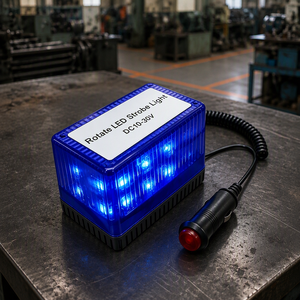
Contractors executing bridge strengthening or road widening projects rely on portable, zero-maintenance magnetic and cone-mounted solar strobe units to delineate hazardous construction zones without fuel generators.
Traffic engineering across Africa is transitioning rapidly from passive, painted metal signs to active, self-illuminated safety infrastructure. In Ethiopia, three distinct industry movements are driving the adoption of solar LED flashers:
Traditional sealed lead-acid (SLA) batteries often deteriorate prematurely under the high-altitude ambient heat and deep discharge conditions common in East African road installations. Leading road authorities now specify LiFePO4 battery modules. These provide 2,000+ deep charge cycles, superior thermal stability up to 60°C, and complete autonomy through prolonged overcast periods during the Ethiopian rainy season (Kiremt).
Modern road safety standards stipulate rigorous chromaticity coordinates and luminous intensity. By pairing precision-molded polycarbonate Fresnel lenses with high-output Osram or Epistar LED arrays, modern warning lights achieve daylight visibility exceeding 800 meters, while automatic pulse-width modulation (PWM) dims the output during total darkness to prevent driver glare.
Equipment security remains a primary engineering concern for roadside installations along remote highways. State-of-the-art solar blinkers feature unibody housings where the solar panel is framed into the chassis, wiring is completely concealed within structural mounting poles, and anti-theft mechanical fasteners deter vandalism without requiring complex field servicing.
Engineered directly to comply with Ministry of Transport specifications, Indian Road Congress (IRC), and international EN/ASTM road safety signaling parameters:
| System Parameter | Standard Configuration | High-Altitude / Heavy Highway Grade |
|---|---|---|
| Lens Diameter | 200 mm (8 Inches) Polycarbonate | 300 mm (12 Inches) High-Impact UV Polycarbonate |
| Luminous Output | > 8,000 mcd per LED (30–60 Hi-Flux LEDs) | > 12,000 mcd per LED (Hyper-Flux Matrix, >1000m visibility) |
| Solar Photovoltaic Cell | 10W – 15W High-Efficiency Monocrystalline | 20W – 40W Monocrystalline with tempered anti-reflective glass |
| Energy Storage Chemistry | 12V 7Ah Valve-Regulated Lead Acid / Li-Ion | 12.8V 12Ah – 24Ah Lithium Iron Phosphate (LiFePO4) |
| Autonomy Without Sun | 5 to 7 Continuous Days (Dark/Overcast) | 8 to 12 Consecutive Days under monsoonal cloud conditions |
| Flashing Rate & Duty Cycle | 50 – 60 Flashes Per Minute (FPM), 20% Duty Cycle | User-selectable: 40–60 FPM, dual alternate or synchronized |
| Ingress Protection Rating | IP65 Enclosure Protection (Dust & Low-Pressure Water) | IP66 Hermetically Sealed Optical Engine & Battery Core |
| Chassis & Hardware | Anti-corrosive Powder-Coated Mild Steel / Polycarbonate | Aviation-Grade Die-Cast Aluminum or UV Polycarbonate + SS304 |
Serving the Ethiopian market requires not only precision hardware engineering, but also an experienced international logistics and manufacturing backbone. Headquartered at GIDC Phase-1, Vatwa, Ahmedabad, India, Enpowers International operates an end-to-end production ecosystem dedicated to export-grade traffic electronics.
Every solar flasher, signal enclosure, and LED array is fabricated, assembled, and photometrically tested in our Ahmedabad factory. Buyers eliminate third-party broker markups and receive fully traceable production warranties.
We review technical tender specifications issued by national road authorities, providing custom solar array sizing, bracket adaptations, and specialized flash sequences designed to match project-specific engineer drawings.
With direct logistics corridors from the western ports of India (Mundra, Kandla, and Nhava Sheva) to the Port of Djibouti and onward transit to Addis Ababa (Modjo Dry Port), we manage comprehensive ocean and multimodal transit documentation.
Our solutions are deployed across over 20 nations and trusted by tier-1 infrastructure developers, Border Roads Organisation (BRO), and National Highways Authorities for demanding operational performance.
Practical technical and logistical answers regarding commercial import, tender specifications, and environmental suitability.
Ethiopia’s high plateau regions experience heavy rainfall and continuous overcast skies between June and September. Our systems are engineered with oversized monocrystalline solar modules and high-capacity LiFePO4 battery storage, providing 7 to 10 consecutive days of operational autonomy without direct sunlight. Integrated intelligent controllers adjust discharge curves to maintain steady optical flash intensity through extended overcast periods.
Ocean freight dispatches originating from western Indian ports (Mundra or Nhava Sheva) typically arrive at the Port of Djibouti within 8 to 14 days of sea transit. From Djibouti, customs clearance and inland road/rail container transport to dry ports such as Modjo or Comet (Addis Ababa) typically take another 5 to 9 days. We handle export packing, commercial invoices, packing lists, and Certificates of Origin to expedite Ethiopian customs clearance.
Yes. We regularly supply international highway projects built to tender specifications referencing ASTM, EN 12352, or specific authority guidelines. We can customize physical aperture diameters (200mm / 300mm), signal color parameters (amber, red, green, bidirectional arrow aspects), solar panel wattage, and structural pole-mount clamp brackets according to your contract drawings.
Addis Ababa and other Ethiopian highland regions sit at elevations above 2,300 meters, where ultraviolet index levels are exceptionally high. Our optical lenses and signal housings are molded from virgin, UV-stabilized Bayer polycarbonate. This prevents the yellowing, surface clouding, and embrittlement that often degrade inferior commercial-grade plastics over time.
We provide complete documentation packages for project consultants and supervising engineers. These include factory test certificates (FTC), photometric test reports, ingress protection (IP) verification sheets, comprehensive wiring schematics, and solar autonomy calculation worksheets configured for the geographical coordinates of your project site.
Connect with our technical export engineering desk today for bill-of-quantities (BOQ) reviews, factory-direct wholesale pricing, and tender specification support.