
Mains Powered LED Traffic Safety Direction Amber Turn Beacon Caution Car Warning Signal Arrow Sign Strobe Light Engineer Grade
- Grade: High-Intensity Engineering Grade
- Grid-Tied / Mains-powered operation
- Optical: Sequential amber directional pulse

Factory-direct supply tested under cyclic temperature fluctuations, heavy rainfall, and vibration-heavy expressway conditions across Greater Tokyo.
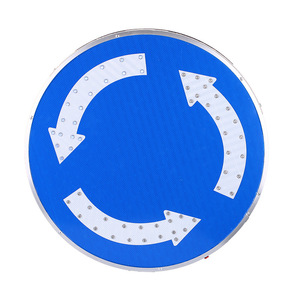
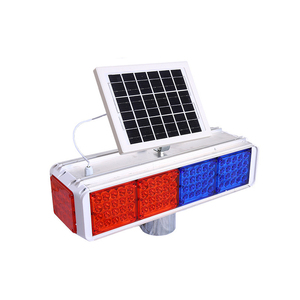
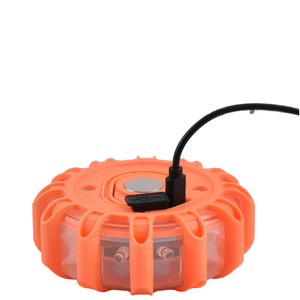
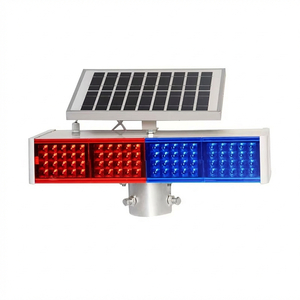
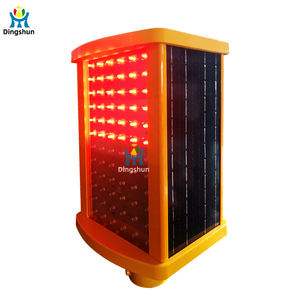
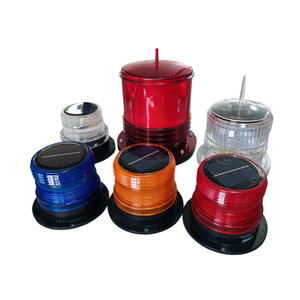
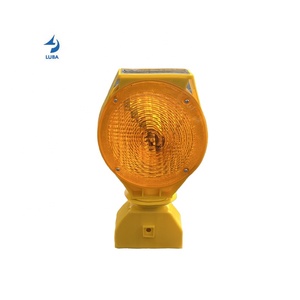
Deploying visual warning hardware across the Greater Tokyo Metropolitan Area demands adherence to the world’s most exacting civil and optical engineering specifications. Operating under rigorous municipal scrutiny—including the Tokyo Metropolitan Government's Bureau of Construction, the Metropolitan Expressway (Shutoko), and East Nippon Expressway Company (NEXCO East)—LED flashing beacons and solar blinkers must deliver infallible photometric performance despite relentless micro-vibrations, intense summer humidity, and seasonal typhoons.
Our direct manufacturing facility engineers specialized LED strobe units and chevron guidance blinkers designed specifically to satisfy strict Japanese JIS (Japanese Industrial Standards) benchmarks and MLIT safety advisories. By utilizing high-transmission polycarbonate lenses engineered with multi-faceted internal prism angles, our beacons ensure zero light scatter, eliminating visual disorientation for drivers while achieving high-lux focal projection visible up to 1.8 kilometers down multi-tier viaduct corridors.
Furthermore, our integrated solar-rechargeable units employ heavy-gauge monocrystalline PV modules coupled with deep-cycle Lithium Iron Phosphate (LiFePO4) or sealed gel battery storage systems. These assemblies are systematically stress-tested to provide a minimum of 5 to 7 days of autonomous continuous flashing under sustained overcast conditions characteristic of Kanto region monsoon weather patterns.

Precision visual mitigation deployed in high-density urban corridors, automated logistics hubs, and offshore industrial zones.
Navigating tight radius junctions and multi-level elevated corridors requires high-frequency amber and directional arrow beacons. Our IP65/IP66 enclosures withstand the constant acoustic shockwaves and mechanical vibration caused by 24/7 heavy transport traffic without solder joint degradation or optical alignment shift.
Salt-laden marine atmospheres at Tokyo Bay, Shinagawa piers, and Kawasaki industrial zones quickly oxidize inferior aluminum alloys. Our specialized marine-rated flashing navigation lights and solar warning strobes utilize ADC12 die-cast aluminum coated with marine fluorocarbon powder and 316-grade stainless steel fixings to prevent galvanic corrosion.
Modern distribution complexes surrounding Haneda and Ariake rely on autonomous guided vehicles (AGVs) and dense logistics traffic. Our mains-powered and solar directional warning systems regulate blind corners, overhead crane aisles, and active loading ramps to prevent blindspot collisions between forklifts and dock personnel.
Standard parameters guaranteed across our exported batches destined for Japanese contractors and infrastructure developers.
| Performance Dimension | Technical Benchmark Parameter | Application Compliance / Advantage |
|---|---|---|
| Optical Wavelength & CCT | Amber (590–595nm), Red (620–630nm), Green (505nm) | Certified compliant with MLIT traffic aspect color specifications and JIS D 5500 chromaticity thresholds. |
| Luminous Intensity | ≥8,000 mcd per LED cluster; >450 cd on-axis beacon | Ensures high-visibility contrast under extreme daylight bloom, driving typhoons, and heavy morning fog. |
| Enclosure Protection | Hermetically sealed silicone gasket, IP65 to IP68 rating | Complete isolation against fine particulate penetration and high-pressure water projection during expressway cleaning. |
| Power Management Unit | MPPT Smart PWM Solar Charging Module (Efficiency ≥96%) | Prevents over-discharge during prolonged cloudy stretches (Tsuyu rainy season), maximizing battery cycle lifespan. |
| Operating Temperature | -30°C to +75°C operational range testing | Guaranteed ignition during extreme sub-zero winter spells in Kanto mountainous passes and summer asphalt radiation. |
| Structural Resistance | Anti-wind load design rated up to 60 m/s gusts (Typhoon-grade) | Engineered for pole mounting along exposed coastal bridges, seawalls, and elevated expressway sign gantries. |
How next-generation LED beacons are evolving toward smart infrastructure, sustainable off-grid mobility, and zero-accident targets.
Tokyo Metropolitan Government's aggressive Net Zero Carbon roadmap requires infrastructure developers to transition from diesel generator-supported lighting to zero-emission solar LED systems. High-capacity LiFePO4 batteries coupled with high-efficiency PV arrays provide zero-carbon night-and-day warning capabilities with zero ongoing electricity costs.
Tokyo's modern smart corridors demand dynamic rather than static alerts. We manufacture flashing beacon arrays integrated with microwave Doppler speed radar modules that illuminate sequential warning patterns only when approaching vehicle velocity exceeds preset thresholds, significantly reducing driver habituation.
Under Japan’s National Resilience Program (Kokudo Kyojinka), road warning systems must survive seismic tremors. Our lightweight, shatterproof polycarbonate housings with internal shock-dampening brackets prevent falling hazards during major earthquakes, keeping key disaster evacuation routes functional.
Decades of dedicated precision engineering, zero trading intermediaries, and verified international infrastructure supply records.
Manufactured and assembled directly at our dedicated facility. From SMT LED placement to optical refraction testing and hermetic chamber sealing, 100% of the manufacturing chain is held in-house, eliminating intermediate broker markups.
Our solar and mains-powered traffic signal assemblies are built to demanding highway specifications (including NHAI, PWD, and BRO international equivalents) and readily configured to meet Japanese MLIT and EN-referenced project tenders.
With established supply lines across Asia, the Middle East, and the Pacific Rim, our logistics handling guarantees export-grade timber crating, transit shock protection, and turnkey customs technical documentation for seamless clearance into Japanese ports.
Full OEM/ODM engineering support. We supply custom pole clamps (48mm–114mm OD), gantry cantilever hardware, specialized flash sequences (single flash, double pulse, pseudo-rotary), and custom voltage inputs (12V DC, 24V DC, 100V–240V AC).
Addressing import compliance, testing certificates, electrical standardization, and lead times for Japanese civil engineering firms.