Precision-molded optical lenses, ultra-durable polycarbonate housings, and intelligent solar microcontrollers configured for high-traffic European and Anatolian corridors.
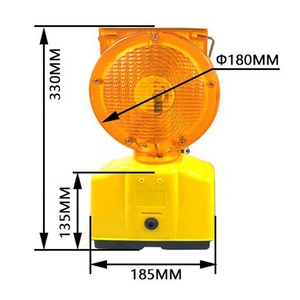
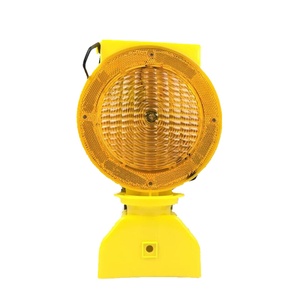

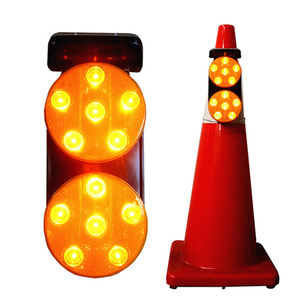
Procuring industrial hazard lighting across Istanbul requires adhering to rigorous engineering constraints driven by Turkey's General Directorate of Highways (Karayolları Genel Müdürlüğü - KGM) and Istanbul Metropolitan Municipality (İBB) specifications. Istanbul is an intercontinental transit hub marked by dense traffic, maritime air moisture, and active seismic mitigation corridors. Construction warning lights deployed here must not simply "flash"—they must achieve stringent photometric performance classifications under EN 12352 (Traffic Control Equipment - Warning and Safety Light Devices) while withstanding harsh environmental conditions.
From the damp, saline air surrounding the Yavuz Sultan Selim and 15 July Martyrs Bridges to high-speed wind shears on the Northern Marmara Motorway (Kuzey Marmara Otoyolu), standard consumer-grade signaling equipment fails rapidly. Early moisture ingress degrades circuit paths, while rapid battery depletion during cloudy winter months compromises driver reaction times. Engineering procurement managers must evaluate solar flashers and safety beacons based on three technical pillars: luminous intensity class, optical lens diffusion physics, and autonomous off-grid energy storage sizing.
Must meet EN 12352 Classes L2H, L8H, or L8M, ensuring luminance exceeds 1500 cd in daytime fog and drops dynamically at night to mitigate driver glare.
IP67 and IP68 hermetically sealed internal drivers prevent sulfurous automotive exhaust and salty Bosphorus mist from corroding solder connections.
Engineered for 41°N latitude irradiation curves, incorporating Grade-A monocrystalline silicon wafers paired with low-degradation LiFePO4 chemistry.
| Standard / Class | Effective Intensity (cd) | Optical Aperture | Typical Istanbul Construction Use-Case | Power Architecture |
|---|---|---|---|---|
| EN 12352 L2H | 50 cd (Continuous Amber) | Ø 180 - 200 mm | Urban trenching, pedestrian bypasses, Kadıköy sewer renewal | Solar PV + Ni-MH / Dry Cell |
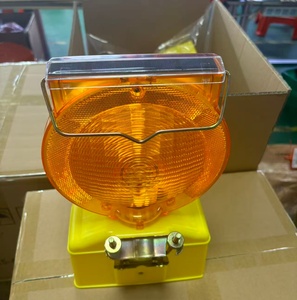
| EN 12352 L8H | > 1,500 cd (Day) / 250 cd (Night) | Ø 200 - 300 mm | High-speed lane tapers, Northern Marmara Otoyolu bridge approaches | Monocrystalline + Deep-Cycle LiFePO4 |
| EN 12352 L8M | > 500 cd (Moderate Strobe) | Ø 200 mm Array | Metro M11 Airport Line feeder repairs, surface logistics hubs | Solar Hybrid / 12V Battery Pack |
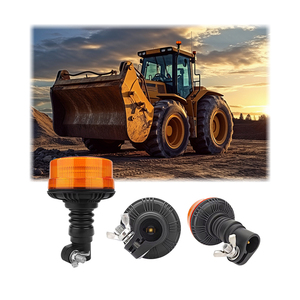
| ECE R65 Class 2 | Dual-Level Intensity Strobe | 360° Rotating Beacon | Heavy earthmoving equipment, dump truck convoys, mobile cranes | 12V/24V Multi-voltage direct tap |
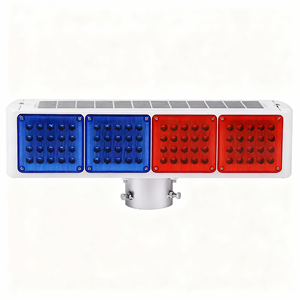
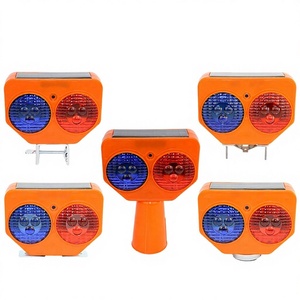
A critical consideration for Marmara transit contractors is the deployment of RF-synchronized sequential wave systems. When civil works close lanes on high-speed motorways like the D-100 (E-5) or the TEM (Trans-European Motorway), standard uncoordinated flashers generate visual chaos. A wall of random flashes creates "phantom brakings" and driver disorientation. Sequential wave flashers guide approaching motorists intuitively into the open corridor via progressive pulses of light, reducing collision impact risks in critical taper zones by up to 64%.
Tailored signaling equipment addressing the unique terrain, maritime climate, and heavy infrastructure challenges of Greater Istanbul.
High-speed logistics routes handle thousands of freight trucks daily. Road expansions and bridge deck repaving require L8H solar barricade flashers and sequential directional beacons that remain visible through dense autumn Advection fogs drifting in from the Black Sea.
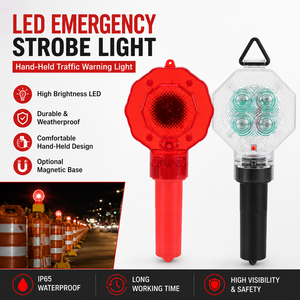
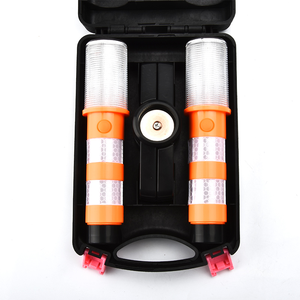
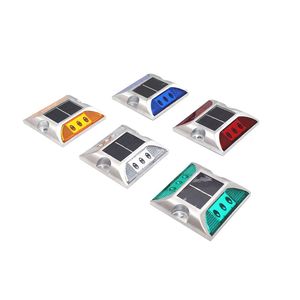
Under İBB's seismic renewal initiatives in Fatih, Zeytinburnu, and Bakırköy, space is limited. Compact magnetic disc flares, cone-mounted strobe lamps, and galvanized iron-frame barricade flashers safeguard narrow pedestrian channels and excavation pits without sprawling power cords.
Marine atmospheric salinity on bridge inspection piers, Galataport berths, and coastal seawall construction necessitates cast aluminum housings with anti-UV polycarbonate lenses. These units prevent yellowing, salt crusting, and circuit shorts under persistent moisture.
Why leading European and Turkish EPC infrastructure groups bypass trading intermediaries to source directly from our advanced production facilities.
Procure directly from our ISO 9001 certified electronics assembly and optical molding factory, cutting middleman markups and slashing container procurement budgets.
We modify flash cadences, bracket clamp dimensions (Ø 48–76mm), and lens color schemes to comply precisely with KGM, EN 12352, and CE road code directives.
Solar arrays and lithium battery storage capacities are matched to Istanbul's seasonal solar irradiation curves, delivering up to 10 days of continuous overcast backup.
Supplying road contractors across 20+ countries, we manage palletized export packaging, customs declarations, and express air/sea freight directly into Ambarlı or Istanbul Airport.
Direct technical and commercial answers for project engineers, safety auditors, and purchasing officers operating in Turkey.
Yes. Our equipment meets the photometric, structural, and chromatic requirements set forth by KGM (Karayolları Genel Müdürlüğü) and is CE certified under EN 12352. Complete test certificates, luminous intensity curves, and material warranties are supplied alongside our formal proposals.
Our solar flashers utilize high-conversion monocrystalline cells paired with intelligent Pulse-Width Modulation (PWM) or MPPT microcontrollers. Backed by high-density lithium (LiFePO4 or low-temp Ni-MH) batteries, they deliver 7 to 10 days of uninterrupted operation even during prolonged overcast and sub-zero weather.
Yes. We produce custom bracket assemblies designed to mount securely onto standard Turkish metal guardrails, precast concrete Jersey barriers, Ø 40-76mm circular steel pipes, and standard reflective traffic cones, ensuring vibration-free stability under heavy motorway wind buffeting.
We provide full export clearance support. Sea-freight shipments arriving at Ambarlı Port typically require 18–25 days transit time, while priority air shipments to Istanbul Airport (IST) take 4–7 business days. All products are crated in seaworthy, reinforced Euro-palletized packaging.
Independent lights create visual noise on high-speed motorways like the E-5. RF-synchronized flashers communicate on a dedicated short-range frequency to create an unmistakable "running wave" of amber light, visually channeling oncoming vehicles away from closed lanes and substantially reducing taper collisions.
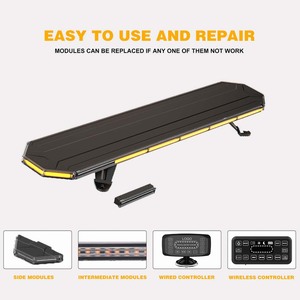
Every industrial light features a modular architecture. Photovoltaic modules, Fresnel outer lenses, LED driver boards, and battery cells can be individually swapped out in minutes on the job site using standard hex tools, minimizing work-zone downtime and long-term total cost of ownership.
Contact our technical export engineering desk today to review tender requirements, request photometric IES files, or receive volume factory pricing for your civil infrastructure projects.