
Direct from automated production facilities: high-flux LEDs, industrial monocrystalline modules, anti-UV polycarbonates, and intelligent power management configured for low-irradiance European winter climates.
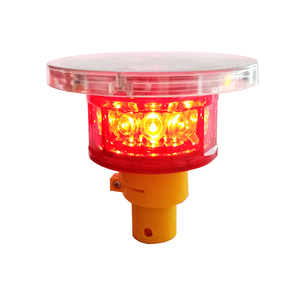
Built for continuous 24/7 or dusk-to-dawn duty. Features high-grade ADC12 aluminum housing, impact-resistant optical PC lens, and automated charging for persistent peripheral intersection signaling.
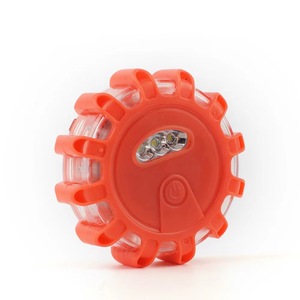
Multi-function rapid deployment flare with neodymium magnetic base and engineered elastomer jacket. Impervious to vehicle run-overs; vital for highway breakdown services and Paris municipal work zones.
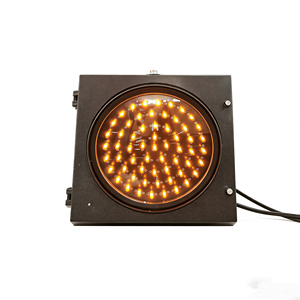
Engineered for urban intersections and tramway crossings where grid-backup failover is mandated by local transport authorities. Seamless automatic switching between solar photovoltaic and mains power.
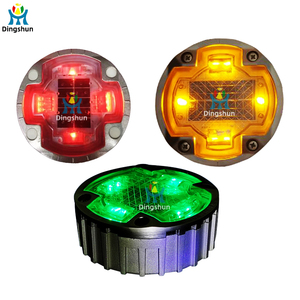
Heavy-duty cast aluminum delineator studs with recessed high-lux LEDs. Hermetically sealed against winter de-icing brine, heavy municipal bus traffic, and urban surface runoff on the Boulevard Périphérique.
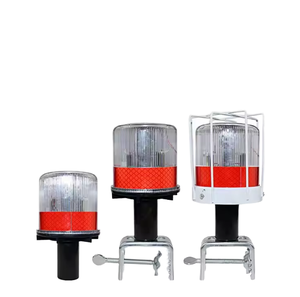
Rapid-lock bracket fits all standard French traffic cones and temporary barriers. 360-degree Fresnel visibility with smart dusk sensors, widely deployed across Grand Paris Express excavation perimeter enclosures.
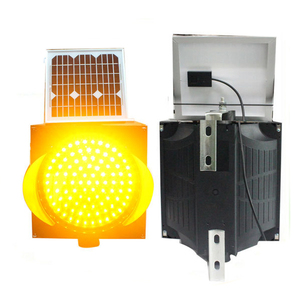
High-intensity 300mm aperture optical warning beacon delivering visible flash alert up to 1,200 meters. Features integrated solar bracket, military-grade PWM flash circuit, and robust anti-glare sun-hood.
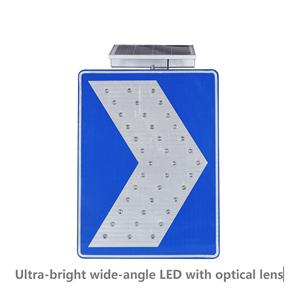
Engineered for sharp curve guidance on rural roads, motorway slip roads, and Paris tunnel entry corridors. Synchronized LED chasing or flashing sequence provides unmistakable advance geometric perception.
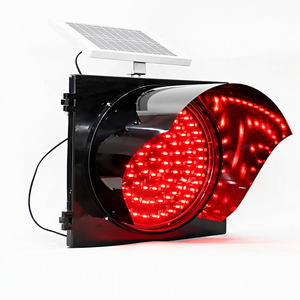
Uncompromising red hazard warning signal light for closed lanes, bridge piers, toll islands, and heavy machinery security. Equipped with high-conversion monocrystalline cell and intelligent low-lux charging controller.
An authoritative technical analysis of road safety modernization, low-carbon municipal mandates, and critical photovoltaic specifications required across the French capital region.
The urban mobility landscape across the Greater Paris region (Métropole du Grand Paris) is undergoing one of the most radical infrastructure transitions in Western Europe. Propelled by the stringent objectives of the Plan Vélo et Mobilités Actives 2021–2026, the ongoing multi-billion-euro expansion of the Grand Paris Express transit corridors, and the aggressive implementation of the Low Emission Zone (Zone à Faibles Émissions - ZFE-m), road designers, civil engineering conglomerates (such as Bouygues, VINCI, and Eiffage), and local administrative councils (Conseils Départementaux) are transitioning entirely away from conventional grid-tethered lighting. In this demanding ecosystem, autonomous solar delineator lights, active LED pavement markers, and intelligent hazard warning signals have shifted from optional accessories to mandatory baseline civil safety components.
Procuring solar road delineation systems for Paris demands a sophisticated appreciation of geographic, regulatory, and photopic realities. Situated at latitude 48.8566° N, Paris exhibits profound seasonal solar insolation disparities: while summer peak horizontal irradiance reaches 5.5 to 6.2 kWh/m²/day, the November-to-February winter average plummets to a mere 0.9 to 1.3 kWh/m²/day, often coupled with persistent overcast cloud decks, freezing drizzle, dense urban fog, and aggressive road-salting campaigns. Standard consumer-grade solar electronics engineered for tropical or arid climates suffer immediate catastrophic battery exhaustion and moisture ingress under these conditions. As a premier direct Chinese manufacturer with decades of specialized export experience, our dedicated production lines build delineator systems engineered specifically for severe northern temperate maritime climates.
Eliminating subterranean cabling, trenching, conduit permits, and transformer hookups reduces installation costs by up to 74% compared to traditional AC-powered road studs and beacons. In historical urban sectors like Paris Intramuros, where excavation is heavily restricted due to underground archeological strata and subterranean utility meshes, self-contained solar delineator systems provide instantaneous, maintenance-free, and CEREMA-aligned delineation without disrupting public space.
Navigating the rigorous framework set forth by AFNOR, the Ministry of Ecological Transition, and CEREMA technical circulars.
French public procurement rules (Code de la commande publique) leave zero margin for uncertified or substandard traffic equipment. When competing in public road tenders (appels d'offres) or supplying private highway concessionaires (such as Sanef, APRR, or Cofiroute), all solar active markers and delineator luminaires must meet documented European and French standard classifications:
| Standard / Regulation | Technical Scope & Target | Mandatory Performance Thresholds | Our Factory Certification Benchmark |
|---|---|---|---|
| NF EN 12352 | Traffic control warning devices • Flashing LED beacons & delineators | Classes L2H, L8H, or L8L; minimum luminous intensity, beam dispersion, continuous vs. pulsing cycle | Certified Class L8H (Day/Night visibility exceeding 1,000m); automated luminance dimming sensors |
| NF EN 1463-1 & 2 | Retroreflecting & active solar road studs (Plots rétro-réfléchissants et solaires) | Colorimetric coordinates (CIE chromaticity), photometric intensity at micro-angles, dynamic tire strike endurance | Full laboratory testing for Class BCR (Bi-directional), IP68 immersion rating, and 30-tonne static load test |
| CEREMA Guidelines | French Center for Studies on Risks, the Environment, Mobility and Urban Planning | Non-dazzling photometric limits for urban cyclists (0.5 to 2.5 cd) vs. highway delineation (5 to 15 cd) | Dual-optic calibrated secondary Fresnel lenses tailored specifically to pedestrian/cyclist eye-lines |
| Loi AGEC & Circular Economy | French Anti-Waste and Circular Economy Directive for Sustainable Public Procurement | Battery reparability, recyclability of aluminum castings, absence of toxic brominated flame retardants | 100% recyclable ADC12 aluminum chassis, certified RoHS compliant, and modular LiFePO4 replacement modules |
How proprietary optical compounding, high-yield monocrystalline silicon, and lithium iron phosphate chemistry overcome the 48.8°N winter energy trap.
Designing a solar delineator light for Paris is an exercise in extreme energy balancing. In the darkest stretch of December, average daily global solar radiation in Île-de-France drops below 1.0 kWh/m²/day, with ambient temperatures fluctuating between -5°C and +4°C. Conventional nickel-metal hydride (Ni-MH) or cheap ternary lithium (NMC) batteries suffer severe chemical sluggishness, high internal resistance, and terminal capacity fading when subjected to repetitive sub-zero thermal cycling.
We integrate high-efficiency (up to 23.4% conversion) anti-reflective monocrystalline silicon wafers that generate effective micro-current charging even under dense Parisian winter overcast and diffused drizzle conditions.
Our battery packs utilize premium-grade Lithium Iron Phosphate cells formulated with low-temperature electrolyte additives, guaranteeing stable discharge performance and over 2,500 life cycles from -20°C to +70°C.
Intelligent pulse-width modulation (PWM) controllers monitor solar charging curve trends daily. If low winter insolation persists, the microchip dynamically reduces standby current while preserving critical photopic visibility.
Internal electronics are fully vacuum-encapsulated in optical-grade silicone or high-impact modified epoxy resin, permanently preventing moisture condensation, electrolytic salt-fog corrosion, and frost heave.
Engineered for immediate field integration across diverse municipal, historical, and transit artery topographies.
Paris's expansive cycle networks along Rue de Rivoli, Boulevard de Sébastopol, and the Seine riverbanks require discrete, flush-mounted delineators that prevent cyclist trip hazards. Our solar-powered embedded studs (Aluminum Road Studs) provide anti-skid low-elevation guidance that guides cyclists through dimly illuminated junctions without glare.
With the Paris ring road speed limit lowered to 50 km/h and high lane densities, high-impact delineator beacons and chevrons (Solar Chevron Sign) delineate high-crash split bifurcations, tunnel portal approaches, and slip roads, drastically lowering secondary night collisions under heavy rain.
With dozens of subterranean metro station excavations active simultaneously across Saint-Denis, Villejuif, and Nanterre, contractors require mobile, ruggedized safety lighting. The Cone Blinker Lamp and Emergency LED Flare allow instantaneous deployment on jersey barriers and perimeter channelizers.
Around historic districts where deep asphalt digging is strictly vetoed by the Architectes des Bâtiments de France (ABF), self-powered solar warning delineators (Solar Warning Signal Lamp) maintain heritage architectural aesthetics while providing unmistakable hazard awareness around retractable bollards and tramway crossings.
Major logistics gateways in Roissy-CDG and Orly require heavy-duty traffic guidance. The 300mm Strobe Beacon and dual-source Hybrid Yellow Flashing Signal provide fail-safe channelization that safeguards toll island barriers from truck strikes.
France is world-renowned for its extensive use of roundabouts (over 65,000 nationwide). Installing our Red Flashing Warning Beacon on center islands and entry splitter curbs prevents late-night overshoot crashes across foggy rural and suburban corridors.
Eliminate intermediary trading margins and procure directly from our high-precision automated manufacturing facility.
From aluminum high-pressure die casting and precision CNC machining to high-speed SMT surface mounting and optical photometric potting, we control every critical phase under ISO 9001 quality controls.
We tailor optical lenses (Fresnel angles from 15° to 120°), LED color wavelengths (590nm Amber, 625nm Red, 505nm Traffic Green, 470nm Blue), battery autonomy sizing, and custom mounting clamps directly to your tender drawings.
100% of finished units undergo a minimum 72-hour continuous thermal and optical burn-in cycle, combined with pressurized sub-aquatic tank tests to guarantee IP68 ingress protection before export crating.
Experienced in containerized maritime shipping to Le Havre port and expedited air cargo directly to Paris Charles de Gaulle (CDG), complete with EUR.1, CE, RoHS, UN38.3 lithium battery transport declarations, and MSDS dossiers.
Clear, technically rigorous answers regarding local compliance, environmental laws, logistics, and field warranties.
Yes. Our products are engineered to satisfy the photometric, colorimetric, and mechanical thresholds defined in NF EN 12352 (for warning devices and flashing beacons) and NF EN 1463 parts 1 & 2 (for road studs). When preparing your response for a municipal or DIRIF tender, our engineering team can provide comprehensive technical submittal files (Fiche Technique), CE certificates, RoHS laboratory test reports, and third-party photometric test verification to ensure swift approval by project supervisors.
We design our power electronics based on the historical solar insolation minimums of Paris (approx. 0.9 kWh/m²/day in December). By coupling high-gain monocrystalline solar cells that harvest diffuse ambient UV with ultra-low internal resistance LiFePO4 batteries and algorithmic PWM current controllers, our delineators maintain a proven autonomy of 10 to 15 consecutive overcast days without direct sunlight exposure.
To comply with the French Circular Economy Act (Loi AGEC), our pole-mounted beacons, hazard warning lights, and chevron signs feature modular, serviceable battery compartments with military-grade silicone sealing gaskets. This allows maintenance personnel to replace battery cells after their standard 5-to-8 year lifespan without discarding the optical and aluminum housing. For embedded road studs exposed to extreme 30-tonne mechanical shear, we utilize completely vacuum-encapsulated IP68 construction for uncompromising structural durability.
For standard configurations, factory production lead time is typically 12 to 18 business days. For volume commercial shipments, we offer containerized ocean freight to Port of Le Havre (Haropa Port) with transit times of 28 to 35 days, followed by direct bonded truck delivery to your Paris-area depot. For critical infrastructure deadlines or replacement components, we arrange expedited air cargo directly to Paris Charles de Gaulle (CDG) within 5 to 7 transit days. DDP (Delivered Duty Paid) terms are fully supported.
Yes. Our embedded delineator studs are die-cast from marine-grade ADC12 or A380 aluminum alloy treated with specialized fluorocarbon or anodic passivating coatings. The optical lenses utilize Bayer polycarbonate or sapphire-hardened borosilicate glass designed with tapered 30-degree inclined ramp angles, allowing snowplow rubber-edge blades and heavy municipal road sweepers to slide effortlessly over the fixture without gouging or dislodging the unit.
Partner directly with China's leading certified solar delineator manufacturer. Connect directly with our international engineering desk for comprehensive technical dossiers, custom photometric photometric files (.IES), and competitive project quotations for your next Paris infrastructure deployment.