Engineered for high-risk intersections, commercial access control, emergency roadworks, and maritime corridors across Greater Mumbai and global transshipment hubs.
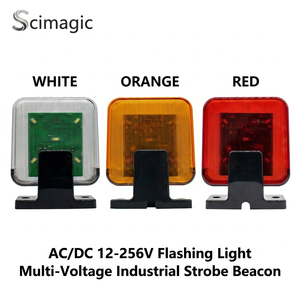
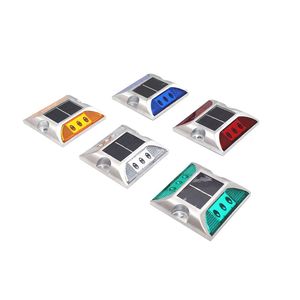
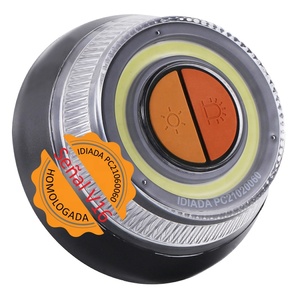

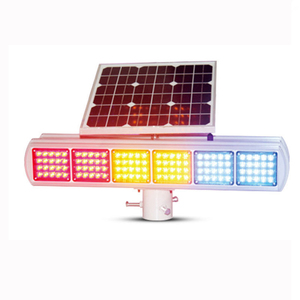
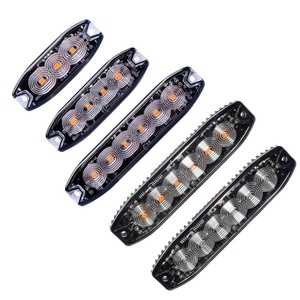
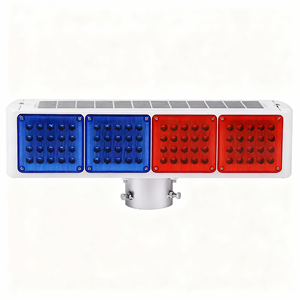
Deploying visual signaling hardware within the Mumbai Metropolitan Region (MMR) involves counteracting aggressive environmental forces: saline sea mist along Marine Drive and Bandra-Worli Sea Link, sustained monsoon cloud cover during June-September, and thermal dissipation challenges exceeding 42°C. A standard commercial beacon fails rapidly when exposed to cyclic relative humidity exceeding 90%. As premier solar warning flasher manufacturers and exporters serving the Mumbai export hub, our production methodology integrates advanced engineering safeguards into every luminaire.
We implement anti-UV polycarbonate lenses (Lexan EX93320 Grade) resistant to yellowing, hermetically enclosed extruded aluminum bodies (LM-6 grade) that resist coastal chloride pitting, and intelligent pulse-width modulation (PWM) constant-current driver circuits. The integral monocrystalline solar modules provide conversion efficiencies above 21.5%, paired with high-rate Lithium Iron Phosphate (LiFePO4) energy cells that support over 3,000 thermal cycles. Even during Mumbai's prolonged overcast cycles, our intelligent flash drivers automatically downshift duty cycles while maintaining required candela output (over 800 cd in amber wavelengths), ensuring continuous roadside alerts.
Our operational presence bridges the high-velocity manufacturing corridor between GIDC Vatwa and the logistics arteries of Nhava Sheva (JNPA Port), empowering seamless marine consignments across the Middle East, East Africa, Southeast Asia, and European freight gateways.

A granular side-by-side technical evaluation designed for highway infrastructure contractors, municipal planners, and project procurement engineers.
| Performance Criterion | Enpowers Solar LED Blinker Units | Conventional Grid-Tied (AC) Blinkers | Standard Low-Grade Solar Clones |
|---|---|---|---|
| Operating Autonomy | 7 to 10 Continuous Overcast Days (LiFePO4) | 0 Days (Requires uninterrupted AC feed / Genset) | 24 to 36 Hours (Vulnerable to Lead-Acid sulfation) |
| Photometric Compliance | Meets IRC:SP:84, NHAI & European EN 12352 | Limited by line-voltage fluctuations | Non-standard scatter lens; uneven lux fall-off |
| Housing Anti-Corrosion | Chromate-Treated LM6 Aluminum + Marine Powder Coat | Pressed mild steel; rusts in 12 months near coast | Recycled ABS brittle to coastal UV radiation |
| Civil Installation Cost | Zero Trenching, zero cabling, zero right-of-way cuts | Heavy civil trenching, cable conduit, power meters | Low unit price, high premature replacement costs |
| Microcontroller Driver | Intelligent PWM / MPPT auto-dimming ambient sensor | Basic resistor-driven stepping or static flasher | Non-stabilized linear driver prone to heat burnout |
Engineered to resolve real-world traffic management bottlenecks across municipal expressways, maritime freight gates, and high-density transport links.
Deployments on the Mumbai Coastal Road, Eastern Freeway, and Trans-Harbour Link (MTHL Atal Setu) demand IP68 sealed optical engines. Our dual-sided amber blinkers pierce heavy monsoon precipitation and salt mist, alerting drivers at high-speed bifurcation loops, lane divisions, and flyover approach terminals.
Serving JNPA (Nhava Sheva) and Mumbai Port Trust terminals, heavy multiaxle freight movements require continuous optical guidance. Our heavy-duty aluminum strobe blinkers and illuminated solar road studs demarcate hazardous blind bends, weighbridge queues, and container staging checkpoints under continuous 24/7 operating cycles.
With active elevated and subterranean metro construction throughout Mumbai and Thane, rapidly mobilizable solar arrow blinkers and portable amber beacons guide congested urban corridors. No trenching or utility coordination is needed, reducing work-zone incursions and zero-hour deployment delays.
Understanding the shift toward sustainable, resilient, and IoT-integrated optical safety infrastructure in Western India.
Tender guidelines issued by the National Highways Authority of India (NHAI) and Maharashtra State Road Development Corporation (MSRDC) strictly favor standalone renewable signaling. Eliminating copper cabling runs reduces both initial capital expenditure and line losses while avoiding copper theft across isolated highway sectors.
Tropical precipitation intensities in the Konkan belt necessitate an upgrade from glued sealings to ultrasonic laser-welded polycarbonate enclosures and IP67 breathers. Dual-stage venting balances internal pressure differentials without permitting maritime moisture entry, eliminating condensation on refractive optical lenses.
Mumbai is India's principal export platform for infrastructure equipment. EPC contractors undertaking multilateral road programs in the Gulf Cooperation Council (GCC) and African development zones utilize our custom-configured export packages, integrating localized mounting brackets, dual-voltage charging, and internationally harmonized EN 12352 / MUTCD chromaticity specs.
Built under strict ISO-9001 quality regimes with full in-house assembly, environmental burn-in, and photometric testing.
Manufactured to rigid specifications stipulated by the National Highways Authority of India, Public Works Department, and Border Roads Organisation for extreme operating environments.
Produced in our advanced manufacturing facility at GIDC Phase-1, Vatwa, Ahmedabad. Zero intermediaries, zero trading markups, and end-to-end trace control across every SMT circuit board.
Configurable in 100mm, 200mm, 300mm, and 400mm aspect apertures. Available with amber, red, green, bidirectional arrow, or cross glyphs engineered to tender drawings.
Strategic export coordination through Nhava Sheva (JNPA) and Mumbai Air Cargo. Professional export palletization, container stuffing, fumigation, and country-of-origin documentation.
Essential guidance covering technical requirements, tender specifications, battery lifecycle, and export delivery processes.
Our systems combine high-efficiency monocrystalline solar panels with oversized Lithium Iron Phosphate (LiFePO4) storage banks. Microprocessor controllers dynamically adjust flash discharge current during prolonged overcast spells, providing 7 to 10 days of continuous operation without direct sun.
Yes. Our flashers comply with Indian Road Congress (IRC:SP:84 and IRC:67) codes, Ministry of Road Transport and Highways (MoRTH) standards, and NHAI specifications. For export contracts, we can adapt our assemblies to European EN 12352 or US MUTCD specifications.
Solar blinkers are ideal for bypasses, flyover forks, arterial dividers, and construction detours where bringing grid power involves trenching, metering delays, and ongoing utility bills. Mains AC blinkers are better suited to sheltered urban intersections under heavy tree canopies with existing traffic control cabinets.
Every export shipment from Nhava Sheva (JNPA) includes complete factory acceptance test (FAT) certificates, Certificate of Origin (COO), commercial invoice, detailed packing list, Bill of Lading, and battery MSDS/UN38.3 test documentation for international sea or air freight handling.
Our high-flux OSRAM/Lumileds LED arrays deliver an MTBF exceeding 100,000 hours (more than 10 years of typical flashing duty). The integrated LiFePO4 cells maintain over 80% capacity after 3,000 charge-discharge cycles, outperforming conventional sealed lead-acid batteries by more than three to one.
Please share the flasher lens diameter (e.g., 200mm or 300mm), signal color aspect (amber, red, green, or directional arrow), required backup autonomy in days, pole mounting style, total quantities, and target delivery location or destination port.
Connect directly with our engineering sales desk for design calculations, project tender sheets, photometric test reports, and competitive factory-gate commercial quotes.
Send an Inquiry