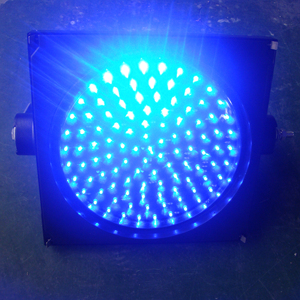
Traffic Light 300mm Solar LED Blue Flashing Warning Light Road Blinker
Rugged 300mm optical lens flasher with dedicated solar PV and high-output blue LEDs. Ideal for law enforcement checkpoints, highway police cordons, and river crossing warnings.

Manufactured under stringent ISO tolerances and designed to provide complete zero-maintenance illumination across off-grid departmental highways, agricultural logistics junctions, and coastal transit nodes.
Rugged 300mm optical lens flasher with dedicated solar PV and high-output blue LEDs. Ideal for law enforcement checkpoints, highway police cordons, and river crossing warnings.
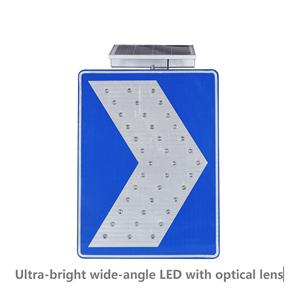
Ultra-bright directional dynamic arrow sign utilizing high-grade reflective backing paired with flashing diodes for extreme weather guidance along sharp highway curves.
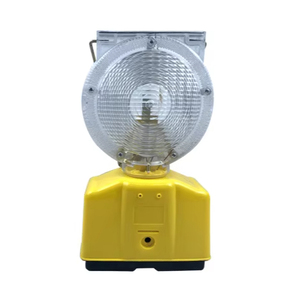
Impact-modified thermoplastic beacon designed for mounting on traffic cones, water barriers, and perimeter barricades during municipal road paving and infrastructure upgrades.
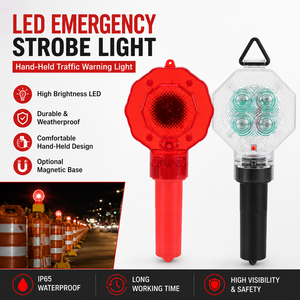
Multi-functional tactical strobe light engineered for rapid deployment during transit breakdowns, nocturnal paving operations, and emergency forestry cordoning.
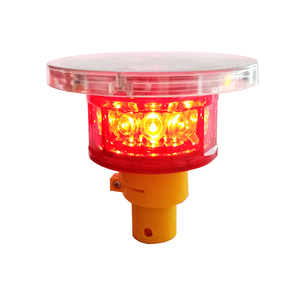
Cast aluminum and UV-stabilized polycarbonate chassis offering continuous 360-degree yellow amber flashing for highway medians, pedestrian crossings, and school zones.
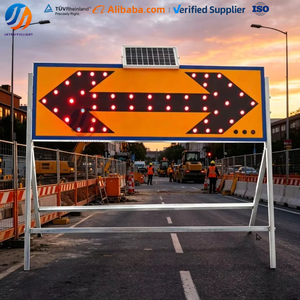
Engineered for acute hairpin bends and off-ramps. Equipped with synchronous red flashing sequences that dramatically reduce run-off-road collisions in poor visibility conditions.
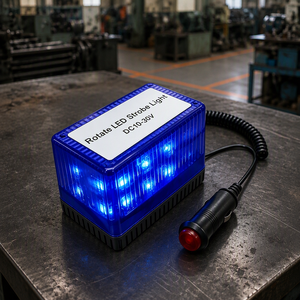
High-candela strobe beacon with optimized optical fresnel diffusion. Emits instantaneous warning cues visible from distances exceeding 1,000 meters in heavy fog and rain.
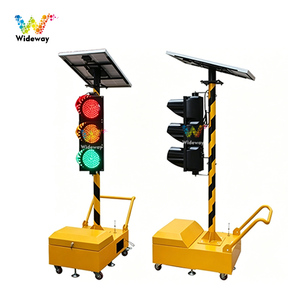
Integrated trolley-mounted wireless mobile signal light system. Uses RF synchronization over 200-800 meters for single-lane alternating flow controls on arterial infrastructure projects.
From Montevideo's bustling port access nodes to the agricultural arterial corridors of the interior, our solar warning beacons solve distinct physical, climatic, and logistical infrastructure challenges.
Uruguay's national highways channel high volumes of heavy transport freight connecting grain terminals, pulp processing hubs, and Mercosur transit corridors. Long rural stretches lack commercial electrical grid tap points. Solar amber warning blinkers provide dependable demarcation at unsignalized grade junctions, passing lane merges, and high-speed rural intersections without costly underground trenching.
The transit of timber to large pulp operations and grain to regional processing plants subjects departmental bypasses to intense vehicular stress. Solar chevron direction indicators and high-candela strobe beacons alert heavy transport drivers well in advance of narrow culverts, localized bridges, and sharp geometry transitions across the Tacuarembó, Rivera, and Durazno departments.
Maritime installations including the Port of Montevideo, Nueva Palmira, and the coastal routes along Maldonado and Rocha demand hardware impervious to marine salt mist and driving humidity. Our warning beacons employ UV-stabilized polycarbonate and marine-grade, powder-coated aluminum housings that resist premature degradation and retain lens transmission under coastal stress.
Urban planning agencies in Montevideo, Canelones, and Salto increasingly prioritize pedestrian safety around schools, clinics, and residential crossings. Solar flashing amber signals provide elevated contrast during dusk and dawn, reminding private passenger vehicles to reduce speed in strict alignment with local speed-calming mandates.
Under highway concession contracts, rehabilitation crews require rapid, portable safety signaling to demarcate single-lane flow and contraflow diversions. Deployable barricade beacons and temporary wireless synchronized lights allow road crews to establish safe working perimeters quickly, minimizing operational risk for both workers and motorists.
Severe convective storms and sudden squalls (Sudestadas) frequently disrupt regional electrical utilities. Our completely self-contained solar warning beacons remain fully operational during municipal grid failures, maintaining round-the-clock hazard visibility when road conditions are at their most hazardous.
Understanding how sustainability initiatives, concession models, and smart signaling priorities are reshaping highway specification requirements throughout the country.
Uruguay continues to lead Latin America in renewable energy integration. This environmental focus directly shapes roadside safety standards set by the Ministry of Transport and Public Works (MTOP). Highway authorities actively select 100% self-sustained photovoltaic signaling devices to avoid grid draw and eliminate recurring energy costs across multi-year concessions.
With private concessionaires managing key national arteries, contract clauses impose severe financial penalties for high accident rates and dark-signal downtime. Concessionaires prioritize beacons built with high-cycle Lithium Iron Phosphate (LiFePO4) storage and monomorphic solar arrays capable of sustaining reliable flash sequences through 7 to 10 consecutive overcast days.
Modern roadside specifications demand automatic dimming circuits that balance optical output across changing ambient conditions. Modern beacons flash at maximum output under blinding midday sun, yet reduce intensity at night to avoid dazzling oncoming drivers while extending stored battery reserves.
Deploying road safety products internationally requires strict alignment with rigorous physical, electrical, and optical standards. We build and test each beacon enclosure to satisfy international highway guidelines, delivering predictable field performance across heavy industrial, municipal, and rural installations.
Whether configuring 200mm or 300mm lens heads, our integrated manufacturing lines ensure your tender documents are met with complete technical conformance.
| Engineering Attribute | Standard Factory Configuration | Tender Customization Option |
|---|---|---|
| Luminous Intensity | ≥ 400 - 800 cd (High-flux Epistar / Bridgelux LEDs) | Custom candela profiles up to 1,200 cd |
| Solar Panel Type | Mono/Polycrystalline Silicon (10W - 30W grade) | Up-sized wattage for low-insolation zones |
| Battery Storage | High-cycle LiFePO4 or Deep-Cycle Sealed Lead Acid | Extended autonomy banks (up to 15 days) |
| Housing Material | UV-Stabilized Polycarbonate / Die-Cast Aluminum | Marine powder-coated anti-corrosion finish |
| Ingress Protection | IP65 hermetically sealed optical chamber | IP68 sub-modules for flood-prone corridors |
| Flash Frequency | Standard 40 - 60 flashes per minute (±5%) | Programmable strobe or steady pulse rates |
| Color Aspects | Amber (590nm), Red (625nm), Blue, Green | Bi-color or synchronized alternating heads |
Drawing on an established manufacturing facility in Ahmedabad, India, we offer complete quality control from the raw diode board assembly to final weather chamber testing.
By eliminating trading intermediaries and speculative export agents, you purchase directly from the primary manufacturing line. This factory-direct supply provides transparent pricing structures that help contractors maintain healthy margins in competitive public and private bidding.
Our engineering division builds signal products to conform to rigorous specifications from road authorities including NHAI, PWD, and BRO, with adaptable electrical and dimensional designs suited for American and European-influenced road codes across the Americas.
With an established export presence spanning more than twenty international destinations, our shipping logistics team manages seaworthy crating, certified container load planning, and export documentation to ensure clear, trouble-free customs clearance at the Port of Montevideo.
We supply complete, field-ready systems including matched solar panels, durable pre-drilled bracketry, internal charge regulators, and pre-wired battery modules. This turnkey design prevents installation confusion and avoids time-consuming sourcing delays on active road corridors.
Before packing, every production batch completes strict environmental evaluations: ingress immersion, high-vibration stress testing, thermal cycling, and continuous 72-hour burn-in cycles to confirm flawless performance upon site arrival.
For regional traffic product distributors and system integrators throughout Uruguay and the Southern Cone, we provide custom pole-mountings, tailored flash controllers, custom shell colors, and specialized client branding.
Key information regarding battery runtime, port transit logistics, optical standards, and site-specific solar performance configurations.
Units destined for Uruguay are calibrated around winter insolation values typical of the Southern Cone (June to August). Solar arrays and battery storage are systematically scaled to deliver 7 to 10 days of continuous operation without direct sunlight, ensuring consistent flasher output through extended cloud cover and winter rain.
Standard manufacturing times for production volumes range from 12 to 18 days following engineering drawing sign-off. Ocean freight transit from Nhava Sheva (JNPT) or Mundra to the Port of Montevideo typically takes approximately 32 to 42 days. For urgent project phases or tenders, expedited air freight is readily supported.
Yes. Our flashing signal heads are produced in 200mm and 300mm standard diameters using high-grade optical lenses that meet internationally recognized chromaticity and candela distribution benchmarks. These specifications align cleanly with the road safety requirements mandated across Uruguay by MTOP and regional intendencias.
Solar DC units are the preferred, cost-effective solution for arterial highways, rural junctions, and open work zones where mains power is absent or trenching costs are prohibitive. Mains-powered AC units are recommended for shaded urban corridors, tunnels, or intersections with dense tree canopies that obstruct photovoltaic panels.
For installations along coastal routes and port approaches (such as Rambla de Montevideo, Maldonado, and Colonia), we supply enclosures molded from UV-stabilized, impact-resistant polycarbonate or marine-grade coated aluminum. All external hardware and bracket assemblies use grade 304 or 316 stainless steel to eliminate galvanic oxidation.
To prepare an accurate proposal, please specify the required aspect color (amber, red, or blue), lens diameter (200mm or 300mm), target mount type (tubular pole diameter, flat bracket, or gantry arm), required battery autonomy, and project quantity. If you have an active tender specification, sharing it directly allows our team to match each clause.
Connect directly with our export engineering desk to receive factory quotations, optical data sheets, and comprehensive shipping timelines for road safety and infrastructure developments across Uruguay.
Send an Inquiry