
Field-proven solar LED flashers, chevron direction indicators, and hazard warning strobes configured specifically for the harsh climate and severe traffic corridors of the Russian Federation.
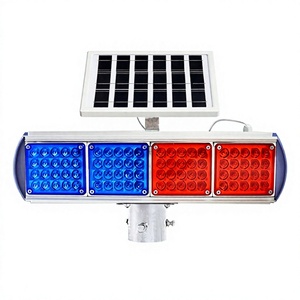 Police & Toll Barricade
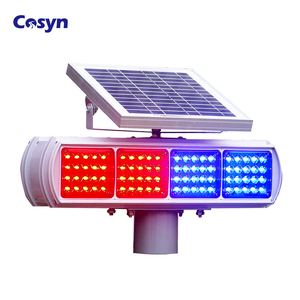 Dual-Faced Strobe
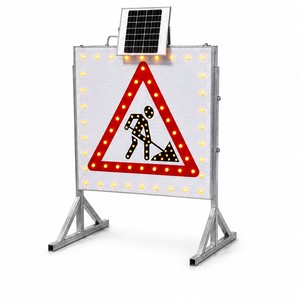 Work Zone / Pedestrian
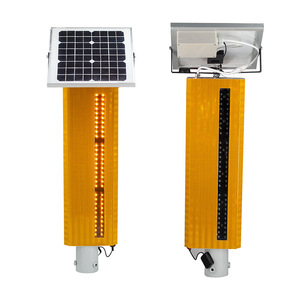 Highway GPS Sync
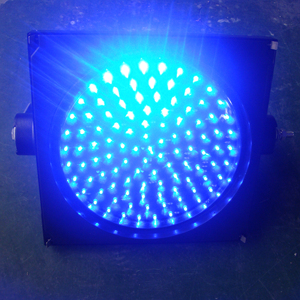 300mm Industrial
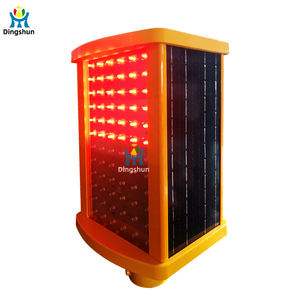 High-Intensity Strobe
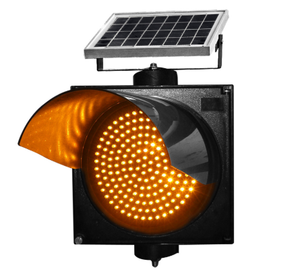 IP68 Submersible
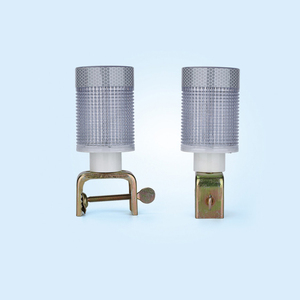 Intelligent Optical Sensor
Deploying solar-powered traffic management infrastructure across Russia demands an uncompromising approach to electromechanical resilience. Covering eleven time zones with climatic environments shifting from humid continental to subarctic and permafrost zones, conventional commercial solar flashers quickly fail due to electrolyte freezing, condensation ingress, brittle housing fracture, and protracted periods of solar starvation. Our manufacturing plant engineers dedicated off-grid road beacons engineered to thrive under stringent regional standards, specifically GOST R 52289-2019 (Rules for application of road signs, markings, signals and traffic devices) and GOST R 52290-2004.
When engineering warning devices for the Russian road network—spanning high-speed toll routes like the M-11 "Neva", heavy transport rings like the TsKAD (Central Ring Road), and trans-continental corridors such as the M-12 "Vostok" and R-255 "Siberia"—optical efficiency must marry thermal protection. Low sun elevation angles in high latitudes (ranging from 55°N in Moscow to well above 65°N in Yamalo-Nenets and Yakutia) cause significant photovoltaic output degradation. Our solar arrays are paired with customizable steep-tilt brackets (calibrated at 55° to 70° inclinations) designed not only to maximize diffuse winter irradiation but also to prevent thick snow crust accumulation that cripples ordinary solar panels.
Technical Superiority Insight: High-latitude winter photoperiods in Central and Eastern Russia routinely drop below 6 hours of indirect sunlight daily. Our proprietary MPPT (Maximum Power Point Tracking) micro-controllers dynamically scale pulse frequencies between 40 to 60 flashes per minute according to battery depth-of-discharge, ensuring zero interruption of hazard warnings even through 12 consecutive days of blizzard and heavy cloud cover.
The standard lead-acid and cheap ternary lithium (NMC) batteries frequently deployed in equatorial markets experience fatal capacity degradation below -10°C, suffering permanent dendritic short circuits during low-temperature charging cycles. To resolve this, our factory equips cold-region blinkers with high-stability Lithium Iron Phosphate (LiFePO4) with integrated thermo-resistive silicone heating jackets, or advanced Lithium Titanate (LTO) battery cells capable of unassisted, continuous charging and discharging down to -40°C and -50°C without micro-structural breakdown.
The structural framework relies on virgin, non-recycled Bayer Makrolon polycarbonate or corrosion-resistant marine-grade die-cast aluminum coated with electrostatically applied UV-defying powder polymers. This structural integrity guarantees that heavy snow plowing vibrations, airborne chloride de-icing compounds, and sub-zero wind loads up to 150 km/h do not cause structural detachment, micro-fracturing of the optical fresnel lenses, or seal deflation.
Russian municipal road services, regional Avtodor departments, state federal agencies (Rosavtodor), and industrial concessionaires utilize our solar LED warning units across high-risk transportation nodes where grid connectivity is commercially unviable or geographically impossible.
Unsignalized U-turns, median transitions, and overtaking danger spots along the M-5 "Ural", M-7 "Volga", and M-10 require continuous high-candela amber and red-blue strobe alerts to mitigate high-speed collisions in zero-visibility blizzard conditions.
In the Nenets Autonomous Okrug, Krasnoyarsk Krai, and Yakutia, temporary ice routes ("Zimniks") operate without electrical networks. Autonomous GPS-synchronized sequential blinkers guide heavy freight across rivers and frozen permafrost crossings safely.
Implementation of pedestrian safety warning light systems (GOST T.7 type signals) at unsignalized zebra crossings near school districts, suburban junctions, and regional towns throughout the Moscow, Leningrad, and Novosibirsk administrative regions.
Perimeter protection, open-pit haul truck crossings, and dangerous rail-road grade intersections across the industrial hubs of Norilsk, Magnitogorsk, Kuzbass, and Kemerovo where uninterrupted 24/7 autonomous warning is mandated by occupational safety codes.
The demand landscape for solar warning blinkers in Russia has shifted rapidly over the past three years, driven by strategic national initiatives, regulatory evolution, and severe climate operating lessons learned during massive transit expansion.
Under the federal project "Safe and Quality High-Speed Roads" (Безопасные качественные дороги), the Russian government has aggressively funded automated roadside hazard mitigation. Eliminating accident clusters (места концентрации ДТП) mandates the rapid deployment of autonomous flashing T.7 warning lights at every rural and suburban school crosswalk lacking immediate access to electrical grids.
Standard standalone flashing lights are being replaced by intelligent units. Russian road authorities now seek solar warning devices embedded with low-power RF or 4G/NB-IoT micro-transceivers and GPS chips, allowing remote health telemetry monitoring through centralized traffic control hubs in St. Petersburg, Kazan, and Yekaterinburg.
Given the immense operational expense of sending technician crews across vast Siberian distances to replace frost-damaged batteries, procurement tenders increasingly specify maintenance-free lifespans exceeding 7 years. This is driving a massive transition away from AGM and standard lead gel towards thermally self-regulating Lithium Titanate and LiFePO4 cells.
To assist municipal contractors, procurement engineers, and general builders preparing state tenders, the following engineering matrix demonstrates the architectural differences between conventional warning lights and our arctic-grade configurations:
| Performance Dimension | Standard Commercial Specification | Russia Frost & Permafrost Specification | Operational Value for Russian Buyers |
|---|---|---|---|
| Operating Temperature | -10°C to +50°C | -50°C to +65°C | Zero failure during extreme Siberian and Far Eastern winter freezes. |
| Storage Cell Chemistry | Standard VRLA AGM / Lead-Acid | LiFePO4 with Thermal Wrap or LTO | Prevents frozen electrolyte rupture; guarantees 3,000+ deep cycles. |
| Photovoltaic Module | Fixed Horizontal / 25° Tilt (Poly-Si) | Adjustable 45°-70° Tilt High-Efficiency Mono-Si | Rapid snow shedding; optimal harvesting at high northern latitudes. |
| Optics & Lens Material | Standard Acrylic / Recycled Plastic | UV-Stabilized Optical Polycarbonate (Fresnel) | Resists yellowing, brittleness at -40°C, and heavy flying stone impacts. |
| Autonomy Duration | 2 to 4 Rainy Days | 10 to 14 Overcast / Polar Twilight Days | Maintains flashing warnings through prolonged winter storms. |
| Ingress Protection | IP54 to IP65 | IP67 / IP68 Hermetically Sealed | Complete barrier against meltwater, condensation, and de-icing spray. |
Direct sourcing from a verified high-capacity manufacturer eliminates unnecessary broker markups and guarantees rigorous engineering verification. Backed by extensive fabrication infrastructure, our factory maintains complete end-to-end control across every production stage—from SMT surface-mount LED diode assembly and computerized potting to environmental thermal chamber stress testing.
Every batch of solar warning lights undergoes a continuous 72-hour burn-in inspection and specialized environmental chamber testing cycling from -45°C to +60°C to verify micro-solder joint integrity before packaging.
We provide full customization of diameter configurations (200mm, 300mm), amber/yellow chromatic coordinates according to GOST 33385-2015, optical dispersion patterns, and specialized cantilever or mast-arm mounting hardware.
Extensive experience managing logistics documentation for the EAEU (Eurasian Economic Union). We ensure streamlined customs clearance through full HS Code compliance, EAC conformity preparation, and rugged seaworthy/rail freight export crating.
We equip regional distributors and contractors participating in public road tenders with full technical passports, photometric calculation charts, circuit schematics, and factory warranty certificates for frictionless submission.
Direct technical and logistical answers addressing the most common concerns raised by procurement engineers, distributors, and road contracting agencies in Russia.
Yes. Our solar road blinkers, specifically the 200mm and 300mm T.7 warning lights, are designed to meet the strict technical standards established under GOST R 52289-2019 and technical specifications for traffic signs and lights GOST 33385-2015. We configure the luminous intensity (exceeding 300 candelas on axis), chromaticity coordinates for traffic amber/yellow and red, and pulsing cycle frequencies (50-60 flashes per minute with a 50% duty cycle) to ensure prompt certification and acceptance by regional state traffic safety inspectorates (GIBDD).
Standard lithium batteries suffer severe plating during cold charging. For shipments designated for cold climate Russian zones, we implement two engineering solutions: First, our advanced LiFePO4 packs feature an intelligent BMS that directs early-morning solar harvest directly into an insulated internal electro-thermal jacket until the core temperature climbs to +5°C, after which high-current cell charging safely resumes. Second, for extreme Siberian or Far North projects, we deploy Lithium Titanate (LTO) cells, which operate natively down to -50°C without requiring artificial heating.
Our products comply with relevant EAEU technical regulations, including TR CU 004/2011 "On safety of low-voltage equipment" (for AC/DC hybrid versions), TR CU 020/2011 "Electromagnetic compatibility of technical equipment", and TR EAEU 037/2016 "On the restriction of the use of hazardous substances in electrical and radio-electronic products". We provide verified test reports, CE certificates, and factory data sheets that enable your importing broker or our local logistical partner to file the EAC Declaration of Conformity swiftly.
Standard horizontal or shallow-angle panels get completely buried under snow drifts. We supply customized structural hot-dip galvanized mounting brackets with variable vertical tilt angles from 55° up to 75°. At this steep inclination, dry snow naturally slides off under gravitational pull. Furthermore, we pair high-efficiency monocrystalline solar cells (22%+ conversion rate) with ultra-low internal resistance MPPT controllers capable of extracting charging energy from low-luminance ambient overcast skies and diffuse reflections off ground snow cover.
Standard factory lead times range between 15 to 25 business days depending on volume and customization requirements. Freight is typically dispatched via multimodal rail routes through Central Asian transit hubs, direct rail to Moscow freight terminals (Vorsino/Silikatnaya), or maritime container lines to Vladivostok, Novorossiysk, or St. Petersburg. We offer flexible commercial payment terms supported by international wire options (such as direct cross-border bank settlement in RUB, CNY, or standard commercial instruments) to ensure frictionless transactions.
Yes. Cutting asphalt to lay trenching cables across multilane highways like the M-4 "Don" or M-11 is cost-prohibitive. Our highway GPS-synchronous solar blinkers are embedded with miniature satellite positioning modules. Upon power-up, each beacon locks onto universal atomic clock signals, orchestrating pinpoint millisecond synchronization or sequential cascading flash sequences across both sides of the roadway with zero hardwire connections.
Connect directly with our engineering department to configure optical diameters, battery reserve capacities, and cold-weather mounting hardware designed for your specific highway chainage or municipal tender.