
Precision-engineered warning beacons configured for Peruvian highway concessions, heavy-duty mining access tracks, and urban safety networks.
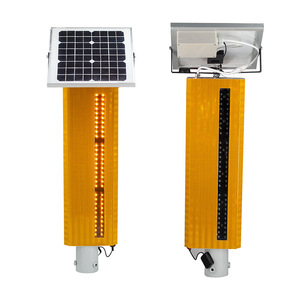
Integrated GPS module delivers synchronized or cascading wave flashes across consecutive roadway curves, bypasses, and multi-kilometer diversion lanes without physical communication cables.
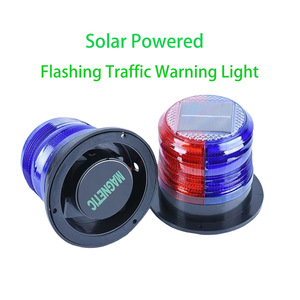
Heavy-duty neodymium magnetic base with IP67 sealed rotary optical reflectors. Engineered for pilot escort vehicles, mining pick-ups, and emergency service trucks operating in rough terrain.
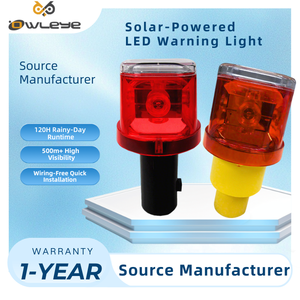
Ultra-efficient power management circuit offering over 120 continuous operating hours during prolonged cloud cover, coastal fog (garúa), and high-altitude Peruvian overcast seasons.
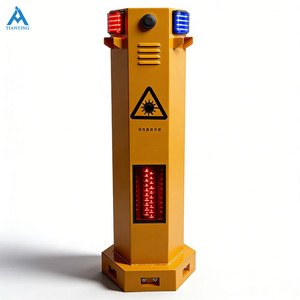
Combines flashing beacons with sharp ground-level red laser safety boundary illumination. Designed for urban intersections in Lima, school perimeters, and industrial mining pedestrian crossings.
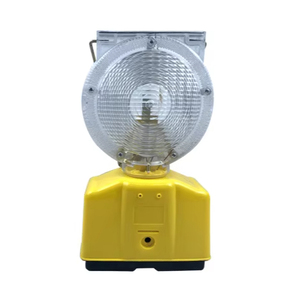
Compact dual-color perimeter beacon designed for mounting onto traffic safety drums, Jersey barriers, and highway worksite delineators with high-impact UV-stabilized polycarbonate enclosures.
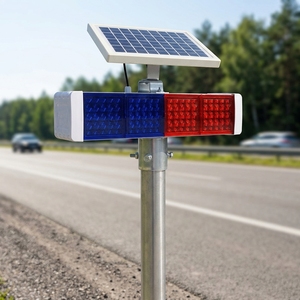
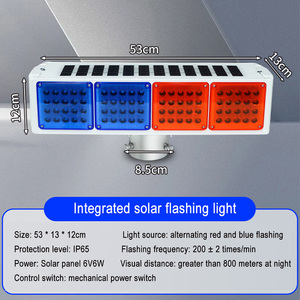
High-lumen alternating red and blue strobe modules delivering tactical visibility for construction roadblocks, municipal patrol barricades, and Peruvian National Police (PNP) highway safety checkpoints.
Equipped with 360-degree Fresnel precision lenses and internal micro-prismatic optical rings. Delivers uncompromising continuous performance with zero scheduled maintenance for five years.
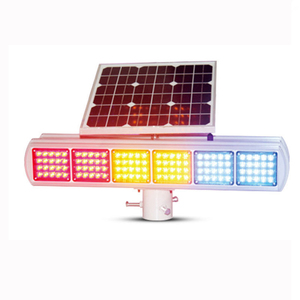
Bi-directional optical warning head with customizable red, amber, and clear warning modes. Formulated with flexible PU/PVC damping bases that resist structural wind fatigue and vehicular contact.
A rigorous engineering evaluation of environmental degradation factors, solar insolation metrics, and structural specifications across the Peruvian territory.
Peruvian mining logistics represent one of the world's most unforgiving operating environments for solid-state electronics and photovoltaic assemblies. Roads traversing the Corredor Minero del Sur (spanning Apurímac, Cusco, and Arequipa to the Matarani Port) routinely exceed altitudes of 3,800 to 4,800 meters above sea level. At these elevations, standard commercial-grade solar blinkers suffer premature field failures within 6 to 12 months due to two unaddressed physical phenomena: atmospheric derating and rapid thermal cycling.
Because barometric air density drops by over 40% at 4,500 MASL, convective heat dissipation from internal driver circuits and high-output LED diodes is drastically impeded. Without precision die-cast aluminum heat-sinking, LED junction temperatures exceed operational limits, triggering irreversible lumen depreciation. Simultaneously, daily ambient temperature swings can oscillate violently from +24°C at midday to -15°C at midnight. Inferior polycarbonate enclosures undergo micro-cracking due to mismatched thermal expansion coefficients, while conventional Lead-Acid and basic ternary Lithium-ion batteries experience rapid electrolyte freeze, leading to permanent capacity loss.
Our export configurations destined for mining operations (such as Las Bambas, Antapaccay, and Cerro Verde access corridors) incorporate high-thermal-conductivity aircraft aluminum housings, specialized breathable pressure-equalizing ePTFE membranes, and custom-insulated Lithium Iron Phosphate (LiFePO4) battery packs with internal smart BMS heating elements. This guarantees continuous, uninterrupted flashing at full photopic output under extreme highland sub-zero conditions.
Along the Carretera Panamericana (Ruta Nacional 1N and 1S), which hugs Peru's Pacific coastline from Tumbes to Tacna, infrastructural assets face a fundamentally different set of degradation vectors: pervasive coastal fog (known locally as la garúa), airborne marine chlorides, and extended periods of diffuse, low-angle solar irradiance during the Peruvian winter.
The thick marine stratocumulus layer settling over Lima, Ica, and La Libertad frequently reduces direct horizontal solar irradiance to below 2.5 kWh/m²/day for consecutive weeks. Traditional solar flashers engineered for generic tropical climates fail to harvest sufficient energy during these diffuse lighting spells, resulting in premature battery depletion. Furthermore, constant onshore salt-spray deposition corrodes standard sheet metal brackets, screws, and solder joints through aggressive galvanic corrosion.
To ensure 100% operational uptime for highway concessionaires (such as Norvial, Rutas de Lima, and Autopista del Norte), our coastal beacon product lines integrate high-efficiency monocrystalline solar panels with anti-soiling, hydrophobic glass coatings and advanced MPPT (Maximum Power Point Tracking) controllers capable of initiating energy harvesting at just 3% spectral sunlight. Every external fastening bracket is stamped from marine-grade 316 stainless steel or hot-dip galvanized steel treated with a thermoset polyester powder barrier coat exceeding 1,000 hours of ASTM B117 salt spray testing.
In high-density metropolitan sectors such as Lima, Callao, Arequipa, and Trujillo, urban transit authorities confront critical pedestrian vulnerability along arterial corridors, rapid transit lines (Metropolitano), and high-turnover school zones. Peruvian Municipal Ordinances and MTC road safety directives increasingly require active visual warnings that immediately break through urban visual clutter and driver smartphone distractions.
Our intelligent smart crosswalk beacons and rapid-pulsing rectangular strobes deploy Class 1 optical prisms delivering wide-angle, high-candela strobe patterns that command visual attention from over 800 meters during both blinding midday sunlight and dark nighttime hours. The addition of laser grid boundary projections casts vibrant virtual hazard barriers directly across asphalt crosswalk surfaces, alerting pedestrians looking down at mobile phones and instructing approaching vehicles to yield early, drastically reducing pedestrian conflict rates in congested municipal corridors.
Procuring traffic safety equipment in Peru is bound by the national technical standards codified in the Manual de Dispositivos de Control del Tránsito Automotor para Calles y Carreteras issued by the Ministerio de Transportes y Comunicaciones (MTC), as well as operational oversight by OSITRAN for public-private road concessions.
Key regulatory compliance metrics that overseas exporters must certify include:
Critical component evaluation metrics required by Peruvian infrastructure tender specifications.
| Engineering Parameter | Our Factory Specification (Peru-Optimized) | Generic Market Alternatives | Significance for Peru Road Safety |
|---|---|---|---|
| Operating Altitude | Up to 5,000 MASL Continuous | Derated above 2,000 MASL | Essential for Southern Mining Corridor passes (Ticlio, Abra Málaga, Puno). |
| Battery Chemistry | Deep-Cycle LiFePO4 (2,500+ Cycles @ 80% DoD) | Sealed Lead-Acid (SLA) or Ternary Li-ion | Prevents electrolyte freeze at -15°C and eliminates yearly battery swaps. |
| Lens Material & UV Protection | Bayer Makrolon® UV-Stabilized Polycarbonate | Recycled Acrylic / Standard Styrene | Resists extreme UV Index (14–16+) without yellowing, crazing, or brittleness. |
| Energy Harvesting Circuit | Micro-Power MPPT Tracking (Starts at 3% lux) | Basic PWM Shunt Controller | Maintains battery reserve during prolonged coastal winter fog (garúa). |
| Mounting Hardware | SS316 Stainless Steel & Hot-Dip Galvanized | Electro-galvanized Zinc or Painted Steel | Zero rust failure along Pacific coastal routes and chemical mining processing zones. |
| Synchronization | Integrated Multi-Constellation GPS (Autonomous) | Hardwired RF or Asynchronous Only | Guarantees synchronized warnings through mountain curves without trenching. |
Our dedicated export engineering department provides complete MTC-compliant data sheets, photometric test reports (IES), and direct factory FOB/CIF Callao pricing for road concessionaires and contractors.
Inquire NowReal-world insights on customs clearance at Port of Callao, technical homologation, and logistics management.
Solar traffic beacons and flashing warning signals enter Peru primarily under HS Code 8530.80.00.00 (Electrical signaling, safety or traffic control equipment for roads). Shipments require a Commercial Invoice, Packing List, Certificate of Origin, and Bill of Lading (B/L). Standard ad-valorem import tariffs are typically 0% to 6%, subject to Peru's prevailing trade agreements, plus standard IGV (18%). We provide fully verified export declarations to expedite SUNAT customs clearance at the Port of Callao.
All our integrated LiFePO4 batteries are certified to UN 38.3, MSDS, and IEC 62133 standards, meeting international maritime safety requirements for IMO Class 9 hazardous materials transport. Batteries are packaged in fire-retardant internal enclosures and locked in low-voltage transport sleep mode to prevent deep self-discharge during sea freight transit to Callao or Paita, arriving ready for immediate field installation.
Yes. We regularly customize mounting brackets for national standard 2-inch to 4-inch tubular steel posts, square perforate tubes, and concrete barriers. We also customize flash cadences, dual-color LED configurations (amber/white or red/blue), solar panel wattages, and housing silk-screens to match specific concession branding guidelines (e.g., Covisur, Norvial, Rutas de Lima).
Sea freight shipments directly dispatched to Callao Port take approximately 24 to 32 days port-to-port. For urgent emergency maintenance or fast-track municipal milestones, consolidated air freight can land at Jorge Chávez International Airport (LIM) in Lima within 5 to 7 business days with pre-cleared customs documentation.
Precision quality systems, comprehensive testing laboratories, and a global logistics footprint supplying more than 20 countries.
From automated high-speed surface-mount technology (SMT) optical diode placement to precision die-cast housing mold fabrication, we control 100% of the production value chain without third-party trading markups or unverified outsourcing.
Every beacon platform undergoes strict simulated aging tests, including -40°C to +85°C climatic thermal chambers, accelerated solar UV degradation, and IPX8 pressurized water submersion tanks to ensure zero field failures in Peru's highlands.
With high-profile safety infrastructure successfully installed across Latin America, South Asia, Africa, and the Middle East, our technical team understands local transit codes, tender compliance, and heavy-duty ocean export packaging standards.
Connect immediately with our bilingual technical engineering team to obtain direct factory quotations, IES photometric files, or custom prototype evaluations.