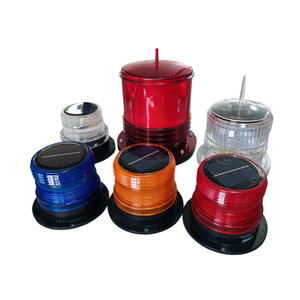
Solar Marine & Port Flashing Navigation Stern Signal Light
Designed for coastal road causeways, wharves, and inter-island barge terminals. Features a salt-fog-resistant polycarbonate enclosure and high-intensity panoramic LED beacons.

Direct from our manufacturing plants to New Zealand civil contractors, regional transport alliances, and port safety authorities. Factory pre-tested for rugged off-grid deployment.
Designed for coastal road causeways, wharves, and inter-island barge terminals. Features a salt-fog-resistant polycarbonate enclosure and high-intensity panoramic LED beacons.
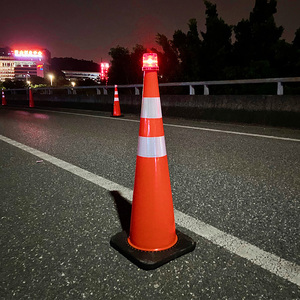
Rapid temporary traffic management (TTM) strobe engineered for night-shift road rehabilitation, rapid cordon visibility, and high-impact roadside hazard zones.
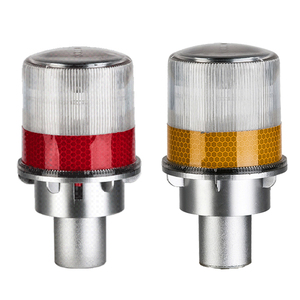
Rugged mono-crystalline integrated warning head with dusk-to-dawn photodiode activation, built to withstand alpine frost, high windage, and persistent rain.
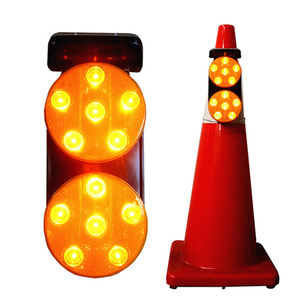
Sequenced multi-module wireless communication for linear guide paths, bridge lane tapering, and detour paths on remote provincial state highways.
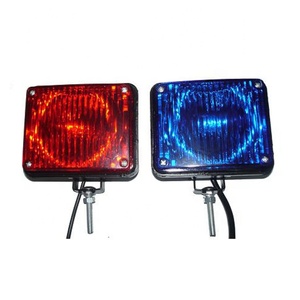
High-lumen optical warning unit for contractor maintenance utes, recovery equipment, highway escort fleets, and municipal road sweeping units.
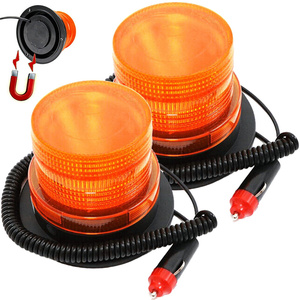
Wide-angle polycarbonate fresnel lens yielding 360-degree high-candela burst visibility. Resistant to heavy vibration on quarry, forestry, and rural transit roads.
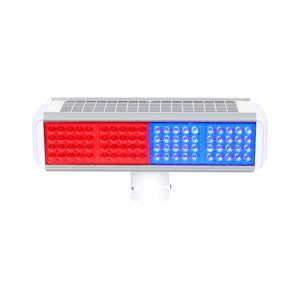
Long-distance alert module designed for hazardous intersection approaches, emergency detour boundaries, and industrial port transit chokepoints.
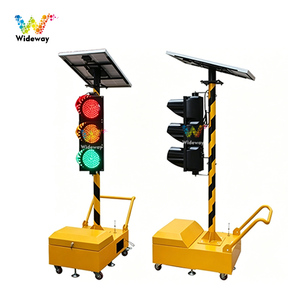
Long-range radio controlled portable signal head system (200-800m) ideal for single-lane bridge works, slip stabilization, and emergency slips.
New Zealand’s transport corridors present some of the most ecologically aggressive and topographically diverse conditions on the planet. From coastal State Highway 1 exposed to Pacific maritime saltwater aerosol to the alpine passes of the Southern Alps (Arthur's Pass, Lindis Pass) experiencing prolonged freezing cycles and heavy sub-antarctic cloud cover, conventional solar warning beacons frequently suffer premature field failure. Sourcing from a tier-one solar road flasher light manufacturer & factory that engineers specifically for these microclimatic variances is mandatory for council asset managers and NZ Transport Agency (Waka Kotahi) delivery alliances.
A persistent challenge across regions like Northland, West Coast, and Southland is sustained solar insolation deficit during winter months, accompanied by dense overcast cycles where daily Peak Sun Hours (PSH) plummet below 1.5 kWh/m²/day. Standard off-the-shelf blinkers designed for equatorial markets feature small 2W to 5W panels paired with basic lead-acid or rudimentary lithium cells lacking low-temperature charge cut-off protection. In contrast, our dedicated production line builds assemblies utilizing premium grade-A mono-crystalline silicon cells rated at >22.5% photoelectric conversion efficiency, coupled with customized Lithium Iron Phosphate (LiFePO4) battery packs with integrated Battery Management Systems (BMS).
These specialized power storage architectures maintain active thermal monitoring, preventing dendritic formation during sub-zero thermal episodes while preserving an unprecedented 15 to 21 days of continuous autonomous operation under zero-sun conditions. Furthermore, our optical cavities leverage high-grade ultraviolet-stabilized Makrolon® polycarbonate and cast aluminum enclosures that resist intense Southern Hemisphere UV degradation and high salt-spray corrosion index (ISO 9227 neutral salt spray tested to >1,000 hours).
Meeting the operational demands of New Zealand's localized network outcomes requires dedicated mechanical configurations and photometric profiles. Below are primary field applications where our autonomous solar road flasher systems deliver uncompromised reliability across the North and South Islands:
New Zealand's provincial network contains hundreds of historic timber and concrete single-lane bridges (such as those along the West Coast and Central Otago). Solar amber and red synchronized flashers serve as primary visual decelerators, cautioning heavy commercial vehicles and campervans well before approach visibility thresholds.
Under the Code of Practice for Temporary Traffic Management (CoPTTM) and the evolving New Zealand Guide to Temporary Traffic Management (NZGTTM), work-zone delineation demands high visual contrast. Our solar strobe flashers and wireless synchronized beacons provide instantaneous deployment without relying on loud, fuel-thirsty petrol generators.
High-speed rural corridors passing schools and community Maraes require targeted dynamic warning. Time-clock and photodiode integrated solar amber flashers activate during peak pedestrian ingress and egress hours, commanding driver compliance even against blinding dawn and dusk glare.
In addition to these settings, coastal ferry link-spans, commercial timber haulage forestry arteries (Bay of Plenty and Taupo regions), and alpine snow chains drop-off bays utilize our heavy-duty red and amber flashers for permanent off-grid visual demarcation.
The procurement landscape for civil lighting across Australasia is experiencing a generational shift. New Zealand's legislative push toward carbon neutrality via the Climate Change Response (Zero Carbon) Amendment Act has placed infrastructure supply chains under heavy scrutiny. Civil contractors tender bidding on major NZTA works are increasingly evaluated on Scope 1, 2, and 3 emissions reduction strategies. Eliminating trenching, cable ducting, asphalt cutting, and continuous grid AC power draws by deploying self-contained solar road flashers directly lowers embodied and operational carbon metrics.
Three core evolutionary trends are reshaping product specification expectations:
The modernization from prescriptive CoPTTM rules toward risk-based NZGTTM methodologies emphasizes higher-efficiency optical cues that can be relocated rapidly by fewer crew members, prioritizing roadworker physical safety through autonomous, wireless-synchronized lighting systems.
Outdated sealed lead-acid (SLA) batteries are being phased out by New Zealand regional councils due to their high recycling toxicity and low cycle life (300-500 cycles). High-stability LiFePO4 batteries deliver >2,500 full charge-discharge cycles, reducing life-cycle replacement frequency by over 70%.
Remote telematics and smart city readiness have moved from luxury to technical requisites. Modern road flasher contracts frequently mandate optional GPS synchronisation and LoRaWAN connectivity, allowing regional operations centers to monitor battery status and operational continuity remotely.
To assist procurement managers, asset consultants, and municipal engineers in evaluating equipment durability, the technical comparative matrix below illustrates our structural manufacturing standards compared to standard consumer-grade road lights:
| Critical Technical Parameter | Enpowers International Industrial Specification | Standard Commercial / Trading Grade | Operational Consequence in New Zealand |
|---|---|---|---|
| Optics & Luminous Intensity | Ultra-bright Osram / Epistar LEDs, >12,000 mcd, AS/NZS 2144 compliant angles | Standard domestic LEDs (<4,000 mcd), uncontrolled beam pattern | High daytime visibility against harsh coastal sun glare and alpine fog. |
| Photovoltaic Harvesting | Mono-crystalline silicon, tempered low-iron glass lamination (>22.5% yield) | Poly-crystalline or cheap epoxy-resin encapsulation (rapid yellowing) | Maintains consistent charging capability during prolonged winter cloud cycles in NZ. |
| Battery Storage Matrix | Automotive grade LiFePO4 battery with intelligent thermal safety BMS | Recycled Lead-Acid (SLA) or unmonitored standard 18650 Li-ion cells | Prevents premature cell failure during sub-zero freezing spells in South Island corridors. |
| Chassis Ingress Protection | IP66 to IP68 hermetically sealed, marine-grade cast alloy & UV Makrolon® | Thin ABS or unrated recycled plastic with rudimentary rubber gasket | Eliminates internal vapor condensation, salt-crust short circuits, and UV brittleness. |
| Autonomy Duration | 15 to 21 consecutive overcast days (dusk-to-dawn standard operation) | 3 to 5 days maximum before total voltage drop-out occurs | Continuous road user guidance through atmospheric river events and extended storms. |
Enpowers International operates as a dedicated, fully integrated research, molding, assembly, and testing facility headquartered in Ahmedabad, Gujarat, India. Unlike trading middlemen who aggregate off-the-shelf catalog parts, we manufacture our assemblies directly under stringent ISO 9001:2015 quality frameworks. Supplying over 20 nations worldwide, we bring direct factory-level pricing, certified engineering compliance, and tailored customization directly to New Zealand ports (Auckland, Tauranga, Lyttelton, Napier).
Cut out layered third-party distributor margins. Access direct factory-floor quotation structures that maximize tender margin competitiveness on council frameworks.
We configure mounting sleeves to match standard New Zealand post dimensions (60mm, 76mm, 89mm OD CHS poles, or Uni-strut channels) without requiring site modification.
Every production run undergoes 72 hours of continuous thermal stress testing, photometric lux distribution scanning, and submersed ingress validation prior to sea freight packing.
Streamlined logistics channels handling complete New Zealand import documentation, commercial invoicing, bills of lading, and certificate of origin clearance packages.
Key technical and procurement clarity to help civil asset managers make data-backed supply decisions:
Consult with our international engineering team today. Send us your project tender specifications, required lens aspect, post dimensions, and target port for a prompt, comprehensive commercial and technical proposal.
Inquire Now