Export Sales: +91 96012 58123 [email protected] Exporting to 20+ Countries
MUTCD & ITE Engineering Grade Compliant

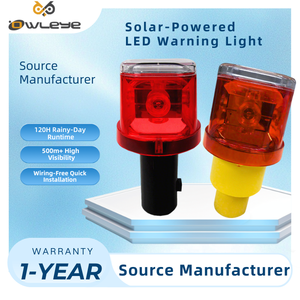
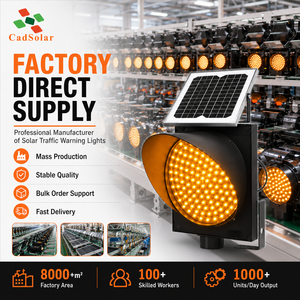
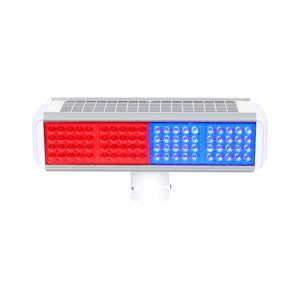
Solar Road Flasher Light Factories & Supplier for the United States Market

Factory-Direct Autonomous LED Traffic Beacons, Chevron Warning Arrays, and Intelligent Solar Barricade Flashers. Engineered for USDOT, FHWA, State DOTs, and Civil Heavy-Highway Infrastructure Contractors Across North America.

Zero
Trenching & AC Utility Infrastructure Costs
120+ Hrs
Continuous Autonomy (Autarky Resilience)
IP65/IP67
NEMA 4X / UV-Stabilized Polycarbonate
20+ Nations
Global Tier-1 Highway Contractor Deliveries
Factory Direct Portfolio

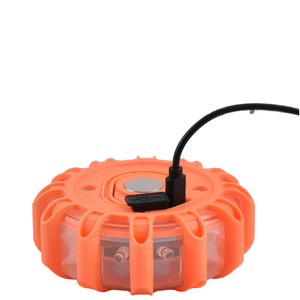
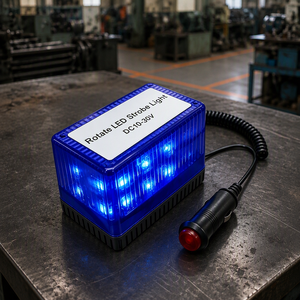
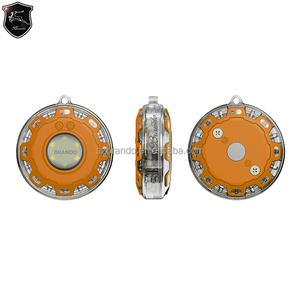
High-Visibility Solar Road Flashers & Traffic Safety Beacons

Engineered to satisfy federal standards including MUTCD Section 4L/4N, ITE VTCSH photometrics, and harsh regional North American climates.

Technical Whitepaper: Deploying Autonomous Solar Road Warning Systems in US Infrastructure

Procuring solar-powered road flashing devices for North American public rights-of-way involves complex engineering standards. Unlike consumer solar lighting, solar traffic blinkers installed on interstate highway systems, state-maintained arterials, and municipal collector roads must comply strictly with the Federal Highway Administration (FHWA) Manual on Uniform Traffic Control Devices (MUTCD), specifically Part 4 (Highway Traffic Signals), Section 4L.01 through 4L.03 (Flashing Beacons), and Section 4N.

1. Photometric Performance and ITE VTCSH Compliance

Under US civil tender frameworks, amber (yellow) and red flashing beacons must maintain luminous intensity profiles compliant with the Institute of Transportation Engineers (ITE) Vehicle Traffic Control Signal Heads (VTCSH) standard. Our solar road flasher systems feature precision poly-carbonate UV-stabilized Fresnel lenses engineered with secondary optical TIR (Total Internal Reflection) collimators. This guarantees minimum on-axis peak candela ratings exceeding 300 cd in high-noon direct sun conditions, maintaining high visual contrast without driver dazzle at night via integrated pulse-width modulation (PWM) auto-dimming.

2. Solar Autarky (Insolation Ratios) Across AASHTO Climate Zones

A critical failure mode among substandard imported flashers is battery depletion during extended cloudy spells in Northern US states (e.g., Minnesota, Michigan, New York) where winter insolation drops below 2.0 Peak Sun Hours (PSH) per day. Our engineering methodology incorporates a conservative 1:5 to 1:7 power generation ratio. By pairing high-conversion Grade-A monocrystalline silicon photovoltaic (PV) modules with thermally insulated Lithium Iron Phosphate (LiFePO4) or deep-cycle Gel-VRLA battery chemistries, our US-market configurations deliver 120 to 180 continuous hours of autonomous operation (autarky) without solar input at an MUTCD-mandated flash rate of 50 to 60 flashes per minute with a 50% duty cycle.

System Specification Parameter Standard Commercial Grade Enpowers US-DOT Grade Solar Flasher Engineering Advantage
Luminous Intensity (Amber) 80 – 120 cd (Uncalibrated) > 350 cd (ITE VTCSH Certified) Meets high-speed Interstate sight distance reqs.
System Autonomy (No Sun) 36 – 48 Hours 120 – 168 Hours (5–7 Days Autarky) Survives severe northern blizzard conditions.
Enclosure Protection IP54 Plastic Shell NEMA 4X / IP67 Die-Cast Aluminum & PC Resists salt fog spray, road gravel, and chemical deicers.
Operating Temperature -10°C to +50°C -40°C to +75°C (-40°F to +167°F) Certified for extreme Alaskan freezes to Arizona heat.
Synchronization Protocol None (Independent Drift) Intelligent RF Mesh / GPS Sync Option Unified progressive flash on chevron curves.
Deployment Scenarios

Engineered for High-Risk American Roadway Applications

Solving visibility, safety, and electrical grid limitations across diverse North American road environments.

Interstate Rural Intersections & Stop Sign Flashers

Over 50% of fatal roadway crashes occur in rural environments. Our solar red and amber blinkers mount seamlessly on standard 2-3/8" OD pipe or Telespar perforated tubes, turning passive stop lines into high-alert intersections without requiring costly trenching across federal corridors.

High-Speed Highway Horizontal Curves

Sharp curve transitions on mountainous switchbacks or high-speed cloverleaf off-ramps utilize our synchronized flashing solar LED Chevron arrow panels. Unifying sequential warning visual pulses prevents heavy trucks and motorists from losing directional focus at night.

Work Zones & Temporary Bypass Diversions

Temporary concrete barrier walls, road construction detours, and barrel taper transitions demand quick-setup lighting. With magnetic and bolt-on barricade designs, contractors achieve instantaneous MUTCD Part 6 temporary traffic control compliance without generator exhaust.

Mid-Block Pedestrian Crosswalks (RRFB Upgrades)

Pedestrian safety mandates across US cities necessitate rapid-response warning. Our solar beacons readily interface with push-button activation and passive microwave radar detection sensors to safeguard high-density urban school zones and university campuses.

Commercial Intermodal Freight Logistics Corridors

Inland logistics hubs, deep-water port gates, and private heavy-rail grade crossings utilize our heavy-duty solar blinkers to control tight commercial truck turning radiuses, rail clearances, and loading dock traffic sequencing around the clock.

Toll Plazas, Weigh Scales & Gantry Lane Indication

Combining heavy-duty hybrid AC/Solar functionality, these signal heads indicate automated toll booth open/closed statuses, emergency weigh-scale detours, and tunnel entrance lane closures under high humidity, engine soot, and exhaust exposure.

Emerging Trends: Next-Gen Solar Roadway Telematics in the US Market

The US highway safety landscape is shifting rapidly from passive visual beacons to intelligent, communicative ITS (Intelligent Transportation Systems) safety nodes. Key technological paradigms shaping our OEM production include:

A. Cellular IoT & V2X Connected Roadway Feedback

Modern state DOT procurement criteria increasingly specify remote health diagnostics. Next-generation Enpowers road flasher systems integrate low-power LTE-M / NB-IoT modules that transmit real-time telemetry—including battery voltage levels, solar charge rates, LED circuit continuity, and ambient thermal conditions—directly to municipal Central Traffic Management Centers (TMC), minimizing field inspection dispatch costs.

B. Radar-Actuated Dynamic Speed Feedback Integration

Fixed flashing lights can cause driver habituation. To counter this, our research and manufacturing pipeline incorporates integrated directional Doppler radar sensors that trigger high-intensity warning flash sequences only when approaching vehicles exceed the posted engineering speed threshold (Speed-Actuated Warning), generating proven speed-reduction impacts of 5–9 mph in work zones.

C. Sustainable Materials & Circular Supply Chain Architecture

Driven by federal Buy America guidelines and stringent ESG sustainability scorecards among primary contractors, our lighting housings incorporate recycled marine-grade aluminum, cadmium-free solid-state electronics, and long-life LiFePO4 battery architectures engineered for a 10-year service life cycle.

Proven Manufacturing Authority

Why US Procurement Specialists & Prime Contractors Partner With Us

Backed by an extensive manufacturing infrastructure in Ahmedabad, Gujarat, India, delivering precision-engineered solar infrastructure products to 20+ global countries.

100% In-House Vertical Manufacturing

Operated from our dedicated facility at GIDC Phase-1, Vatwa, Ahmedabad, we oversee every step of production. From SMD LED high-precision placement and circuit potting to environmental climatic chamber testing, we eliminate middleman trading costs and guarantee direct factory pricing.

Stringent Tender & Standard Mapping

With an extensive track record serving Tier-1 highway infrastructure agencies like BRO, NHAI, CPWD, and large EPC conglomerates (Tata Projects, GVK, IRB, NCC), our engineering team readily maps municipal US RFP and State DOT Standard Specifications into high-precision technical submittals.

Rigorous Sea & Air Logistics Packaging

Deploying export cargo to over 20 countries, every consignee receives products enclosed in IPPC-certified ISPM-15 wooden crates with internal shock isolation, anti-static moisture barriers, and complete shipping document dossiers for smooth US Customs clearance.

Procurement Intelligence

Frequently Asked Questions by US Civil Engineers & Buyers

Addressing essential technical, contractual, and regulatory considerations for seamless cross-border highway supply.

Do your solar road flashers meet FHWA MUTCD standards for flashing beacons?
Yes. Our solar road flashers and beacon lights can be configured directly to conform with MUTCD Chapter 4L (Flashing Beacons), including Section 4L.01 for Intersection Control Beacons, Section 4L.02 for Warning Beacons, and Section 4L.03 for Speed Limit Sign Beacons. They maintain the standard flashing cycle of 50 to 60 flashes per minute with visual illumination spanning over 1,000 meters under typical atmospheric conditions.
Can your housings and brackets mount to standard US signposts (Telespar, Round Pipe)?
Absolutely. We manufacture modular, hot-dip galvanized and powder-coated universal mounting hardware designed specifically for 1-3/4" to 2-1/2" square perforated Telespar® posts, standard 2-3/8" OD round signposts, wooden utility poles, and concrete crash barrier brackets. Custom mast-arm clamps and overhead gantry mounts are available upon submittal review.
How do you guarantee cold-weather performance in northern US states like Alaska or Montana?
For cold-climate deployments, we engineer units with specialized cold-rated lithium chemistries (LiFePO4 with internal thermal self-heating BMS) or industrial deep-cycle AGM/Gel batteries rated down to -40°C (-40°F). Solar module capacities are upsized to provide an overage reserve, ensuring batteries reach float charge even on short, overcast winter days with heavy cloud cover.
Can Enpowers provide project customization and OEM white-label manufacturing?
Yes. As a direct manufacturer, we provide turnkey OEM and ODM services for domestic US distributors, traffic safety product brands, and regional DOT supply contractors. We customize lens diameter (200 mm / 8" or 300 mm / 12"), housing color (Highway Yellow, Black, Aluminum), specialized multi-pattern flash firmware, custom bracket stamped branding, and project-specific carton labeling.
What is the typical production and shipping lead time to major US ports?
Standard order production ranges between 2 to 4 weeks depending on volume and customization. Ocean freight transit from the Mundra/Nhava Sheva ports in India to US West Coast (Los Angeles/Long Beach) or US East Coast (New York/Savannah) typically takes 28 to 35 days. For emergency work-zone contracts, expedited air freight is readily accommodated.
What warranty and documentation packages accompany US export shipments?
We supply a comprehensive warranty of 2 to 5 years depending on battery chemistry and project tier. Every shipment includes Factory Inspection Reports, Certificate of Origin (COO), CE/RoHS material safety compliance certifications, photometrics laboratory testing sheets, and clear schematic wiring instructions.

Accelerate Your Next US Road Safety & Civil Highway Project

Partner with an established manufacturer capable of meeting strict North American traffic safety specs, robust delivery schedules, and factory-direct volume pricing. Contact our engineering team for instant design assistance.

Get a Quote
Online Enquiry Contact Sales