
As a direct OEM manufacturer supplying international infrastructure operators and Colombian highway concessions (ANI & INVIAS corridors), our solar road flares, embedded active LED studs, and barricade guidance flashers eliminate wiring costs while dramatically reducing high-risk collision indices across mountainous topography.
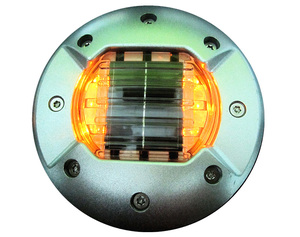
Engineered with high-grade cast aluminum and ultra-bright 6-LED double-sided arrays. Ideal for sharp curve delineation along Colombian cordillera passes where thick mountain fog obscures passive markers.
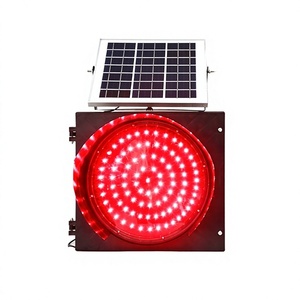
Autonomous red hazard beacon equipped with high-efficiency monocrystalline solar panels. Designed for permanent median warning, dangerous cross-intersections, and perimeter security barriers.
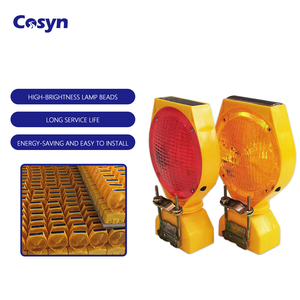
Versatile mounting system compatible with traffic barrels, temporary road cones, and metal guard rails for infrastructure maintenance sites and emergency mountain detour routing.
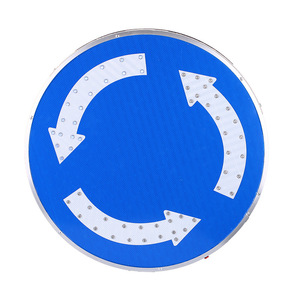
Active perimeter LEDs integrated with 3M reflective sheeting. Increases driver recognition at highway transition zones entering urban centers like Medellín, Cali, and Bogotá.
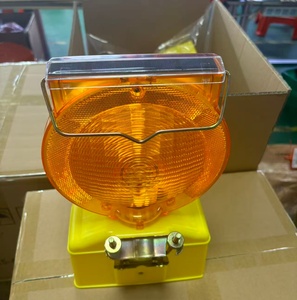
High-impact ABS construction with 360-degree illumination geometry. Built specifically for prolonged civil engineering projects on primary arterial networks without maintenance overhead.

Multi-mode optical frequency control featuring corrosion-resistant internal circuitry. Widely deployed in Colombian open-pit mining operations and logistics port gateways in Barranquilla.
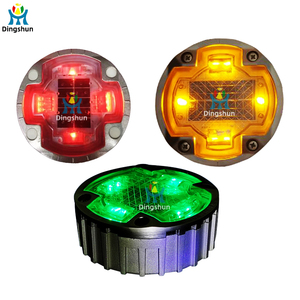
Recessed roadway design resisting continuous heavy-freight tractor-trailer impacts. Eliminates snowplow and asphalt scraping damage while maintaining uncompromised optical projection.
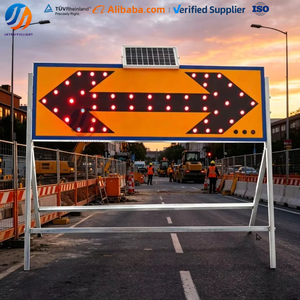
Dynamic sequential curve guidance signage providing immediate tactical comprehension for drivers navigating hairpin bends across the Cordillera Central and high-grade descents.
Colombia presents one of the world's most demanding physical landscapes for highway signaling infrastructure. Spanning three mountain chains (Cordillera Occidental, Central, and Oriental), alongside sea-level tropical coastlines in the Caribbean and Pacific, road equipment must withstand intense climatic polarities. Traditional passive cat-eyes often fail due to premature surface abrasion, thick cloud-forest fog (neblina), and torrential tropical rainfall exceeding 3,000 mm annually in areas such as the Chocó and lower Magdalena corridors.
Under the standards set forth by the Instituto Nacional de Vías (INVIAS) and the Agencia Nacional de Infraestructura (ANI), highway concessions are held to strict performance metrics regarding nocturnal visibility, retroreflection retention, and structural load endurance. In high-altitude mountain passes such as the Cruce de la Cordillera Central (Alto de La Línea) at over 3,200 meters above sea level, passive retroreflective studs lose up to 80% of their optical effectiveness when headlight beams are scattered by saturated moisture particles. Active solar road flares and LED cat-eyes counteract this optical dispersion by projecting high-candela light directly toward the driver’s cone of vision up to 1,000 meters in advance.
Furthermore, heavy cargo transport corridors linking the deep-water Port of Buenaventura to the interior industrial centers of Bogotá and Medellín impose severe dynamic axle pressures. Solar road flares deployed along centerline or edge demarcations must be cast from high-density aerospace-grade aluminum alloys (A380 or ADC12) capable of resisting repeated dynamic tire impacts exceeding 30 to 40 metric tons without structural fracturing, lens deformation, or water ingress.
From massive Fourth and Fifth Generation (4G/5G) concession highways to municipal bus rapid transit networks, autonomous solar flares provide zero-trenching safety enhancements.
Corridors such as the Bogotá-Villavicencio (Vía al Llano), Bucaramanga-Pamplona, and the Medellín-Bogotá highway experience sudden cloud cover and torrential mudslide hazards. Synchronized solar amber blinkers and embedded active road studs outline lane trajectories even during severe torrential downpours.
Colombia's extensive tunnel infrastructure (e.g., Túnel de Oriente, Túnel de la Línea) requires explicit approach transitions where daylight brightness transitions to tunnel luminaire environments. Solar warning beacons and chevron guides alert operators ahead of concrete crash barriers and lane segregation islands.
Connecting municipal cabeceras with agricultural regions, tertiary roads lack electrical grid connections. Standalone solar barricade lights and self-charging road flares provide zero-carbon delineation at school zones, sharp curves, and unlit bridge approaches without cabling infrastructure.
Highway concessionaires evaluated under international ISO 39001 Road Traffic Safety standards must optimize life-cycle costs (LCC) against initial capital expenditure. The table below outlines why engineering teams serving Colombia are replacing passive retroreflectors with active autonomous solar devices.
| Performance Parameter | Enpowers Solar Road Flares | Standard Retroreflective Studs | Trench-Wired AC Halogen Flares |
|---|---|---|---|
| Visibility Range in Heavy Rain/Fog | 800 – 1,000 meters (Active) | 50 – 100 meters (Passive) | 600 – 900 meters (Active) |
| Installation Complexity & Cabling | Zero Cabling (Epoxy or Core Drill) | Zero Cabling (Surface Adhesive) | High (Deep Trenching, Conduit) |
| Continuous Electrical Operating Cost | $0.00 / kWh (100% Autonomous) | $0.00 / kWh (Non-Powered) | High Grid/Generator Reliance |
| Dynamic Heavy Axle Load Rating | ≥ 30 Metric Tons (Cast Alloy) | 10 – 15 Tons (Prism Cracking) | Varies by Cast Enclosure |
| Battery Chemistry & Thermal Tolerance | Ni-MH / LiFePO4 (-20°C to +75°C) | N/A (Passive Optic Only) | Centralized Transformer Dependent |
With the transition toward 5G infrastructure concessions and strict adherence to the *Manual de Señalización Vial* (Resolución 1885), the demand for smart, sustainable solar delineation is surging across Colombia.
Major concession consortia (e.g., Grupo Argos, Mario Huertas Cotes, Sacyr Colombia) must meet rigorous ESG decarbonization metrics. Implementing solar safety equipment earns green infrastructure points while fulfilling contractual accident reduction goals.
The *Agencia Nacional de Seguridad Vial (ANSV)* has identified nocturnal run-off-road collisions on intercity single-carriageway corridors as a top priority. Active flashing blinkers deliver the critical extra response seconds needed at high driving speeds.
Vandalism and copper cable theft on unmonitored highways represent an ongoing operational expenditure for concession operators. Integrated solar flares eliminate salvageable copper wiring, removing the economic incentive for theft.
Headquartered in Ahmedabad, India, with direct export operations serving more than 20 countries, Enpowers International operates integrated production lines spanning surface mount LED placement (SMT), aluminum precision die-casting, silicone vacuum potting, and environmental stress chambers. Our manufacturing methodology ensures every solar road flare exported to Colombia delivers unwavering operational integrity.
Our monocrystalline photovoltaic modules and high-temperature lithium / Ni-MH storage banks are sized for 120+ hours of continuous flashing without direct sunlight, ensuring operational uptime during extended rainy seasons (épocas de lluvia).
Fabricated to conform with international ASTM D4280, EN 1463, and Colombian INVIAS Chapter 7 specifications. We provide complete technical data sheets, photometric curves, and mill test certifications for immediate concessionaire audit approval.
Deal directly with the primary manufacturer without trading intermediaries. We support project bidding with customized casing designs, custom laser branding, flexible packaging, and door-to-door freight to Cartagena or Buenaventura.
Detailed answers covering import compliance, customs procedures (DIAN), electrical certifications, and engineering compatibility.
Direct factory pricing, verified photometric test certificates, and complete project support for highway concessionaires, EPC contractors, and municipal transport authorities. Connect directly with our international infrastructure engineering desk today.
Get a Quote