
Autonomous, maintenance-free, and engineered for high-humidity subtropical climates. Explore our core export catalog ready for rapid dispatch to Hanoi and Haiphong port distribution hubs.
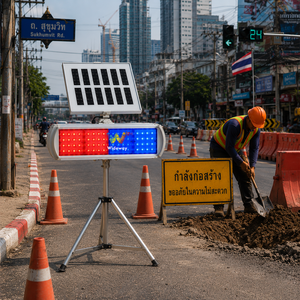
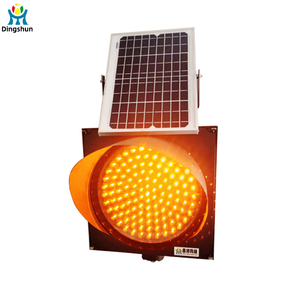
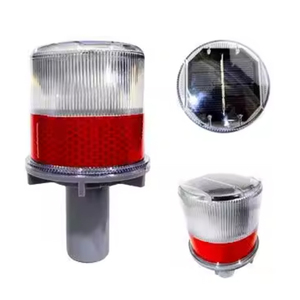
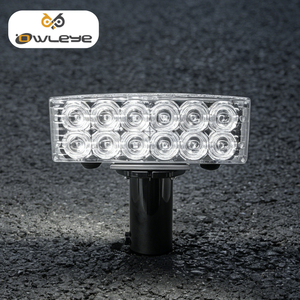
As the capital of Vietnam undergoes rapid transit transformations under the Hanoi 2030 Transport Master Plan, passive safety infrastructure has shifted from conventional electrical wiring to autonomous solar warning signals.
Hanoi's urban layout presents one of Southeast Asia's most challenging traffic environments. With a registered vehicle registry exceeding 7.8 million motorcycles and approximately 1.1 million passenger and heavy logistics vehicles, mixed-traffic saturation requires unambiguous visual cues. Fast-expanding orbital expressways like Vành Đai 3 (Ring Road 3), elevated viaducts, and the upcoming massive construction belts of Vành Đai 4 (Capital Region Ring Road) demand zero-downtime hazard alerts at divergence points, on-ramps, and bridge piers.
Traditional grid-tied warning lights in Northern Vietnam face persistent operational challenges. The combination of intense summer monsoons, high humidity (frequently exceeding 85%), seasonal subterranean water surges, and occasional grid load shedding creates vulnerability for cabled electrical networks. Digging asphalt or concrete roadbeds across high-volume transit corridors like Thăng Long Boulevard or National Highway 5 (QL5 linking Hanoi to Haiphong Port) to repair broken ground cables incurs severe traffic disruption and costly manpower overhead.
Engineered solar road beacons resolve these urban transit friction points completely. Integrating monocrystalline photovoltaic generation, industrial LiFePO4 energy storage, and solid-state pulsing LED modules inside an IP68 hermetically sealed envelope, our autonomous beacons operate completely off-grid. They ensure constant visual alerts through dense winter smog, heavy monsoon downpours, and power interruptions—giving municipal contractors, BOT concessionaires, and general infrastructure developers in Hanoi a durable, cost-effective safety asset.
Optimized optical optics, anti-UV encapsulation, and high-frequency flashing cycles designed for specific transit pinch points across Hanoi's urban and peri-urban landscape.
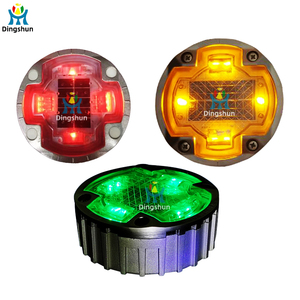
Crucial for elevated segments on Ring Road 3, Thanh Tri Bridge interchanges, and the Vo Nguyen Giap Airport expressway. Amber and red-blue strobe beacons warn high-speed traffic ahead of diverging lanes, attenuators, and emergency lay-bys without wiring hurdles.
Supplying heavy logistic feeder roads connecting Hanoi with surrounding manufacturing hubs in Bac Ninh, Hung Yen, and Vinh Phuc. Installed around container marshaling yards, logistics entry gates, and heavy truck turnaround bays to prevent blind-spot collisions.
High-luminance red/green and directional arrow beacons installed on toll lane canopies, concrete splitter islands, and weigh-in-motion bypasses along Hanoi - Hai Phong Expressway (5B) and Noi Bai - Lao Cai route (CT05) for clear multi-lane status delineation.
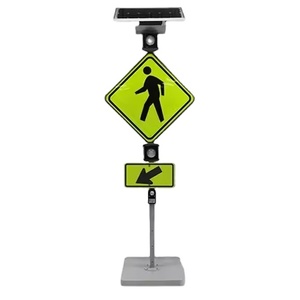
In central districts such as Dong Da, Ba Dinh, and Cau Giay, solar pedestrian blinking sign beacons command driver attention during morning school runs and rainy evenings, safeguarding vulnerable pedestrians without adding to municipal electrical grid consumption.
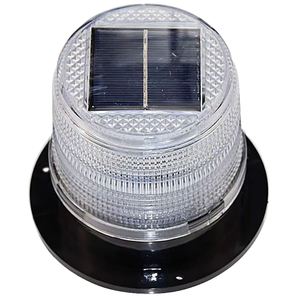
Portable cone-mounted beacons and magnetic strobe lights provide instant, fail-safe visual barriers for ongoing construction, resurfacing contracts, and utility repairs along the new 112km Hanoi Ring Road 4 development corridor.
Approaches leading from Western Hanoi into Hoa Binh and Northwest mountains frequently suffer dense highland fog and sudden moisture saturation. High-penetration amber LED chevron blinkers ensure continuous guidance where AC power lines cannot reach.
A detailed lifecycle, performance, and operational comparison prepared for civil engineering consultants, project evaluators, and MOT Vietnam procurement tenders.
| Evaluation Parameter | Industrial Solar Road Beacon Systems | Conventional Grid-Tied (AC 220V) Signals | Technical Impact for Hanoi Projects |
|---|---|---|---|
| Installation Complexity | ✓ Rapid Setup (Pole mount, under 30 mins, no trenching) | Requires concrete trenching, conduits, transformer hookups | Zero pavement tearing; saves up to 70% in initial civil works costs. |
| Monsoon Power Continuity | ✓ 5–7 Days Autonomy (LiFePO4 battery deep-cycle) | Vulnerable to substation trip-outs & underground short-circuits | Eliminates outage hazards during typhoons and severe wet season cloudiness. |
| Ingress Protection & Corrosion | ✓ IP66 to IP68 hermetically sonic-welded casing | IP54 junction boxes; prone to terminal oxidation & moisture | Withstands Northern Vietnam's extreme 95% summer humidity cycles. |
| Operating Carbon Footprint | ✓ 100% Zero Emission (Clean solar energy conversion) | Continuous carbon draw from thermal power generation | Aligns with Vietnam's National Green Growth Action Plan 2021–2030. |
| Lifecycle Maintenance Overheads | ✓ Near-Zero (Brushless solid-state components) | Periodic cable checks, breaker swaps, voltage regulation | Reduces recurring municipal maintenance visits by more than 80%. |
| Visual Driver Penetration | ✓ High-Intensity Pulsed optics (1200+ m nocturnal view) | Static or standard filament/early generation LED lamps | Cuts through diesel particulate haze, road dust, and driving rainfall. |
Northern Vietnam's transport networks are modernizing at unprecedented speed. Here is how solar safety beacon engineering aligns with emerging regulatory and technological shifts.
Procurement by the Directorate for Roads of Vietnam (DRVN) increasingly references stringent visibility and photometrics under TCVN 7887 and equivalent European EN 12352 classes. Modern projects require certified chromaticity coordinates for amber and red aspects, ensuring zero color fading under harsh tropical UV exposure.
Next-generation solar beacons in Hanoi are incorporating IoT micro-controllers and 4G/NB-IoT telemetry. Beacons can now sync flashing cadences wirelessly across an entire interchange or dynamically boost lumen output when integrated traffic camera radar detects high-speed vehicular approach in adverse weather.
With Vietnam's official commitment to Net-Zero carbon emissions by 2050 made at COP26, highway concessionaires and municipal departments in Hanoi earn environmental compliance credits by deploying standalone solar-powered safety beacons over carbon-intensive grid infrastructure.
Backed by direct factory manufacturing, proven compliance on national highway corridors, and export shipments across 20+ countries, we bring precision Indian engineering to Vietnam.
No intermediaries or distributor markups. We engineer, assemble, and test every optical component at our industrial facility, guaranteeing optimal tender cost margins.
Manufactured to NHAI, PWD, and BRO highway standards, easily configurable to EN 12352, ASTM, and Vietnam MOT technical guidelines upon inquiry review.
Complete flexibility over lens diameter (200mm, 300mm), LED flashing frequencies (30–60 fpm), mono/polycrystalline wattage, and tailored mounting brackets.
Seamless export logistics with full maritime container dispatch directly to Haiphong Seaport or express air cargo to Hanoi Noi Bai International Airport (HAN).
Detailed technical, commercial, and regulatory answers for road contractors, municipal tender managers, and equipment importers in Vietnam.
Our solar road beacons are engineered with oversized high-conversion monocrystalline photovoltaic panels and deep-cycle Lithium Iron Phosphate (LiFePO4) storage batteries. This configuration guarantees an autonomous operating reserve of 5 to 7 consecutive days (over 120 continuous hours) of nocturnal flashing, even when Hanoi experiences uninterrupted overcast skies and persistent drizzle (mưa phùn) during early spring.
Every shipment dispatched to Hanoi or Haiphong includes a complete export dossier: Certificate of Origin (CO), Factory Certificate of Quality/Inspection (CQ), Bill of Lading, detailed packing list, commercial invoice, and laboratory test reports for IP rating, optical intensity, and CE electromagnetic compatibility. For government-funded or international ODA road projects, we can supply test-bench verification matching project-specific tender requirements.
For ocean freight (LCL and full 20ft/40ft FCL container loads), typical sailing transit times from Western Indian ports (Nhava Sheva / Mundra) to Haiphong Port (the primary maritime gateway for Hanoi) range between 14 to 20 days. Inland bonded trucking from Haiphong to Hanoi distribution yards takes less than 24 hours via the Hanoi–Hai Phong Expressway. For urgent prototype evaluations or small project batches, air freight delivery directly to Noi Bai International Airport takes 4 to 6 business days.
Yes. We provide full firmware and hardware customization. Standard models operate at 45 to 60 flashes per minute with a 50% duty cycle, but flash rates, alternating multi-strobe patterns (e.g., Red/Blue emergency strobes for toll stations or police checks), and directional chevron arrow sequences can all be factory programmed. Available colors include amber/yellow (590nm), signal red (625nm), safety blue, and vivid green.
The optical lenses and outer housings are molded using virgin, optical-grade Bayer polycarbonate fortified with premium anti-UV stabilizers. This prevents yellowing, hazing, and brittleness even after years of direct tropical sun exposure. Aluminum road studs utilize aviation-grade A380 die-cast alloys treated with electro-static powder coatings to withstand surface temperatures exceeding 65°C common on Northern Vietnam asphalt roads in mid-summer.
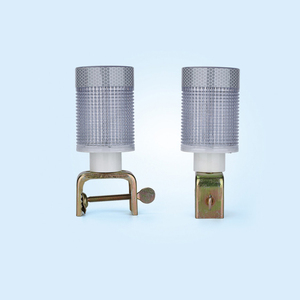
We provide modular, heavy-gauge galvanized steel and aluminum mounting brackets designed to clamp securely onto standard round traffic poles (diameter 50mm to 114mm), square box posts, or overhead gantry arms. Custom universal U-bolt brackets, anti-theft security bolts, and tilt-adjustable solar bracket arms (allowing optimal solar positioning toward the south at Hanoi's 21°N latitude) are available on demand.
Yes. Our embedded aluminum road studs are load-bearing certified up to 30 metric tons. Designed with an ultra-low profile and anchor shanks that bond mechanically into core-drilled asphalt beds using epoxy grout, they comfortably absorb repeated impacts from 40-foot container trucks, cement mixers, and multi-axle freight transporters without cracking or dislodging.
We offer an industry-standard 24 to 36-month factory warranty on complete beacon systems, including photovoltaic modules, internal controllers, and LED clusters. We also maintain a rapid-dispatch replacement program for solar cells and pre-assembled PCB control cards, ensuring project concessionaires experience zero protracted road downtime during maintenance cycles.
Consult directly with our technical export engineers. Receive comprehensive tender submittals, photometrics data sheets, compliance certificates, and CIF Haiphong / DDP Hanoi price matrices within 24 hours.