
Precision-engineered solar LED warning beacons, strobe flashers, and embedded intelligent road studs designed for severe operational environments, dense coastal fog, and heavy cargo transit corridors.
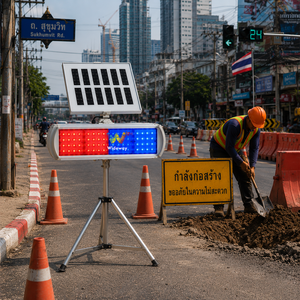
High-intensity alternating strobe warning system for expressway median barriers, roadside work zones, and critical accident diversion points.
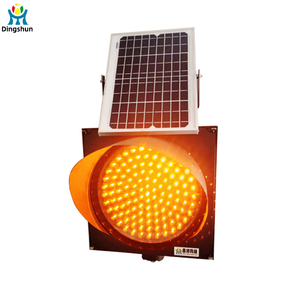
Rapid deployment solar yellow cautionary flasher with high-efficiency monocrystalline solar module for construction and lane diversion zones.
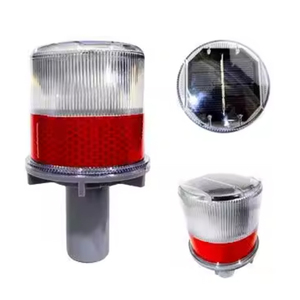
Universal fit traffic cone mount strobe with 360-degree Fresnel optical distribution lens, designed for temporary emergency utility maintenance.
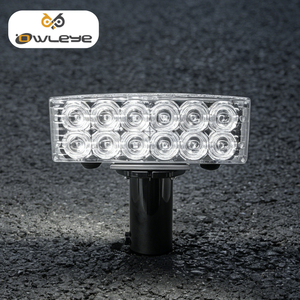
Weather-sealed IP66 polycarbonate housing engineered for long-distance perimeter warnings, civil work approaches, and highway construction.
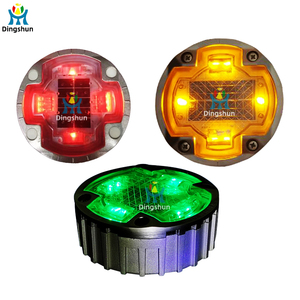
IP68 cast aluminum structural road marker featuring 30-ton dynamic load capacity, ultra-bright LEDs, and continuous underwater seal integrity.
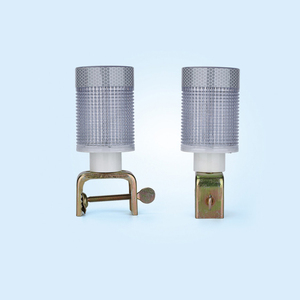
CE certified dusk-to-dawn automated photocell strobe beacon. Optimizes battery reserve with low-power intelligent optical switching.
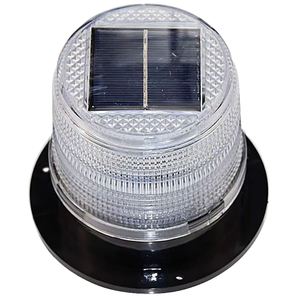
Ultra-strong neodymium magnetic base for fast attachment to heavy commercial trucks, guardrails, and temporary steel construction barriers.
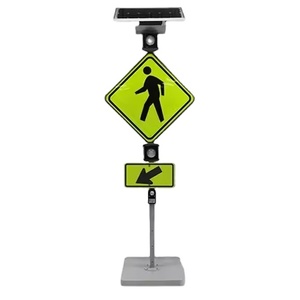
High-candela synchronous crosswalk warning beacon system designed for urban intersections, school perimeters, and logistics center gateways.
In contemporary civil engineering, the deployment of roadside safety hardware is dictated by fail-safe reliability, minimal maintenance intervention, and uncompromised visibility across extreme meteorological events. As an internationally recognized solar road beacon factory and specialized infrastructure supplier serving Nagoya, our systems depart fundamentally from consumer-grade warning lights. Infrastructure applications require strict adherence to photometric candela ratings, thermodynamic heat dissipation profiles, and specialized power-management firmware capable of preventing brownouts during prolonged monsoon cloud coverage or seasonal typhoons.
Solar road beacons deployed along Japanese transport routes—such as the Isewangan Expressway, the Meishin Expressway, and coastal berths throughout the Port of Nagoya—operate in microclimates characterized by high airborne salinity, severe summer humidity, and cyclical freezing conditions. Delivering zero-downtime operation demands that every sub-assembly (from photovoltaic energy harvesting to optical refraction) be mathematically modeled for the regional solar irradiation curve of Aichi Prefecture (averaging 3.6 to 4.2 peak sun hours per day).
Visibility is not merely a product of raw LED lumen output; it is governed by chromaticity standards, beam angle diffusion, and pulse-width modulation (PWM). Our beacons utilize automotive-grade surface-mount device (SMD) diodes mounted on metal-core printed circuit boards (MCPCB). This architecture ensures that junction heat is swiftly conducted away from the diode dye, eliminating thermal degradation and maintaining a uniform 590nm amber or 625nm red wavelength over a 100,000-hour operational life.
| Engineering Parameter | Enpowers Industrial Standard | Standard Commercial Beacon | Impact on Infrastructure Lifecycle |
|---|---|---|---|
| PV Cell Composition | Monocrystalline Silicon (21.5% Efficiency) | Polycrystalline (14-16% Efficiency) | Rapid replenishment during low-lux overcast days in Nagoya's winter. |
| Battery Chemistry | LiFePO4 (Lithium Iron Phosphate) / Extreme NiMH | Standard Sealed Lead-Acid (SLA) | Over 2,500 full charge cycles; eliminates hazardous acid spills and sulfation. |
| Housing Ingress Protection | IP68 Hermetically Sonic-Welded / Cast Aluminum | IP54 Glued Plastic Shell | Impervious to high-pressure washdowns, salt fog, and subterranean water pools. |
| Operating Temperature | -30°C to +80°C Verified | -10°C to +50°C | Prevents thermal runaway during hot asphalt exposure and winter icing. |
| Dynamic Load Bearing | Up to 300 kN (30+ Metric Tons) | < 50 kN (5 Metric Tons) | Resists direct wheel roll-over from heavy containerized transport haulers. |
The historical failure point of autonomous road beacons has persistently been chemical battery degradation. Traditional sealed lead-acid (SLA) batteries lose up to 50% of their operational capacity within 18 months due to ambient temperature cycling. Our factory equips all heavy-duty road beacons with high-stability Lithium Iron Phosphate (LiFePO4) or temperature-tolerant Nickel-Metal Hydride (NiMH) storage units.
Equipped with proprietary Battery Management Systems (BMS), our units feature deep-discharge cutoff prevention, over-voltage suppression, and thermal monitoring circuits. This grants an extraordinary continuous flash autonomy of 120 to 180 continuous hours on a single full charge, guaranteeing uninterrupted signaling even during extended mid-winter overcast weather or continuous rainy weeks in Japan's coastal belt.
Customized optoelectronic warning deployments tailored to the industrial geography, multimodal shipping facilities, and heavy-haul expressway networks of the Greater Nagoya Metropolitan Area.
As Japan’s largest port by cargo volume, the Port of Nagoya experiences dense 24/7 container traffic. Our IP68 marine-grade anodized aluminum solar beacons delineate container staging perimeters, dockside turning basins, and dampening berths where heavy salt mist degrades lower-spec electronics within months.
Transit corridors linking Nagoya, Toyota City, and Kariya witness constant, high-tonnage semi-trailer movement. Surface-flush 30-ton load-bearing solar road studs and pole-mounted amber flashing beacons safeguard critical highway merge nodes, roundabouts, and distribution gate checkpoints against blind-spot incidents.
Expressway spurs connecting Aichi to the Kiso mountain pass corridors (Chuo Expressway) experience abrupt transitions into dense mist, freezing fog, and early winter frosts. Our high-candela strobe beacons cut through fog layers, providing unmistakable advance deceleration cues where utility trenching is economically non-viable.
The Chubu region is the beating heart of Japanese advanced automotive manufacturing and automated driving trials. The modernization of transport infrastructure across Aichi Prefecture is driving a pronounced transition from passive road signs to active, self-illuminating warning infrastructure. Solar-powered road beacons are no longer isolated flashers; they are transforming into decentralized nodes in next-generation road safety ecosystems:
1. Synchronized Flash Arrays (RF Mesh Networking): Group-synchronized beacons along curved exit ramps or sharp deceleration points on expressways flash sequentially, creating an unmistakable directional light path that substantially enhances depth perception for human operators and commercial camera-based autonomous haulage platforms alike.
2. Zero-Emissions Infrastructure Targets: Aligning with Aichi’s carbon-neutral infrastructure mandates, eliminating AC power grid dependency across peripheral road signs drastically curtails cable trenching disruptions, civil excavation costs, and operational CO2 footprints.
Factory-direct engineering, zero intermediary markups, and end-to-end quality assurance tested against grueling national infrastructure standards.
Complete oversight from bare PCB design and SMT component placement to precision polycarbonate injection molding and robotic sonic sealing. Zero trading-agent markups.
Proven delivery records fulfilling rigid public works requirements (NHAI, PWD, BRO) along with tender compliance for Japanese (JIS), European (EN 12352), and American (MUTCD) specifications.
PV wattages and battery capacities are custom calculated using NASA atmospheric irradiance data mapped to the project destination, eliminating system blackout risks.
With active export deliveries across more than 20 countries, our operations provide full export container crating, bonded logistics, and complete engineering submittals.






Critical answers regarding technical compliance, custom sizing, tender submittals, and logistics execution for procurement managers and project engineers.
Yes. For coastal installations around the Port of Nagoya, Ise Bay, or Chita Peninsula, our beacon enclosures undergo rigorous testing equivalent to JIS Z 2371 (neutral salt spray test) for over 500 continuous hours. Housings are constructed from marine-grade anodized ADC12 die-cast aluminum alloys or high-impact UV-stabilized Makrolon polycarbonate with silicone compression gaskets, guaranteeing IP68 water immersion resilience.
We calculate energy autonomy around worst-case meteorological percentiles rather than theoretical averages. Our engineering team sizes the monocrystalline solar module wattage and LiFePO4 battery capacity to sustain an operational autonomy of 120 to 180 hours (5 to 7 days) of zero direct sunlight. Onboard microcontrollers automatically throttle power consumption during sustained overcast spells while maintaining target optical candela thresholds.
Standard production runs for batch orders of 100 to 1,000 units are completed in 14 to 20 working days. Shipments are consolidated and dispatched directly via container sea-freight to the Port of Nagoya or via expedited air cargo to Chubu Centrair International Airport (NGO) for critical fast-track infrastructure contracts. Full export documentation, Certificate of Origin (COO), and RoHS/CE compliance files accompany every consignment.
Yes. We offer complete firmware customization for flash rates (e.g., 30 FPM, 60 FPM, synchronous stroboscopic bursts) and color aspects. We supply amber, red, blue, green, and pure white configurations, as well as directional chevron or arrow aspects that comply with local road authority or site-specific construction tender requirements.
Our cast-aluminum embedded road markers utilize a reinforced internal ribbed structure and a solid-core epoxy casting that distributes compressive loads evenly into the asphalt sub-base. Certified under hydraulic press tests to withstand dynamic compressive wheel loads of over 30 metric tons (300 kN), they resist crushing even when traversed repeatedly by fully loaded industrial freight trailers.
Collaborate directly with our engineering division to receive CAD schematics, photometric reports, and competitive factory-direct pricing for your highway or municipal project in Nagoya and beyond.