Heavy-Duty
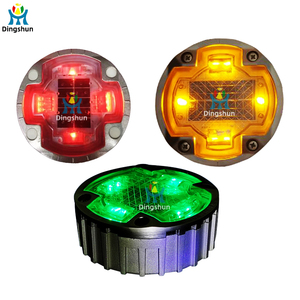

Explore our export-certified solar obstruction lights, roadway delineators, and warning systems designed to withstand Melbourne's UV exposure, coastal salinity, and seasonal temperature swings.
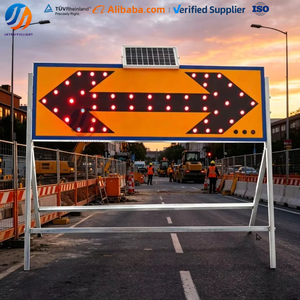
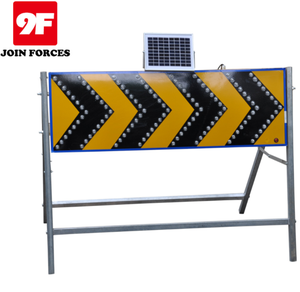
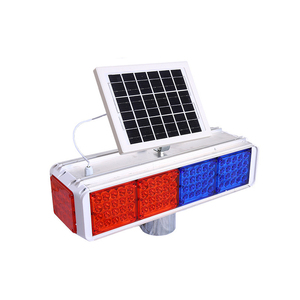
A rigorous examination of compliance mandates, CASA MOS Part 139 specifications, and meteorological challenges governing tall structures across southeastern Australia.
The urban skyline of Melbourne, spanning from the dense vertical clusters of the Central Business District (CBD), Southbank, and Docklands to rapid horizontal infrastructural growth across the Western and Northern growth corridors, demands absolute adherence to aviation obstruction marking protocols. As structures penetrate the lower airspace regulated by the Civil Aviation Safety Authority (CASA) and local council planning overlays, implementing fail-safe, solar-powered visual beacons is not merely an engineering recommendation—it is a legal prerequisite for protecting airspace integrity.
Under the Australian regulatory architecture defined by CASA Manual of Standards (MOS) Part 139 – Aerodromes, specifically Chapter 9 ("Obstacle Clearance and Marking"), structures that project through an obstacle limitation surface (OLS) or exceed 110 meters above ground level (AGL) must be clearly demarcated with approved obstruction lighting. In dynamic metropolises like Melbourne, where air traffic converges on major transport hubs such as Melbourne International Airport (Tullamarine), Essendon Fields, Moorabbin Airport, and regional aerodromes like Avalon Airport, uncontrolled obstacles pose severe hazards to visual flight rules (VFR) and instrument flight rules (IFR) operations.
Operating an un-gridded aviation warning system across Victoria requires confronting harsh regional microclimates. Melbourne is world-renowned for experiencing "four seasons in one day." Coastal structures lining Port Phillip Bay and the Mornington Peninsula endure relentless airborne maritime salt spray, corrosive humidity, and powerful marine gusts. Simultaneously, inland communications masts across the Great Dividing Range face sub-zero nocturnal winter drops, severe frost cycles, and intense radiant solar ultraviolet (UV) loads in summer. Traditional hardwired obstacle lighting systems often face prohibitive conduit cabling costs, lightning surge vulnerability, and utility grid dependency. Off-grid, self-contained solar obstruction luminaires with intelligent Maximum Power Point Tracking (MPPT) logic represent the premier technological solution for asset protection.
| CASA / ICAO Category | Intensity Rating | Beam Spread (Horiz / Vert) | Operational Flash Mode | Recommended Melbourne Deployment | Compliance Tier |
|---|---|---|---|---|---|
| Low-Intensity Type A | ≥ 10 cd (Candelas) | 360° / > 10° | Steady Burning Aviation Red | Industrial stacks, perimeter obstacles < 45m AGL | MOS 139 Certified |
| Low-Intensity Type B | ≥ 32 cd (Candelas) | 360° / > 10° | Steady Burning Aviation Red | Tower cranes, construction hoists, low comms masts | MOS 139 Certified |
| Low-Intensity Type E | ≥ 32 cd (Candelas) | 360° / > 10° | Flashing Red (20–60 FPM) | Wind monitoring towers, temporary hazards, transmission towers | MOS 139 Certified |
| Medium-Intensity Type A | 20,000 cd (Day) / 2,000 cd (Night) | 360° / 3° Custom Cut-off | Flashing White (20–60 FPM) | Structures > 150m AGL, dual-purpose day/night demarcation | ICAO Annex 14 |
| Medium-Intensity Type B | 2,000 cd ± 25% | 360° / 3° Custom Cut-off | Flashing Red (20–60 FPM) | Turbine nacelles (Gippsland / Western Plains), tall chimneys | CASA / ICAO |
| Medium-Intensity Type C | 2,000 cd ± 25% | 360° / 3° Custom Cut-off | Steady Burning Red | High-rise building parapets in Melbourne CBD / Southbank | CASA / ICAO |
From towering jib cranes reshaping Melbourne's skyline to wind generation corridors in regional Victoria, our solar obstruction solutions provide unyielding reliability.
With major urban redevelopment initiatives across Southbank, Fishermans Bend, and North Melbourne, tower cranes continuously breach local OLS ceilings. Installing mains AC wiring up a dynamic, climbing crane mast is expensive and prone to cable breaks. Our self-contained solar Low-Intensity Type B fixtures feature integrated heavy-duty magnetic and scaffolding clamps, allowing riggers to affix them to crane jibs, counter-weights, and apexes within minutes. They provide instantaneous dawn-to-dusk photometric compliance without adding load to generator switchboards.
Victoria's Renewable Energy Zones (VREZ)—stretching through the Western Plains, Central Highlands, and Gippsland—host towering wind turbines reaching blade tip heights beyond 200 meters. Medium-Intensity Type B flashing red solar beacons positioned on nacelles and intermediate met-masts ensure visual containment for low-flying emergency rescue aircraft and regional aviation. Equipped with GPS synchronization modules, our systems flash in unison across an entire wind park, eradicating visual noise and pilot disorientation.
Broadcast towers and wireless relay poles situated across the Dandenong Ranges, Yarra Ranges, and regional bushland often operate on isolated ridgelines with unreliable utility grids. Running trenching across rocky terrain costs upwards of $120 per meter. Enpowers solar obstruction beacons eliminate the need for sub-distribution lines. With IP68 sealed LiFePO4 batteries and mono-crystalline solar wafers capable of low-light diffuse radiation harvesting, our systems flash non-stop through Victorian winter cloud fronts.
At the Port of Melbourne—Australia's busiest container and bulk cargo hub—container gantry cranes, silo towers, refinery flare stacks, and conveyor bridges pose navigation hazards to both low-altitude aircraft and incoming maritime traffic. Our luminaires are cast from marine-grade A356 aluminum alloy with an electrostatically applied anti-corrosive powder finish resistant to ISO 12944 C5-M marine exposure. They provide seamless continuous visual delimitation across salt-laden estuaries and river mouth approaches.
High-voltage electricity transmission lines traversing the Yarra River basin and agricultural corridors present catastrophic strike risks for aerial firefighting aircraft and crop dusters. Solar-powered catenary warning lights and tower apex markers offer autonomous nighttime strobe safety without requiring expensive inductive power couplers or high-voltage step-down transformers connected directly to the phase conductors.
Major Victorian medical facilities—including The Royal Melbourne Hospital and The Alfred—depend on life-saving helicopter emergency medical services (HEMS). Cranes and rooftop elevator shafts located within the HEMS landing corridors must be marked with non-dazzling, low-intensity visual markers. Our precision-engineered optics deliver narrow vertical cut-offs, preventing glare into night-vision goggles (NVG) or pilot eyes while retaining crisp long-range recognition.
The convergence of carbon neutrality mandates, aviation safety upgrades, and digital infrastructure is transforming obstruction lighting procurement across Melbourne.
Major Tier-1 infrastructure contractors working on Victoria’s "Big Build" projects face stringent environmental sustainability requirements. Replacing grid-connected halogen obstruction beacons with self-sufficient solar LED luminaires reduces kilowatt-hour consumption to zero, cutting site carbon emissions and simplifying Green Star building compliance.
Single-point flashing creates chaotic visual fields when applied across large wind farm complexes or bridge spans like the West Gate. Modern Victorian project briefs now demand GPS-synced beacons. Our integrated GNSS receivers pulse all lights at identical millisecond intervals without the need for inter-luminaire data cabling.
Victorian summers frequently face atmospheric degradation from regional bushfire smoke haze. Aviation authorities require certified chromacity coordinates for Aviation Red (625nm peak wavelength) to ensure optical penetration through high aerosol concentrations without chromatic shifting into ambiguous amber bands.
Scaling high asset towers for routine beacon maintenance introduces severe fall-from-height hazards. Modern tenders require integrated LoRaWAN, NB-IoT, or dry-contact alarm telemetry that relays battery voltage, solar input current, and LED failure warnings directly to facilities management dashboards.
Combining world-class engineering, custom solar sizing algorithms, and direct factory-to-project dispatch without middleman markups.
As a global manufacturing authority exporting mission-critical traffic and solar warning technology to over 20 countries, our production headquarters houses dedicated automated SMT pick-and-place lines, in-house photometric goniophotometer darkrooms, thermal shock chambers, and salt-mist immersion baths. We build products designed for high-stress civil deployments compliant with major international standards including NHAI, PWD, BRO, and international ICAO / FAA / CASA specifications.
We eliminate agency markups and supply chain inflation. Melbourne developers and asset operators receive direct factory pricing, certified bill of materials (BOM), and direct communication with electrical design engineers.
We calculate solar module watt-peak (Wp) and lithium reserve amp-hours based on your exact Victorian coordinate insolation records (NASA Surface Meteorology datasets), guaranteeing uninterrupted 365-day operation.
From custom 48mm-60mm scaffolding U-bolts for Melbourne crane jibs to specialized flange plates, frangible couplings, and magnetic leveling pedestals, we build hardware tailored to your site drawings.
We eschew short-lived lead-acid or standard lithium-ion batteries. Our products utilize advanced Lithium Iron Phosphate (LiFePO4) cells boasting 3,000+ deep discharge cycles and thermal stability up to +65°C.
Every batch undergoes mandatory 48-hour continuous burn-in tests, waterproof submersion checks, and spectral radiance validation before secure export palletization to the Port of Melbourne.
Every shipment is backed by verified factory test certificates, ICAO/CASA compliance declarations, wiring schematics, and complete customs export documentation for rapid clearance across Australian borders.
In-depth technical answers addressing Victorian aviation regulations, environmental resilience, and project logistics.
Our obstruction luminaires are precision-engineered to meet and exceed the photometric candela matrices, beam spread cut-offs, and chromaticity tolerances stipulated in CASA Manual of Standards (MOS) Part 139 – Chapter 9. For Low-Intensity Type A (10 cd) and Type B (32 cd), our custom Fresnel lenses produce a full 360° horizontal omnidirectional beam with an elevation divergence exceeding 10°. Photometric test reports verified via goniophotometer measurement confirm exact aviation red chromaticity compliance between 615nm and 630nm wavelengths.
Melbourne experiences significant seasonal solar variations, with peak winter insolation dropping to approximately 1.8 to 2.2 Peak Sun Hours (PSH) per day in June and July. To prevent battery starvation, our export systems engineered for southeastern Australia incorporate high-efficiency mono-crystalline solar panels paired with ultra-low loss MPPT microcontrollers. Crucially, we size our LiFePO4 battery banks to provide between 10 to 21 consecutive days of full operational autonomy without any solar replenishment, guaranteeing continuous flashing through extended Victorian overcast spells.
Yes. Deployments along coastal Victoria (Docklands, Williamstown, Geelong, Mornington) face severe airborne chlorides. Our light heads are manufactured using high-grade, copper-free A356 die-cast aluminum alloys treated with chromate conversion coating and finished with architectural UV-stabilized electrostatic powder coatings. Enclosures achieve an IP68 ingress protection rating with fluorosilicone gaskets, ensuring complete resistance against salt-fog corrosion per ASTM B117 standards and preventing moisture intrusion under severe sea-wind pressures.
Generally, under CASA regulations, any temporary or permanent structure reaching 110 meters (360 feet) above ground level (AGL) requires mandatory notification and obstacle lighting assessment. However, within Melbourne's urban core and surrounding aerodrome protection zones (such as Melbourne Airport Environs Strategy and Essendon Airport OLS), structures as low as 30 to 45 meters may penetrate protected airspace surfaces, making obstruction marking legally compulsory. Project engineers should consult both local council planning schemes and CASA MOS 139 before finalizing site safety designs.
Our aviation-grade LED arrays utilize high-bin OSRAM / Lumileds chips with an engineered L70 service life exceeding 100,000 hours (over 11 years of continuous nocturnal operation). The built-in Lithium Iron Phosphate (LiFePO4) storage cells are rated for over 3,000 charge-discharge cycles at 80% Depth of Discharge (DoD), which translates to a service life of 7 to 10 years under typical ambient temperature conditions. Batteries are modular and easily replaced in the field without decommissioning the optical assembly.
We incorporate integrated multi-constellation GNSS (GPS, GLONASS, Galileo) receiver chips into our flashing obstruction lights. Upon initial boot-up, each beacon locks onto satellite time signals (1 Pulse-Per-Second). This synchronizes the flash frequency across infinite luminaires across wind farms, high-voltage spans, or mega-construction sites down to a microsecond tolerance, completely eliminating discordant strobe effects without interconnecting control cables.
We supply modular, hot-dip galvanized and marine-grade 316 stainless steel mounting systems suited for diverse structural geometries. For tower cranes, we supply heavy-duty scaffolding pipe clamps (compatible with standard 48.3mm scaffold tubes), high-strength neodymium magnetic mounting pedestals (tested against 160 km/h wind shear), and vertical bolt-down flange plates designed for direct apex attachment.
Standard export orders are processed and manufactured within 7 to 14 business days. For urgent construction deadlines in Melbourne, express air freight via DHL/FedEx arrives at Melbourne Airport (Tullamarine) within 4 to 6 business days post-dispatch. Bulk commercial container shipments (FCL/LCL) route directly to the Port of Melbourne with typical maritime transit times of 16 to 22 days, complete with Australian Border Force compliant customs declaration paperwork.
Direct from our high-precision manufacturing facility to your construction site or facility in Victoria. Request a comprehensive technical dossier, photometric compliance documentation, and factory-direct commercial quotation today.