Global Export Markets Served
Hermetic Ingress Engineering
Autonomous Depletion Reserve
In-House Manufacturing QC
Configured for Mediterranean climatic conditions, high-velocity highway exits, urban diversions, and maritime coastal humidity.

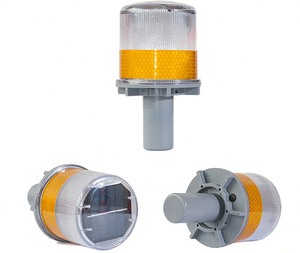
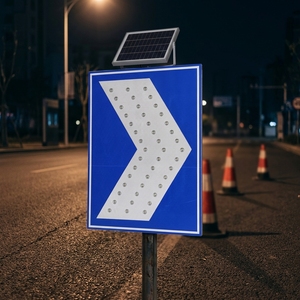

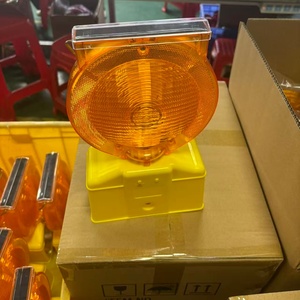
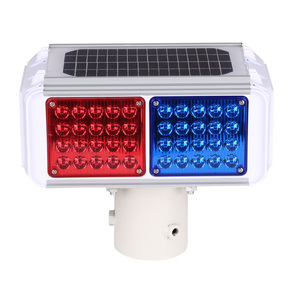
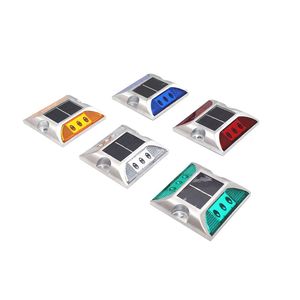
Modern civil infrastructure within the Autonomous Community of Catalonia, particularly the Àrea Metropolitana de Barcelona (AMB), contends with a multifaceted traffic flow equation. Arterial highways such as the AP-7 (Autopista del Mediterráneo), the C-31 / C-32 coastal transit conduits, and the hyper-dense B-10 / B-20 ring roads (Rondes de Barcelona) process high-density vehicular flows under distinct microclimatic stressors. As a specialized solar highway flasher exporter serving engineering contractors and municipal procurement departments in Barcelona, Enpowers International delivers hardware specifically tuned to these unique regional variables.
The strategic deployment of autonomous solar highway blinkers, flashing chevron delineators, and amber hazard beacons addresses critical sightline and braking differentials. High-velocity merges, sudden geometric radius reductions in mountainous switchbacks leading toward Montserrat, and fog-prone low-elevation coastal links demand active, self-luminous warning systems. Photovoltaic traffic signaling represents the vanguard of sustainable roadway safety, operating completely isolated from municipal electrical grid fluctuations.
Engineered to satisfy the stringent requirements of the Servei Català de Trànsit and international highway engineering frameworks.
Toll plaza transition zones, high-speed divergence ramps, and sharp curvature interchanges require intensive optical warning. Our solar chevron arrows and amber blinkers pierce through high ambient visual noise, offering 1,000-meter detection ranges that give long-distance logistics drivers adequate deceleration buffer.
Heavy multimodal freight operations, gantry crane movements, and round-the-clock container terminals necessitate industrial-grade visual segregation. Here, solar spike indicator lights and dual-aspect hazard flashers withstand continuous heavy-axle loadings while offering salt-spray corrosion resistance against maritime sea winds.
Barcelona’s Zona de Baixes Emissions mandates agile perimeter traffic diversion during air quality events and structural corridor repairs. Self-contained barricade strobe blinkers and magnetic emergency beacons enable rapid traffic redirection without waiting for municipal utility grid tie-ins.
How progressive European mandates are transforming physical road-signage procurement from static elements into autonomous photonic beacons.
Both Spanish national and Generalitat de Catalunya infrastructure budgets heavily incentivize decarbonized hardware. Solar-powered blinkers eliminate lifetime operating emissions and minimize the carbon footprint associated with deep-trench cabling, concrete trenching, and grid sub-station load allocations.
The Mediterranean basin is increasingly subject to localized sudden flash downpours (Gota Fría / DANA) interspersed with intense summer thermal loads. Modern procurement demands solar flashers with IP68 thermal-isolated battery enclosures that operate seamlessly between -20°C and +70°C without risk of electrolyte degradation.
Procuring entities in Catalonia strictly require adherence to European traffic signaling norms. This involves rigorous photometrics regarding luminous intensity class (L2H, L8H), flash cycle frequencies (50-60 flashes/min), and chromatic coordinates for optical safety amber, red, and blue.
For infrastructure consultants and EPC concessionaires compiling formal tender submittals, our solar flashers fulfill the following mechanical and electrical benchmarks:
| Engineering Parameter | Export Technical Specification | Applicable Operational Standard |
|---|---|---|
| Optoelectronic Element | Ultra-bright AlGaInP / InGaN LEDs, 5mm or High-Power SMD; 100,000 hrs MTBF | EN 12352 Class L8H / ICAO Annex 14 |
| Photovoltaic Subsystem | High-efficiency Monocrystalline Silicon (18.5% - 22% conversion efficiency) | IEC 61215 / IEC 61730 Tested |
| Electrochemical Energy Storage | Deep-cycle LiFePO4 (Lithium Iron Phosphate) or High-Temp Sealed Gel VRLA | UN 38.3 Safe Transport Certified |
| Depletion Autonomy | 120 hours continuous operation without direct solar irradiation (Overcast/Rain) | Servei Català de Trànsit Requirements |
| Structural Enclosure | Extruded Aluminum Alloy 6063-T6 / UV-stabilized Bayer Polycarbonate (IK08 / IK10) | EN 60529 (IP65 - IP68 Hermetic Seal) |
| Flash Synchronization | Integrated micro-controller with optional GPS synchronous cascading flash control | DIN 67527 / Spanish DGT Directive |
Enpowers International operates an advanced, fully integrated manufacturing facility in Ahmedabad, India (GIDC Phase-1, Vatwa). We control every engineering tolerance—from precision SMD LED placement, PCB conformal coating, and custom solar module integration, to accelerated environmental aging tests—bypassing trading intermediaries to deliver uncompromising quality directly to Barcelona project sites.

Direct technical and logistical clarifications for engineering procurement teams, safety directors, and logistics planners.
Our units are dimensioned with an energy buffer ratio of 1:5. This means that a standard 6-hour daylight exposure stores sufficient charge within our high-density LiFePO4 batteries to sustain uninterrupted blinking for up to 5-7 days (120+ hours) of persistent fog, rain, or overcast conditions commonly encountered along the Catalan coastline.
Yes. Our internal microcontrollers can be pre-programmed at the factory to match specific flash frequencies (typically 50, 60, or 75 pulses per minute) and duty cycles required by the Servei Català de Trànsit and Dirección General de Tráfico (DGT). Ambient light sensors automatically throttle day/night intensity to prevent driver glare.
Ocean shipments from Nhava Sheva (JNPT) or Mundra to the Port of Barcelona have an average ocean transit time of 22–28 days. Air freight consignments reach Josep Tarradellas Barcelona-El Prat Airport (BCN) within 4–6 business days. We provide complete export clearance dossiers including Bill of Lading, Packing Lists, Certificates of Conformity, and Commercial Invoices.
For seaside infrastructure such as the Ronda Litoral (B-10) and Port de Barcelona corridors, our housings are fabricated from marine-grade architectural anodized aluminum (6063-T6) or UV-stabilized polycarbonate, coupled with 316 stainless steel external fasteners. PCB assemblies receive double conformal coating to prevent corrosion from saline condensation.
Absolutely. We supply universal adjustable pole clamps designed to mount directly onto standard European tubular sign posts (ranging from Ø 60mm to Ø 114mm diameter), as well as dedicated brackets for crash barrier (guardrail) w-beam integration, overhead portal gantries, and concrete barrier top-mounting.
Enpowers International is an ISO-aligned, pure-play original equipment manufacturer with our sprawling industrial factory in Ahmedabad, India. We do not broker third-party equipment; every flasher head, solar bracket, and driver circuit is manufactured, assembled, and quality-tested within our own production facilities.
Whether you require tender-compliant samples, specialized mounting schematics, or direct container-load export pricing for highway infrastructure contracts, our engineering team is ready to assist.