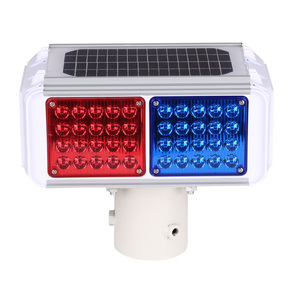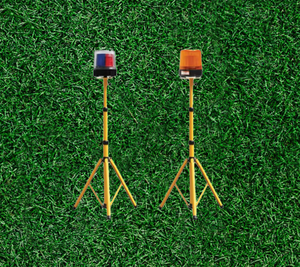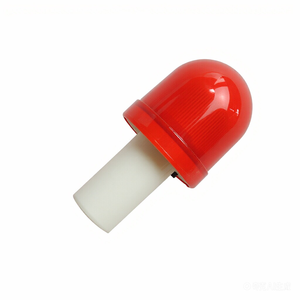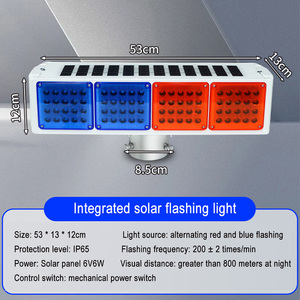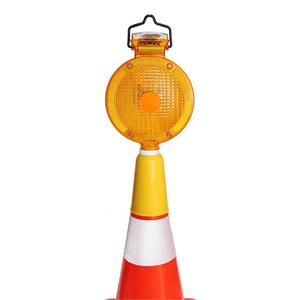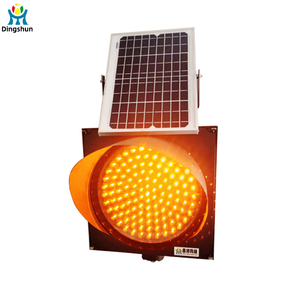
12V Portable LED Warning Beacon with Solar Panel Yellow Flashing Traffic Light
- High-flux amber optical LED cluster
- Integrated monocrystalline PV module
- Over 1000m daytime visibility distance
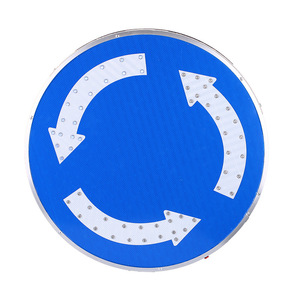
Browse our factory-direct selection of solar-powered flashing hazard beacons, barricade strobes, and optical road signs calibrated for high luminous contrast under intense oceanic and desert sun conditions.
Australian road contractors face distinct environmental constraints: extreme ultraviolet degradation, remote access logistical costs, and thermal stress exceeding 50°C. Review how our technical architecture exceeds local engineering parameters.
Deploying solar blinkers along remote arteries like the Stuart Highway or Great Northern Highway demands true autonomous resilience. Civil contractors cannot bear the reputational or logistical liability of premature battery failure caused by thermal degradation or undersized photovoltaic panels.
Every unit we supply for Australia features high-efficiency monocrystalline cells paired with thermal-protected Lithium Iron Phosphate (LiFePO4) or AGM Deep Cycle chemistries. Intelligent microcontrollers regulate duty cycles, guaranteeing minimum 7 to 10 days of continuous overcast flashing autonomy without grid dependency.
| Engineering Metric | Standard Commercial Grade | Enpowers AU Specification |
|---|---|---|
| Luminosity Rating | 400–600 cd/m² (Basic LEDs) | > 1200 cd/m² High-Flux Epistar/Cree LEDs |
| Polymer UV Resistance | Standard ABS (Yellows in 12 mos) | UV-Stabilized Polycarbonate + Anti-Chalking Coat |
| Ingress Protection | IP54 (Basic rain splash) | IP65 to IP66 (Pressure spray & fine desert dust) |
| Operating Thermal Span | -10°C to +50°C | -20°C to +75°C (Tested for Pilbara heat waves) |
| Overcast Autonomy | 3 to 4 Days | 7 to 10 Days Continuous Flashing Cycle |
| Regulatory Reference | Uncertified generic import | AS/NZS 3845, AS 1742.3, MRTS02 Compliant |
From state road authority maintenance to private resource haulage networks, our solar warning beacons solve safety challenges where utility power is technically or financially infeasible.
Unsignalized rural crossroads across Western Australia and Regional Queensland suffer from reduced night visibility. Installing solar amber blinkers on advance warning signposts alerts drivers at 110 km/h speeds well ahead of intersection conflict points without expensive trenching.
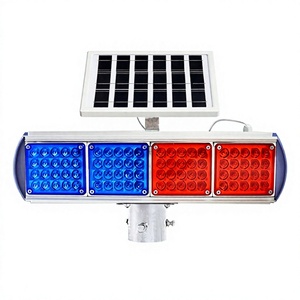
Pilbara and Hunter Valley open-cut mines demand rugged, vibration-damped hazard indicators. Our double-sided red/blue and flashing amber strobe systems delineate oversized vehicle crossings, dump pockets, and active dragline corridors with zero maintenance downtime.
Compliant with state road authority temporary traffic management safety standards, these compact barricade and traffic cone warning lights ensure dynamic work crews can stage rapid lane closures, detours, and speed reductions under harsh nighttime conditions.
Continuous stop-and-go logistics at port weighbridges and toll infrastructure require high-frequency optical indicators. High-illumination solar LED signals communicate lane clearances and maintenance closures instantaneously under full noon glare.
With cyclonic storm fronts and torrential wet-season downpours, coastal NSW and Top End transport infrastructure need IP66 marine-grade sealing. Internal electronics are silicone conformal-coated to resist salt mist and tropical moisture corrosion completely.
Municipal city councils in Victoria and South Australia deploy solar flashing beacons to elevate safety around school zones and pedestrian refuge islands. Built-in astronomical timers or remote radar triggers allow tailored operation during peak commute hours.
Australian tier-1 civil engineering contractors and local councils are transitioning procurement strategies toward sustainable, low-maintenance solar warning technologies.
State agencies (such as Major Transport Infrastructure Authority in Victoria and TfNSW) enforce carbon reduction frameworks across all civil works. Solar-powered flashing road beacons eliminate mains electricity drawdown, cabling conduits, and diesel generator emissions, contributing directly to contractor sustainability scorecards.
Traditional sealed lead-acid (SLA) batteries fail prematurely under Australia's interior heat cycles. The national market has aggressively pivoted to Lithium Iron Phosphate (LiFePO4) storage, which provides over 2,000 charge cycles, compact weight for pole-top mounting, and thermal stability up to 65°C ambient temperatures.
To avoid confusing night-driving motorists, modern Australian road tenders increasingly require synchronized, sequential flashing across chevron arrays and lane taper warnings. Integrated 433MHz/2.4GHz RF chipsets allow groups of beacons to pulse harmoniously without messy interconnecting wires.
Manufactured directly at our integrated production plant at GIDC Phase-1, Vatwa, Ahmedabad, we oversee every tier of production—from optic photometric calibration to climatic chamber stress testing.
No intermediaries or third-party relabelers. Complete control over injection molding, surface-mount PCB assembly, and optical alignment ensures competitive wholesale container rates.
We tailor lens diameters (200mm/300mm), housing bracket fixtures, flash intervals (50 to 60 fpm), and solar panel wattage directly against municipal and state tender drawings.
Approved and deployed on major national expressways by national road authorities including BRO, NHAI, and CPWD, with thousands of continuous zero-defect operating hours.
Standard export-grade seaworthy pallets and foam-cushioned packaging. Direct shipping lanes to Fremantle, Melbourne, Sydney, and Brisbane ports with comprehensive customs documentation.


Direct answers addressing certification, lead times, tender documentation, and environmental validation for Australian council buyers and project estimators.
Yes. Our export production lines build flashing warning beacons and road hazard lights to match photometric chromaticity, luminous intensity, and flash frequency per Australian Standard AS 1742.3 (Manual of uniform traffic control devices - Traffic control for works on roads) and AS/NZS 3845. Optical components provide distinct amber yellow (590-595nm) and emergency red wavelengths that comply with state road authority guidelines including Transport for NSW (TfNSW), Queensland Department of Transport and Main Roads (TMR MRTS02), and VicRoads specifications.
Standard consumer batteries degrade rapidly under sustained temperatures above 45°C encountered in Central Australia, the Pilbara, and the Northern Territory. For Australian orders, we incorporate high-grade LiFePO4 cells with built-in thermal charge cut-offs, rated to operate reliably up to 65°C ambient temperatures. Solar panels utilize high-transmittance tempered glass that withstands high UV radiation indices (UV index 11+) without yellowing or micro-cracking.
Standard production runs for batch orders (50 to 500 units) require 10 to 18 business days at our Ahmedabad plant. Ocean freight transit from Mundra/Nhava Sheva to Australian ports (Fremantle, Melbourne, Sydney, Brisbane) typically takes 18 to 26 days. We provide complete sea freight documentation, including commercial invoices, packing lists, bill of lading, and certificate of origin to ensure seamless Australian Border Force customs clearance.
Yes. We manufacture customized universal mounting hardware that fits standard Australian 60.3mm OD, 76mm OD, and 89mm OD circular hollow section (CHS) signposts, as well as square Telspar and Unistrut channel profiles. Heavy-duty hot-dip galvanized steel or grade 304 stainless steel U-bolts are provided to prevent bi-metallic corrosion.
All solar hazard warning lights and blinker systems supplied to Australia carry a standard 2-year to 3-year factory warranty covering the photovoltaic module, LED array, microcontroller board, and battery. Modular internal components allow fast replacement in the field. Spare driver boards, lenses, and batteries can be stocked alongside primary project shipments.
Yes. Our in-house firmware development team can program custom flash rates (e.g., 50, 60, or 75 flashes per minute), dual strobe bursts, variable duty cycles, and automated dimming curves (reducing power at 2:00 AM while retaining optical compliance) based on specific tender requirements.
Consult with our international engineering desk for volume pricing, photometric test certificates, and Australian tender customization. Receive full technical specifications within 24 business hours.