Tailored specifically for civil contractors, municipal authorities, port operators, and highway concessionaires across Thailand and Southeast Asia.
The Kingdom of Thailand encompasses a rapid-growth logistics ecosystem spanning over 70,000 kilometers of national highways, expressways, and arterial corridors overseen by the Department of Highways (DOH), the Department of Rural Roads (DRR), and the Expressway Authority of Thailand (EXAT). However, procuring solar hazard warning lights in Southeast Asia presents extreme engineering hurdles rarely encountered in temperate western climates. Infrastructure procurement officers face an aggressive cocktail of equatorial heat (regularly surpassing 42°C ambient and 70°C internal enclosure temperatures), prolonged torrential precipitation during the southwest monsoon, and severe relative humidity (often >90% RH).
Standard commercial warning beacons fail prematurely under Thai road conditions due to three recurring failure modes: thermal degradation of traditional lithium polymer or flooded lead-acid batteries, hydrolytic degradation and UV yellowing of cheap polystyrene lenses, and capillary moisture ingress compromising the surface-mount device (SMD) LED boards. As an established direct manufacturer and international exporter delivering to over 20 nations, our road safety systems are specifically customized to exceed ASTM, CIE, and Thailand Ministry of Transport standards.
Our engineering architecture integrates Grade-A Lithium Iron Phosphate (LiFePO4) cell chemistry with an operating thermal window up to 65°C, ensuring over 2,000 full discharge cycles without thermal runaway. The outer housings are pressure-injection molded from virgin UV-stabilized Bayer polycarbonate, maintaining 92% optical clarity after 3,000 hours of accelerated QUV weathering test exposure. Coupled with multi-stage constant-current MPPT solar controllers and IP67/IP68 sealing matrices, our solar flashing beacons ensure 100% operational uptime through prolonged monsoon overcast periods across Thailand's eastern seaboard and southern peninsular freight lines.
From Eastern Economic Corridor mega-highways to municipal work zones, our beacons provide autonomous, un-jammable safety perimeters.
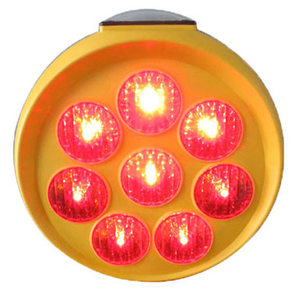
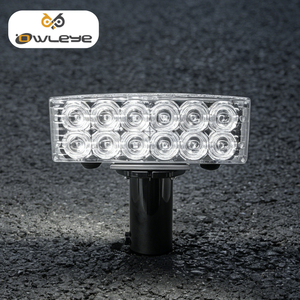
Continuous heavy-freight routes along Motorway 7 and Route 331 linking Bangkok, Chonburi, and Rayong demand high-intensity amber strobe beacons at high-speed merging nodes, toll deceleration plazas, and weigh-in-motion bypass stations where mains electricity is unavailable or cost-prohibitive to trench.
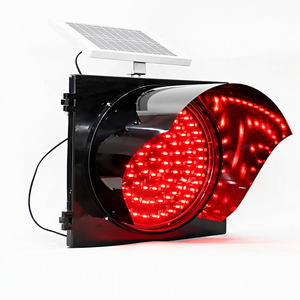
The Department of Rural Roads network traversing mountainous northern provinces like Chiang Mai and Mae Hong Son features sharp hairpin switchbacks susceptible to dense mountain fog and unlit curves. Our solar self-contained blinkers with 360-degree Fresnel magnification provide visible warnings up to 1,200 meters away without grid dependency.
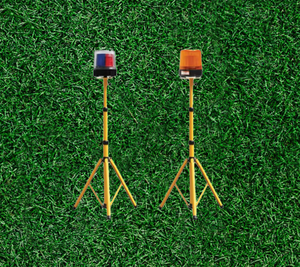
High-density container terminals, straddle carrier zones, and heavy industrial estates in Map Ta Phut require continuous hazard demarcations. Alternating red-blue and high-candela amber beacons warn forklift operators and prime movers around rail gantries, chemical storage containment berms, and blind intersections.
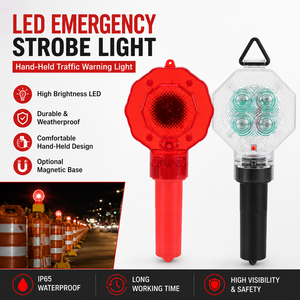
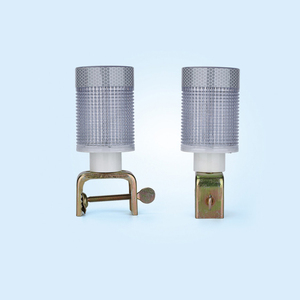
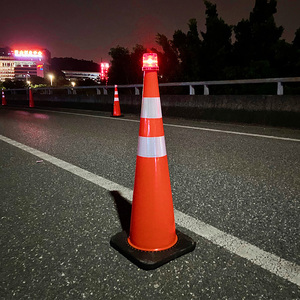
Active mass transit civil engineering contracts (MRT Orange and Purple line works) require portable, cone-mounted, and barrier-mounted flashing units. Instant rapid-lock brackets allow evening road work crews to establish visible diversions along Sukhumvit, Rama II, and Vibhavadi Rangsit roads in under 15 minutes.
During the annual monsoon deluge along Highway 4 (Phetkasem Road) and southern coastal arteries, low-lying highways face flash flooding. Our IP68 hermetically welded submersible warning lights continue pulsing underwater or through torrential downpours, marking submerged bridge abutments and median limits.
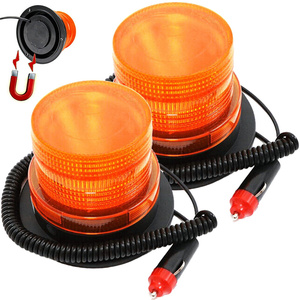
In central and northeastern provinces (Isan) during November–April milling seasons, slow-moving overloaded agricultural cane haulers operate on unlit two-lane dual carriageways. Magnetic portable beacons provide immediate roadside breakdown signaling, preventing rear-end collisions by high-speed interprovincial transit buses.
Why government-grade infrastructure demands specialized engineering parameters over consumer-grade imports.
| Engineering Parameter | Our Tropical-Spec Solar Beacons | Standard Generic Market Importers | Thai Infrastructure Engineering Benefit |
|---|---|---|---|
| PV Cell Composition | A-Grade Monocrystalline Silicon (21.8% efficiency) | Polycrystalline or Amorphous Thin-Film (12-14%) | Accelerated recharge during cloudy Thai monsoon rain days. |
| Energy Storage Chemistry | Lithium Iron Phosphate (LiFePO4) 3.2V / 6000mAh | Lead-Acid (SLA) or standard Li-ion NMC 3.7V | Survives ambient 60°C enclosure heat; zero explosion hazard; 5+ yr life. |
| Lens Material & Optics | Virgin Bayer Polycarbonate + UV380 Stabilizer | Recycled Polystyrene (PS) or standard Acrylic (PMMA) | No yellowing or crazing under intense Southeast Asian UV indices (UV index 11+). |
| Luminous Intensity (Cd) | High-Intensity > 350–800 cd (Epistar / Bridgelux) | Generic 3528 SMD LEDs (80–120 cd) | Penetrates heavy tropical cloudbursts, morning mist, and dust > 1,000m. |
| Ingress Rating | Full IP66 / IP67 with Ultrasonic Sonic Welding | IP44 / IP54 with glued snap-fit joints | Prevents internal condensation, fungal growth, and short-circuit failure. |
| Autonomy Without Sun | 120–180 continuous flashing hours (5–7 full days) | 24–48 hours maximum | Guaranteed continuous nighttime warning during 5-day continuous monsoon overcast. |
Adapting procurement strategies to align with the Thailand 4.0 Smart Transport Master Plan.
Thailand's DOH is increasingly specifying RF-synchronized solar hazard flashers for long construction work zones on interprovincial highways. Rather than chaotic random blinking, synchronized sequential firing guides nighttime drivers seamlessly into bypass lanes, reducing lane-closure collision rates by over 42%.
Under Thailand's National Carbon Neutrality Roadmap 2050, the Ministry of Transport is transitioning all secondary highway warning lights from AC grid power to off-grid solar architecture. This eliminates millions of Baht in cabling, transformer maintenance, and copper cable theft along remote corridors.
Civil engineering joint-ventures on EXAT and DOH contracts face severe liquidated damages for road accidents within un-demarcated construction perimeters. Contractors are abandoning brittle disposable warning lamps in favor of certified, drop-tested industrial units that withstand heavy construction vehicle strikes.
Advanced traffic codes now require solar hazard beacons to produce high daytime candela (>600 cd) to combat harsh tropical midday glare, while automatically throttling back by 50% at night to prevent blinding oncoming motorists, preserved via calibrated optical micro-controllers.
Controlling every stage from optical mold tooling to photometric burn-in verification.
No trading middlemen markup. We handle surface-mount SMT placement, injection molding, and potting directly, delivering unbeatable project pricing.
Configurable lens diameters (100mm, 200mm, 300mm), amber/red/blue/green color arrays, bespoke mounting brackets, and private OEM laser engraving.
Complete documentation packages: Photometric IES files, IP rating lab certificates, Salt-Spray anti-corrosion test reports, and factory warranty certificates.
Established freight lanes with door-to-door or CIF terms to Bangkok Klong Toey port and Laem Chabang Deep Sea Port within 5–9 days transit.
Practical clarifications covering import compliance, tender specifications, and long-term field maintenance.
Partner directly with a seasoned industrial manufacturer. Obtain complete technical datasheets, CAD drawings, tender compliance documentation, and competitive factory-direct volume pricing delivered to your job site or port of entry.