Export Sales: +91 96012 58123[email protected]Exporting to 20+ Countries
MLIT Guidelines & JIS Optical Compliant
Solar Hazard Flasher Suppliers & Exporters for the Japan Market
Precision-Engineered Photovoltaic Strobe Units, Road Hazard Warning Lights, and Fail-Safe Traffic Luminaires Tailored to Japan's Extreme Climatic and Seismic Infrastructure Demands.
Industrial Specification
Engineering Solar Hazard Warning Infrastructure for the Japanese Archipelago
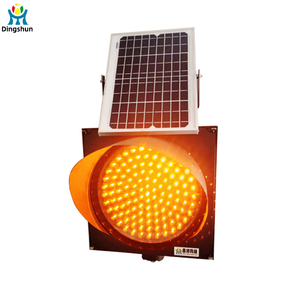
Japan’s transportation networks—managed under stringent technical mandates by the Ministry of Land, Infrastructure, Transport and Tourism (MLIT), regional NEXCO highway agencies, and municipal public works bureaus—represent some of the world's most unforgiving operating environments for autonomous signaling. Exporting solar hazard flashers, chevron curve warnings, and median blinkers to Japan requires transcending off-the-shelf assemblies. It necessitates industrial-grade optical dispersion, micro-controlled MPPT charging architectures capable of winter survival under low-solar-insolation conditions in Hokkaido and Tohoku, and structural housings rated for category-5 typhoon wind loads and coastal salinity.
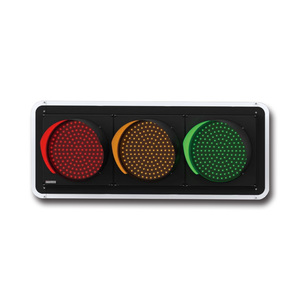
Ultra-bright intersection luminaires featuring anti-glare polycarbonate optical fresnel lenses. Designed for clear sightlines during heavy precipitation, volcanic ash events, and high-speed expressway diverges.
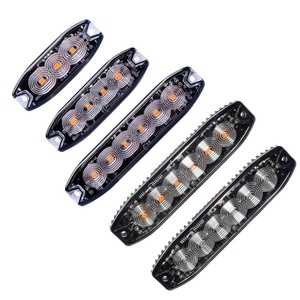
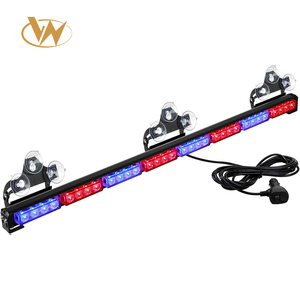
Ultra-slim surface mount vehicle strobes built for highway maintenance trucks, patrol cars, and utility fleets. High vibration resistance with synchronized pulsing programs meeting emergency protocols.
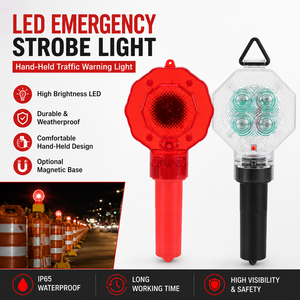
Hand-held and magnetic mount amber/red dual-tone flashing beacons. Engineered for rapid placement by Japanese traffic guidance personnel during seismic disruptions and construction roadblocks.
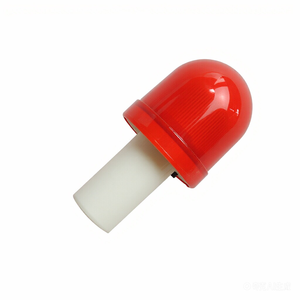
Compact red mini warning flasher with drop-in socket fittings designed for standard Japanese construction cones. Weather-sealed push-buttons with long runtime for overnight urban work zones.
High-power 32-LED directional advisor system with selectable left, right, and center-out split warning sequences. Designed for highway incident management vehicles and sweepers.
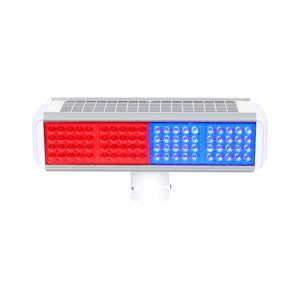
Aerodynamically stabilized red/blue warning flasher boasting 1000m visibility range. Engineered with high-strength polycarbonate shell to withstand coastal typhoon wind pressures.
>1000mNighttime Optical Range
240+ HrsAutonomy Without Sun (10 Days)
IP67 / IK09Water, Dust & Impact Certified
60 m/sTyphoon Wind Load Rating
Geographic Integration
Engineered for Japan's Specific Regional Road Topologies
Japan’s physical geography combines steep mountainous corridors, heavily developed seismic coastal areas, and northern snowbelts. Standard imported solar equipment often fails due to sub-zero battery thermal clipping, salt air corrosion, or insufficient winter irradiance. Here is how our hardware aligns with local demands.
Tohoku & Hokkaido Snowbelt Roads
In high-latitude prefectures, snow accumulation blinds standard horizontal solar collectors, while temperatures plunging below -20°C permanently degrade conventional lead-acid and standard ternary NMC batteries. We equip our Japanese models with vertically oriented steep-tilt (55°–65°) hydrophobic PV mounts and thermal-jacketed LiFePO4 cells with smart low-temperature MPPT cut-off logic.
Anti-Snow Clamping Fixtures
Pacific Coast Typhoon & Saline Corridors
Highways along Shizuoka, Wakayama, and Okinawa endure seasonal oceanic typhoons with gust velocities exceeding 55 m/s, paired with dense, corrosive salt mist. Our chassis utilizes ADC12 die-cast aluminum coated with electrostatically applied fluorocarbon powder, complemented by SUS316 marine-grade stainless hardware that survives 1,000+ hours of continuous salt-spray testing.
SUS316 Hardware & IP68 Seals
Metropolitan Work Zones & Expressways
Tokyo, Osaka, and Nagoya ring roads (Shuto Expressway) require strict optical cutoff to alert merging drivers without inducing night blindness or distracting oncoming urban rail operators. Our collimated LED matrices feature precision micro-prismatic internal visors that confine the primary hazard pulse precisely within legal MLIT viewing angles.
Precision Beam Collimation
Parametric Data
Technical Benchmark Matrix: Japanese Commercial Requirements
Comparing baseline export units with our optimized high-durability hazard flasher series for municipal, concessionaire, and tier-1 road contractor sourcing.
Technical Specification
Standard Export Configuration
Enpowers Japan-Optimized Series
Infrastructure Compliance Target
Solar PV Module Type
Polycrystalline (15% efficiency)
N-Type Monocrystalline (21.8% efficiency)
Rapid recharge under diffuse rainy season light
Battery Chemistry
VRLA AGM Lead-Acid
Grade-A LiFePO4 w/ BMS Cold-Cutoff
Long service life (2,500+ cycles vs 400 cycles)
Operating Ambient Temp
-10°C to +50°C
-25°C to +70°C Guaranteed
Hokkaido winter to Okinawa summer thermal span
Luminous Intensity
>400 cd (Axial)
>850 cd (Axial Amber / Red)
JIS D-5500 Class 1 & MLIT Visibility Spec
Housing Material
Standard Recycled ABS Plastic
Virgin Bayer Makrolon® PC / ADC12 Alloy
IK09 Impact & UV ASTM G154 Resistance
Ingress Protection
IP54 / IP65
Hermetically Potted IP67 / IP68
Complete resilience against torrential monsoons
Market Evolution
Market Modernization: Future Trends in Japan’s Traffic Safety Sector
Japan’s road safety market is undergoing a major paradigm shift driven by demographic shifts, aging infrastructure rehabilitation, and climate resilience frameworks. Understanding these strategic pivots is crucial for EPC contractors and general trading firms (Sogo Shosha).
Post-Disaster Black-Sky Resilience (BCP)
In accordance with Japan’s National Resilience Basic Plan, roadway signals along designated disaster evacuation arteries must operate independently of grid infrastructure during subduction-zone seismic events. Off-grid solar hazard flashers with sustained 10-day battery reserve capacity ensure immediate intersection guidance during widespread transformer failures.
Disaster Evacuation Ready
Mesh-Synchronized Wireless Hazard Warning
Conventional solitary flashing units are being systematically replaced on high-speed expressways by sub-GHz RF mesh synchronized flashers. When entering tight tunnels, fog zones, or blind curves, whole series of chevron arrow signs pulse in simultaneous or chasing patterns, providing drivers with unambiguous kinetic guidance.
RF Synced Micro-Networks
Mitigating Labor Shortages in Road Works
With an aging labor force and shrinking numbers of certified traffic guidance personnel (Kotsu Yudo-in), contractors increasingly rely on autonomous, tripod-mounted, and magnetic portable strobe arrays to demarcate highway resurfacing zones safely without putting personnel in harm's way.
As a vertically integrated lighting and traffic electronics manufacturer headquartered in Ahmedabad, India (operating within GIDC Phase-1, Vatwa), we eliminate middleman trading friction. Our dedicated automated production floors engineer every sub-component: from LED driver SMT placement and solar charge controller firmware development to final CNC housing machining.
Having supplied major infrastructure programs across 20+ countries—incorporating demanding NHAI, PWD, BRO, and overseas EN/US criteria—we provide Japanese buyers with transparent traceability, component-level testing reports, and strict customization flexibility.
True Direct Factory Pricing: Completely transparent component bills with no external trading company markups.
Strict Quality Assurances: 100% burn-in luminescence testing, high-pressure environmental leak testing, and thermal chamber cycling before packaging.
Custom Drawing Execution: Precision custom brackets for Japanese standard pole diameters (φ76.3mm, φ89.1mm, φ114.3mm) and tailored solar mast designs.
Frequently Asked Questions by Japanese Importers & Contractors
Direct technical responses addressing common regulatory, electrical, and commercial questions raised by engineering and procurement teams.
Do your solar hazard flashers comply with Japanese Industrial Standards (JIS D-5500) for chromaticity and luminance?
Yes. Our optical arrays are calibrated to meet JIS D-5500 chromaticity coordinate boundaries for traffic warning lights (Amber: 590nm - 595nm dominant wavelength; Red: 625nm - 630nm). The photometric output maintains an on-axis intensity exceeding 800 candelas during daylight hours, switching automatically via built-in solar cell lux sensors to anti-glare dimmed operation (250 cd) during dusk and night to avoid blinding drivers on unlit expressways.
Can your battery and solar arrays withstand prolonged rainy seasons (Tsuyu) and winter snow cover in Tohoku/Hokkaido?
We specifically engineer our autonomous systems with an expanded battery-to-load autonomy ratio of 10 to 14 consecutive unlit days (240+ operational hours). For northern regions, we integrate cold-tolerant Lithium Iron Phosphate (LiFePO4) or specialized low-temperature Nickel-Metal Hydride cells coupled with MPPT controllers programmed with zero-degree current tapering to avoid lithium plating damage during charging at sub-zero temperatures.
How do your mounting brackets interface with standard Japanese infrastructure poles?
Unlike generic overseas hardware that relies on flexible strapping bands, our export shipments include heavy-gauge hot-dip galvanized steel (HDG) or anodized extruded aluminum clamps engineered specifically for Japanese outer pipe diameters: φ60.5mm, φ76.3mm, φ89.1mm, and φ114.3mm. We also supply custom mast-arm adapter plates for integration with gantry structures, bridge parapets, and guardrail steel posts.
Can you support custom flash patterns (e.g., MLIT 60 fpm standard or synchronized strobe cadences)?
Yes. Our in-house microcontroller firmware is fully flashable before dispatch. We can configure precise single-pulse cadences (such as the standard 60 flashes per minute with a 50% duty cycle preferred by Japanese municipal bureaus), triple-pulse emergency bursts, or deploy RF wireless transceivers (using local Japanese 920 MHz ARIB STD-T108 compliant bands) to facilitate multi-device synchronized cascade warning.
What documentation, warranty, and spare parts provisions are provided for Japanese municipal bids?
We supply comprehensive mill inspection certificates, material composition sheets (RoHS compliant), photometric spectral diagrams, ingress IP67 test reports, and English CAD engineering drawings. All commercial export units feature a standard 3-to-5-year limited hardware warranty, with modular replacement drivers, PV modules, and battery packs packaged to allow fast field swap-outs without requiring pole removal.
Request Custom Quotations & Technical Drawings for Japan Projects
Whether you require tender-compliant solar warning beacons for NEXCO expressway upgrades, temporary magnetic strobes for metropolitan construction, or severe-climate mountain chevron signs, our engineering team will calculate optimal PV/battery autonomy ratios based on your prefecture's solar insolation index.