
High-candela optical lenses, military-grade LiFePO4 energy storage, and corrosion-resistant enclosures configurable for Costa Rica Ministry of Public Works and Transport (MOPT) and SIECA road guidelines.
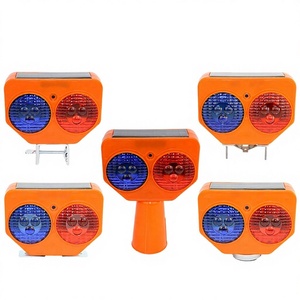
Reinforced iron mount for traffic cones, roadside barricades, and detour channelizers. Features dual optical facets for maximum wet-pavement visibility.
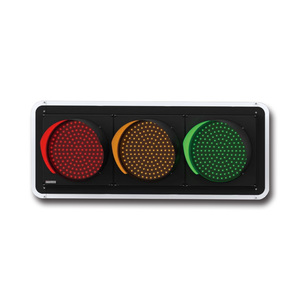
Modular 200mm/300mm optical modules configurable for pure green safe-passage indications, intelligent roundabouts, and toll gantry interfaces.
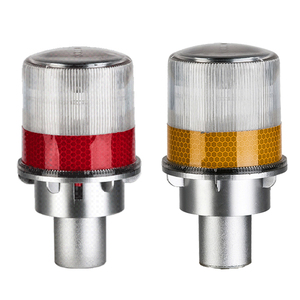
High-efficiency monocrystalline solar charging panel coupled with multi-angle LEDs for work-zone lane demarcations and temporary construction limits.
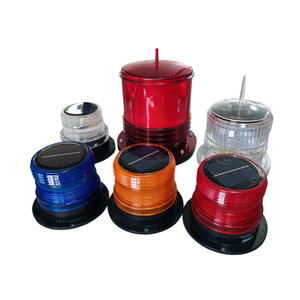
Engineered with high salt-fog resistance for coastal logistics terminals at Puerto Limón and Caldera. Available in calibrated green safe-berth aspects.
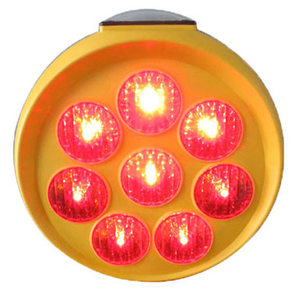
Omnidirectional radial LED dispersion ideal for sharp mountainous curves, median points, and rural junctions along Costa Rican arterial routes.
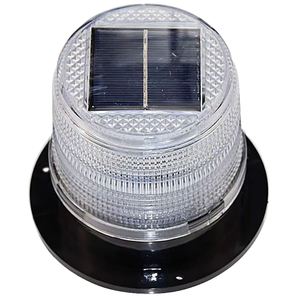
High-adhesion neodymium magnetic base for rapid vehicle roof mounting during emergency escort services, utility repairs, and temporary lane inspections.
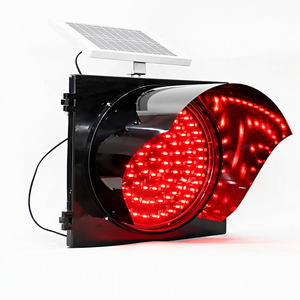
UV-stabilized polycarbonate housing withstands intense tropical ultraviolet radiation and unrelenting wet-season storms without lens clouding.
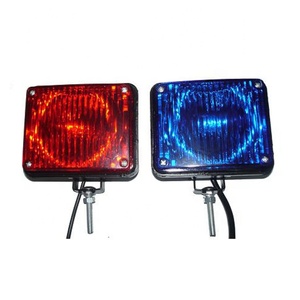
Compact solid-state LED flasher modules designed for contractor work trucks, roadside assistance vehicles, and highway concessionaire fleets.
Addressing the intersection of tropical rain microclimates, seismic topography, sustainable decarb goals, and strict SIECA/MOPT optical protocols.
In modern traffic engineering across Central America, solar green blinker lights (balizas solares de destello verde) serve a vital, specialized role distinct from traditional regulatory amber and red warnings. Configured to emit focused wavelengths between 505 nm and 525 nm (CIE chromaticity coordinates within the pure green spectrum), these self-sustaining autonomous beacons communicate affirmative guidance, lane-availability confirmation, right-of-way clearance, and priority navigation through complex road infrastructures.
For municipal authorities, highway concessionaires, and civil engineering contractors in Costa Rica, procuring photovoltaic traffic control devices involves confronting extreme operational conditions. From torrential downpours exceeding 5,000 mm annually along the Caribbean lowlands to zero-visibility cloud-cover zones atop the Cordillera de Talamanca, standard commercial blinkers suffer catastrophic moisture penetration, solar starvation, and battery breakdown. Sourcing directly from an experienced manufacturer like Enpowers International guarantees field-tested durability certified for heavy equatorial and maritime conditions.
Deploying solar green flashing luminaires in Costa Rica requires understanding the distinctive topographical segments defined by the Ministry of Public Works and Transport (MOPT) and the Road Safety Council (COSEVI):
Navigating through Zurquí and Braulio Carrillo National Park involves perpetual cloud mist, horizontal rains, and sudden visibility drops below 15 meters. Green solar blinkers provide clear lane-edge alignment and emergency escape ramp confirmation without requiring grid cabling over unstable geological slopes.
High-volume logistics arteries leading into APM Terminals Moín and Puerto Caldera rely on solar green blinkers to sequence heavy freight traffic into automated terminal inspection lanes, customs weighing stations, and dynamic reversible bypass routes subject to intense ocean salt spray.
Aligned with Costa Rica's eco-tourism standards in Guanacaste, Monteverde, and Manuel Antonio, off-grid green solar beacons delineate low-impact biological corridors, speed-calmed pedestrian trails, and hotel access spurs without nocturnal light pollution or forest-trenching disturbances.
Autonomous green flashers provide overhead and median indication of active electronic toll collection (QuickPass) lanes, high-speed open lanes, and seasonal contraflow segments during peak holiday migrations between San José and coastal resort districts.
Remote renewable energy installations managed by ICE (Instituto Costarricense de Electricidad) in Arenal and Miravalles feature off-grid access ways marked with green safety blinkers to ensure clear right-of-way during night maintenance runs in zero-grid territories.
Within the Gran Área Metropolitana (San José, Alajuela, Cartago, Heredia), compact solar green blinkers signal active priority entry channels and bicycle express corridors, eliminating costly municipal trenching through congested asphalt.
The procurement landscape for road safety lighting in Costa Rica is undergoing a structural transformation catalyzed by nationwide environmental legislation and regional harmonized standards:
Review the comprehensive technical matrix comparing Enpowers International's heavy-duty export build with typical commercial-grade solar blinkers:
| Engineering Parameter | Enpowers International (Costa Rica Export Spec) | Standard Commercial Alternates | Field Impact in Costa Rica |
|---|---|---|---|
| LED Peak Wavelength | 505 nm – 525 nm (Pure Signal Green) | 530 nm – 555 nm (Yellowish Green) | Superior optical contrast through dense rain sheets and tropical fog. |
| Photovoltaic Module | Monocrystalline A-Grade (18.5%–21% efficiency) | Polycrystalline (14%–16% efficiency) | Accelerated charging during diffuse overcast days common to Cartago and Limón. |
| Battery Chemistry | Lithium Iron Phosphate (LiFePO4, 2000+ cycles) | Ternary Lithium or Sealed Lead-Acid (300-500 cycles) | Withstands ambient temperatures up to 55°C without thermal degradation or bulging. |
| Enclosure Protection | UV-Stabilized GE Lexan Polycarbonate + IP67 Vent | ABS Plastic (IP54 / IP65) | Prevents yellowing under intense UV and stops internal pressure-differential condensation. |
| Autonomous Backup | 168 to 240 hours (7–10 continuous rainy days) | 48 to 72 hours (2–3 days) | Eliminates dark outages along Ruta 2 (Cerro de la Muerte) during prolonged storms. |
| Corrosion Resistance | Marine Grade 316 SS Fasteners + Coated Bracket | Standard Galvanized Steel | Immunity to ocean salt air across Puntarenas, Caldera, and Moín logistics ports. |
With an integrated production facility located in Ahmedabad, Gujarat, India, Enpowers International operates not as a broker or trading firm, but as an end-to-end original equipment manufacturer. We deliver distinct strategic advantages to engineering consultancies and EPC concessionaires executing projects across Latin America:
Every solar blinker light, LED traffic head, and solar chevron beacon is engineered to national specifications (NHAI, PWD, BRO) and easily adapted to AASHTO, ASTM, and SIECA requirements. Because we control precision SMT LED placement, PCB conformal coating, lens moulding, and environmental thermal chamber burn-in testing under one roof, our products offer predictable reliability with zero middleman markups.
Our dedicated export logistics team arranges secure, containerized pallet packing with vapor-barrier desiccant seals, ensuring electrical assemblies arrive at Puerto Limón or Puerto Caldera without sea-freight humidity damage. We provide comprehensive documentation including Certificate of Origin, test reports, and tender-ready compliance sheets.
Direct technical and logistical guidance for public works tenders, import duties, and environmental compliance.
While amber denotes caution and red commands a mandatory halt, green flashing beacons indicate positive routing, active weigh-station access, open express toll lanes (QuickPass), pedestrian right-of-way passage, and emergency bypass priority. Under the SIECA and MOPT traffic manuals, green beacons maintain distinct chromaticity standards to prevent driver ambiguity at critical decision points.
Relative humidity in regions like Sarapiquí or Limón consistently exceeds 90%. When midday sun rapidly alternates with torrential rainfall, internal air pressure plunges, sucking moist air into ordinary housings. Our enclosures incorporate micro-porous waterproof breathing membranes (ePTFE vents). These equalize internal and external pressure while completely barring liquid water and airborne moisture molecules, eliminating lens fogging.
Yes. For Costa Rican orders, we configure high-efficiency monocrystalline panels capable of harvesting indirect diffuse ultraviolet radiation during heavily overcast days. Paired with oversized LiFePO4 battery banks and intelligent low-draw PWM/MPPT flash controllers, our units provide between 7 and 10 full consecutive days (up to 240 operating hours) of autonomous flashing with zero direct sunshine.
Manufacturing lead time for standard project batches (50 to 500 units) ranges from 12 to 18 days at our Ahmedabad plant. Ocean freight transit from Nhava Sheva (Mumbai) to Puerto Limón (Atlantic) or Puerto Caldera (Pacific) typically requires 28 to 35 days via major maritime carriers. For urgent emergency tender deadlines, expedited air freight is available directly into Juan Santamaría International Airport (SJO).
Yes. Our engineering department can calibrate flash rates (e.g., 50 to 60 FPM), duty cycles (10% to 30%), luminous intensity (greater than 300 candela in green aspect), retroreflective 3M microprismatic back-plates, and pole mounting collars to precisely match Costa Rican municipal or ministry tender documentation. Simply submit your technical schedule for clause-by-clause compliance mapping.
We supply versatile hot-dip galvanized and powder-coated universal mounting clamps compatible with 2-inch, 3-inch, and 4-inch standard tubular steel poles, square posts, overhead gantry trusses, and portable barrier brackets. Stainless steel banding slots are also integrated for quick installation on concrete utility columns.
Whether you are outfitting a national highway concession, securing industrial port approaches, or installing off-grid municipal pedestrian safety systems in Costa Rica, our engineering team delivers factory-direct pricing, customized autonomy calculations, and end-to-end export documentation.