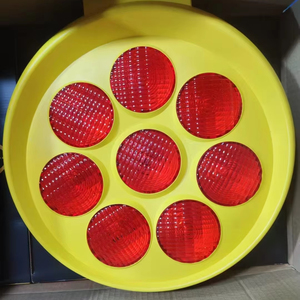
Factory-direct industrial road safety beacons, sequential warning lights, and active solar delineators engineered to meet Caltrans District 4 standards and municipal safety tenders.
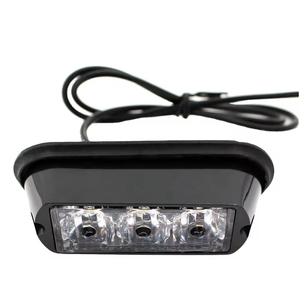

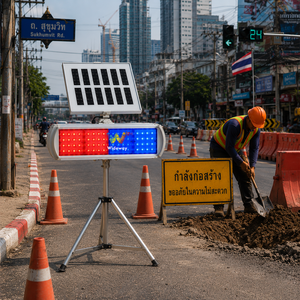
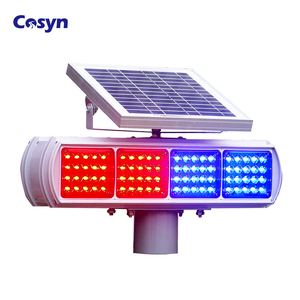
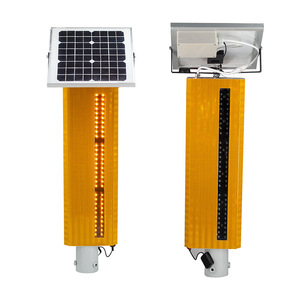
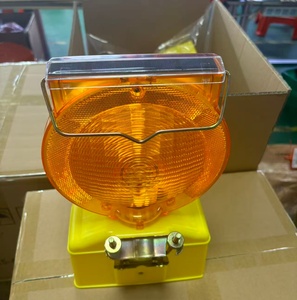
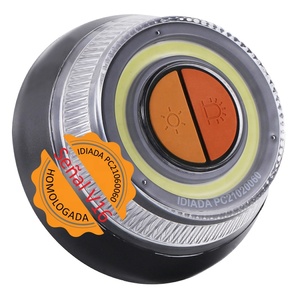
Deploying roadway delineation infrastructure across San Francisco and the broader Bay Area corridor requires overcoming severe environmental constraints rarely encountered in standard inland installations. The microclimates of the San Francisco Peninsula—characterized by persistent advection fog (locally known as Karl the Fog), heavy marine salt-spray airborne particulates, coastal condensations, and rapid thermal swings—demand advanced optical engineering and resilient photovoltaic harvesting.
Traditional passive retroreflective raised pavement markers (RPMs) lose up to 78% of their retroreflectivity when blanketed by atmospheric moisture, road oil glaze, or dense coastal fog. Active solar delineator lights solve this life-safety vulnerability by projecting calibrated, directional, high-flux optical pulses directly into the driver’s line of sight without relying on vehicle headlamp bounce-back.
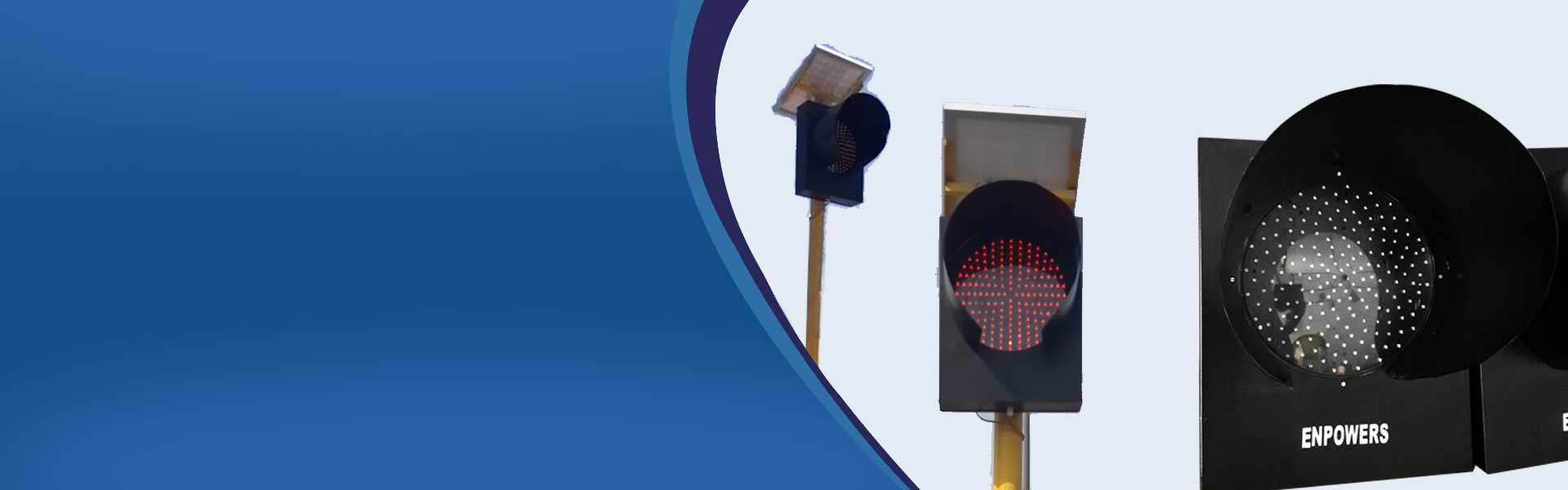
| Performance Parameter | Commercial Grade Delineator | SF Bay Area Coastal Specification | Engineering Impact / Regulatory Mandate |
|---|---|---|---|
| PV Cell Chemistry | Polycrystalline (13-15% efficiency) | N-Type Monocrystalline (21.5%+) | Captures low-lux diffuse light through dense advection fog layer. |
| Energy Storage System | Standard NiMH or Basic Li-ion | Lithium Iron Phosphate (LiFePO4) / Supercaps | Operates reliably from -20°C to +65°C; exceeds 3,500 charge cycles. |
| Zero-Sun Autonomy | 36 - 48 hours maximum | 120 - 180 continuous hours | Prevents field blackouts during prolonged Northern California winter rains. |
| Ingress Protection | IP65 (Splash resistant) | IP68 Hermetic Vacuum Seal (Submersible) | Immune to high-pressure street sweepers, tidal spray, and salt fog. |
| Housing Construction | Standard ABS or Recycled Plastic | Bayer Makrolon Polycarbonate / A380 Aluminum | IK10 impact resistance; sustains direct vehicular tire runovers. |
| Chroma Compliance | Generic uncalibrated diodes | CIE 1931 Chromaticity Coordinates | Meets Caltrans Chapter 6F & CA-MUTCD regulatory color boundaries. |
How active solar delineator systems eliminate roadway blackspots across iconic and high-risk Northern California transportation corridors.
Freeway transitions such as the US-101 Doyle Drive approach through the Presidio and the Interstate 80 corridor near the Fremont Street off-ramp experience radical visibility drops during marine fog incursions. Active solar delineator posts and pavement beacons provide high-intensity sequential guidance, cutting lane-departure collisions by up to 43% during night hours.
Navigating steep grades and blind vertical curves along Twin Peaks Boulevard, Portola Drive, and the Presidio’s coastal switchbacks demands uninterrupted visual cues. Our GPS-synchronized sequential delineators trace curve radiuses dynamically, signaling hazardous curvature speeds to descending drivers.
Along the Embarcadero maritime boundary, heavy salt-laden atmosphere corrodes standard electrical conduit, while tidal surge and heavy multi-modal traffic create high risk for cyclists, Muni light-rail cross-traffic, and pedestrians. IP68-sealed solar delineator studs provide permanent off-grid barrier delineation immune to subterranean salt water intrusion.
San Francisco’s Vision Zero initiative focuses on the 13% of city streets that account for 75% of severe traffic injuries. Solar-powered amber and red delineators deployed at mid-block crossings, daylighted intersections along Geary Boulevard, and Mission Street bike lanes provide continuous visual warning alerts to prevent vehicle-pedestrian conflict.

As Northern California pushes the boundaries of decarbonized municipal transit and autonomous mobility, roadway safety equipment must evolve past legacy unpowered reflectors. San Francisco leads global adoption of two primary infrastructure shifts:
Why municipal specifiers, international infrastructure concessionaires, and general contractors bypass middlemen to partner directly with our specialized production facilities.
From surface-mount PCB soldering and optical lens tooling to environmental vacuum chamber sealing, 100% of production occurs in dedicated manufacturing facilities. No third-party trading markups or diluted quality control.
Engineered precisely to contract drawings: customize lens aperture (200mm, 300mm), casing color, flash duty cycles (50ms to 200ms pulses), bracket geometry for steel guardrails, concrete K-rails, or timber round posts.
Supplying national transportation authorities, highway concessionaires, and defense road agencies (NHAI, PWD, BRO) with products engineered to outlast extreme alpine frost, desert heat, and coastal corrosion.
Practical engineering and compliance answers for Bay Area general contractors, civil engineers, and public works purchasers.
Yes. Our solar delineator beacons and markers are manufactured in strict compliance with the California Manual on Uniform Traffic Control Devices (CA-MUTCD) Part 3 (Markings) and Part 6 (Temporary Traffic Control). Chromaticity thresholds for amber, white, and red optical outputs align with ASTM D4956 and SAE J595 Class 1 photometric distribution standards, ensuring swift permit sign-off on Caltrans right-of-way contracts.
San Francisco experiences low global horizontal irradiance (GHI) during July/August fog and December rainstorms. To guarantee 100% up-time, we integrate oversized anti-reflective monocrystalline photovoltaic cells paired with high-coulombic-efficiency LiFePO4 battery modules. Our intelligent pulse-width modulation (PWM) power management automatically scales drive currents during sustained low-lux periods, sustaining over 120 to 180 hours of continuous dark operation.
All aluminum housings receive an electrostatically applied architectural-grade polyester powder coating certified under ASTM B117 (1,000-Hour Salt Spray Testing). Translucent optical dome shells utilize UV-stabilized Bayer Makrolon Polycarbonate treated to resist saltwater pitting, road-clearing chemicals, and solar yellowing. All internal circuitry is sealed with automotive-grade silicone conformal potting.
Yes. We manufacture universal modular mounting adapters. Hardware configurations include hot-dip galvanized and stainless steel 304 brackets for standard W-beam guardrails, concrete barrier K-rails, round structural poles (50mm to 114mm OD), and base-plate bolt anchors for concrete medians or curb-bulbouts.
Standard volume models are maintained in modular component inventory for dispatch within 5–7 business days. Custom-engineered project orders (specialized bracket configurations, programmed sequential flash algorithms) ship via expedited ocean freight directly to the Port of Oakland or air cargo to San Francisco International Airport (SFO) with complete commercial invoicing, customs clearance, and mill test certification.
Unlike regional re-sellers and trade distributors who provide generic white-labeled imports, our engineering plant governs the physical bill of materials (BOM)—from solar silicon purity to optical photometrics. Every batch shipped to North American buyers is subjected to burn-in flash testing, photometric goniometer validation, and environmental seal testing. Send your complete project drawings or tender spec sheets to receive a turnkey engineering proposal within 24 hours.
Need certified solar delineator lights, barricade flashers, or GPS-sequential beacons engineered to Caltrans and CA-MUTCD standards? Connect directly with our international engineering desk for competitive tender quotations, CAD specifications, and photometric reports.