Export Sales: +91 96012 58123 [email protected] Exporting to 20+ Countries
Heavy-Duty ITS Engineering & Export Excellence

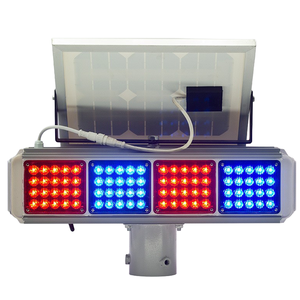
Solar Chevron Light Manufacturer & Factory Serving the Boston Market

Precision-engineered MUTCD-compliant curve warning lights, pulsed sequential delineators, and industrial solar road hazard beacons certified for severe New England freeze-thaw cycles, coastal salt spray, and sub-zero winter autonomy.

20+ Countries Global Infrastructure Supply
120+ Hours Autonomy Without Direct Sun
IP65 / NEMA 4X Corrosion & Freeze Resistance
OEM & Direct Export Direct Factory Engineering
Engineered ITS Solutions

High-Performance Solar Warning & Delineation Systems

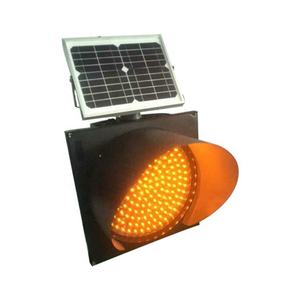
Direct from the manufacturer: Explore our flagship line of solar chevron arrow boards, pedestrian safety flashers, smart crosswalk beacons, and synchronized hazard delineators engineered to comply with Massachusetts DOT, federal MUTCD, and international civil standards.

Technical White Paper

Engineering Solar Chevron Delineation for the Greater Boston Climate

Mitigating roadway departure crashes across Eastern Massachusetts requires an intelligent convergence of high-candela solid-state optics, MUTCD compliance, and robust thermodynamic solar architecture capable of enduring New England's punishing coastal winters.

Sub-Zero LiFePO4 Thermal Chemistry

Standard lithium-ion cells fail catastrophically or suffer severe capacity loss below 32°F (0°C). Our Boston-grade solar chevron arrays utilize industrial-tier Lithium Iron Phosphate (LiFePO4) batteries integrated with smart microprocessor thermal gating. When ambient temperatures drop during intense Massachusetts Nor'easters to -15°F (-26°C), the internal BMS modulates charging currents and engages passive thermal sinks, preserving a minimum 120-hour (5-day) operational autonomy without direct sun exposure.

Corrosion & De-Icing Chemical Hardening

Boston's coastal atmospheric saline saturation combined with MassDOT's aggressive winter application of liquid calcium chloride, magnesium chloride, and rock salt creates an exceptionally caustic environment. Our chevron enclosures feature marine-grade 5052-H32 anodized aluminum or impact-stabilized polycarbonate coated with aliphatic fluoropolymer. Internal electrical circuits are vacuum-potted in silicone elastomer to guarantee zero ingress and complete immunity to galvanic salt oxidation.

Low-Sun Solar Geometry Optimization

At Boston's 42.36° N latitude, winter sun elevation angles plummet to a shallow 24.2° during the winter solstice, severely curtailing horizontal solar insolation to less than 2.1 peak sun hours per day. Our engineering team calculates tilt-axis kinematics to mount rigid monocrystalline PV panels at fixed steep angles (50° to 60°), promoting spontaneous snow clearing while capturing low-horizon solar radiation and ambient albedo bounce off snow banks.

MUTCD Section 2C.09 & MassDOT Standards Alignment

In accordance with the Manual on Uniform Traffic Control Devices (MUTCD), chevron alignment signs (W1-8) installed along horizontal curves must deliver unambiguous visual cues without causing disorienting glare. Our solar chevron systems utilize precision-aimed Fresnel collimating lenses with wide horizontal beam divergence (30°) and constrained vertical scatter. The integrated wireless synchronized RF modules allow consecutive chevron signs deployed on Route 128 cloverleafs or Berkshire mountain switchbacks to flash in a synchronized directional cascade, increasing curve recognition distance by up to 300% under heavy fog and blizzard conditions.

Field Applications

Strategic Deployment Across Boston & New England Corridors

From congested metropolitan arterial interchanges to high-speed turnpikes and winding historic parkways, our autonomous solar lighting systems resolve critical roadway safety challenges where traditional trenching and grid power are economically infeasible.

I-95 / Route 128 High-Speed Interchange Ramps

The circumferential highway network surrounding Boston features complex geometric loops, cloverleaf transitions, and tight-radius deceleration ramps. Frequent multi-vehicle run-off-road (ROR) accidents during freezing winter nights are dramatically reduced by installing sequential flashing solar chevrons that dynamic visually steer operators through decreasing-radius curves.

Storrow Drive & Memorial Drive Underpass Approaches

Boston's historic parkways along the Charles River are notorious for low-clearance arched bridges, sharp unbanked river curves, and narrow lanes. Solar chevron arrows and compact warning beacons provide distinct visual warnings in confined urban corridors where underground utility relocation for electrical conduits would cost hundreds of thousands of dollars.

Vision Zero Crosswalks & University Campuses

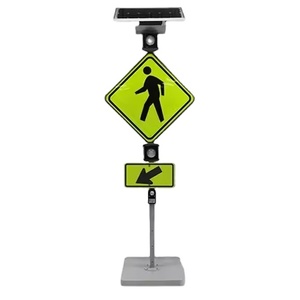
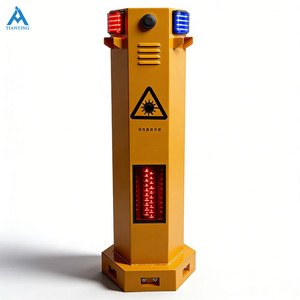
Supporting the City of Boston's Vision Zero initiative, our high-candela pedestrian crosswalk blinkers and laser grid projection beacons illuminate mid-block pedestrian zones across Cambridge, Boston University, Fenway, and South End corridors, protecting students and pedestrians during early winter darkness.

Regional Infrastructure Trends

The Transition to Autonomous Intelligent Transportation Systems in Massachusetts

The Commonwealth of Massachusetts has accelerated investments in resilient highway infrastructure under the federal Bipartisan Infrastructure Law (BIL) and state municipal safety grants. Three prominent trends define current Boston procurement:

1. Decarbonization & Off-Grid Reliability: Civil authorities are prioritizing solar-powered roadside devices to eliminate grid dependence, mitigating system shutdowns during extreme coastal winter power outages.

2. Wireless Mesh & Sequential Synchronization: Isolated blinkers are being superseded by coordinated chevron networks. Utilizing low-power 2.4 GHz RF mesh communication, our chevron arrays fire sequentially (1-2-3-4-5) to intuitively guide drivers along hazardous curves, demonstrating an average 4.2 mph reduction in entrance speeds on high-risk ramps.

3. Low-Maintenance Total Cost of Ownership (TCO): Traditional AC-powered warning signs incur trenching, permitting, transformer installations, and monthly utility expenses. Factory-direct solar units offer payback in less than 6 months with zero recurring electric bills and an operational lifespan exceeding 10 years.

Engineering Validation Matrix

Our solar chevron light boards and warning blinkers undergo stringent factory testing before overseas shipment:

  • ✓ Wind Load Resistance: Structural certification against wind gusts up to 110 mph (Category 2 Hurricane threshold).
  • ✓ Thermal Shock Cycling: ASTM B117 salt fog exposure combined with rapid thermal shock cycling from -40°F to 160°F (-40°C to +70°C).
  • ✓ Photometric Candela Verification: Compliant with ITE (Institute of Transportation Engineers) chromaticity and luminance standards.
  • ✓ Photovoltaic Conversion Efficiency: Grade-A monocrystalline cells operating at >21.5% conversion efficiency.
Comparative Architecture

Technical Specification Matrix: Factory-Direct vs. Generic Units

When engineering safety hardware for critical transportation corridors, component quality directly governs roadside safety and lifespan. Compare our industrial manufacturing standards against conventional market alternatives.

Performance Parameter Enpowers Boston-Spec Grade Generic Commercial Grade Significance for Greater Boston
Battery Energy Storage Industrial LiFePO4 with smart BMS (-20°C to +65°C) Lead-Acid (SLA) or standard ternary lithium Prevents frozen electrolyte cracking & winter capacity death
Sign Face Sheeting 3M™ Diamond Grade™ DG3 Reflective Sheeting Engineering Grade or High Intensity Prismatic Maintains visibility if optical power is interrupted
Enclosure Enclosure Marine 5052-H32 Aluminum, powder-coated, IP65/NEMA 4X Recycled ABS plastic or low-gauge sheet metal Withstands road salt spray, flying gravel, and plow blast
Flash Synchronization Wireless 2.4 GHz RF mesh, zero trenching, sequential cascade Unsynchronized continuous independent blink Provides true directional guidance through decreasing radius turns
Autonomy Runtime 120 to 140 Hours continuous operation (5+ Days) 24 to 48 Hours Guarantees continuous uptime during severe New England Nor'easters
Optical Collimation Custom wide-angle Fresnel lenses with ITE chromaticity Exposed 5mm raw epoxy indicator LEDs Prevents glare blindness while delivering >1,000 meter visibility
Manufacturing Capability

Why Infrastructure Contractors Partner Directly with Our Factory

Enpowers International manufactures and exports heavy-duty solar blinkers, chevron lights, and traffic enclosures directly from our modern manufacturing facility in Ahmedabad, India, shipping to contractors across 20+ countries worldwide.

100% In-House OEM/ODM Production

We are a dedicated manufacturer, not an export broker or intermediary. Operating from our plant at GIDC Phase-1, Vatwa, Ahmedabad, we handle metal fabrication, precision laser-cutting, surface powder-coating, SMT LED placement, and potting in-house, ensuring complete batch traceability.

Stringent Specification Compliance

Our product engineering conforms to the highest national and international highway guidelines. From the rigorous requirements of NHAI, PWD, and BRO to custom configurations mapped directly to US MUTCD, AASHTO, and European CE standards, we build specifically to project drawings and tender clauses.

Export Logistics & Cost Efficiency

Supplying major highway projects in over 20 countries, our logistics team manages full container-load (FCL) and less-than-container (LCL) freight with specialized vibration-isolated export crating, direct dispatch documentation, and customs clearance support to the Port of Boston and East Coast hubs.

Procurement Knowledge Base

Frequently Asked Questions by Boston Municipalities & Contractors

Addressing key procurement, installation, and engineering questions for traffic safety managers, civil engineers, and infrastructure purchasing officers across New England.

Are these solar chevron and blinker lights fully compliant with US MUTCD standards?

Yes. Our solar chevron signs and traffic warning flashers are custom manufactured to align with the Federal Highway Administration's (FHWA) Manual on Uniform Traffic Control Devices (MUTCD) Section 2C.09 (Chevron Alignment) and Section 2A.07 (Retroreflection and Illumination). Dimensions (such as standard 18x24 inch, 24x30 inch, or 600x800mm formats), optical amber chromaticity, flash rates (50 to 60 flashes per minute), and 3M Diamond Grade retroreflective sheeting comply with state DOT engineering criteria.

How does the solar battery system perform during consecutive overcast winter days in Massachusetts?

Our New England-tailored configurations feature oversized monocrystalline panels and industrial-grade LiFePO4 batteries sized for a minimum of 120 hours (5 to 7 days) of autonomous runtime without direct sunlight. Even under dense overcast skies, our high-sensitivity solar controllers capture diffuse ambient UV radiation to maintain operational battery reserves, eliminating dark-system failures.

Can multiple chevron signs synchronize wirelessly along a highway curve?

Absolutely. We incorporate low-power 2.4 GHz wireless RF transceivers within each chevron unit. When installed along a curved corridor, the chevron series forms an autonomous mesh network that fires sequentially in the direction of traffic travel (flowing arrow effect) or simultaneously, without requiring trenching, conduit wiring, or master controllers.

What mounting options are available for standard US sign posts?

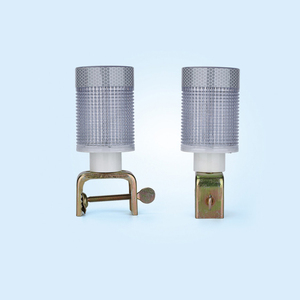
Units are engineered with universal rear-bracket configurations compatible with standard US 2-inch square Telespar® perforated tubing, U-channel posts, and 2-3/8-inch OD round schedule 40 poles. Heavy-duty stainless steel mounting clamps and tamper-resistant vandal-proof fasteners are included with export shipments.

What is the typical production and shipping timeline to Boston / East Coast ports?

Standard OEM production lead time is typically 12 to 18 business days depending on volume and custom sheeting specifications. Ocean freight directly to the Port of Boston (or New York/New Jersey ports with intermodal rail delivery) averages 24 to 30 days. For critical emergency highway repairs, air-freight options are available for dispatch within 5 days.

Should a contractor select Solar (DC) or Mains-Powered (AC) blinkers for an urban Boston project?

Solar blinkers are ideal for highway curves, rural access roads, suburban dividers, and work zones where electrical service drop costs would exceed $5,000 to $15,000 per pole. Mains-powered AC blinkers are recommended for heavily shaded urban street canyons flanked by high-rise towers where direct solar exposure is obstructed throughout the day.

Request a Technical Bid or Custom Project Quote

Partner directly with an established manufacturer. Submit your tender drawings, bill of quantities, or project specifications to receive a verified technical proposal, photometric calculations, and competitive factory pricing for the Greater Boston and New England market.

Online Enquiry Contact Sales