
Precision-engineered in our ISO 9001 certified facilities for extreme weather durability, cold-cranking discharge reliability, and high-intensity luminous output.
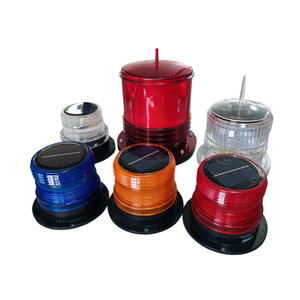
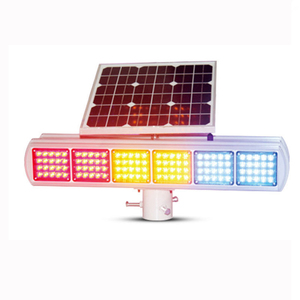
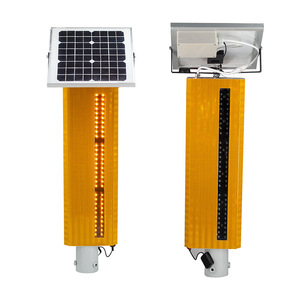
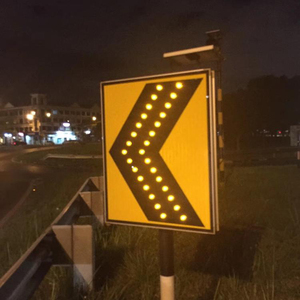

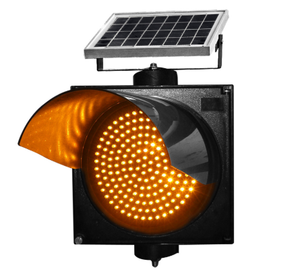
Sweden pioneered Vision Zero (Nollvisionen) in 1997, enshrining the ethical imperative that no loss of life or severe injury is acceptable on public transport networks. Governed by the Swedish Transport Administration (Trafikverket), highway development and temporary work-zone regulation (specifically under standard TDOK 2012:86 and V3-level roadworks equipment requirements) enforce rigorous benchmarks on dynamic signaling equipment. Solar arrow blinker lights and sequential warning chevrons deployed on Swedish motorways such as the E4, E6, and E18 must exceed generic global standards to satisfy strict European norms, notably SS-EN 12352 (Traffic control equipment - Warning and safety light devices) and SS-EN 12966 (Variable message signs).
Procuring solar-powered warning devices for the Scandinavian market requires deep understanding of ambient optical physics and sub-zero chemistry. During Swedish winters, daylight can drop to less than 4 to 6 hours in central hubs like Stockholm and Gothenburg, and practically zero above the Arctic Circle in Norrbotten and Kiruna. Consequently, standard commercial solar blinkers manufactured for tropical climates fail catastrophically: their lead-acid or standard ternary lithium cells suffer electrolyte freezing, monocrystalline panels get choked by rime ice, and standard LEDs lack the precise Class L8H photometric candela power to pierce through driving blizzards, sub-polar maritime fog, and sleet.
To provide genuine information gain and engineering authority, our industrial facilities in Vatwa, Ahmedabad, have developed specialized, cold-tolerant BOM (Bill of Materials) configurations specifically engineered for Swedish infrastructure contractors, transport equipment rental companies (maskinuthyrning), and municipal road authorities (kommunala väghållare).
Equipped with smart low-temperature BMS (Battery Management Systems) and integrated PTC heating elements that prevent lithium plating during charging below -10°C, sustaining full electrochemical throughput down to -40°C.
Employing high-efficiency N-type TOPCon bifacial modules tilted at steep 60°–75° angles. This prevents snow accumulation while harvesting reflected albedo radiation from white snowfields, boosting winter yield by up to 32%.
Using OSRAM/CREE automotive-grade amber LEDs (590nm±3nm) combined with Fresnel collimating lenses delivering over 2,000 cd on-axis, complete with auto-dimming ambient photocells to prevent night blinding.
When issuing public tenders or private sub-contract procurement packages, Scandinavian road engineers must ensure compliance with rigorous CE, RoHS, and Swedish winter survivability standards. Below is a granular side-by-side engineering comparison illustrating why Enpowers International's customized Swedish-export line guarantees lifetime operational integrity.
| Technical Metric | Standard Tropical / Commercial Spec | Enpowers Sweden Nordic Heavy-Duty Spec | Swedish Mandate Compliance |
|---|---|---|---|
| Operating Temperature | -10°C to +50°C | -40°C to +65°C (Cold Tested) | PASS (Trafikverket V3) |
| Battery Chemistry | Standard VRLA AGM Lead-Acid or Basic Li-ion | Extreme-grade LiFePO4 / LTO with Thermal Heating | PASS (Eco-Design & Arctic Safe) |
| Insolation Autonomy | 3 to 5 Days (Tropical Assumptions) | 15 to 25 Days Zero-Solar Continuous Run | PASS (Swedish Polar Night Spec) |
| Optical Classification | Non-standard or EN 12352 Class L2 | SS-EN 12352 Class L8H (High Brightness) / L8M | PASS (SS-EN 12352 Certified) |
| Ingress Protection | IP54 to IP65 | IP68 Hermetically Sealed Electronics Enclosure | PASS (Salt & Slush Proof) |
| Enclosure Construction | Standard Recycled ABS Plastics | Marine Aluminum Alloy 6063-T6 + UV Polycarbonate | PASS (Vandal & Impact IK10) |
| Wireless Sync Protocol | None (Independent Flashing) | Sub-GHz / GPS Sequential Cascading (Chevron Arrows) | PASS (Safe Lane Merging) |
Modern transport and road construction in Sweden demand versatile mounting systems, rapid deployment capabilities, and failsafe optical output. Our solar blinker systems are tailored for targeted deployment scenarios across the Scandinavian peninsula:
Trailer-mounted and barrier-fixed sequential solar arrow blinkers that guide high-speed freight traffic safely around highway resurfacing and median maintenance corridors without external diesel generators.
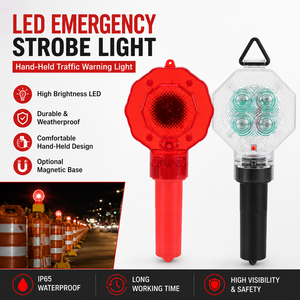
Heavy-duty magnetic and pole-mounted LED flashers installed along sub-arctic mining access routes, resistant to extreme vibrational shock, permafrost heave, and heavy iron ore dust.
Permanent solar amber chevron systems (Varningsskyltar) deployed at suburban roundabouts and rural arterial curves in Scania (Skåne) and Västra Götaland where grid hookups are economically unfeasible.
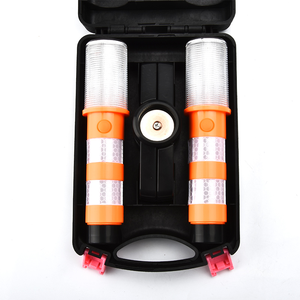
Magnetic strobe and beacon units mounted on maintenance fleets and snow plowing machinery, providing high-visibility strobe patterns compliant with ECE R65 Class 2 standards.
Autonomous red/amber warning lights installed across the Port of Gothenburg and Trelleborg to govern autonomous AGV movement, railway siding crossings, and ship-to-shore gantry cranes.
Sensor-triggered solar blinking hazard beacons placed across forested sections of inland route 45, activating automatically when infra-red wildlife detection systems register moose or reindeer on the roadbed.
Contractors operating in Sweden—such as Skanska, NCC, Peab, and Svevia—are increasingly shifting towards sustainable procurement criteria where Environmental Product Declarations (EPD), life-cycle CO2 footprint, and low-maintenance circularity play major roles in tender evaluations.
1. Decarbonization of Work Zones: Replacing noisy, polluting portable diesel generator towers with self-sustaining solar-powered LED arrow boards and blinker signals has transitioned from an environmental luxury to an operational necessity. Municipalities such as Stockholm and Malmö now impose low-emission construction zone requirements that explicitly encourage zero-emission autonomous solar signals.
2. IoT & Centralized Telematics: Advanced Nordic contractors require smart-connected devices. Our arrow blinkers can be equipped with 4G LTE-M / NB-IoT modules that transmit real-time battery voltage, charging currents, solar panel temperature, and LED failure telemetry back to cloud dashboards, preventing unanticipated downtime on critical corridors.
3. GPS Sequential Cascading (Chasing Arrows): For high-speed highway diversions, single uncoordinated flashing lights cause sensory disorientation. Swedish safety guidelines favor sequential flashing arrow systems where consecutive signs trigger in an exact wave, intuitively directing Swedish motorists into alternative lanes with zero driver confusion.
Headquartered in Ahmedabad, Gujarat, India, with advanced fabrication lines situated in GIDC Phase-1, Vatwa, Enpowers International operates as a genuine industrial manufacturer—not an intermediary trader. By controlling every stage of precision engineering, PCB surface mounting, optical lens molding, and environmental stress screening, we guarantee factory-direct cost efficiency paired with uncompromising global build quality.
Our track record encompasses delivering high-reliability road safety infrastructure to governmental authorities, including the National Highways Authority of India (NHAI), Border Roads Organisation (BRO), and major multinational civil engineering conglomerates across more than 20 countries worldwide. For Swedish and Scandinavian partners, our export division configures every product batch to specific European directives (CE, EMC Directive 2014/30/EU, RoHS 2011/65/EU) and ensures comprehensive testing documentation, including salt-mist spray tests (ASTM B117), vibration impact durability (IK10), and optical spectrum verification.
Connect directly with our export engineering department to receive technical whitepapers, CAD dimensional drawings, EN 12352 photometric compliance reports, and container-load quotation sheets.