Export Sales: +91 96012 58123 [email protected] Exporting to 20+ Countries
Direct Industrial Manufacturing • Caltrans & MUTCD Standards

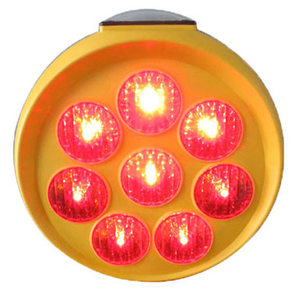
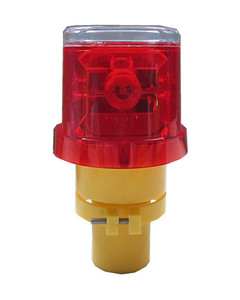
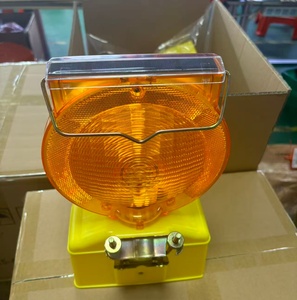
Solar Amber Blinker Light Factory & Supplier for Los Angeles

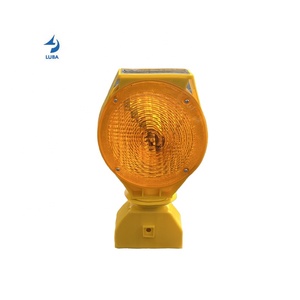
Engineering autonomous, solar-powered amber flasher beacons and optical traffic delineators engineered for Southern California highways, construction work zones, port logistics, and municipal Vision Zero infrastructure.

20+
Global Export Territories
500m+
Nighttime Chromatic Visibility
IP66
Harsh Marine & UV Ingress Protection
10-15
Days Continuous Dark Autonomy

As highway traffic density expands across Los Angeles County, public work departments, regional prime contractors, and utility operators face rigorous safety targets. Sourcing directly from an integrated manufacturer provides the photometric precision, battery cycling longevity, and engineering compliance demanded by Caltrans, local municipalities, and port authorities without intermediary trading overhead.

Precision-Engineered Solar Amber Blinkers & Traffic Lights

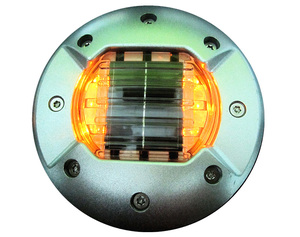
Standardized 200mm/300mm optical modules, barricade flashers, and embedded lane indicators engineered for harsh ambient solar environments.

Engineering for the Greater Los Angeles Transit Ecosystem

Autonomous solar flashing installations resolve specific field challenges across Southern California's arterial corridors, coastal ports, and mountain passes.

High-Volume Arterial Intersections & Caltrans Corridors

From the I-5 and I-10 interchange arteries to busy junctions across the San Fernando Valley and the Inland Empire, our 300mm amber flashing beacons provide uninterrupted warning at unsignalized junctions, reducing right-angle collision rates without requiring trenching across heavy asphalt concrete.

Port of Los Angeles & Long Beach Freight Terminals

The San Pedro Bay port complex operates 24/7/365 under saline coastal fog and persistent exhaust particulate. Our IP66/IP67 rated solar amber blinkers safeguard container marshaling yards, rail grade crossings, and drayage gate queues, maintaining chromatic fidelity against marine corrosion.

Vision Zero & Safe Routes to School (SRTS)

LADOT and regional Southern California school districts implement high-intensity solar amber beacons at mid-block pedestrian crossings, school crosswalks, and speed cushions. Integrated photocells regulate brightness to prevent blinding glare in twilight while piercing the California marine layer.

Temporary Caltrans Work Zones & Pavement Rehab

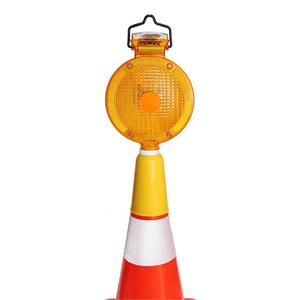
Nighttime lane closures on the 405, 101, and 605 freeways demand Type A low-intensity and Type B high-intensity barricade warning lights. Factory-calibrated flash rates (55-65 FPM) guide fast-moving motorists through sudden merge tapers and maintenance shifts.

Wildfire & High-Wind Mountain Corridors

In high-wind canyon passes such as Cajon Pass, Malibu Canyon, and the Angeles Crest, utility infrastructure faces high thermal swings, dust storms, and Santa Ana winds. Self-contained solar flashers eliminate fire risks from frayed utility poles while retaining power in remote zones.

Engineering Specifications vs. Field Operating Realities

Deploying solar amber blinkers in the American Southwest requires specialized thermal dissipation and UV stabilization. Inferior commercial lights suffer from solar panel discoloration, battery bloat above 104°F (40°C), and premature degradation of optical polycarbonate lenses.

Our direct manufacturing facility controls every tier of assembly—from Grade-A Monocrystalline Silicon Photovoltaic wafers to IP66-sealed enclosures and industrial-grade LiFePO4 / high-temp sealed gel storage cells. The result is a rated service life exceeding 5 years without unscheduled roadside service calls.

All flasher assemblies match or exceed Caltrans Standard Specifications (Section 86 & 87) and the California Manual on Uniform Traffic Control Devices (CA MUTCD) regarding chromaticity coordinates, daytime candela intensity, and flash pulse duty cycles.

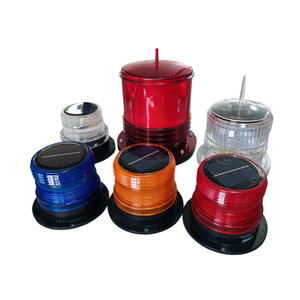
Critical Parameter Enpowers / Factory Standard Generic Commodity Lights
Optics / Housing GE UV-Stabilized Polycarbonate / Die-Cast Aluminum Recycled ABS (Yellows & Cracks in 12 mos)
PV Module High-Efficiency Mono-Si (21%+ conversion rate) Low-grade Poly-Si or Amorphous panels
Battery Chemistry Deep-Cycle LiFePO4 or High-Temp AGM Gel Low-cost Li-ion (Swelling risk in heat)
Autonomy Rating 10-15 Days continuous overcast operation 2-3 Days (Fails during multi-day rain)
Luminous Output >300-600 cd (High daytime contrast) <120 cd (Washed out by direct California sun)
Flash Regulation Solid-State Microcontroller 55-65 FPM Crude analog RC timing (Drifts with temp)

Market Dynamics: Solar Blinker Adoption Across Greater L.A.

Strategic insights for municipal project planners, transportation engineers, and safety contractors.

Transition to Lithium Iron Phosphate (LiFePO4)

Lead-acid batteries are rapidly being phased out by Southern California municipal specifiers due to hazmat disposal constraints and thermal sensitivity. Our standard migration to LiFePO4 delivers 2,000+ deep charge-discharge cycles, operating reliably up to 140°F (60°C) during Inland Empire heatwaves.

Trenchless Infrastructure Cost Reduction

Saw-cutting California asphalt, conduit boring, trenching, and pulling 120V grid power to a warning beacon often exceeds $25,000 to $45,000 per intersection. Standalone solar amber blinkers drop direct capital implementation costs by over 75%, allowing agencies to treat 4x the safety hotspots within existing annual allocations.

Smart Wireless Synchronized Flash Networks

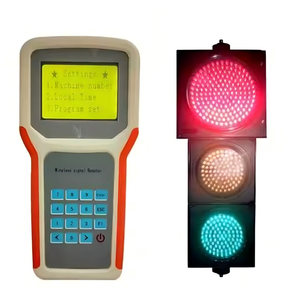
In response to CA MUTCD standards for work zone delineation and high-speed off-ramps, contractors increasingly demand RF-synchronized chevrons and amber beacons. Sequential flashing creates an unambiguous visual line, guiding drivers safely around curves and lane shifts.

Direct Factory Capabilities & Export Advantage

Operating an advanced manufacturing hub in Ahmedabad, India with documented deliveries to over 20 countries worldwide.

100% In-House Assembly

Fabrication at GIDC Phase-1, Vatwa. Full control over LED array binning, SMT assembly, circuit waterproofing, and aging burn-in tests.

Direct Tender Compliance

Proven track record building to NHAI, PWD, BRO standards, seamlessly configured for AASHTO, ITE, and Caltrans project submittals.

Containerized Logistics

Direct ocean freight routing to the Port of Los Angeles (POLA) / Port of Long Beach (POLB) terminals with comprehensive export documentation.

Project Customization

Custom mounting brackets for 2-3/8" to 4-1/2" posts, dual-mount flashers, custom amber chromaticity, and specialized shroud hoods.

Frequently Asked Inquiries for Southern California Buyers

Key technical, regulatory, and supply chain considerations for local contractors and engineers.

Do your solar amber blinkers meet Caltrans and CA MUTCD Section 4L specifications? +
Yes. Our solar amber flashing beacons are engineered to comply with the California Manual on Uniform Traffic Control Devices (CA MUTCD) regarding flash rate (50 to 60 flashes per minute), illuminated pulse duration, and chromaticity coordinates matching ITE standards for Highway Yellow/Amber. Optical systems deliver minimum required candela output for clear visibility from distances exceeding 500 meters under bright midday sun.
How does solar battery autonomy handle the coastal "June Gloom" in Los Angeles? +
Southern California's coastal morning fog layer ("May Gray" and "June Gloom") presents low UV irradiance. Our solar power supplies are specifically sized with a high panel-to-battery ratio, incorporating high-efficiency Grade-A monocrystalline silicon solar cells that capture diffuse light. With a minimum reserve autonomy of 10 to 15 continuous days (running 24/7 or 12/7 dusk-to-dawn), our flashers will not lose operation during prolonged overcast periods.
Can we mount these lights to existing Telespar, unistrut, or round schedule 40 poles? +
Yes. We supply standardized universal cast aluminum and stainless-steel bracket assemblies. These match 2" square perforated Telespar posts, 2-3/8" O.D. round posts, 4" or 4-1/2" signal poles, wooden utility poles, or direct vertical flat-surface installations on crash barriers and concrete bridge abutments.
How are bulk international shipments handled into the Port of Los Angeles / Long Beach? +
We handle direct factory-to-port export logistics. Shipments are consolidated into seaworthy pallets or full containers (FCL/LCL), packaged in impact-resistant crates with desiccants to survive ocean transit. We provide all necessary commercial documentation (Bill of Lading, Certificate of Origin, packing lists, HS Code 8530.80/8530.90 classification, and factory test reports) for expedited clearance through U.S. Customs and Border Protection.
Can your blinkers be configured for dusk-to-dawn vs. continuous 24/7 flashing? +
Yes. The onboard micro-controller features automatic optical sensing through the photovoltaic panel. It can be factory-programmed for 24-hour continuous operation (typical for sharp curve warnings, median tips, and high-accident intersections) or dusk-to-dawn activation (for school crosswalks, industrial gates, or pedestrian refuge islands). Custom radar-speed trigger integration is also available upon request.

Deploy Caltrans-Compliant Solar Amber Blinkers in Los Angeles

Consult with our engineering desk on submittal packages, custom photometric specifications, mounting hardware options, and wholesale direct-supply pricing for your regional project.

Send an Inquiry
Online Enquiry Contact Sales