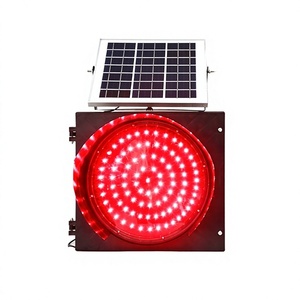
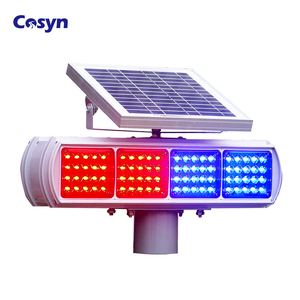
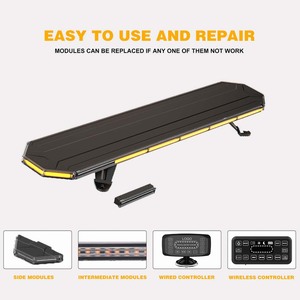
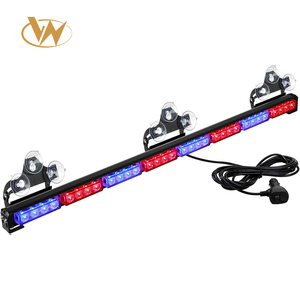
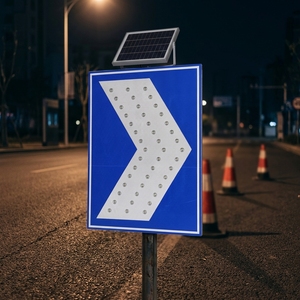
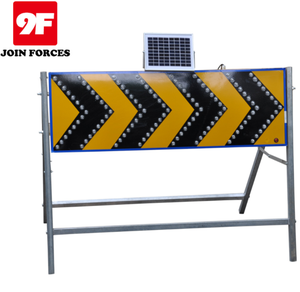
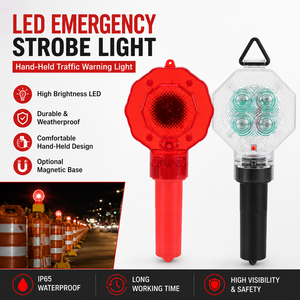
Explore our certified product line engineered for high optical vigilance, extended off-grid endurance, and rapid tactical deployment along motorways, urban worksites, and transport hubs.
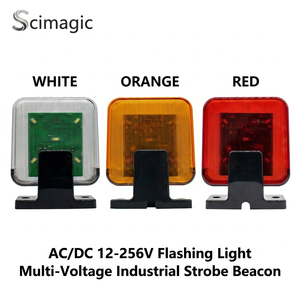
Modern temporary work zone safety on the French national road network (Réseau Routier National) demands unprecedented optical rigor, mechanical survivability, and environmental resilience. Governed by the stringent statutory frameworks established by the Direction Générale des Infrastructures, des Transports et des Mobilités (DGITM) and detailed under the Instruction Interministérielle sur la Signalisation Routière (IISR - Livre I, 8e Partie: Signalisation Temporaire), roadwork visual warnings cannot rely on generic commercial illuminators. Instead, they require precision-engineered luminous elements designed to prevent multi-vehicle collisions along fast-moving motorways operated by toll concessionaires (Sociétés Concessionnaires d'Autoroutes such as VINCI Autoroutes, APRR, and Sanef), as well as départemental routes overseen by local councils (Conseils Départementaux).
As an integrated original equipment manufacturer (OEM), we design, build, and calibrate roadwork flashing lights (feux de balisage et d'alerte temporaire) to bridge European regulatory thresholds with field-ready modular versatility. Whether deployed on mobile intervention trucks (fourgons d'intervention), integrated into autonomous trailer-mounted directional arrows (flèches lumineuses de rabattement - FLR), or positioned as independent solar-driven hazard beacons along bridge rehabilitation corridors, our optical systems deliver quantified information gains and life-saving pre-warning buffers.
Deployment topologies across mainland France present extreme geographic and operational contrasts—from high-vibration maritime viaducts in Normandy to sub-zero alpine passes in the Auvergne-Rhône-Alpes and high-temperature summer motorways along the Mediterranean basin. Our warning lighting architectures are purpose-built to address these distinct domestic scenarios:
Operated on sections with 110–130 km/h limits, requiring Class L8H / L9M synchronized strobe arrays mounted to advanced impact attenuators and FLR trailers, warning drivers up to 1,500 meters in advance.
Engineered for high-altitude passes subject to intense freeze-thaw cycles, sub-zero battery suppression, and snowplow spray. Housing seals operate continuously down to -30°C with self-regulating internal thermal margins.
Compact, silent, zero-emission solar LED beacons suited for inner-city construction in Paris, Lyon, Marseille, and Bordeaux, providing continuous pedestrian and micro-mobility demarcation without diesel fumes or generator noise.
The road safety ecosystem in France is undergoing an accelerated technological evolution, heavily accelerated by the Plan de Relance Autoroutier and national commitments toward digitalized, smart mobility (ITS). Procurement managers and highway civil engineers must prepare their work zone inventories for three prevailing market transitions:
Static, uncoordinated flashers create disorienting optical chaos when clustered in dense construction zones. French highway authorities actively demand synchronized sequential flashing (feux synchronisés à défilement). Our proprietary short-range mesh radio protocol allows up to 64 flasher units to establish automatic leader-follower dynamic sequencing without requiring on-site manual pairing or external control boxes. This dynamic visual runway directs night traffic smoothly into diversion channels.
Under the European C-Roads platform and France's national ITS deployment roadmaps, roadwork warning lights are transitioning from passive optical emitters into smart connected endpoints. Our electronic driver architectures accommodate direct dry-contact interfaces and low-power IoT transmitters (LoRaWAN / NB-IoT) that can broadcast work zone activation logs to regional traffic management centers (Centres d'Ingénierie et de Gestion du Trafic - CIGT) and in-vehicle navigation feeds.
Traditional lead-acid accumulators are rapidly being phased out due to hazardous waste regulations (RoHS) and weight overheads that complicate tactical deployment by highway maintenance personnel. Our French market road safety products integrate grade-A Lithium Iron Phosphate (LiFePO4) storage banks capable of 3,000+ deep-discharge cycles, retaining full operational functionality throughout prolonged winter periods with minimal solar insolation.
Understanding optical classes ensures road engineering companies procure lighting solutions that pass mandatory roadside technical audits conducted by the Directions Interdépartementales des Routes (DIR).
| Performance Criterion | EN 12352 / NF Standard Reference | Enpowers Technical Specification | On-Site Operational Impact |
|---|---|---|---|
| Luminous Intensity | Class L2H (Urban) / Class L8H (Motorway) | Class L8H compliant (> 1,500 cd peak daytime) | Penetrates heavy fog, rain bursts, and harsh glare |
| Ingress Protection | NF EN 60529 (IP min. IP54) | Hermetic IP65 / IP68 silicone dual-gasket | Withstands high-pressure jet washing and road grit |
| Automatic Dimming | Class F1 & F2 Photocell Standards | Dynamic photodiode with 1:5 to 1:10 night dimming | Eliminates blinding disability glare for passing motorists |
| Power Management | Autonomous Off-Grid (NF P98-475) | Monocrystalline MPPT + LiFePO4 / 12-24V DC input | Guarantees 120–180 continuous hours without sunlight |
| Impact Resistance | IK08 Mechanical Shock Resistance | High-grade UV-stabilized Bayer Polycarbonate lens | Survives accidental vehicle knock-downs and road debris |
Sourcing directly from Enpowers International provides European civil engineering consortia, concessionaires, and regional equipment distributors with distinct logistical and quality assurances that third-party trading intermediaries cannot replicate:
All circuit boards, lens molds, and aluminum housings are fabricated at our state-of-the-art facility in GIDC Phase-1, Vatwa, Ahmedabad. We do not drop-ship or relabel generic consumer components.
Every batch of high-power amber, red, and blue LEDs undergoes photometric, chromaticity, and burn-in chamber validation before hermetic sealing, guaranteeing uniform color temperatures across all delivery phases.
Shipments destined for French hubs are packed in certified export-grade maritime crates with complete documentation: CE Declaration of Conformity, RoHS verification, and factory test reports.
Connect directly with our engineering division for comprehensive technical proposals, custom OEM bracket drawings, photometric certificates, and volume wholesale quotations for the French market.
Send an Inquiry