

Factory-Direct Catalog
Engineered Roadway Warning Blinker Systems
Precision-manufactured solar and emergency flashing signaling units built for extreme ultraviolet indexes, torrential tropical rainfall, and continuous off-grid reliability.
20+
Global Export Markets Served
100%
In-House Manufacturing & Testing
IP65 / IP68
Ingress Protection Rated Assemblies
120+ hrs
Continuous Autonomy Without Direct Sun
Executive Industry Analysis
The State of Portable Traffic Signalization in East Africa's Primary Transit Hub
The infrastructure ecosystem across the Republic of Kenya is undergoing an unprecedented modernization program driven by the Kenya Vision 2030 economic blueprint. Central to this transformation is the aggressive expansion of the national classified road network overseen by the Kenya National Highways Authority (KeNHA), the Kenya Urban Roads Authority (KURA), and the Kenya Rural Roads Authority (KeRRA). As inter-county transport networks evolve from single-carriageway routes to dual-carriageway expressways and classified Class A, B, and C arteries, civil engineering contractors and road concessionaires face severe operational challenges regarding active work zone demarcation, accident blackspot mitigation, and nocturnal traffic calming.
In high-speed freight corridors such as the Northern Corridor (Mombasa – Nairobi – Nakuru – Eldoret – Malaba), continuous logistics operations demand high-conspicuity warning devices that command instant driver compliance from distances exceeding 800 meters. Traditional reflective retro-reflective sheet signs and unilluminated chevron boards frequently fail to provide adequate reaction times under heavy monsoon downpours, thick Great Rift Valley thermal radiation fog, or unlit rural expanses. Consequently, the engineering demand for autonomous, heavy-duty portable traffic blinkers and solar LED warning beacons has transformed from an ad-hoc safety measure into an essential specification within standard Bill of Quantities (BOQ) submissions across East Africa.
However, importing and procuring traffic warning equipment in Kenya presents rigorous logistical and regulatory demands. Tenders executed under the auspices of the Ministry of Roads and Transport require uncompromising adherence to structural longevity, UV stabilization against near-equatorial solar degradation, zero-grid electrical autonomy, and compliance with the Kenya Bureau of Standards (KEBS) Pre-Export Verification of Conformity (PVoC) mandates. As an established direct manufacturing force based in the industrial heart of Vatwa, Ahmedabad, India, Enpowers International bridges this technical gap, engineering export-grade blinker assemblies certified to stringent highway agency parameters (NHAI, PWD, BRO, British BS EN 12352 standards) that effortlessly integrate into Kenya's demanding terrain.
Field Deployments
Critical Deployment Scenarios Across Kenya's Road Landscape
Field-proven engineered solutions addressing localized topography, environmental extremes, and high-risk traffic dynamics across Kenyan counties.
Northern Corridor A104 Heavy Freight Arteries
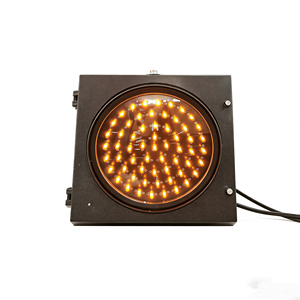
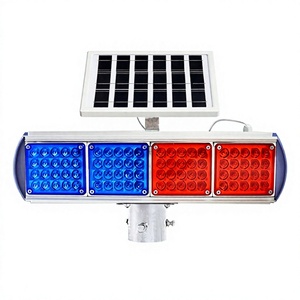
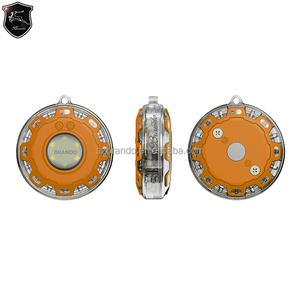
Long-haul articulated freight haulage between Mombasa Port and the Ugandan border generates acute wear and frequent median breakdowns. Magnetic rechargeable strobe units and pole-mounted 300mm amber solar blinkers installed along climbing lanes at Salgaa, Sachang'wan, and Mau Summit provide preemptive visual alerting, reducing catastrophic rear-end collisions during nocturnal hauls.
Great Rift Valley Fog Zones & Escarpment Curves
The treacherous Limuru, Mai Mahiu, and Kerio Valley escarpments experience sudden microclimatic fog, slashing visual sightlines below 15 meters. Dual-color Red/Blue solar warning beacons and synchronized chevron blinkers cut through airborne moisture, outlining sudden hairpin geometry and preserving lane discipline for high-center-of-gravity passenger matatus.
Urban Mass Transit & Nairobi Expressway Off-Ramps
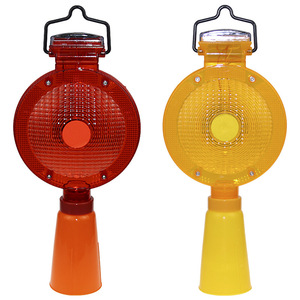
Navigating dense multi-lane merges along Uhuru Highway, Southern Bypass intersections, and Thika Superhighway requires robust, non-grid-dependent signalization. UV-stabilized polycarbonate 200mm and 300mm solar flashing signal lights act as standalone traffic command alerts at newly demarcated roundabouts and pedestrian footbridge access ramps.
LAPSSET Project & Remote Northern Frontier Corridors
The Lamu Port-South Sudan-Ethiopia Transport (LAPSSET) corridor stretches through remote arid terrain with zero power infrastructure. Autonomous solar blinkers featuring mono-crystalline photovoltaic arrays and lithium iron phosphate (LiFePO4) storage withstand searing midday heat, wind-blown desert sand, and zero-maintenance operation across hundred-kilometer stretches.
High-Risk Mining Haul Roads & Quarry Perimeters
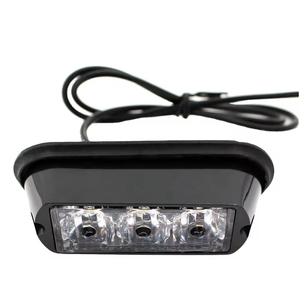
Active titanium mining operations in Kwale, limestone extractions in Athi River, and geothermal sites in Olkaria mandate heavy-equipment traffic separation. Rugged IP65-rated flashing warning bars and high-candela strobe beacons mounted directly on service vehicles and access checkpoints provide fail-safe operational demarcation amidst dense dust clouds.
Temporary Roadworks & County Speed Table Delineations
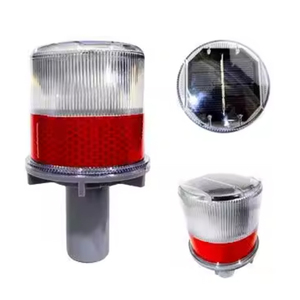
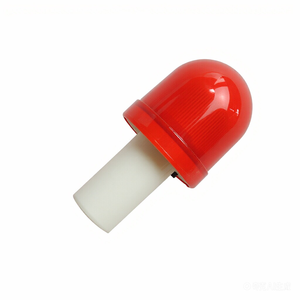
Municipal and KeRRA bypass construction zones frequently re-route night traffic onto rough detour shoulders. Solar traffic cone strobes and portable mini-blinkers provide rapid, tool-free deployment that guides motorists past open trenches, newly cast asphalt speed bumps, and concrete barrier terminations without requiring fuel generators.
Specification Standard
Engineering Specifications vs. Kenyan Operating Conditions
Direct comparison of manufacturing parameters engineered to survive equatorial UV radiation, dust inundation, and autonomous off-grid duty cycles.
| System Component | Enpowers Factory Specification | Standard Market Alternative | Field Significance in Kenya |
|---|---|---|---|
| Housing Material | 100% Virgin UV-Stabilized Polycarbonate (GE Lexan) / Die-Cast Al | Recycled ABS / Untreated Polystyrene | Prevents chalking, yellowing, and brittleness under Kenya's severe 11+ UV Index. |
| Optical System | Hi-Flux Epistar/Bridgelux LEDs with Fresnel Optical Magnification | Standard 5mm DIP LEDs without primary lensing | Guarantees 800m+ daytime visibility under harsh equatorial direct sunlight glare. |
| Battery Chemistry | Lithium Iron Phosphate (LiFePO4) / Deep-Cycle Solar Gel | Standard Sealed Lead-Acid (SLA) | Maintains 2,000+ thermal charge cycles; operates reliably at 45°C ambient road temperatures. |
| Photovoltaic Module | High-Efficiency Grade-A Monocrystalline Silicon (18.5% efficiency) | Polycrystalline or Thin-Film Amorphous | Ensures high-amperage battery replenishment even during Mombasa's extended overcast rainy seasons. |
| Ingress Protection | Hermetically Sealed IP65 to IP68 with Neoprene Gasketing | Basic IP54 with glued joint seams | Completely eliminates dust penetration during dry spells and moisture ingress during flash floods. |
| Vandal Resistance | Integrated internal hardware, tamper-proof fasteners, modular poles | External exposed wingnuts and unreinforced brackets | Deters component theft and roadside battery pilferage along isolated inter-county highways. |
Market Horizon 2025–2030
Emerging Trends Reshaping Traffic Safety Procurement in Kenya
1. The Shift to Anti-Pilferage Integrated Architecture
A longstanding obstacle faced by KeNHA and county engineers across Machakos, Nakuru, and Kiambu counties has been the roadside theft of solar panels and lead-acid batteries from standalone warning signals. The contemporary procurement trend heavily prioritizes integrated, unibody portable blinkers where the photovoltaic panel is flush-mounted into the chassis and the battery is locked within a reinforced, tamper-proof core. Municipal buyers are refusing traditional split-component setups in favor of all-in-one warning lights that require proprietary security keys to dismount, drastically reducing operational downtime.
2. Transition from Lead-Acid to High-Capacity LiFePO4 Chemistry
In equatorial climates, ambient ground-level roadway temperatures routinely reach 40°C to 50°C. Under these parameters, conventional lead-acid battery cells suffer from rapid electrolyte evaporation and thermal runaway, degrading completely within 8 to 14 months. Infrastructure concessionaires across East Africa now specify Lithium Iron Phosphate (LiFePO4) energy storage. With operating tolerance extending up to 60°C and a depth-of-discharge (DoD) capability surpassing 80%, these modern power cells deliver an operational lifespan exceeding 5 to 7 years, dramatically lowering the total cost of ownership (TCO) for government road contractors.
3. Stringent Mandates on Photometric Angles and Luminous Conspicuity
With road safety audit enforcement by the National Transport and Safety Authority (NTSA) growing progressively rigorous, engineering standards have evolved. It is no longer sufficient for a road blinker to simply emit light; tenders require documented photometric angular distribution. Warning blinkers must deliver wide-angle horizontal beam spreads (minimum 30° to 60°) to ensure approaching commercial trucks rounding blind curves or negotiating steep downhill grades perceive hazard alerts well before braking thresholds are breached.
Factory Advantage
Why Infrastructure Contractors Partner with Enpowers International
Direct-from-manufacturer technical engineering, certified quality control, and decades of international road safety export expertise.
Direct In-House Plant
Fabricated at our specialized production facility in Vatwa, Ahmedabad, Gujarat, India. No intermediary broker margins, offering true factory-gate pricing and uncompromised build integrity.
20+ Export Destinies
Exporting to over 20 countries worldwide. We understand ocean freight logistics via Port of Mombasa (Kilindini Harbour) and air freight through Jomo Kenyatta International Airport (JKIA).
Highway-Grade Certification
Fully compliant with NHAI, PWD, and BRO specifications, easily cross-configured to KeNHA, BS EN 12352, and AASHTO standards for fast tender evaluation sign-off.
Tailored Engineering
Lens diameter (200mm/300mm), housing chemistry, autonomy reserve calculations, bracket dimensions, and optical colors fully matched to your project drawings.
Procurement Knowledgebase
Frequently Asked Questions by Kenyan Contractors & Engineers
Essential guidance on standards compliance, import logistics, duty exemptions, and field engineering in East Africa.
Q1: How do your blinkers comply with KEBS Pre-Export Verification (PVoC)?
All export consignments shipped to Mombasa or Nairobi undergo comprehensive pre-shipment inspection via authorized verification bodies (such as SGS, Bureau Veritas, or Intertek). We provide complete technical data sheets, CE/RoHS test reports, and factory inspection certificates required to obtain the mandatory Certificate of Conformity (CoC) for rapid customs clearance without delays.
Q2: Are solar road safety products eligible for import duty exemptions in Kenya?
Yes. Under the East African Community Customs Management Act (EACCMA) and current Kenyan tax statutes, specialized solar equipment and specialized road safety hardware imported for public infrastructure developments may qualify for preferential duty rates or VAT zero-rating when backed by appropriate project exemption documentation from the National Treasury or contracting ministry.
Q3: How do your systems maintain performance during Kenya's long rainy seasons?
Our solar blinkers are engineered with an autonomy reserve ratio of at least 5 to 7 days (120+ hours of continuous flashing with zero direct sunshine). By pairing oversized high-conversion monocrystalline PV panels with intelligent low-power microcontroller PWM circuits, the batteries continue charging even under diffuse cloudy skies in Nairobi or during the coastal monsoons of Mombasa.
Q4: Can blinkers be configured for direct mounting on standard KeNHA/KURA posts?
Absolutely. We manufacture modular universal clamp brackets designed to fit standard 2-inch, 2.5-inch, and 3-inch nominal bore galvanized mild steel poles commonly specified by Kenyan road agencies. We also supply custom unistrut or back-plate cantilever attachments based directly on your construction submittal drawings.
Q5: What is the typical maritime lead time from Ahmedabad to Port of Mombasa?
Shipments departing Mundra Port or Nhava Sheva (JNPT) typically achieve a maritime transit duration of only 12 to 16 days to Port of Mombasa. Total delivery time, including production scheduling and pre-export PVoC inspection, generally ranges between 3 to 4 weeks, enabling contractors to comfortably meet strict road hand-over deadlines.
Q6: Do you provide sample units for agency approval and field demonstration?
Yes, we routinely dispatch pre-qualification evaluation units and sample kits via air courier (DHL/FedEx directly to Nairobi, Mombasa, or Kisumu). This allows resident engineers, project consultants, and agency material testing laboratories to inspect build thickness, photometric output, and battery resilience prior to major tender procurement awards.