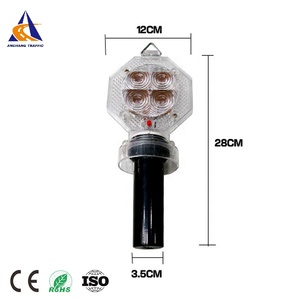
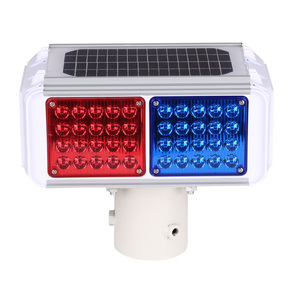
Direct OEM/ODM production featuring optical polycarbonates, intelligent battery management systems (BMS), high-efficiency mono-crystalline photovoltaic arrays, and versatile mounting clamps adapted for standard 76mm, 89mm, and 114mm CHS posts.
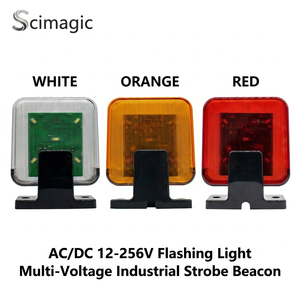
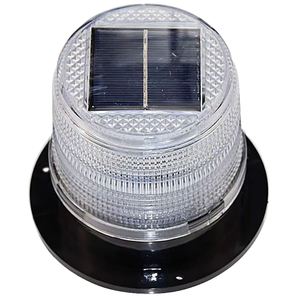
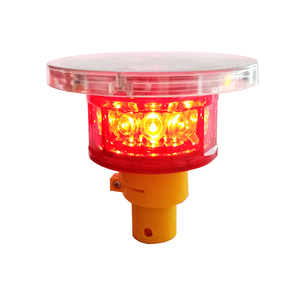
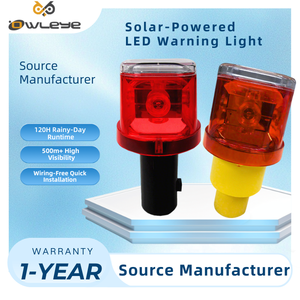
The Irish road network encompasses over 99,000 km of varied terrain, from dense high-speed motorway corridors like the M50, M7, and M1 to complex regional (R-roads) and local (L-roads) traversing exposed coastal hills, boglands, and persistent rain belts.
Unsignalized rural intersections across counties like Mayo, Donegal, and Kerry suffer high collision severity rates due to narrow sightlines and sudden speed reductions from 80 km/h limits.
Ireland's Wild Atlantic Way encounters persistent sea salt aerosol, relative humidity exceeding 90%, and dense marine fog causing severe visibility impairment below 100 meters.
Utility repairs (Irish Water / ESB) and resurfacing schemes require rapid barricade and cone delineation that comply strictly with the Traffic Signs Manual Chapter 8 requirements.
National Safe Routes to School (SRTS) initiatives demand automated flashing signals operating strictly during school drop-off and pickup intervals to protect vulnerable pedestrians.
Midlands bog roads and peat verges make heavy trenching for electrical cables structurally dangerous and cost-prohibitive, risking subsidence and asphalt collapse.
Intensive traffic nodes (Dublin Port Tunnel, Port of Cork, M50 gantries) require clear lane status indicators and high-impact warning signals to manage oversized freight lanes.
Procuring solar road warning devices for Ireland requires overcoming unique geographical challenges. Located between 51.5° and 55.5° N latitude, Ireland experiences extreme seasonal daylight variations, heavy cloud cover, and low winter solar radiation.
During December and January, Ireland's average Peak Sun Hours (PSH) drop to between 0.8 and 1.1 hours per day, combined with heavy cloud scatter. Standard tropical/subtropical solar flasher configurations (which rely on 4-5 PSH) systematically experience blackouts after 3 consecutive overcast days. Our Irish-spec OEM design utilizes oversized monocrystalline PERC panels (21.5% efficiency) paired with low-internal-resistance LiFePO4 batteries, ensuring complete operational autonomy for up to 21 consecutive sunless days (504 hours continuous flashing).
All temporary and permanent warning equipment installed on Irish roads must align with Transport Infrastructure Ireland (TII) standards and the Department of Transport's Traffic Signs Manual. Warning flashers must meet European Standard EN 12352 (Traffic Control Equipment - Warning and Safety Light Devices), specifically Class L8H (high luminous intensity for daytime visibility) or Class L2H for night application, with certified luminous distribution, effective intensity ratios, and EMC compliance according to EN 50293.
Under Ireland's Climate Action Plan and local authority Green Procurement guidelines, City and County Councils are mandated to cut carbon emissions across municipal operations by 51% by 2030. Replacing mains-powered amber warning lights with zero-carbon solar beacons eliminates both grid connection standing charges (which average €300-€600/year per pole across rural networks) and grid electricity consumption, delivering a full capital payback within 14 to 18 months.
| Engineering Parameter | Generic / Low-Cost Exporter Spec | Enpowers Ireland-Optimized OEM Spec | Impact on Irish Road Authority |
|---|---|---|---|
| Photovoltaic Module | Polycrystalline 15-17% Efficiency | Mono-PERC 21.5% High Low-Light Response | Captures diffuse ultraviolet radiation during typical Irish overcast & rainy weather. |
| Energy Storage Chemistry | Lead-Acid or Standard Ternary Lithium | Automotive LiFePO4 (-20°C to +65°C) | 3,000+ cycle life (8-10 years maintenance-free) with cold-weather discharge performance. |
| Battery Autonomy Reserve | 3 to 5 Days (Subtropical tuning) | 15 to 21 Days (360 - 504 Hours) | Zero winter failure rates during extended Atlantic depressions and November storms. |
| Enclosure Protection | Recycled ABS / IP54 Rating | Marine-Grade 6063-T6 / UV PC / IP67 | Hermetic defense against wind-driven Atlantic rain, salt fog, and coastal gale forces. |
| Optical Photometrics | Standard LEDs (Uncertified Lux) | EN 12352 Class L8H / L8M / L2H Certified | Guaranteed 800+ meter sight distance in daylight, fog, and torrential rain conditions. |
| Mounting Hardware | Custom non-standard brackets | TII Standard 76mm / 89mm / 114mm CHS Post Clamps | Direct drop-in installation onto existing council posts without site fabrication. |
With an integrated production facility in Ahmedabad's premier industrial hub (GIDC Phase-1, Vatwa), Enpowers International operates as a premier OEM/ODM partner for European traffic safety distributors, municipal councils, and Tier-1 civil engineering contractors.
From aluminum die-casting and precision optical injection molding to SMT LED surface-mounting and environmental testing, our end-to-end production eliminates intermediary margins.
We configure lens sizes (200mm, 300mm), housing alloys, custom flash duty cycles (e.g. 50 flashes/min per Irish specs), solar wattages, and private labeling with laser-etched council asset IDs.
Supplying major national infrastructure developments under NHAI, BRO, and international specifications. Our team is fully versed in European export packing, customs harmonization, and documentation.
Every single optical unit undergoes continuous 72-hour operational burn-in, thermal shock profiling (-20°C to +60°C), optical flux measurement, and IP67 water submersion before container dispatch.
Whether responding to eTenders Ireland public procurements, supplying regional road maintenance frameworks, or equipping private logistics corridors, our engineering team provides full tender submittal packages: complete photometric reports, schematic CAD drawings, mounting structural calculations, and CE Declaration of Conformity documents.

Authoritative technical guidance addressing the common challenges faced by highway authorities, civil engineering estimators, and electrical contractors across the Republic of Ireland.
Standard equatorial solar blinkers fail in Ireland because they assume 4 to 5 hours of full daily sunlight. Our Ireland-specific OEM builds are engineered around Ireland’s winter baseline of 0.8 Peak Sun Hours (PSH). We integrate high-efficiency mono-PERC photovoltaic arrays with elevated angle mounts (optimizing for 53° N latitude) and utilize Class-A LiFePO4 battery cells with a minimum 15 to 21-day autonomous run capacity (up to 504 hours of flashing without sunlight). Even in sustained December rain and cloud cover, the unit never drops below minimum operating voltage.
Yes. Our solar warning flashers conform to European Standard EN 12352 (Traffic control equipment - Warning and safety light devices). Depending on your project requirements, we configure optical assemblies for Class L8H (high-intensity amber for daylight warning on high-speed roads) or Class L2H/L8M (continuous night and low-speed road safety). Each dispatch includes complete CE declaration documents, photometric test graphs, and RoHS compliance certificates necessary for tender submittals.
Absolutely. Road signposts across Ireland standardly employ Circular Hollow Section (CHS) galvanised steel posts in diameters of 76mm (3-inch), 89mm (3.5-inch), and 114mm (4.5-inch), as well as rectangular post profiles. As an OEM manufacturer, we supply heavy-gauge, hot-dip galvanised or grade-304/316 stainless steel universal bracket kits pre-engineered to clamp directly onto standard TII post diameters without on-site cutting or welding.
Roads along the Atlantic coast (Kerry, Clare, Galway, Sligo, Donegal) experience severe atmospheric salt corrosion. Our solar warning flasher housings are manufactured either from virgin UV-stabilised polycarbonate (Bayer/Sabic resin) or high-pressure die-cast 6063-T6 aluminum treated with chromate conversion coating and marine-grade architectural polyester powder coating. Optical chambers are sealed with continuous EPDM rubber gaskets achieving verified IP67 ingress protection against wind-driven torrential downpours.
For volume OEM production, standard manufacturing lead time is 15 to 25 days depending on bespoke configuration. Ocean freight from Nhava Sheva (JNPT) or Mundra port to Port of Dublin or Port of Cork typically takes 24 to 30 days. For urgent road safety scheme deadlines, rapid air-cargo delivery (via Dublin Airport DUB or Shannon SNN) is available in 5 to 7 days. We provide complete commercial invoices, packing lists, HS Code classification (8530.80), and Certificate of Origin documentation for smooth Irish Revenue customs clearance.
Yes. We offer advanced ODM integration of 24GHz Doppler radar speed detection modules directly inside the flasher housing. The flasher remains dormant or in low-power standby until an approaching vehicle exceeds the preset speed threshold (e.g. 50 km/h in school zones or 80 km/h on rural bends), triggering high-visibility Class L8H flashing. We also offer internal Real-Time Clock (RTC) calendar timers that restrict flashing strictly to school morning and afternoon operating windows, conserving battery reserve.
Discuss your tender specifications, custom bracket requirements, photometric performance standards, and direct distributor pricing with our senior optical and solar engineering team today.