
Purpose-built for motorway verges, high-speed splitters, roundabouts, and construction corridors. Complete solid-state enclosures with autonomous monocrystalline photovoltaic capture.

Ultra-bright 360-degree Fresnel polycarbonate lens with dusk-to-dawn intelligent solar switching. Built for rapid deployment across Chapter 8 roadworks and London street works.
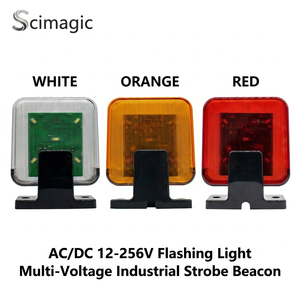
Multi-voltage industrial perimeter and access beacon with IP65 ingress protection. Features dual strobe and constant flash modes for depot gates and automated logistics parks.
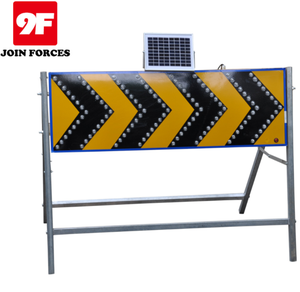
Synchronous directional chevron modules engineered to guide motorists through high-risk bends, rural roundabouts, and motorway off-ramps with zero mains infrastructure.

3M Class RA2 retroreflective substrate enhanced with pulsing edge LEDs for urban 20mph zones, arterial speed transition areas, and London school safety corridors.
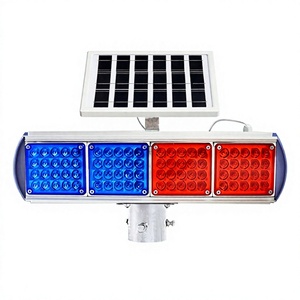
Alternating dual-colour warning beacons with rugged housing for highway patrol barriers, incident clearance zones, emergency diversion bottlenecks, and border posts.
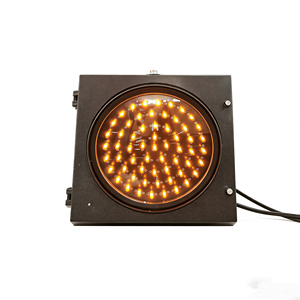
Heavy-duty polycarbonate enclosure tested to withstand UV degradation and salt mist. Optimized for motorway slip entries, pedestrian refuge islands, and junction warnings.
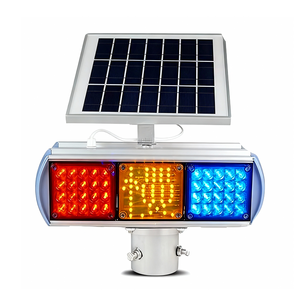
Two-way visibility design reducing installation footprint by 50%. Ideal for dual-carriageway median divides, temporary lane switches, and work-zone approach tapers.

Integrated K-band radar sensor detecting approach velocities up to 300m away. Automatically triggers warning flashers and speed display for traffic calming schemes.
Procuring solar-powered traffic management infrastructure across Greater London, the Home Counties, and UK Strategic Road Networks (SRN) presents strict thermal and irradiance challenges. Unlike equatorial regions where solar isolation exceeds 5.5 kWh/m²/day, London experiences mid-winter insolation lows dropping below 0.65 kWh/m²/day in December and January, accompanied by overcast atmospheric diffusions.
Standard commercial solar blinkers fail within 72 hours of persistent British rainfall due to uncalibrated battery sizing and parasitic micro-controller draws. Our OEM/ODM engineering architecture solves this through three non-negotiable solid-state design parameters:
We utilize Grade-A monocrystalline silicon cells treated with anti-reflective textured glass, operating at 21.8% conversion efficiency even under diffuse 100 W/m² spectral irradiance.
Our automotive-grade Lithium Iron Phosphate cells incorporate BMS low-temperature cut-offs and internal PTC heating mantles, guaranteeing 2,500+ charge cycles from -20°C to +60°C.
Continuous tracking of maximum power curves combined with pulsed-width modulation LED drivers ensures zero flicker, high candela luminous output, and autonomous runtimes of up to 25 rainy days.
All assemblies align strictly with BS EN 12352 (Traffic Control Equipment – Warning and Safety Light Devices) under Class L8H (high luminous intensity for daylight visibility) and Class F3 (flashing frequency uniformity between 1.0 Hz and 2.0 Hz), enabling rapid section approvals for Transport for London (TfL) contractors and National Highways Area teams.
Civil engineering installations requiring zero surface excavation, eliminated cable-theft risk, and immediate compliance with UK Traffic Signs Regulations and General Directions (TSRGD).
Installed at high-velocity slip road convergences, median barriers, and gantry diversions where lane closures or queued traffic demands 1,000-metre advance ocular alerts without costly sub-pavement power trenching.
Integrated with high-visibility backing boards and radar telemetry within boroughs such as Camden, Westminster, and Southwark, operating automated school morning and afternoon flashing periods via astronomical timers.
Temporary and permanent highway access junctions handling continuous heavy construction movements. Amber flashers give clear priority awareness for Class 1 heavy goods vehicles pulling out onto 50mph rural arterials.
High-reliability red and amber directional lane-closure flashers. Robust IP66 sealed housings safeguard electronics from diesel particulate matter and high-pressure chemical wash-down sprays.
Off-grid sequential solar chevron arrays. Provides continuous, synchronised directional guidance around unlit blind corners, cutting night-time run-off-road collisions by over 40% where grid connections are economically non-viable.
Heavy duty hazard flashers situated across container terminals at Tilbury and London Gateway. Resists coastal salt corrosion, continuous vibration from port reach-stackers, and heavy wind loading.
Compare our heavy-duty manufacturing benchmarks against generic consumer imports to assess true lifecycle cost (LCC) and mean time between failures (MTBF).
| Performance Characteristic | Generic Market Import | Our OEM/ODM London Infrastructure Spec | Operational Significance for UK Tenders |
|---|---|---|---|
| Optical Class (BS EN 12352) | Class L2 or Uncertified | Class L8H / L8M Certified | Guarantees 1,500+ cd on-axis day luminosity across bright, low-angle winter sun. |
| Photovoltaic Module | 5W-10W Polycrystalline | 20W-50W Monocrystalline (A-Grade) | Generates sufficient charge during overcast 4-hour London winter daylight periods. |
| Battery Storage Tech | Sealed Lead-Acid (SLA) | Deep-Cycle LiFePO4 w/ Smart BMS | Lasts 7-10 years without electrolyte degradation; resists severe sub-zero winter temperatures. |
| Ingress Protection | IP54 (Basic Splash) | IP65 / IP66 Sealed Enclosure | Prevents water ingress during British motorway spray, surface downpours, and frost cycles. |
| Housing Construction | Recycled Fragile Polystyrene | UV-Stabilised Polycarbonate or Die-Cast Al | High mechanical impact resistance (IK08/IK09) against flying aggregate and road debris. |
| Autonomy Period | 3 to 5 Days | 15 to 25 Consecutive Sunless Days | Ensures non-stop flashing through prolonged London fog and overcast winter spells. |
| Mounting Adaptability | Fixed Single Bracket | Universal 76mm – 114mm Post Clamps | Drop-in compatibility with standard UK highway tubular posts and passive safety masts. |
The UK civil sector is undergoing a profound structural shift driven by the National Highways Net Zero 2030 / 2050 Plan and London’s ultra-low carbon urban transport mandate. Infrastructure operators are actively stripping mains electricity connections from isolated traffic warning assets for three key operational reasons:
1. Trenching and Civil Works Abatement: Trenching high-voltage cables alongside active motorways costs between £120 and £280 per linear metre in London, not factoring in the traffic management costs for lane closures. Autonomous solar blinkers eliminate street-cutting permits, DNO (Distribution Network Operator) connection queues that often exceed 18 weeks, and ongoing carbon emissions associated with grid draws.
2. Eradication of Metal Theft & Vandalism: Copper cable theft has repeatedly shut down power to traditional signs along strategic bypasses. Fully self-contained solar flashers with embedded internal wiring and tamper-proof security fixings nullify vulnerability to cable stripping.
3. Vision Zero Compliance: The Mayor of London’s Vision Zero initiative targets zero deaths and serious injuries across London’s transport network by 2041. Solar LED flashing signals, radar feedback signs, and amber pedestrian beacons provide a dependable intervention to lower 85th-percentile vehicle speeds in vulnerable zones without depending on fragile civil infrastructure.
Drawing upon extensive road safety manufacturing experience, our production plants blend in-house electronics assembly with robust mechanical engineering.
No broker markups. We control every stage of fabrication from LED pick-and-place surface mounting and optic lens moulding to final environmental chamber bake testing.
Custom lens diameters (100mm, 200mm, 300mm), bespoke flash timing duty cycles, corporate private labeling, and bespoke powder-coated RAL aluminium housings.
Direct mapping to technical clauses for National Highways, UK County Councils, TfL schemes, and international ministries of transport across 20+ countries.
Export-grade reinforced packaging with customs documentation, air freight capabilities directly into Heathrow/Gatwick, and seafreight consolidated pallet drops into Felixstowe or London Gateway.
Direct answers to the most common engineering, compliance, and logistics questions encountered during tender qualification.
Whether you require a standard batch of 200mm amber flashing beacons for local council road improvements or a customized OEM solar chevron system for motorway safety upgrades, our engineering team is ready to review your project drawings and tender specifications.