
Discover export-grade solar-powered delineators, active LED herringbone signs, and high-intensity warning modules certified for European road environments and challenging Mediterranean topographies.
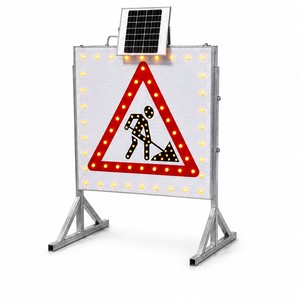

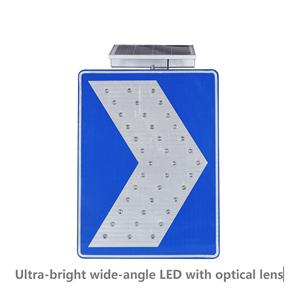
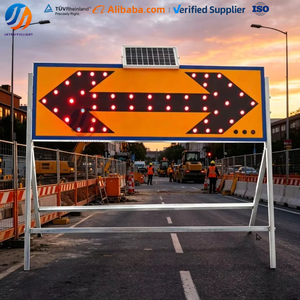
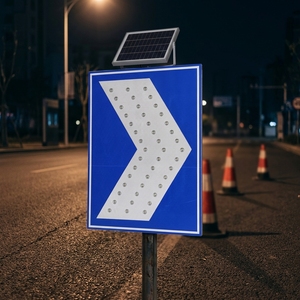
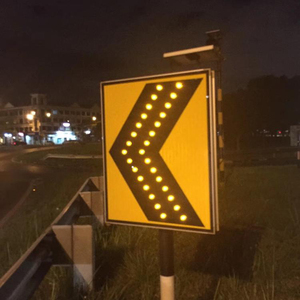
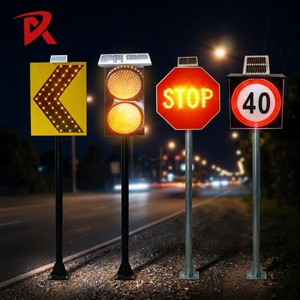
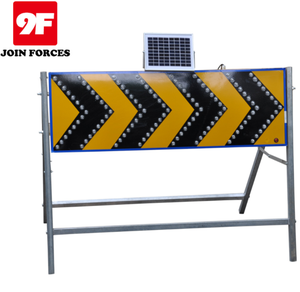
The Greek national road landscape presents a unique, demanding operational theater for road safety infrastructure. Connecting mainland logistical corridors such as the Egnatia Odos (A2), PATHE (A1), and Olympia Odos (A8) with high-altitude alpine crossings through the Pindus Range, down to isolated coastal routes and archipelagos (Crete, Rhodes, Cyclades, and the Ionian Islands), requires signage that survives coastal salinity, high UV index degradation, extreme temperature shifts, and complex microclimates.
Passive reflective signs frequently fail during dense coastal sea fogs (Marazi), heavy downpours, or sudden glare transitions common along the Hellenic peninsula. Active solar chevron systems provide distinct information gain to approaching motorists. By incorporating high-lumen, focused-beam surface-mount LEDs within micro-prismatic sheeting (Class RA2 or Class 3 micro-prismatic), the sight distance is extended from sub-100 meters to exceeding 800 meters, delivering decisive reaction times for commercial transit and tourist traffic unfamiliar with localized curve radiuses.
When engineering OEM/ODM solar chevron signs for modern Greek tenders, solitary flashing beacons are rapidly being superseded by sequential radar-triggered directional chevrons. Utilizing short-range 2.4 GHz or sub-GHz RF mesh communication, an array of 4 to 12 herringbone signs fires in a cascading sweep (dynamic motion pattern) along the outer perimeter of a sharp curve. This visual animation actively draws the driver’s foveal vision along the safe tangential path, eliminating visual clutter and drastically mitigating run-off-road (ROR) collision rates.
Tailoring robust photovoltaic optical alerts to the geological and environmental specificities of the Aegean and Ionian road transport sectors.
Trans-Balkan transit routes through northern and central Greece experience severe sub-zero winter temperatures, snowfall, and persistent mountain rime. Our custom cold-weather solar chevron arrays are engineered with LiFePO4 battery modules equipped with thermal insulation, operating uninterrupted down to -25°C while cutting through mountain haze.
Island ring roads (such as the Northern Road Axis of Crete - VOAK) and coastal cliffs face high aerosol salinity and relentless solar irradiance. We utilize marine-grade 5052-H32 aluminum enclosures with fluorocarbon electrostatic powder coating and UV-stabilized polycarbonate lenses that prevent chalking and yellowing under intense Mediterranean UV exposure.
Junction off-ramps and speed-reduction zones near major toll plazas along Attiki Odos and Moreas Motorway demand rapid deceleration warnings. High-output amber/red dual-color solar LED chevrons actively alert high-speed commercial traffic to sharp curvature changes without requiring disruptive grid trenching.
How European safety directives, the EU Vision Zero campaign, and municipal decarbonization programs are transforming road hardware requirements in Greece.
Greek road concessionaires are integrating roadside sensors with regional Traffic Management Centers (TMC). Modern solar chevron signs now feature optional NB-IoT or LoRaWAN communication, transmitting real-time operational status, battery health metrics, and automated alerts during impact or vehicle intrusion.
With strict European Green Deal objectives, Greek public work tenders (KEDE / Ministry of Infrastructure and Transport) prioritize standalone PV systems that eradicate electrical draw from fossil grids and minimize excavation disruption along protected cultural and ecological heritage corridors.
Tenders in Greece strictly follow harmonized European standards, including EN 12899-1 (Fixed, vertical road traffic signs), EN 12352 (Traffic control warning devices), and CE / RoHS certifications. Sourcing directly from an established manufacturing partner eliminates compliance risks during public audits.
Delivering vertically integrated engineering, proprietary photometric calibration, and end-to-end tender compliance for EPC contractors worldwide.
Manufactured at our dedicated facility in GIDC Phase-1, Vatwa, Ahmedabad, we eliminate third-party markups. From aluminum stamping, automated SMT LED placing, robotic sealing, to accelerated environmental testing, every production phase is monitored to strict global benchmarks.
We calculate panel wattage and battery amp-hour capacity according to the target Greek micro-region’s NASA solar insolation databases. Our systems guarantee over 120 continuous hours of flashing autonomy during consecutive overcast winter conditions.
We tailor custom sign dimensions (such as 600×800mm, 450×600mm), mounting bracket clamp diameters (60mm to 114mm steel poles), flashing frequencies (30–60 FPM), dynamic cascades, and dual-source hybrid power configurations (Solar + 230V AC bypass).
Addressing technical standards, port customs logistics, salt-spray corrosion resistance, and tender compliance.
Yes. Our signs are custom engineered to meet the dimensional, retroreflective, and colorimetric guidelines stipulated by the Greek Traffic Code (K.O.K.) and European standards EN 12899-1 and EN 12352. Submittals include comprehensive photometric curves, ingress protection test reports, and mill certificates for project approval.
We use heavy-gauge marine aluminum alloys (5052-grade) with specialized chemical pre-treatment and polyester powder coatings exceeding 1,000 hours of ASTM B117 salt spray testing. Electrical compartments are hermetically sealed to IP66/IP67 with silicone gaskets and waterproof breathers (ePTFE membrane) to prevent internal condensation.
For deployments across southern Greece and the islands where ambient pavement temperatures exceed 45°C, we configure our signs with high-stability Lithium Iron Phosphate (LiFePO4) battery packs managed by customized smart BMS. This provides deep thermal cycling stability up to 60°C and a lifespan exceeding 2,500 charging cycles.
Absolutely. Our dynamic chevron systems incorporate synchronized RF transceiver modules with automated master-slave assignment. They establish an encrypted ad-hoc network along the curve, initiating synchronized sequential arrow flows with no field cabling or external power line required.
With full in-house production in Ahmedabad, India, typical OEM production cycles range between 15 to 25 working days depending on quantity and custom bracket requirements. Shipments via ocean freight direct from Mundra or Nhava Sheva to Piraeus typically take 18–24 days, accompanied by full EUR.1/origin certification and export packing.
Enpowers International is a specialized, vertically integrated manufacturer located at GIDC Phase-1, Vatwa, Ahmedabad, India. Direct procurement eliminates intermediary costs and provides direct factory engineering support for Greek concession tenders, custom drawings, and warranty backup.
Consult directly with our international infrastructure engineering desk to receive comprehensive photometric datasets, mechanical CAD diagrams, and factory-direct commercial tenders tailored for Greek road projects.
Contact Us