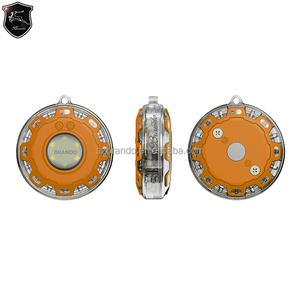
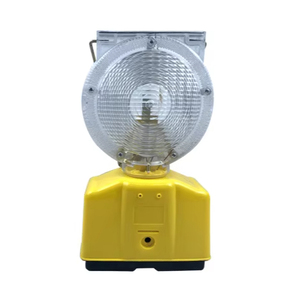
High-grade optical output, UV-stabilized polycarbonate lenses, and thermal-dissipating aluminum housings engineered to meet Dubai RTA and Abu Dhabi Department of Municipalities and Transport criteria.
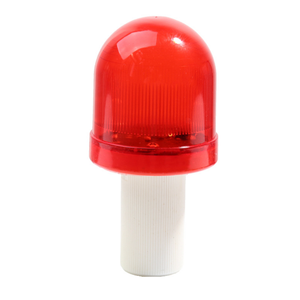
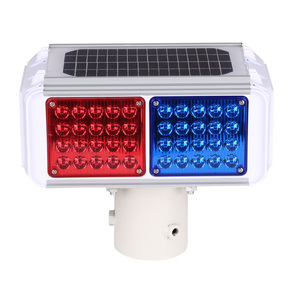
The road infrastructure of the United Arab Emirates represents one of the most sophisticated logistical networks in the world. From multilane orbital superhighways such as the E11 (Sheikh Zayed Road) and E311 (Sheikh Mohammed Bin Zayed Road) to rugged desert access arteries connecting Al Ain, Liwa, and the northern emirates of Ras Al Khaimah and Fujairah, the physical demands placed upon roadway safety devices are extreme. For civil engineers, municipal project managers, and road contractors, standard commercial-grade warning devices frequently fail due to thermal fatigue, particulate scouring, and battery failure.
As an OEM/ODM manufacturing factory with deep international export expertise across 20+ countries, we design roadway safety light systems specifically hardened against GCC environmental stressors. Standard solar electronic warning lights engineered for temperate climates suffer rapid lumen degradation and battery bloat when ambient surface temperatures on Arabian asphalt reach upwards of 75°C during peak summer months. Our UAE-dedicated assemblies implement specialized component selections:
Traditional Lithium-Ion (NMC) and standard Lead-Acid batteries suffer thermal runaway and accelerated aging when subjected to heat above 45°C. Our Middle East product series is powered by ultra-stable Lithium Iron Phosphate (LiFePO4) or high-grade Ni-MH chemistries capable of enduring operational internal chamber temperatures of up to 80°C without loss of charge retention.
The Shamal wind events generate sustained airborne dust and fine silica particles that pit and frost conventional acrylic lenses. We utilize Bayer Polycarbonate optical injection moldings embedded with high-grade UV stabilizers (UV400+ rating) and scratch-resistant hydrophobic coatings, guaranteeing optical transmissivity exceeding 92% across a 5-year lifecycle.
Fine particulate infiltration (
By engineering systems to meet both Indian subcontinental baseline resilience (NHAI, PWD, BRO standards) and international European (EN 12352) and American (MUTCD) project requirements, Enpowers International provides municipal distributors, project contractors, and EPC procurement teams with certified equipment ready for long-term field deployment across the UAE.
Civil engineering contractors operating within Dubai, Abu Dhabi, Sharjah, and the northern emirates navigate stringent safety mandates governed by authorities like the Roads and Transport Authority (RTA) and local police divisions. Below are key deployment contexts where our custom OEM/ODM road hazard blinkers and solar beacons excel:
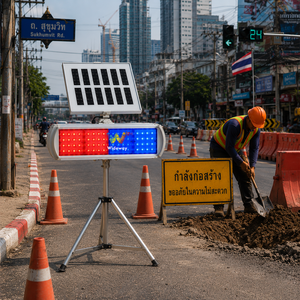
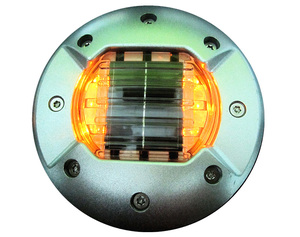
Long highway stretches such as the E66 (Dubai-Al Ain) and E102 (Sharjah-Kalba) present extreme speed variance and sharp thermal drops at dusk. Autonomous solar-powered amber blinkers and embedded solar cat-eye studs guide drivers clearly through low-illumination curves and median openings without requiring costly grid cabling across vast desert distances.
With massive master-plan developments continuously expanding in Dubai South, Palm Jebel Ali, and Abu Dhabi's Yas/Saadiyat zones, major diversions demand temporary lane-shift signage. Our high-flux LED arrow blinkers and synchronized barricade beacons provide day-and-night optical clarity that prevents collisions at temporary concrete barriers.
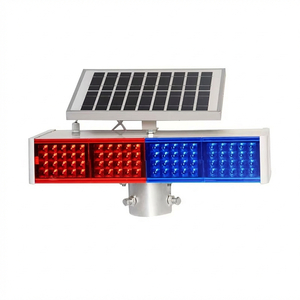
Industrial hubs including Jebel Ali Port, Khalifa Port, and industrial free zones require 24/7 internal logistics safety. Magnetic rechargeable flashers, heavy-duty solar barricade lights, and dual red/blue hazard beacons provide critical warning signals for gantry lanes, container stacks, and heavy equipment access gates.
Procurement teams often compare roadway warning equipment purely on initial price. However, lifecycle failure in the GCC region results in significant liability, road traffic fines, and labor replacement overhead. The matrix below highlights why engineered builds deliver superior total cost of ownership (TCO):
| Performance Attribute | Generic / Low-Cost Market Units | Enpowers UAE OEM/ODM Industrial Spec | Strategic Impact on Project |
|---|---|---|---|
| Battery Storage Chemistry | Standard Lithium Cobalt (NMC) / Sealed Lead-Acid | High-Grade LiFePO4 or High-Temp Ni-MH | Eliminates risk of thermal bulging, explosion, or early cell decay in 50°C+ summer ambient heat. |
| Optical Enclosure Material | Standard Recycled Polystyrene / Thin Acrylic | Optical-Grade Virgin Bayer Polycarbonate + UV400 | Prevents yellowing, surface brittleness, and cracking under intense solar UV exposure in the Gulf. |
| Ingress Protection Rating | IP54 to IP65 (Glued Seals) | IP68 Certified (EPDM Continuous Gasket + Resin Encapsulation) | Completely seals out super-fine silica dust and pressurized wash-down water sprays on highway equipment. |
| Optical Output & Visibility | Generic unbranded LEDs (<5,000 mcd) | High-Flux Osram / Epistar LEDs (>12,000–18,000 mcd) | Delivers daylight visibility over 1,000 meters, ensuring rapid driver reaction on 120–140 km/h expressways. |
| Photovoltaic Autonomy | 1 to 2 cloudy days, low-efficiency poly panels | 5 to 7 days continuous overcast autonomy, mono PERC cells | Maintains round-the-clock flash cadence during seasonal dust squalls and dense coastal morning fog. |
The road safety technology landscape within the United Arab Emirates is rapidly transforming under strategic frameworks like UAE Vision 2031, Dubai Smart City initiative, and the UAE Zero Road Deaths Vision. Municipal agencies are actively upgrading safety infrastructure to meet aggressive targets for traffic hazard mitigation and smart asset management. Key macroeconomic and regulatory trends shaping roadway light purchasing include:
In accordance with green building initiatives and net-zero sustainability charters across the GCC, civil tenders now specifically mandate off-grid solar equipment. By removing the need for cable trenching and carbon-intensive grid draws, solar LED blinkers reduce roadway maintenance emissions while accelerating project deployment schedules.
Modern highway diversion zones are replacing scattered, non-synchronized hazard beacons with sequential RF or GPS-linked lighting arrays. When approach flares flash in a guided chevron sequence, drivers perceive lane closures with significantly improved spatial orientation, mitigating high-speed rear-end impacts at temporary work sites.
Procurement entities under RTA Dubai, Musanada Abu Dhabi, and Sharjah Roads & Transport Authority (SRTA) are enforcing higher compliance hurdles. Certificates of conformity (CoC), material traceability, and accredited third-party test reports (verifying thermal endurance, IP hermeticity, and optical luminous intensity) are now mandatory prerequisites for civil bid qualification.
Headquartered in Ahmedabad, Gujarat, India, Enpowers International operates a dedicated manufacturing complex at GIDC Phase-1, Vatwa. We are not a trading intermediary; we are a precision road safety engineering facility controlling every step of production from PCB surface-mounting and structural mold tooling to climatic stress testing and custom optical calibration.
From housing geometry, mast mounting diameter (50mm–114mm), customized lens aspects (amber, red, green, bidirectional arrow), to custom branded bezels and client-specified flash duty cycles, we engineer bespoke configurations tailored to your tender drawings.
Our safety lights protect prestigious national highway networks and are extensively deployed across projects supervised by premier infrastructure agencies including the National Highways Authority of India (NHAI), Central Public Works Department (CPWD), and the Border Roads Organisation (BRO). We translate this rigorous field experience directly to Gulf project compliance.
Located in strategic proximity to Mundra and Kandla ports on India's western seaboard, we offer ultra-fast ocean freight transit times of just 3 to 5 days to UAE entry ports (Jebel Ali, Port Khalid, Khalifa Port). Complete documentation, including Certificate of Origin, mill test reports, and customs compliance dossiers, is delivered standard with every export batch.
Clear, direct technical answers addressing regulatory compliance, thermal engineering, shipping lead times, and customization options.
Yes. Our road safety luminaires can be custom-engineered to meet specific photometric distribution, chromaticity limits, and flash cadence standards established by UAE authorities (such as the Dubai RTA Road Safety Signage Guidelines and Abu Dhabi DMT Road Safety Manuals). When you share tender specifications or project drawings, our engineering team maps each clause directly into compliant hardware configurations.
Unlike standard consumer-grade safety flashers that use standard NMC lithium cells, we utilize high-stability Lithium Iron Phosphate (LiFePO4) or high-temperature rated Nickel-Metal Hydride (Ni-MH) cells. Coupled with reflective housing designs, isolated thermal barriers, and passive aluminum heat sinks, our electronics are engineered for operational reliability up to 75°C–80°C ambient enclosure temperatures.
Absolutely. We provide modular hot-dip galvanized and powder-coated mounting hardware designed to interface seamlessly with 50mm, 76mm, 89mm, and 114mm cylindrical steel poles, existing gantry arms, square tube assemblies, and temporary concrete Jersey barriers. Custom CAD bracket fabrication is standard within our OEM/ODM service.
Standard OEM/ODM production runs typically require 10 to 20 business days depending on volume and configuration complexity. Shipping from our export manufacturing center in Gujarat through Mundra or Kandla Port to Jebel Ali Port, Dubai, takes approximately 3 to 5 days ocean transit, providing UAE contractors with some of the fastest replenishment turnarounds in the international market.
Every export shipment is backed by factory quality control documentation, including luminous intensity (candela) reports, IP65/IP68 ingress verification, and electrical endurance testing. Third-party accredited laboratory test reports (verifying vibration resistance, dust immersion, and UV stability) are provided upon request during project submittals.
Yes. We manufacture smart wireless synchronized hazard lights utilizing short-range RF (radio frequency) modules or satellite GPS time-syncing. These systems allow consecutive warning lamps deployed across hundreds of meters along highway diversions to flash in unison or in sequential chevron waves, significantly improving driver lane-discipline at night.
Connect directly with our engineering and export sales specialists to receive complete technical submittal packages, photometric data, OEM/ODM drawings, and competitive direct-factory pricing for your upcoming tenders.
Get Catalog