
Tested under rigorous desert photometric criteria, high-intensity ambient sunlight, and extreme thermal cycling for mission-critical deployment in Doha and greater Qatar.
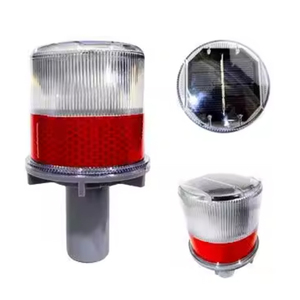
Universal-fit cone mount flasher featuring high-efficiency monocrystalline solar cells, rugged polycarbonate lens, and automated 360-degree optical visibility for roadworks.
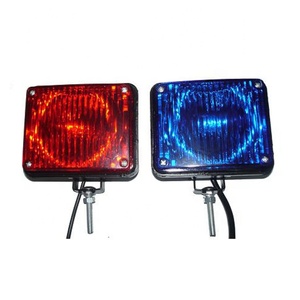
Heavy-duty perimeter strobe warning bar for escort vehicles, municipal work trucks, and civil defense fleets with multiple flash synchronization patterns.
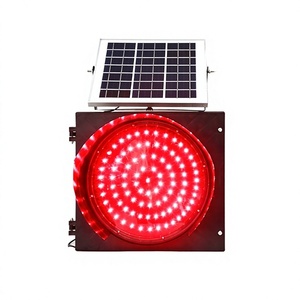
Autonomous red flashing hazard light engineered with an hermetically sealed base, built-in dusk-to-dawn sensor, and high candela visibility exceeding 1,000 meters.
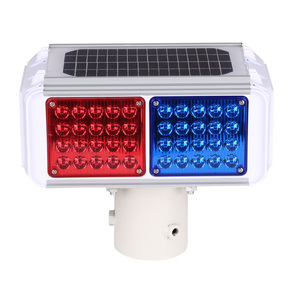
Dual-cluster bi-directional solar hazard beacon specifically configured for highway median diversions, police checkpoints, and expressway split-junction warnings.
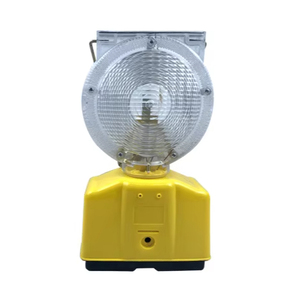
High-impact resistant warning flasher compatible with metal and water barrier installations. Features UV-stabilized Fresnel prism lens to maximize optical dispersal.
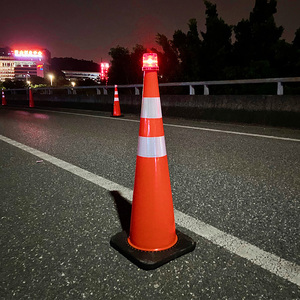
All-in-one deployable night warning system combining heavy ballast safety cones with top-mounted solar pulsating strobes for fast-turnaround roadwork security.
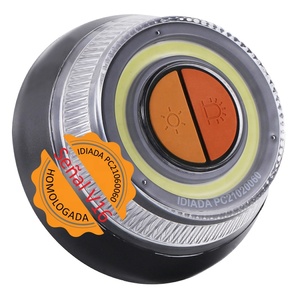
Compact 40CD-80CD magnetic emergency warning beacon for roadside breakdown alerts. Replaces traditional hazard triangles with safe roof-mounted activation.
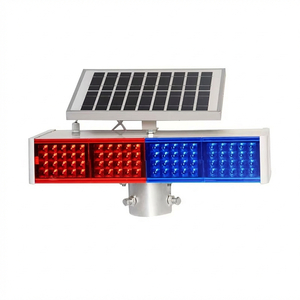
Reinforced aviation-grade aluminum casing paired with integrated micro-prismatic reflectors, designed to endure severe physical abrasion, sandstorms, and heat.
Supplying road safety lighting in Qatar is not merely a matter of delivering generic off-the-shelf LED products. The State of Qatar, situated along the Arabian Gulf, experiences one of the world's most demanding operational environments for solid-state optoelectronics and off-grid solar equipment. During summer months across Doha, Al Rayyan, and Mesaieed, ambient air temperatures routinely exceed 48°C, with unshaded tarmac surface temperatures skyrocketing past 75°C. When enclosed in a polycarbonate or aluminum casing, the internal thermal cavity can reach extreme operating thresholds that quickly destroy commercial-grade drivers and degrade low-quality LED phosphor arrays.
OEM/ODM Engineering Benchmark: Our Doha-targeted LED warning beacons integrate high-thermal-conductivity aluminum metal-core PCBs (MCPCB), industrial LiFePO4 battery chemistry rated up to +75°C, and German Bayer Makrolon® polycarbonate with deep-infused UV inhibitors to ensure zero yellowing, cracking, or optical attenuation across multi-year contracts.
Beyond extreme heat, the Arabian Peninsula experiences periodic "Shamal" northwesterly wind events, generating fine silica sandstorms with grain sizes under 50 micrometers. Standard IP65 housings frequently fail due to sand ingress through unsealed joints or brittle gaskets, causing electrical arcing and moisture condensation during humid coastal nights. As a dedicated OEM/ODM factory and global exporter, our warning beacons utilize ultrasonic hermetic bonding or continuous dual-lip silicone compression seals verified to IP68 standards. Furthermore, the external optical lenses are treated with polysiloxane anti-abrasion hard-coatings, preventing optical diffusion caused by blowing desert silt.
While Doha receives intense solar irradiation exceeding 2,100 kWh/m² annually, high ambient temperatures reduce photovoltaic output efficiency by up to 0.4% per degree Celsius above 25°C. Traditional ternary lithium-ion (NMC) batteries become dangerously unstable when subjected to prolonged 60°C+ enclosure temperatures. For our Qatari and GCC municipal consignments, we exclusively engineer lithium iron phosphate (LiFePO4) or high-temperature nickel-metal hydride (Ni-MH) battery systems with integrated thermal cut-offs and intelligent Pulse Width Modulation (PWM) or Maximum Power Point Tracking (MPPT) micro-controllers. This guarantees over 120 hours of continuous dark autonomy (rainy or low-light sandstorm conditions) while eliminating thermal expansion or leakage risks.
Evaluating standard commercial beacons versus our specialized OEM/ODM industrial-spec warning lights for infrastructure developers.
| Technical Parameter | Standard Commercial Flasher | Our Factory Industrial-Spec (Doha Export) | Significance in Gulf Projects |
|---|---|---|---|
| Lens Material Chemistry | Standard Recycled PC / PS | Virgin Bayer Makrolon® + UV380 Stabilizers | Prevents yellowing and hazing under 11+ UV Index |
| Ingress Protection (IP) | IP54 / IP65 (Snap-fit) | IP68 Hermetic Ultrasonic / Dual Silicone O-Ring | Total immunity to micro-fine Shamal dust & Gulf humidity |
| Battery Cell Technology | Standard Li-ion (NMC) 45°C limit | Grade-A LiFePO4 cells rated for -10°C to +75°C | Eliminates swelling, fire risk, and rapid degradation |
| Photometric Intensity (cd) | 15 to 30 Candela | 60 to 120+ Candela (SAE J595 / EN 12352 L8H) | Critical daylight recognition at highway speeds (120 km/h) |
| Housing Structural Rating | ABS Plastic (IK06) | Die-Cast ADC12 Aluminum or Polycarbonate (IK10) | Resists heavy vehicle impact, ballast displacement, and vibration |
| Solar Energy Conversion | Polycrystalline (15-17%) | Grade-A Monocrystalline Silicon (21.5-23%) | Fast charging even during overcast skies or light sand dust layer |
From Lusail Smart City corridors to Ras Laffan petrochemical highways, our LED beacons safeguard critical logistics arteries.
Deployed along the Doha Expressway, Orbital Highway, and Al Shamal corridor. Our high-candela amber beacons guide motorists through construction detours, flyover splitters, and speed breaker approaches per Qatari Work Zone Traffic Management Guide (WZTMG).
Continuous heavy container movements require fail-safe perimeter marking. Our cast-aluminum solar flashers and V16 emergency beacons are deployed on gantry rails, hazardous storage corners, and heavy transport access points across Mesaieed and Umm Sa’id.
Supporting Qatar National Vision 2030 smart infrastructure initiatives. Low-profile, sleek LED barricade beacons provide discreet yet powerful night warnings along tram corridors, pedestrian promenades, and sustainable commercial construction sectors.
ATEX/IECEx compliant custom-molded signaling configurations used by energy concessionaires to demarcate high-risk pipeline crossings, flare stack perimeters, and specialized chemical loading docks where maintenance-free solar operation is mandatory.
Our LTD-8SQ dash deck and perimeter strobe warning lights equip municipal maintenance vehicles, private security convoys, and heavy transport escort trucks operating between Doha and border entry points, offering synchronous flash choreography.
For rural branch roads leading to Dukhan or Zubarah where grid trenching is economically non-viable, standalone double-sided red/blue and amber flashing beacons operate indefinitely, self-sustained by clean solar energy harvesting.
The regulatory ecosystem for roadside safety devices in Qatar is strictly supervised by the Public Works Authority (Ashghal), the Ministry of Transport (MOT), and the General Directorate of Traffic. Under the updated Qatar Traffic Control Manual (QTCM) and the Qatar Construction Specifications (QCS 2014 / 2024 updates), contractor compliance is audited with zero tolerance for sub-standard warning devices. The standard requires that temporary and permanent warning beacons adhere to defined chromaticity coordinates (CIE 1931), optical luminous intensities (EN 12352 class L8H / L8M), and minimal physical degradation under prolonged solar irradiance.
Historically, civil works contractors in Doha relied on heavy 6-volt dry-cell barricade lanterns. This practice created significant hazardous waste, ongoing battery replacement labor expenses, and frequent night failures due to forgotten maintenance. Driven by Qatar’s strict environmental targets under Vision 2030, government and Tier-1 EPC contractors now require solar-powered warning devices with long-life rechargeable battery storage capable of maintaining continuous operation for at least 3 to 5 years without maintenance.
As smart expressway corridors expand across Doha, the future of work-zone protection lies in synchronous sequential flashing. Our R&D factory unit designs OEM wireless RF-synchronized beacon arrays. When spaced 10 to 20 meters apart along expressway deceleration lanes or merge points, the beacons pulse in an eye-guiding directional wave, vastly improving driver reaction time during high-speed nocturnal transit.
In line with international roadside safety transitions, Qatar’s automotive safety market is actively transitioning away from traditional reflective triangles. Roadside deployment of reflective triangles exposes motorists to dangerous passing traffic on high-speed expressways such as the Sabah Al Ahmad Corridor. The magnetic V16 emergency flasher can be deployed from inside the vehicle by placing it on the roof, immediately emitting a 360-degree, high-intensity emergency beacon visible up to 1,000 meters.
Consolidated manufacturing excellence, certified ISO quality management, and end-to-end customization for the Middle East market.
In-house CNC mold-making facilities allow rapid prototyping of custom mounting brackets, cone adapters, and specialized optical lenses matching exact tender drawings within 15 days.
High-speed surface-mount technology (SMT) lines manufacture high-efficiency LED driver boards with integrated transient voltage protection, reverse polarity safeguards, and thermal throttling.
Every single warning beacon undergoes automated 72-hour continuous thermal chamber cycling (-10°C to +75°C) and water immersion testing prior to packaging to ensure zero on-site defects.
Seamless CIF Doha shipping routes to Hamad Port or fast air cargo to Hamad International Airport (DOH). We provide complete Certificates of Origin, SASO/QCS technical files, and palletized packaging.
Clear, direct answers regarding custom manufacturing, Ashghal documentation, logistics, and climate endurance.
Yes. Our beacons are engineered to comply with the performance requirements set forth in the Qatar Work Zone Traffic Management Guide (WZTMG) and Qatar Construction Specifications (QCS). This includes EN 12352 photometric class compliance (L2H, L8H, and L8M), designated chromaticity coordinates for amber, red, and blue signaling, and required flash frequency rates (typically 50 to 60 flashes per minute with customizable duty cycles). We provide full submittal packages including photometric lab test reports and material safety datasheets for contractor consultant approvals.
Absolutely. As an actual manufacturing facility, we offer extensive OEM/ODM support for distributors and infrastructure companies across Qatar. We can laser-engrave or silk-screen your company logo on housing surfaces, mold housings in custom RAL safety colors, program proprietary multi-flash strobe sequences, modify base-plate mounting holes to fit specific crash barriers or cones, and deliver private-label retail or master carton packaging.
Standard lithium polymer (Li-Po) and standard lithium-ion cells fail rapidly under Gulf heat. We specifically utilize industrial Grade-A Lithium Iron Phosphate (LiFePO4) or high-temperature Ni-MH cells designed for continuous operation in temperatures up to +75°C. Furthermore, our internal printed circuit boards incorporate intelligent temperature sensor cut-offs that regulate charging currents during midday peaks to avoid thermal stress, ensuring a service life exceeding 2,000 charge cycles.
For standard models, production typically requires 10 to 18 days depending on order volume. Custom OEM/ODM runs with custom housing tooling require approximately 20 to 25 days. Ocean freight from our factory port to Hamad Port (Mesaieed, Qatar) takes roughly 14 to 22 days. For urgent project replenishment, we regularly ship palletized cargo via air freight to Hamad International Airport (DOH) with transit times of 3 to 5 business days.
We use virgin optical-grade polycarbonate sourced directly from Bayer (Covestro Makrolon®) compounded with concentrated benzotriazole UV-stabilizer additives. This protects the polymer chains against photodegradation caused by the extreme solar UV index (frequently reaching 11 to 12 in Qatar). In accelerated QUV weathering tests simulating 5 years of intense desert exposure, our lenses exhibit less than 1.5% delta optical haze, maintaining full photometric intensity.
We provide a comprehensive export package including the Commercial Invoice, Packing List, Bill of Lading (B/L) or Air Waybill (AWB), Certificate of Origin (COO) attested by the Chamber of Commerce, and MSDS / UN38.3 battery transport compliance documents. All products comply with CE, RoHS, and relevant ISO standards, ensuring straightforward clearance through Qatar General Authority of Customs.
Connect immediately with our technical export division. Whether you require standard Ashghal-compliant road safety beacons or complete custom OEM injection molding, our engineers will deliver detailed technical datasheets and factory-direct pricing.