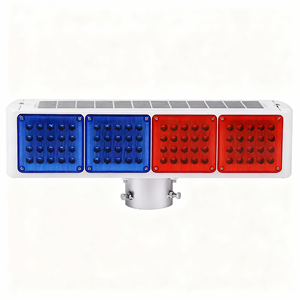
Aluminum Dual-Sided Solar Warning Light
Red/Blue strobe, dual-aspect optical array, cast aluminum alloy body, high resistance to desert winds.

Engineered for autonomous 24/7 highway safety, round-the-clock diversion signaling, and resilience against high UV indices and coastal saline winds across Morocco.
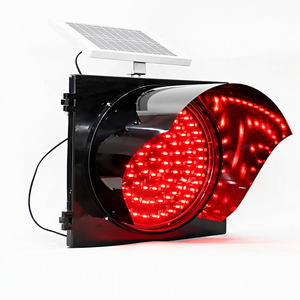
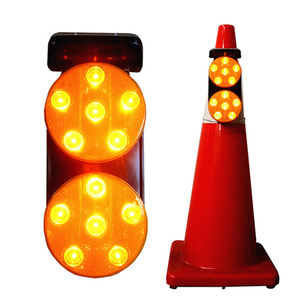
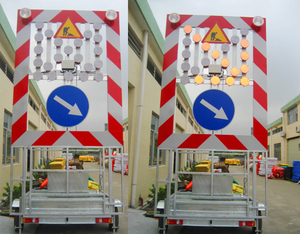
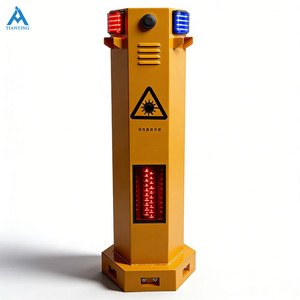
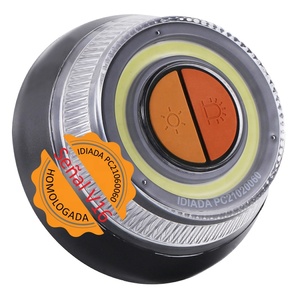
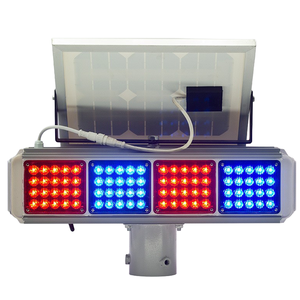
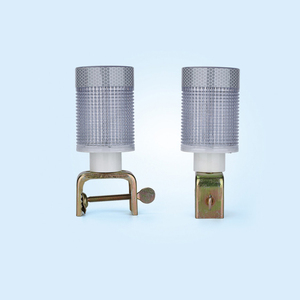
Aligning with Morocco’s National Road Safety Strategy (NARSA) and mega infrastructure projects leading to the 2030 World Cup.
Morocco's transportation and logistics ecosystem is undergoing an unprecedented modernization drive. Driven by initiatives orchestrated by the Ministère de l'Équipement et de l'Eau and Autoroutes du Maroc (ADM), civil contractors are under stringent mandates to reduce accidental fatalities along expressways, mountain switchbacks, and urban transition zones. As local concessionaires build, maintain, and upgrade extensive arterial routes—including the A1 (Casablanca–Rabat), A2 (Rabat–Fes–Oujda), and the southward routes through Marrakech down to Agadir—the demand for reliable, industrial-grade LED flashing beacons has surged.
Procuring directly from specialized manufacturing plants eliminates non-standard third-party assemblies that consistently fail in harsh environmental conditions. Operating in Morocco presents severe operational bottlenecks: elevated thermal stress exceeding +45°C during summer in interior basins, abrasive dust storms (Chergui) blowing across southern pre-Saharan roadways, and marine fog coupled with corrosive saline humidity along Atlantic coastal nodes such as the Port of Casablanca and Tanger Med. Standard consumer-grade optical assemblies turn brittle, suffer circuit desoldering, or endure rapid battery degradation under continuous thermal shifts.
Our manufacturing philosophy bridges this operational reliability gap. By employing marine-grade die-cast aluminum alloys, stabilized polycarbonate lenses with anti-yellowing UV inhibitors, and specialized lithium-iron phosphate (LiFePO4) energy storage systems governed by intelligent MPPT controllers, we supply equipment built to execute sustained unattended warning cycles over decades across Morocco's national road network.
Hairpin curves, elevated descents, and sudden microclimatic fog in the High Atlas require autonomous solar beacons capable of cutting through dense cloud formations and enduring sub-zero winter temperatures without luminaire failure or battery capacity drops.
High-volume deceleration zones and median diverges along the Casablanca-Rabat-Tangier corridor mandate high-candela amber and red-blue strobe units to alert long-haul freight and international passenger traffic at long visual detection distances.
Heavy commercial container transport arteries, roll-on/roll-off lanes, and customs inspection yards need robust, IP67-sealed warning signals immune to intense salt-mist corrosion, petrochemical fumes, and 24-hour vibration profiles.
Examining technical transformation, tender evolution, and decarbonization benchmarks shaping Morocco’s procurement landscape.
Morocco’s National Road Safety Agency has increased safety audits on civil contractors. Road construction zones without synchronized directional lights and certified high-output beacons face stringent non-compliance penalties, driving private concessionaires toward factory-certified equipment with proven lux and candela metrics.
Grid-tied infrastructure in remote parts of the Oriental, Drâa-Tafilalet, and Souss-Massa regions entails prohibitive trenching, cabling, and transformer capital expenditure. Self-contained solar-powered beacon designs fit perfectly with Morocco's green transition goals and off-grid road electrification programs.
The acceleration of regional road expansions interconnecting Grand Stade de Casablanca, Rabat, Marrakech, Fes, and Tangier requires rapid-turnaround factory deliveries. Civil contractors demand standardized hardware with clear export customs documentation and direct engineering accountability.
| Specification Parameter | Standard Commercial Grade | Our Moroccan Export Factory Standard | Impact on Project Performance |
|---|---|---|---|
| Housing Material | Recycled ABS / Thin Sheet Metal | Die-Cast LM6 Marine Alloy + UV-Resistant Polycarbonate | Prevents casing distortion, rust, and cracking under 45°C+ summer sun. |
| Optics & Luminous Flux | Standard DIP LEDs (40-60 Lumens) | High-Flux OSRAM/Bridgelux SMD Array (>180 Lumens/W) | Delivers clear visibility beyond 1,000 meters through dust storms and ocean mist. |
| Battery Chemistry | Sealed Lead-Acid (SLA) | Lithium Iron Phosphate (LiFePO4) rated for 2000+ Cycles | Withstands extreme heat without capacity degradation or premature cell death. |
| Solar Autonomy | 2 to 3 Rainy Days | 7 to 10 Days Continuous Uncharged Autonomy | Guarantees continuous 24/7 flashing throughout extended winter rain or dust cover. |
| Ingress Protection | IP44 / IP54 | Hermetically Sealed IP65 to IP67 | Eliminates internal condensation, fine silt penetration, and salt crusting. |
Combining end-to-end production control, global highway certifications, and proven export engineering.
Direct production in specialized plants. We manage the entire fabrication chain—from precision electronic PCB assembly and die-casting to final lumen/candela calibration and waterproof testing.
Our solutions are designed to comply with NHAI, PWD, BRO standards, and can be customized to match European CE EN 12352 requirements, ensuring full compliance for Moroccan ministerial tenders.
With an active logistics presence serving road authorities, concessionaires, and EPC leaders across 20+ nations, we understand customs clearance, export container packaging, and marine shipping logistics.
Complete flexibility over lens dimensions (200mm, 300mm), amber/red/blue color arrays, multi-mode flash logic, high-capacity solar sizing, and specialized pole/barrier mounting brackets.
Consult with our export engineering department to receive tender-compliant specification sheets, project pricing, and photometric test reports for your road, port, or municipal contracts.
Get CatalogClear, technical responses addressing local procurement, transit logistics, and climate compatibility.