
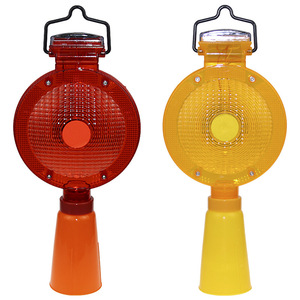
Engineering Demands for Barricade Lights in Bangladesh's Extreme Macroclimate
Procuring LED barricade warning systems for South Asian highway projects is not merely a question of baseline luminous intensity; it is a fundamental reliability challenge against extreme ambient environments. Bangladesh experiences an intense sub-tropical monsoon season spanning June through October, characterized by sustained torrential rainfall, relative humidity frequently exceeding 92%, seasonal road waterlogging, and elevated coastal salinity stretching from the Chittagong port corridor down to the Matarbari deep-sea port belt.
Standard consumer-grade warning lights manufactured with low-grade ABS plastic and non-sealed switch circuits invariably fail within 60 to 90 days under these operating environments. Failures typically stem from three failure modes: moisture intrusion corroding the internal printed circuit boards (PCBs), UV degradation causing the amber lens to yellow and become brittle under scorching 38°C pre-monsoon sunshine, and rapid battery death due to poorly dimensioned solar-to-storage autonomy ratios during 7 consecutive overcast monsoon days.
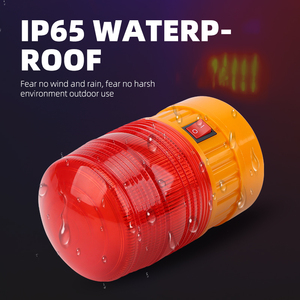
IP67/IP68 Hermetic Ingress Protection
Ultrasonic welding and continuous silicone perimeter O-rings protect the internal optoelectronics and battery cavities against jet water, deep puddle submergence, and airborne alluvial silt.
Anti-UV Virgin Polycarbonate Lenses
Stabilized with Bayer Makrolon optical polycarbonates that resist yellowing, micro-cracking, and mechanical stress impact from high-velocity gravel dispersion kicked up by heavy multi-axle freight traffic.
LiFePO4 High-Temperature Cell Chemistry
Unlike conventional NiMH or traditional Lead-Acid cells that degrade rapidly in ambient sub-tropical heat, Lithium Iron Phosphate (LiFePO4) storage preserves 80% capacity after 2,000+ deep cycling loops.
Comparative Engineering Matrix: Barricade Warning Solutions
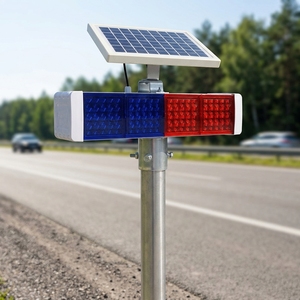
When evaluating procurement choices for Bangladeshi expressways, toll plazas, and bridge works, contractors often debate between standard disposable D-cell battery flashers, conventional grid-tied AC blinkers, and integrated off-grid monocrystalline solar barricade beacons. The following engineering comparison illustrates why solar-powered solid-state units deliver the lowest Levelized Cost of Safety (LCoS).
| Evaluation Parameter | Disposable D-Cell Warning Lights | AC Grid-Powered Blinkers | Heavy-Duty Solar LED Barricade Lights |
|---|---|---|---|
| Capital Expenditure (Initial Unit Cost) | Low initial entry threshold | Moderate to High (cabling costs) | Moderate (optimized lifecycle value) |
| Operational Expenditure (Ongoing Labor) | Extremely High (weekly battery swap) | Low (ongoing municipal power draw) | Zero Operating Cost (self-harvesting) |
| Monsoon Continuous Operation (Overcast) | Constant until battery drain (72-96h) | Susceptible to rural grid load-shedding | 7 to 10 Days Continuous Unshaded Autonomy |
| Theft & Tamper Risk on Remote Arterials | High (valuable loose D-cells) | High (copper line stripping) | Tamper-proof bolt & internal integrated cell |
| Installation Flexibility & Speed | Immediate mounting on traffic barrels | Slow (trenching, conduit, switchboard) | Plug-and-play bracket/cone/magnetic fix |
| Optical Range & Nighttime Photometrics | 150–250 meters (dimming rapidly) | 500–800 meters (continuous driver) | 500–1000+ meters (constant current pulsed) |
Local Infrastructure Trends Driving Barricade Light Adoption in Bangladesh
Bangladesh’s Vision 2041 roadmap and the Strategic Transport Plan (STP) for the Greater Dhaka area have catalyzed unprecedented public capital expenditure into inter-district multi-lane highways and transit systems. However, rapid infrastructure construction on operational corridors introduces hazardous traffic friction, especially given the diverse mix of non-motorized vehicles (rickshaws, human haulers) operating alongside inter-district freight trucks and express long-haul buses.
Dhaka Expressway & Flyover Works
Padma Link & Southern Corridors
Chittagong Port & EPZ Corridors
Direct Plant Manufacturing & Global Engineering Discipline
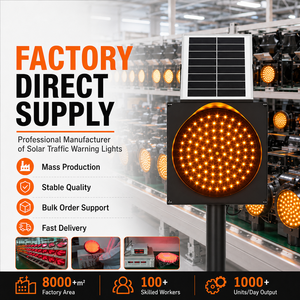
Unlike local trading agents or commercial importers who source unvetted surplus batches, we design, mold, assemble, and quality-test our safety lighting systems within our own specialized production facility. Every assembly is constructed to strict tolerances conforming to regional highway authority requirements (NHAI, PWD, BRO standards) and adaptable to European CE/EN 12352 and American MUTCD tender specifications.
With verified shipments across 20+ countries, our engineering division controls every link of the supply chain—from surface-mount LED picking, optical refraction design, to automated environmental chamber cycling.
Bypassing commission brokers and domestic retail distributors ensures direct factory EXW, FOB, or CIF pricing, maximizing tender margins for civil contractors.
Lens diameters (200mm, 300mm), mounting bracket dimensions, specific flash duty cycles (60 FPM), and panel orientations built precisely to your official RHD/LGED drawings.
Reinforced sea-freight master carton packaging, moisture barrier pallet wrap, and prompt documentation for rapid LC retirement and seamless customs clearance.
Technical Selection Guide: Sizing Solar Panels & Batteries for Bangladesh
A common mistake in sub-tropical highway lighting procurement is the under-dimensioning of solar panels and internal storage batteries. In Bangladesh, peak solar insolation reaches approximately 4.5 to 5.2 kWh/m²/day during the dry winter and summer months (November to April). However, during prolonged monsoon rain depressions (June through August), solar insolation drops significantly to below 1.8 kWh/m²/day due to persistent overcast sky conditions.
To maintain continuous 24/7 or dusk-to-dawn duty cycle operation without unexpected blackouts, the mathematical formula for minimum battery autonomy and panel rating must be strictly adhered to:
Required Battery Capacity (Ah) = [Daily Operating Hours (h) × Average LED Current Draw (A) × Required Days of Autonomy (7 to 10 Days)] ÷ Depth of Discharge (DoD)
*For standard 60-flash-per-minute warning beacons utilizing 6 high-flux Epistar LEDs (average pulsed current: 45mA over a 12-hour dusk-to-dawn cycle), total daily consumption is approximately 0.54 Ah. Sizing for a 7-day no-sunshine window with a safe 70% DoD on LiFePO4 cells necessitates a minimum 5.4 Ah internal cell matched with a 3W–5W monocrystalline solar cell configured with MPPT or high-efficiency PWM control.
Frequently Asked Questions: Sourcing for Bangladesh Projects
Clear, direct answers regarding commercial terms, letter of credit (LC) compliance, port logistics, and project quality verification.
Do you accept Letters of Credit (L/C) issued by Bangladeshi scheduled banks?
Yes. We regularly process project orders via Irrevocable Letters of Credit at Sight (L/C at Sight) issued by reputable scheduled commercial banks in Bangladesh, including Islami Bank, Eastern Bank Ltd (EBL), Standard Chartered Bangladesh, BRAC Bank, and Dutch-Bangla Bank. We ensure all shipping and quality documents strictly adhere to Bangladesh Bank foreign exchange guidelines and tender requirements.
What is the standard lead time for shipping to Chittagong Port (Chattogram)?
Standard manufacturing lead times range between 10 to 20 working days depending on quantity and custom bracket requirements. Sea freight transit to Chittagong Port typically takes 12 to 18 days depending on feeder schedules. For emergency highway project handovers or urgent safety audits, we also provide direct air-cargo shipments directly to Hazrat Shahjalal International Airport (DAC), Dhaka within 3 to 5 business days.
How do your lights comply with Roads and Highways Department (RHD) specifications?
Our product designs are aligned with both international standards (EN 12352 Class L2L/L8L, US MUTCD Type A/Type B) and regional highway requirements formulated by NHAI, PWD, and RHD traffic engineering divisions. We configure standard flash rates (50 to 65 flashes per minute), specify chromaticity coordinates for true amber (wavelength 590nm ± 5nm), and provide factory test reports confirming photometric lux output and IP ingress sealing.
Can barricade lights withstand severe monsoon flooding and continuous rain?
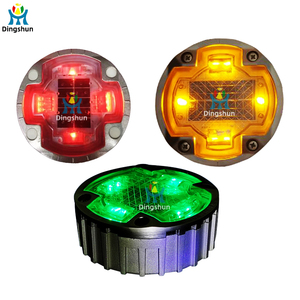
Yes. Our barricade and cat-eye light housings are engineered with IP67 to IP68 rating options. Key vulnerable areas such as the internal switchgear and solar connection terminals are encapsulated in high-grade dielectric polyurethane potting resin or sealed with precision silicone gaskets, preventing moisture vapor transmission during intense monsoon downpours and humid heat cycles.
Do you supply complete mounting brackets compatible with water-filled plastic barriers and steel poles?
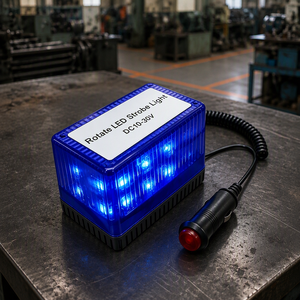
Yes. We supply customized mounting adapters for various barricade types common in Bangladesh: 1) Universal bolt-down base plates for plastic water-filled barriers; 2) Pipe and round-post clamp brackets for 50mm, 76mm, and 100mm steel scaffolding; 3) Heavy-duty rubber cone collar adapters for standard 750mm and 1000mm PVC delineator cones; and 4) Industrial magnetic mounts for crane outriggers and steel sheet piling.
Are test samples available for consultant or client approval prior to bulk dispatch?
Yes. We routinely dispatch sample evaluation units via DHL/FedEx courier directly to contractors' project offices in Dhaka, Chittagong, or Rajshahi for inspection by client supervising consultants, RHD executive engineers, or bridge authority representatives before executing bulk container orders.