Navigating High-Density Traffic Dynamics in the Seoul Metropolitan Area
The Capital Area of South Korea—encompassing Seoul, Incheon, and the surrounding Gyeonggi Province—represents one of the most sophisticated, densely interwoven road networks in East Asia. Artery infrastructures like the Gyeongbu Expressway (Expressway No. 1), the Capital Region First Ring Expressway, Olympic-daero, and Gangbyeonbuk-ro carry traffic loads that frequently exceed 200,000 vehicles per day per corridor. Operating highway safety hardware within this ultra-dense environment introduces uncompromising engineering demands. Standard warning solutions frequently fail due to severe ambient optical noise, relentless diesel exhaust deposition, and dynamic speed gradients at multi-level expressway junctions.
As civil infrastructure contractors and regional transport authorities upgrade traditional caution points, self-sustaining solar LED blinker lights have emerged as critical infrastructure assets. By utilizing autonomous photovoltaic generation paired with high-efficiency energy buffering, these devices bypass the prohibitive logistical and financial hurdles of tapping into buried urban electrical mains—eliminating high asphalt excavation costs, traffic-choking lane closures, and maintenance grid downtime.
Seoul Technical Paradigm: Highway solar blinkers deployed across the Seoul Metropolitan Area are not merely stand-alone flashers; they serve as critical visual anchors at divergence lanes, tunnel entrance approaches, and reversible median crossovers where rapid recognition at 100+ km/h is mandatory to prevent chain collisions.
Thermal & Photovoltaic Dynamics: Surviving the Korean Microclimate
Sourcing solar blinkers for the Seoul market requires an acute understanding of the local climate, which swings dramatically between seasonal extremes. Seoul experiences a humid continental climate influenced heavily by the East Asian monsoon (Jangma) from late June to late July, followed by bone-chilling Siberian high-pressure fronts throughout December, January, and February where temperatures regularly plunge to -15°C (5°F).
Sub-zero temperatures cripple generic lithium-ion batteries by radically increasing internal resistance, which throttles charge acceptance from solar panels and drops energy discharge capacity by as much as 40% to 60%. Conversely, summer heat on highway blacktop can elevate internal enclosure temperatures beyond 65°C. As a premier manufacturer and international exporter, our highway blinkers are engineered specifically with wide-temperature chemical storage:
- Lithium Iron Phosphate (LiFePO4) & Low-Temp Gel Electrolytes: Formulated with thermal stabilization chemistry to accept photovoltaic trickle charging down to -20°C without lithium plating risks, while enduring blistering summer surface heat up to +70°C.
- Smart Microcontroller Photovoltaic MPPT/PWM: In-house algorithmically managed charging circuits adjust flash duty cycles based on real-time voltage monitoring, ensuring continuous 24/7 flashing even during consecutive weeks of zero direct sunlight during monsoon downpours.
- Anti-Yellowing Polycarbonate Optical Lenses: UV-stabilized Bayer polycarbonate Fresnel lenses resist UV degradation, retaining high optical transmission and preventing the embrittlement commonly triggered by road de-icing salts (calcium chloride) spread copiously along Korean highways during winter blizzards.
Technical Specification Matrix: Engineering Comparison for Seoul Procurement
The table below highlights the engineering metrics demanded by municipal concessionaires, civil EPC contractors, and international transit safety boards compared against lower-grade commercial alternatives:
| Engineering Attribute |
Enpowers Highway-Grade Standard |
Standard Commercial Grade |
Operational Impact on Seoul Roads |
| Optical Aperture |
200mm / 300mm / 400mm Fresnel PC Lens |
100mm–150mm Flat Plastic Lens |
Maintains 1,000m visual throw on high-speed expressways (Gyeongbu/Seohaean). |
| LED Luminous Intensity |
≥8,000–12,000 mcd per diode (Epistar/Osram) |
<3,000 mcd generic diodes |
Cuts through heavy coastal fog around Incheon Bridge and smog corridors. |
| PV Cell Technology |
Monocrystalline Silicon (≥21.5% Efficiency) |
Polycrystalline or Thin Film (<15%) |
Maximizes short winter sunlight hours (2.5–3 peak sun hours in Seoul winter). |
| Battery Autonomy |
168 to 240 Continuous Hours (7–10 Days) |
48 to 72 Hours (2–3 Days) |
Eliminates outage blackouts during Korea's prolonged Jangma monsoon rain spells. |
| Housing Integrity |
UV-Resistant Virgin Polycarbonate / Die-Cast Al |
Recycled Low-grade ABS Plastic |
Prevents cracking from sub-zero freeze-thaw cycles and calcium chloride exposure. |
| Ingress Protection |
IP65 to IP67 Hermetically Sealed Gaskets |
IP54 Unsealed Grommets |
Resists high-pressure highway wash trucks and severe convective summer rainstorms. |
Localized Highway Application Scenarios Across Greater Seoul
Every highway sector exhibits unique geometric configurations and traffic profiles. Our solar blinker systems have been engineered to address specific application sectors:
Expressway Interchange Divergences
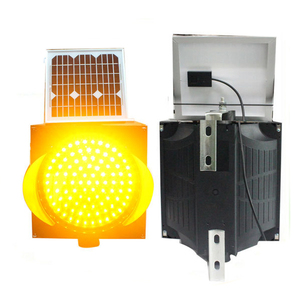
Multi-lane bifurcation points on the Seoul Ring Expressway require conspicuous amber and red solar blinkers mounted on crash cushions (impact attenuators) to guide drivers navigating complex slip roads during peak night congestion.
Hi-Pass Barrier Approaches & Toll Bays
Korea's open-road electronic tolling (Hi-Pass) lanes process vehicles at speeds exceeding 80 km/h. Solar overhead arrow and yellow blinkers provide advance visual pacing to alert motorists of lane status and width restrictions.
Work Zones & Emergency Maintenance
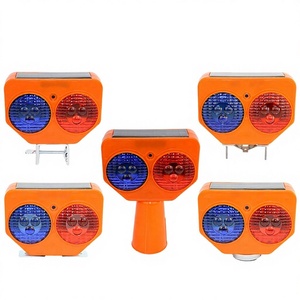
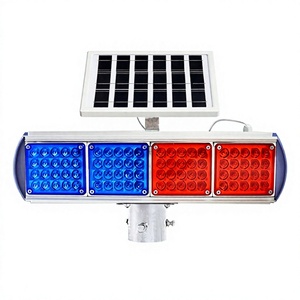
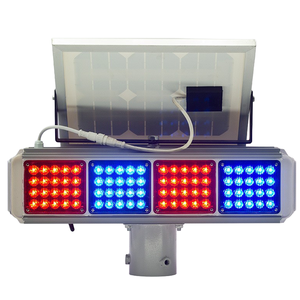
Nighttime surface repaving on Olympic-daero and Han River bridges demands portable, high-intensity red/blue strobe barriers. Self-contained solar units eliminate the noise, emissions, and cabling hazards of diesel generators in residential zones.
Regulatory Compliance & Technological Trends in South Korea
Procurement specifications in South Korea are among the world's most exacting. The Ministry of Land, Infrastructure and Transport (MOLIT) alongside the Korea Expressway Corporation (KEC) enforce comprehensive safety guidelines regarding road traffic control devices. Key procurement benchmarks include:
1. Photometric Calibration & Chromaticity: MOLIT standards govern the exact dominant wavelength ranges for traffic signals (590–595nm for amber, 620–630nm for red). Our LED arrays undergo strict integrating sphere optical verification to guarantee no chromatic deviation under high temperature or low battery charge.
2. Evolution Towards Cooperative Intelligent Transport Systems (C-ITS): Greater Seoul is an epicenter for C-ITS pilot corridors. The future of highway solar blinkers involves pairing low-power flashing units with V2X (Vehicle-to-Everything) short-range wireless beacons. These hybrid assemblies not only issue visual warnings to human drivers but also broadcast digital hazard alerts to autonomous vehicular sensors entering highway construction zones.
3. Low Carbon Green Growth Mandate: In alignment with South Korea's national 2050 Carbon Neutrality goals, municipal public road works systematically prioritize zero-carbon solar signaling hardware over hardwired infrastructure, generating carbon offset credits for infrastructure concessionaires.
Procurement FAQ for Seoul Contractors & Infrastructure Developers
Common technical and logistics questions addressed by our export engineering desk:
Q1 How do your solar blinkers perform during Seoul's winter sub-zero cold waves?
We employ custom-formulated LiFePO4 cells and high-stability Gel electrolytes coupled with custom BMS boards that prevent freeze damage. In addition, our high-transmittance monocrystalline modules feature a steep tilt profile to prevent snow accumulation and optimize low winter solar angles.
Q2 Can your blinkers be configured to meet Korea Expressway Corporation (KEC) specs?
Yes. We specialize in project-specific OEM/ODM manufacturing. We adapt lens diameter (200mm/300mm), casing color (standard black or highway yellow), flash frequency (50–60 flashes/min), and duty cycles to match local tender documents perfectly.
Q3 What ingress protection ratings do you guarantee against road de-icing salts?
Our housings feature IP65 to IP67 certification. Critical electronics are conformal-coated with silicone elastomer barriers, isolating PCBA boards from moisture, airborne particulates, and corrosive calcium chloride salt spray spread by highway snowplows.
Q4 How do you package and handle shipping to Incheon or Busan Port?
Shipments are packaged in multi-wall shock-resistant corrugated cartons with custom-molded EPE foam shells. Products traveling via sea or air freight to South Korea include complete UN38.3 battery safety documentation, MSDS certificates, and customs-cleared HS classifications.
Q5 What mounting brackets are provided for Korean standard steel poles and barriers?
We provide universal hot-dip galvanized and stainless steel clamping brackets compatible with standard 76mm–114mm steel poles, overhead gantry tubes, temporary Jersey concrete barriers, and road construction crash cushions.
Q6 Why choose an overseas manufacturing exporter rather than local trading suppliers?
Procuring directly from our high-capacity production facility eliminates multiple middleman markups, guarantees 100% component-level batch traceability, allows direct engineering customization, and ensures strict quality assurance from PCB SMD mounting to lux testing.
Enterprise Advantages: Factory-Direct Engineering & Export Authority
Backed by decades of industrial manufacturing heritage, Enpowers International is an established global leader in highway signaling, solar traffic light systems, and road safety infrastructure. With our dedicated manufacturing center located at GIDC Phase-1, Vatwa, Ahmedabad, India, we maintain end-to-end sovereignty over the production lifecycle.
Integrated In-House Plant
From precision mold casting and injection polycarbonate pressing to automated SMT pick-and-place electronic assembly, every phase is controlled in-house.
National Authority Pedigree
Proven track record building equipment certified under stringent NHAI, PWD, and BRO highway standards, adaptable to EN 12352 and Korean KEC criteria.
Worldwide Export Supply
Regular supplier to major infrastructure consortiums across 20+ countries, ensuring smooth customs processing, maritime logistics, and bonded port delivery.
Rigorous Flash & Lux Aging
Every production run undergoes a mandatory 72-hour continuous thermal burn-in, photometric lux verification, and water immersion seal inspection before dispatch.
By combining direct Indian manufacturing cost advantages with tier-one optoelectronic engineering, we furnish Seoul highway concessionaires and civil contractors with high-reliability solar blinker light systems that outperform expectations while keeping tender bids commercially aggressive.