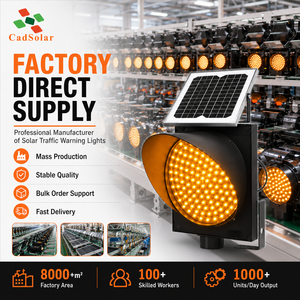

Precision-Engineered Solar, LED & Wireless Synchronized Signaling for Lombardy's Expressways, Ring Roads (Tangenziali), and Alpine Mountain Corridors
Tested for extreme photometrics, IP66 ingress protection, and rugged vibration resistance to meet the demanding requirements of Italian motorways and logistics junctions.
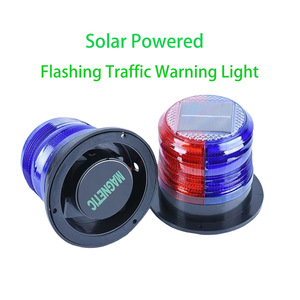
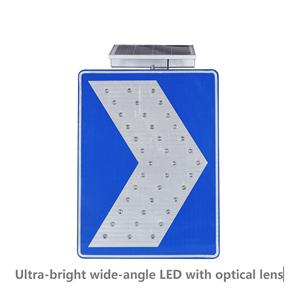
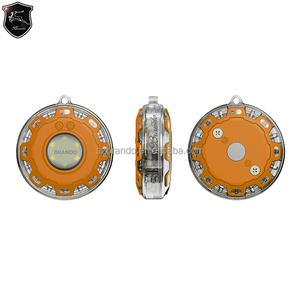
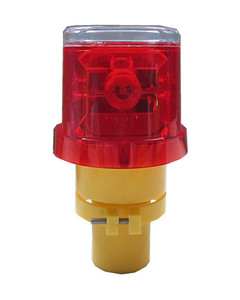
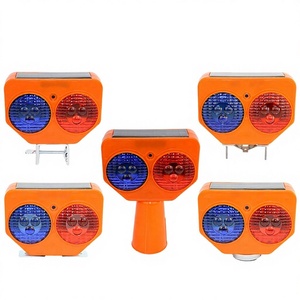
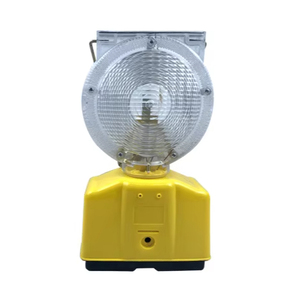
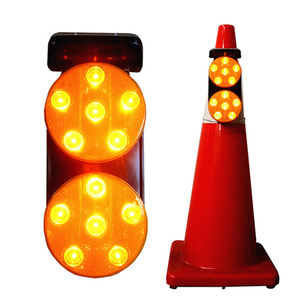
As the primary industrial, economic, and transport nexus of Southern Europe, the Greater Milan metropolitan area presents unique demands on road safety infrastructure. Milan sits at the confluence of Italy’s most heavily traveled arteries, including the Autostrada A1 (Autostrada del Sole), the A4 Serenissima (Turin–Venice corridor), the A8/A9 Lakes Motorways, and the intricate orbital network comprising the Tangenziale Est (A51), Ovest (A50), and Nord (A52). Maintaining driver awareness, managing peak commercial traffic volumes, and securing temporary work zones require warning signaling hardware that surpasses standard baseline parameters.
Our direct manufacturing facility engineers specialized off-grid solar and low-voltage wired LED signaling solutions tailored to the operational realia of Lombardy. Rather than supplying off-the-shelf consumer warning lamps, our manufacturing processes prioritize compliance with UNI EN 12352 (Traffic control equipment - Warning and safety light devices) and the technical decrees established by Italy's Ministry of Infrastructure and Transport (MIT) and Autostrade per l’Italia (ASPI).
Technical Ingress Insight: In accordance with the Italian Nuovo Codice della Strada (Art. 21) and international standard EN 12352 Class L8H/L2H, highway warning systems deployed in Northern Italy must guarantee distinct luminous intensity during low-visibility fog conditions while mitigating reflective phantom illuminations caused by automotive LED headlights.
The geography of Milan and the surrounding Po Valley (Pianura Padana) introduces environmental and infrastructural variables that dictate precise optical and electrical configurations:
Autumn and winter across the Lombard plain frequently feature dense advection radiation fog (nebbia), dropping visibility below 40 meters. Our solar LED beacons utilize 590nm optical-grade amber diodes with specialized Fresnel collimate lenses that pierce ambient particulate without blinding approaching vehicles.
Maintenance schedules on the Milan Ring Roads (A50/A51/A52) are heavily compressed into nocturnal windows to avoid gridlock. Our wireless synchronized LED warning lights create progressive, running light sequences that guide high-speed freight traffic safely away from closed lanes with zero delay.
Northward routes leading to Como, Lecco, and the Swiss border feature winding gradients, sudden weather shifts, and severe sub-zero winters. High-impact polycarbonate housing rated at IK08 with LiFePO4 battery management guarantees autonomy even during sustained snow cover and -20°C temperatures.
Italian highway concessionaires, regional road operators (such as Milano Serravalle - Milano Tangenziali S.p.A.), and tier-1 civil engineering contractors are shifting their supply chain requirements based on three macro drivers:
1. Shift to High-Efficiency Autonomy without Excavation: Trenching along brownfield infrastructure or historical peripheral corridors in Milan is prohibitively expensive and legally convoluted due to underground utilities. Concessionaires are specifying self-contained solar blinkers with intelligent MPPT (Maximum Power Point Tracking) controllers capable of 120+ hours of continuous flashing on zero sun exposure.
2. Smart Telemetry and Synchronized Mesh Protocols: Standalone unsynchronized blinkers create visual confusion ("visual noise") on multi-lane arterials. Modern Italian procurement calls for RF/wireless synchronized flashing where entire arrays of chevron signs or barrier-mounted lights flash in harmonious cadence or cascade sequences, greatly accelerating driver reaction times.
3. Circular Materials and Decarbonization Metrics: Under Italy’s PNRR (Piano Nazionale di Ripresa e Resilienza) initiatives, infrastructure materials must demonstrate reduced carbon footprints. Our engineering integrates UV-stabilized virgin Bayer polycarbonate bodies that are 100% recyclable, coupled with mercury-free, long-life solid-state electronics.
Enpowers International bridges the gap between precision industrial production and European operational demands. As an authentic manufacturer headquartered with comprehensive vertically integrated production, we eliminate intermediaries and deliver documented technical value:
| Operational Metric | Enpowers Direct Manufacturing | Typical Trading Intermediaries |
|---|---|---|
| Custom Lens Optics & Angles | Custom tooling & optical beam angles (Class F3, L8H per EN 12352) | Fixed generic commercial stock; non-customizable |
| Photometric & Solar Sizing | Solar panels and battery autonomy calculated for Northern Italian solar irradiance | Generic low-capacity cells prone to winter battery dropouts |
| Quality Assurance Protocol | 100% aging, thermal-shock cycle (-20°C to +70°C), IP water ingress testing | Sample-based visual checks with no optical verification |
| Tender Support Documentation | Direct production test reports, factory acceptance test (FAT) support, CAD specs | Delayed third-party datasheets; no direct engineering liability |
| Cost Efficiency | Direct ex-factory pricing with container/pallet optimization | Layered broker margins and unpredictable delivery timelines |
Clear, technical answers addressing standard engineering, import logistics, and compliance inquiries.
Yes. Our signals are built to meet the photometric performance, luminous color, and angle specifications outlined in European standard EN 12352, matching requirements set forth by ANAS, ASPI, and the Italian Codice della Strada. We provide detailed photometric and environmental test reports for tender approvals.
We dimension our monocrystalline photovoltaic arrays and high-density LiFePO4 battery packs specifically for Lombardy's winter solar radiation indices (averaging ~1.5 to 2.0 PSH). Our microcontrollers switch to ultra-low-draw PWM dimming profiles while preserving the required class candela output, delivering 7 to 10 days of continuous overcast autonomy.
Absolutely. We manufacture modular galvanized steel and aluminum mounting brackets compatible with standard round steel poles (60mm, 76mm, 89mm) as well as universal clamping kits designed for standard European 3-wave and 2-wave steel guardrail barriers.
Standard export orders are palletized with IPPC-certified heat-treated packaging. Ocean freight shipments dispatch directly to Genoa (Genova) or La Spezia ports, arriving in Milan within 25–32 days. Urgent contractor batches can be routed via air cargo directly to Milan Malpensa (MXP).
Connect with our technical engineering desk to request complete photometric documentation, custom optical configurations, or factory-direct volume pricing for the Milan and broader European markets.
Contact Us