Precision Photometric Amber Warning Signals Engineered to EN 12352 / EN 12368 European Standards, Tailored for Bulgaria's High-Elevation Transit Corridors, Black Sea Logistics, and Municipal Road Projects.
Engineered Signaling Portfolio
Certified Road Hazard & Blinker Systems for Bulgarian Infrastructure
Explore our specialized range of high-flux amber, red, and bidirectional optical warning devices, manufactured under ISO 9001 quality frameworks and configured for European tender specifications.
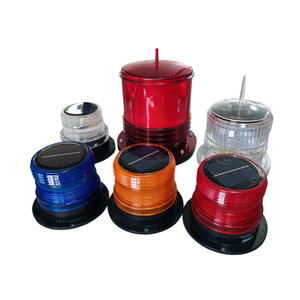
360-degree high-intensity Fresnel optic, IP68 hermetic seal. Designed for coastal safety around Varna and Burgas maritime docks, Danube River channel buoys, and exposed bridge piers.
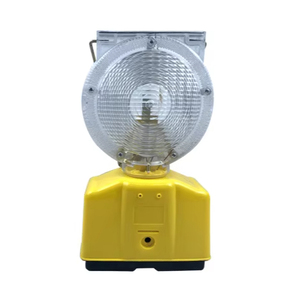
Impact-resistant UV-stabilized polycarbonate shell with automatic twilight switching. Essential for civil work zones along Hemus (A2) and Trakia (A1) highway rehabilitation sectors.
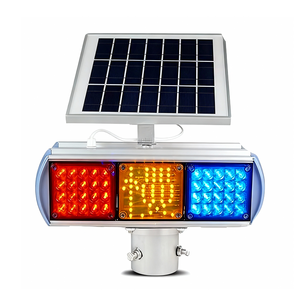
Dual-direction amber signaling arrays with integrated mono-crystalline PV panel. Configured for municipal school corridors and pedestrian crossings across Sofia and Plovdiv.
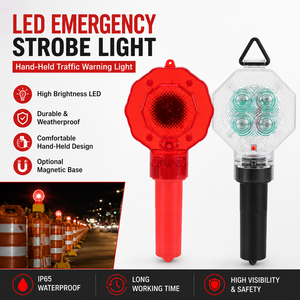
High-candela output strobe beacon equipped with deep-cycle LiFePO4 cells to ensure reliable 7-day operation through dense Balkan winter fogs and heavy precipitation.
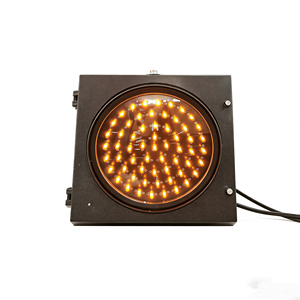
EN 12352 Class L8H compliant 300mm amber flashing head with polycarbonate housing. Supports 230V AC grid backup or complete off-grid solar-pole integration for highway curves.
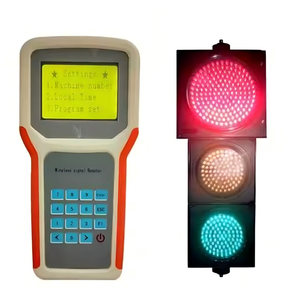
Industrial RF remote synchronization system with programmable duty cycles. Ideal for temporary one-lane bridge repairs and mountain tunnel maintenance zones.
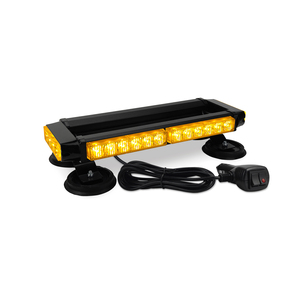
Neodymium magnetic mount array delivering 72 watts of synchronous warning bursts. ECE R65/R10 automotive EMC rated for municipal utility trucks and highway tow fleets.
Technical Whitepaper: Engineering High-Visibility Optical Warnings for Bulgarian Transit Corridors
Road signaling within the Republic of Bulgaria presents unique geographic and photometric challenges. Situated at the crossroads between Central Europe, Turkey, and Greece, Bulgaria carries an immense volume of international freight across the Trans-European Transport Network (TEN-T) corridors, including Corridor IV (Vidin–Sofia–Kulata) and Corridor IX (Ruse–Dimitrovgrad). Ensuring vehicle operator recognition demands optical warning devices capable of cutting through dense radiation fogs, blowing snow in the Balkan Mountains (Stara Planina), and high-glare Mediterranean summers.
As a specialized custom OEM manufacturing facility, we engineer our yellow and amber blinker lights according to EN 12352 (Traffic control equipment – Warning and safety light devices) and EN 12368 (Traffic control equipment – Signal heads). Our optical engines do not rely on generic, uncollimated LEDs. Instead, we utilize high-power surface-mount diodes (SMD 3030 or 5050 arrays) operating within the precise amber chromaticity spectrum of 589 nm to 593 nm. This wavelength delivers superior Rayleigh scattering penetration, ensuring driver perception at stopping distances exceeding 400 meters on high-speed motorways.
Technical Distinction: Class L2H vs. Class L8H Photometrics
Under European standard EN 12352, temporary work zone beacons must achieve Class L2H luminous intensity (≥ 50 cd along the optical axis during daytime), whereas high-speed highway warning signals installed on overhead gantries and median approaches mandate Class L8H certification (≥ 1,500 cd peak daytime flash). Our factory produces custom PCB optical assemblies tailored specifically to meet both threshold classes with zero beam clipping.
Solar Power Autonomy & Balkan Insolation Modeling
Bulgaria experiences significant solar insolation disparities between summer (> 6.2 kWh/m²/day) and mid-winter (< 1.4 kWh/m²/day in northern plains such as Pleven and Ruse). Generic off-grid solar warning lights frequently fail between November and February due to battery sulfation and undersized photovoltaic surface areas. Our engineering process incorporates dedicated winter autonomy calculations calibrated to Bulgaria's 41°N–44°N latitude:
Monocrystalline PV Arrays
Equipped with anti-reflective, low-iron tempered glass and conversion efficiencies exceeding 21.5%, harvesting maximum diffuse solar radiation during prolonged Balkan overcast cycles.
LiFePO4 Chemistry with BMS
Automotive-grade Lithium Iron Phosphate cells paired with proprietary Battery Management Systems that permit sub-zero charging down to -20°C without lithium plating or capacity decay.
Microprocessor Flash Regulation
Smart pulse-width modulation (PWM) constant-current drivers ensure uniform luminous flash intensity (55 to 65 flashes per minute) regardless of battery terminal voltage fluctuations.
Localized Application Scenarios in the Bulgarian Road Network
Working alongside municipal transport directorates, regional road administrations (Opu / ОПУ), and primary general engineering contractors throughout Bulgaria, our custom OEM yellow blinker systems are designed to resolve distinct operational vulnerabilities:
Traversing the Balkan Range via the Shipka Pass (Шипка), Petrohan Pass (Петрохан), and the Beklemeto Pass (Троянски проход) exposes roadside infrastructure to heavy snowfall, freezing rain, and high wind loads. Standard consumer-grade housings succumb to brittle fracture under extreme cold. Our blinkers utilize Bayer Makrolon® UV-stabilized virgin polycarbonate or pressure die-cast ADC12 aluminum housings rated to IK08 / IK10 impact resistance, resisting thermal cracking down to -30°C and maintaining hermetic seal integrity against roadway de-icing salt sprays.
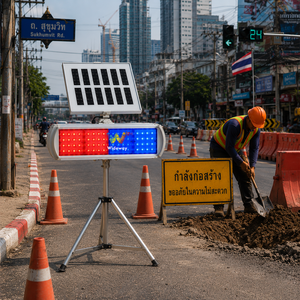
Modernization of the Bulgarian motorway infrastructure involves active construction diversions, lane narrowing, and sudden speed transitions. Our 300mm Class L8H yellow blinkers provide advance warning at median openings, toll collection gate approaches, and critical junction diverges, substantially lowering rear-end and barrier collisions among international transit haulers.
3. Maritime & Inland River Logistics (Varna, Burgas, Ruse)
In the Black Sea maritime hubs of Varna and Burgas, as well as along the industrial river ports of the Danube (Ruse, Vidin, Lom), atmospheric salinity accelerates galvanic corrosion. We provide specialized C4-M and C5-I grade marine protective coatings and stainless steel (AISI 316) mounting brackets, preventing bracket shear and enclosure failure under corrosive maritime humidity.
Technical Benchmark: Standard vs. OEM Industrial Warning Signals
Procurement directors and road engineers in Bulgaria frequently review tender documents requiring specific ingress protection, photometric output, and autonomous duty cycle proofs. Below is a comparative engineering breakdown:
Performance Criterion
Commercial Grade Blinkers
Our Industrial OEM Specification
Relevance to Bulgarian Regulations
Optical Norm Compliance
Generic, non-certified luminous flux
EN 12352 (Class L2H / L8H) & EN 12368
Mandatory for public tenders funded by OP "Transport"
Lens Material & UV Rating
Recycled ABS / standard acrylic (PMMA)
Optical Virgin Polycarbonate (Makrolon® UV400)
Prevents yellowing and micro-crazing from solar radiation
Operating Temperature
-10°C to +45°C (Rapid winter failure)
-35°C to +65°C continuous
Survives sub-zero Balkan freezes & Thracian valley heat
Ingress Protection Rating
IP54 (Vulnerable to driving rain)
IP65 / IP67 Hermetic Gasket System
Protects against chemical de-icing brines (NaCl / CaCl2)
Battery Chemistry & Life
Sealed Lead-Acid (SLA), 300 cycles
LiFePO4 or Deep-Cycle Gel (>2,000 cycles)
Reduces municipal maintenance costs over 5–7 years
Autonomy Duration
24 to 48 hours without direct sun
Up to 120–168 hours (5–7 full continuous days)
Prevents outages during prolonged winter cloud banks
Emerging Road Safety Trends in the Bulgarian Market (2025–2030)
The road infrastructure sector in Bulgaria is undergoing an accelerated modernization phase propelled by European Union cohesion policy, the National Recovery and Resilience Plan (NRRP), and Vision Zero road fatality reduction initiatives. B2B importers, regional distributors, and general contractors are adapting to three major technical trends:
Smart Sensor & Radar Integration
Increasing demand for yellow blinker systems triggered dynamically by Doppler radar sensors when approaching vehicles exceed speed thresholds, rather than continuous flashing.
Standardized Enclosure Modularity
Municipalities increasingly mandate universal bracket mounting kits and quick-release modular LED inserts to simplify field repair without taking entire assemblies off poles.
Electromagnetic Compatibility (EMC)
Adherence to EN 50293 standards ensures high-power LED strobe arrays do not induce electronic interference with toll collection transponders or highway emergency radios.
Factory-Direct OEM/ODM Engineering: Why Sourcing Directly from Our Production Facility Empowers Your Business
As an authoritative manufacturer and global exporter established with comprehensive in-house tooling, SMT assembly, and optical validation facilities, we offer European contractors and commercial trading entities significant commercial and technical advantages over middleman distributors:
Custom Tooling & Mold Design
Full capability to fabricate custom branded housings, private label backplates, and specialized pole mounting clamps to match local municipal requirements.
Strict Photometric QA Testing
Every batch undergoes goniophotometer colorimeter scans, 72-hour elevated-temperature burn-in tests, and IPX6/IPX7 waterproof submersion testing before shipment.
Direct EU Logistics Support
Experienced with door-to-door (DDP) and port-to-port maritime shipping directly into Varna, Burgas, Thessaloniki, or Constanta with EUR.1 and full CE documentation.
3-to-5 Year Warranty
Comprehensive manufacturing warranties covering LED luminous maintenance, solar panels, and power electronics, supported by rapid spare-parts availability.
Frequently Asked Questions for Bulgarian B2B Buyers & Importers
Direct answers addressing technical certification, custom engineering, import logistics, and operational parameters for engineers and purchasing managers in Bulgaria.
Are your yellow blinker lights compliant with Bulgarian Road Infrastructure Agency (RIA / АПИ) standards?
Yes. Our yellow and amber blinker lights are manufactured according to European Norms EN 12352 (warning lights) and EN 12368 (traffic signals), which form the baseline technical specification required by the Bulgarian Road Infrastructure Agency (Агенция "Пътна инфраструктура" - АПИ) and municipal departments such as Sofia's Directorate of Transport. Detailed photometric test reports, CE declarations, and RoHS conformity certificates are supplied with every order.
How do your solar batteries perform during sub-zero Balkan winter months?
Unlike consumer units that use generic gel or SLA batteries that freeze and degrade at -5°C, our industrial units for the Bulgarian market utilize cold-temperature rated LiFePO4 batteries with built-in thermal protection circuitry or specialized low-temperature colloidal gel batteries capable of discharging down to -35°C without significant capacity drop. Solar panels are sized with an autonomy factor of 5 to 7 overcast days, preventing blackout conditions.
Can we request custom OEM branding, housing colors, and flash pattern modifications?
Yes, our core business is OEM/ODM manufacturing. We routinely customize housing colors (standard signal yellow, black, or custom RAL specifications), integrate contractor or distributor logos via precision silk-screening or mold embossing, and program specific flash frequencies (e.g., 50, 60, or 75 FPM, single-flash, double-pulse, or alternating strobe) directly into the onboard microcontroller.
What are the typical lead times and shipping routes to Bulgaria?
Standard OEM production batches typically require 15 to 25 working days depending on quantity and custom tooling requirements. Maritime freight is efficiently routed directly to the Port of Varna or Port of Burgas (transit time approximately 20–28 days), or alternatively via Piraeus / Thessaloniki for expedited multimodal transport into Sofia and central Bulgaria. Air freight delivery is available for urgent pilot testing.
Do your blinkers support hybrid solar and AC mains electrical connectivity?
Yes. We produce a dedicated hybrid variant that connects to the 230V AC municipal grid for daily operation while maintaining an internal battery backup, as well as units that operate entirely off solar power. In urban tunnels or shaded tree-canopied boulevards in Sofia, Plovdiv, and Ruse, our AC-powered blinkers eliminate solar shadowing concerns while using the exact same robust optical lens architecture.
How do you handle warranty claims and technical spare parts for European projects?
We provide a 3-year standard warranty on complete assemblies, with optional 5-year extensions for high-grade infrastructure concessions. Because we manufacture every subassembly, we maintain modular spares including matched LED circuit boards, calibrated driver chips, and pre-wired battery packs that can be dispatched immediately to support continuous contractor service-level agreements (SLAs).
Ready to Upgrade Your Road Safety Projects in Bulgaria?
Connect directly with our export engineering department to request technical data sheets, photometric certificates, competitive factory-direct pricing, or bespoke OEM/ODM design proposals.