
Engineered to withstand equatorial UV exposure, heavy tropical rainfall (IP68/IP65), and remote unpowered corridors across South America.
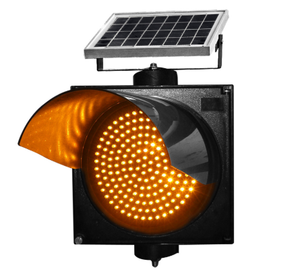
Autonomous 300mm polycarbonate warning blinker delivering over 8,000 mcd yellow flashing intensity. Hermetically sealed casing with monoblock PV and LiFePO4 battery pack designed for continuous work-zone safety.
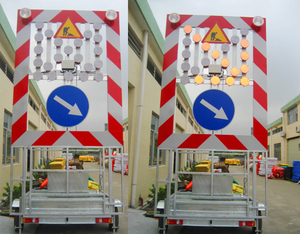
Heavy-duty mobile trailer matrix board for arterial lane closures. Features hydraulic mast lifting, multi-aspect flashing chevron/arrow/cross displays, and deep-cycle battery banks recharged by high-wattage tilting solar arrays.
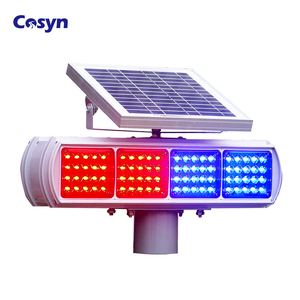
Emergency double-sided dual-color strobe beacon configured for police checkpoints, toll plaza lane closures, and critical barricades. Employs 360-degree optical diffusion rings with synchronized high-speed burst flashing.
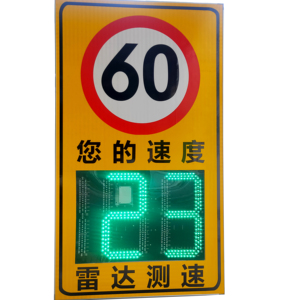
Integrated 24GHz Doppler radar feedback sign with high-intensity amber/red LED display. Instantly alerts speeding drivers approaching school perimeters, sharp highway curves, and descending mountain passes with customizable thresholds.
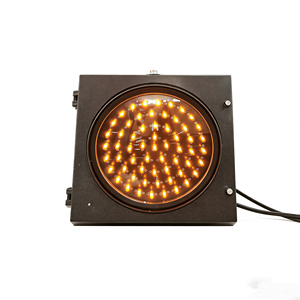
UV-stabilized virgin polycarbonate signal flasher compatible with both 12V/24V solar DC kits and 110V/220V AC mains. Features precision GE Lexan optics, high shock resistance, and anti-phantom sun hood design.
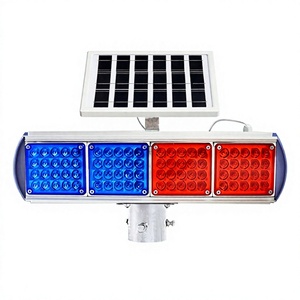
Impact-resistant ABS polymer dual-flasher engineered for perimeter control, industrial plant gates, and temporary diversion posts. Equipped with mono-crystalline solar wafers and intelligent dusk-to-dawn photosensors.

Engineer-grade or diamond-grade reflective sheeting mounted on CNC-cut marine-grade 5052 aluminum alloy. Perimeter embedded flashing LEDs create ultra-long recognition distance along unlit federal highways.
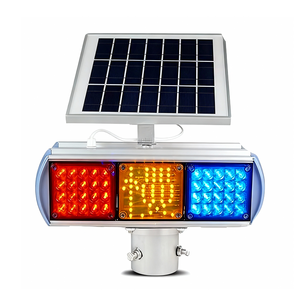
Compact bidirectional solar hazard strobe designed for lane narrowing, concrete barriers, and emergency median crossovers. Features automatic optical intensity scaling to prevent driver glare during nighttime operation.
From the humid coastal fog of the Serra do Mar to the vast ungrid corridors of Mato Grosso and the heavy logistics arteries of São Paulo and Minas Gerais, our solar flashers solve critical road safety challenges where grid electrification is cost-prohibitive.
Federal highways such as BR-101, BR-116, and BR-050 managed by ANTT concessionaires require unyielding signaling at median openings, toll plaza approaches, and emergency cut-throughs. Our solar flashers eliminate million-dollar trenching costs across multi-kilometer rural stretches.
The Atlantic plateau descent in São Paulo, Rio de Janeiro, and Paraná suffers from extreme neblina (dense sea fog) and torrential rains. Moisture ingress causes terminal corrosion in sub-standard blinkers. We supply hermetic IP68 silicone-gasketed housings with anti-condensation breathers.
Transporting soybeans along BR-163 or iron ore through the Quadrilátero Ferrífero puts signs under relentless mechanical vibration from bi-trem and rodotrem heavy trucks. Our flashers utilize automotive vibration-damped assemblies and shockproof polycarbonate enclosures.
The Brazilian road safety market is undergoing a structural transformation driven by concession privatizations, regulatory enforcement by CONTRAN, and aggressive decarbonization roadmaps.
Signage installed along Brazilian municipal and federal roadways must conform to strict standards established by the Conselho Nacional de Trânsito (CONTRAN), particularly the Manual Brasileiro de Sinalização de Trânsito (MBST) and ABNT NBR standards. Recent revisions mandate tighter chromaticity limits for amber, red, and yellow-green visual warning signals, alongside stricter flicker frequencies (50–60 flashes per minute).
Concurrently, highway concession contracts administered by the Agência Nacional de Transportes Terrestres (ANTT) under the Programa de Parcerias de Investimentos (PPI) include stringent Key Performance Indicators (KPIs) for incident reduction. Private operators such as CCR, EcoRodovias, and Arteris are prioritizing autonomous solar warning flashers that deploy rapidly without requiring approval from local electrical utilities (distribuidoras de energia like Enel or CEMIG).

A rigorous engineering guide for procurement officers, municipal road safety authorities, and infrastructure EPC contractors comparing critical flasher parameters.
| System Parameter | Enpowers OEM Heavy-Duty Build | Standard Commercial Grade | Brazilian Field Significance |
|---|---|---|---|
| Optical Wavelength & CCT | Amber: 590nm ± 2nm; Red: 625nm ± 3nm; Pure White: 6500K | Broad spectrum 580–605nm with color drift | Strict alignment with CONTRAN MBST Volume IV chromaticity coordinates. |
| Luminous Output (Cd) | ≥ 400 Cd (Daytime Boost), auto-dimming to 150 Cd at night | Static 80–120 Cd (invisible in harsh noon sun) | Prevents driver blinding at night while penetrating blinding midday Brazilian sunlight. |
| Battery Chemistry | Lithium Iron Phosphate (LiFePO4) ≥ 2,500 Cycles @ 80% DoD | Lead-Acid (VRLA/SMF) 300–500 Cycles | LiFePO4 withstands road-level enclosure heat in Brazil's North/Northeast without thermal runaway. |
| Reserve Autonomy | 12 to 18 Days (Continuous flashing without direct solar input) | 3 to 5 Days (Prone to complete failure in rainy season) | Critical for prolonged tropical monsoons (Dezembro a Março) in Sudeste and Sul regions. |
| Housing Integrity | Virgin GE/Bayer Polycarbonate or Die-Cast Aluminum (IP68) | Recycled ABS / Thin Sheet PVC (IP54 to IP65) | Resists UV degradation, yellowing, micro-cracking, and heavy road salt/chemical spray. |
| Vibration Resistance | Conforms to IEC 60068-2-6 (Shock & Vibration Damped) | Unrated solder joints and loose cell mountings | Endures continuous micro-vibrations from heavy 9-axle rodotrem cargo transport. |
Combining 20+ years of industrial road safety engineering from Ahmedabad, India, with localized technical support for international infrastructure clients.
Headquartered at GIDC Phase-1, Vatwa, Ahmedabad, our vertically integrated plant houses surface-mount SMT lines, photometric darkrooms, environmental salt-mist chambers, and custom mold engineering facilities. You cut out trading markups and interface directly with certified traffic engineers.
We do not deliver one-size-fits-all hardware. We customize housing dimensions (200mm, 300mm, 400mm), solar panel bracket tilts (optimized for Brazil's latitude between +5°N to -33°S), private-label silk printing, custom flash duty cycles (Strobe, Wig-Wag, Burst), and custom RF telemetry.
Shipping to the Port of Santos, Paranaguá, Itajaí, or Suape requires flawless documentation. We issue certified Bills of Lading, Certificate of Origin, test declarations, and UN 38.3 Lithium Battery Safety Certificates to ensure smooth clearance through Receita Federal and SISCOMEX.






Key answers regarding importation, regulatory conformity, battery shipping compliance, and field installation across Brazil.
Our sign flashers are calibrated to comply with the Manual de Sinalização Rodoviária issued by DNIT and relevant CONTRAN resolutions. Optical modules feature 50–60 flashes per minute duty cycles, precise amber/red color coordinates per CIE 1931, and minimum luminous intensity values exceeding 400 candelas during daylight hours, ensuring smooth project sign-off by concession engineers.
Yes. We routinely export under harmonized tariff codes such as NCM 8530.80.90 (Aparelhos elétricos de sinalização para vias públicas) or NCM 8541.43.00 for dedicated solar modules. We structure our proforma and commercial invoices with explicit technical descriptions to prevent customs holds at Santos, Paranaguá, or Viracopos.
In central and southeastern Brazil, overcast conditions can persist for over 10 consecutive days between December and March. We size our LiFePO4 battery banks and monocrystalline solar arrays with an autonomy multiplier of 12 to 18 continuous days. Intelligent MPPT microcontrollers automatically adjust LED pulse-width modulation (PWM) during extended sunless stretches to maintain signal visibility.
Every commercial consignment includes complete mill test certificates, photometrics test reports (lux/candela curves), ingress protection (IP) test verification, UN 38.3 lithium battery transport test summaries, and comprehensive English/Portuguese wiring and mechanical mounting instructions.
Yes. Brazilian road networks commonly utilize 2-inch to 4-inch galvanized circular posts, octagonal poles, or U-channel masts. Our engineering department manufactures adjustable hot-dip galvanized or stainless steel clamping collars, universal tilt-and-swivel solar mounts, and tamper-resistant shear nuts that prevent roadside theft.
Standard OEM production for batch orders (50 to 500 units) requires 15 to 25 working days. Maritime transit from Mundra or Nhava Sheva ports in India to the Port of Santos or Paranaguá typically averages 32 to 40 days. Airfreight options via São Paulo-Guarulhos (GRU) or Campinas (VCP) are available for critical tender milestones.
Partner directly with an established OEM manufacturer. Download comprehensive engineering technical datasheets, photometrics files, and competitive export pricing for your highway concession or municipal traffic tender.