Multi-Barrier
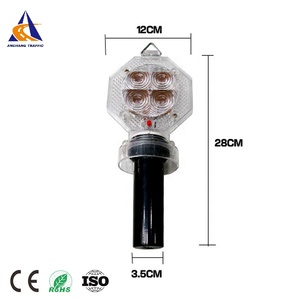
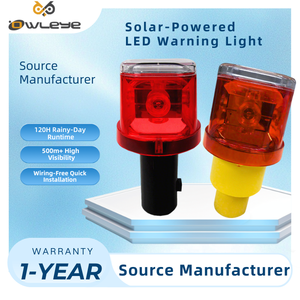
Flashing Cat Eye Barricade Cone Top Blinker
- Mount: Universal Safety Cone / Barrier
- Optics: 360-Degree Refractive Cat-Eye Lens
- Power: Solar Photovoltaic / Built-in Ni-MH

Autonomous off-grid solar architecture, IP65-IP68 hermetic ingress sealing, and anti-UV polycarbonate optical systems designed for severe Saharan and coastal environments.
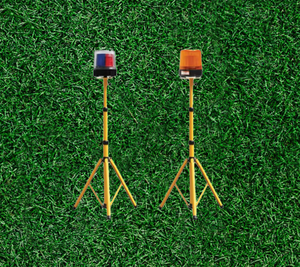
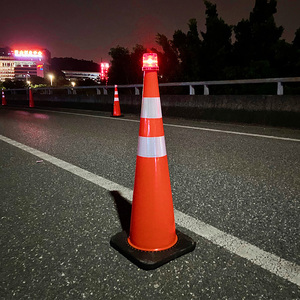
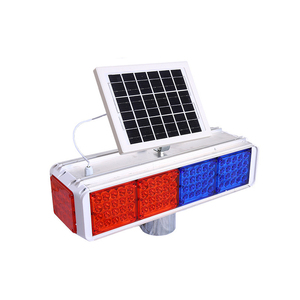
Deploying LED blinker lighting in the Algerian People's Democratic Republic requires compliance with extreme thermal differentials, severe dust abrasion, and national public works safety codes.
The Democratic and Popular Republic of Algeria presents one of the most mechanically and thermally challenging operating environments on Earth for visual signaling infrastructure. Civil engineering tenders published by the Direction des Travaux Publics (DTP) across the 58 Wilayas establish demanding requirements on roadside illumination. Equipment must withstand extreme diurnal thermal shifts: coastal regions like Algiers, Oran, and Annaba experience intense sea-spray salinity, while the arid Southern Wilayas (such as Tamanrasset, Adrar, and Ouargla) frequently exceed ambient operational temperatures of +52°C, with unshaded solar enclosure skins rising above +75°C.
Standard commercial-grade blinkers degrade rapidly under these conditions due to UV-induced polycarbonate clouding, solder crystallization, and premature chemical electrolyte drying in inferior lead-acid storage batteries. As a premier custom OEM LED blinker light exporter, our specialized production protocols integrate UV-stabilized Lexan™ polycarbonates, thermal gap padding, IP65 to IP68 hermetically sealed silicone perimeter gaskets, and high-temperature Lithium Iron Phosphate (LiFePO4) energy cells. These cells operate reliably across a continuous temperature spectrum of -20°C to +75°C without thermal degradation.
The southern interior of Algeria is subject to high-velocity Sirocco winds carrying sharp particulate quartz. Our optical enclosures feature scratch-resistant hard-coated polymer lenses and sand-deflecting angled housings that prevent sand accumulation over solar panels and LED optics.
For strategic highway installations along the 1,200 km coastal corridor and port facilities like Skikda and Djen Djen, our steel reinforcement cages and mounting brackets are hot-dip galvanized to ASTM A123 standards or crafted from marine-grade 316 stainless hardware.
With massive distances separating remote utility grids in the Grand Sud, off-grid standalone solar systems are essential. Our Algerian configurations specify oversized monocrystalline PV panels and high-capacity battery units engineered for 7–10 days of continuous operation during extended sandstorm overcast.
From transnational high-speed arterial expressways to strategic hydrocarbons bases in the Grand Sud, here is how our custom LED blinker lighting systems ensure continuous road and industrial safety.
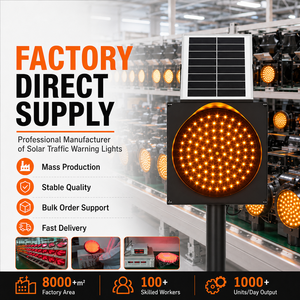
High-speed median openings, major slip-road divergences, and automated toll collection lanes along the 1,216 km Autoroute Est-Ouest require clear warning signals. High-intensity 300mm amber blinkers give drivers early warning at distances up to 1,000 meters in low-light conditions.
The Algerian segment of the Trans-Sahara Highway connects Algiers to the border city of In Guezzam. In these remote areas where grid connections do not exist, our solar blinkers deliver self-sustaining operation without external generators or maintenance teams.
Hassi Messaoud, In Salah, and Rhourde Nouss require safety equipment that meets strict industrial standards. Our flashers provide heavy vehicle speed warnings, perimeter safety signaling, and ATEX/hazardous-zone certified warning lighting.
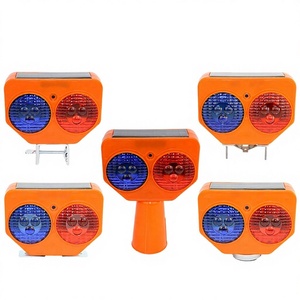
Urban planning projects across Algiers, Constantine, and Setif deploy our red-yellow LED traffic warning signals for school crossings, pedestrian refuges, elevated tramway junctions, and roundabouts to help reduce metropolitan traffic congestion.
The Algerian visual signaling sector is transitioning rapidly from basic lighting toward intelligent solar hardware, green energy integration, and higher quality requirements in government infrastructure tenders.
Historically, civil road works in Algeria relied on traditional tungsten and halogen warning lamps connected to unreliable AC distribution systems. Today, the Ministry of Public Works and Basic Infrastructure, alongside municipal governance bodies, enforces strict safety guidelines. The national agenda prioritizes renewable self-sufficiency and low operating costs, leading to three major structural shifts across public procurement frameworks:
Tender boards under the Agence Nationale des Autoroutes (ANA) prioritize self-contained solar lighting over AC grid-dependent lamps. Off-grid systems eliminate underground conduit cabling costs, reduce copper theft risks, and guarantee uninterrupted signaling during municipal load shedding.
Modern highway construction zones along national routes increasingly require sequentially flashing LED directional arrows and wireless radio frequency (RF) inter-blinker communication. This provides drivers with unified directional guidance through construction detours.
Algerian procurement agencies, EPC contractors, and private import distributors now require verified test reports covering IP rating, solar panel efficiency, battery cycle life, and photometric intensity to confirm compliance before port delivery.
| Performance Vector | Standard Commercial Blinkers | Our OEM Export Spec (Algeria Grade) | Operational Impact in Field |
|---|---|---|---|
| Thermal Range | -5°C to +45°C (Lead-Acid Weakness) | -25°C to +75°C (LiFePO4 Chemistry) | Eliminates summer heat swelling and desert failures. |
| Optical Material | Recycled Polystyrene / Standard Acrylic | Bayer UV-Stabilized Polycarbonate | Resists yellowing and degradation under high Saharan UV. |
| Ingress Protection | IP54 Water Resistant | IP65 to IP68 Hermetically Sealed | Blocks fine sand intrusion and high-pressure rainstorms. |
| Autonomy Duration | 24 to 36 Hours Backup | 120 to 144 Hours Extended Backup | Maintains flashing during multiple days of sandstorm cloud cover. |
Answers to common questions from Algerian contractors, commercial import agents, and technical purchasing managers regarding customs, testing standards, and OEM customization.
Direct-from-plant production ensures strict quality control, verified component sourcing, and reliable export fulfillment for major infrastructure projects worldwide.
We manage every stage of production—from surface-mount technology (SMT) LED assembly and polycarbonate injection molding to battery integration and flash-testing—ensuring consistent build quality without trading markups.
We use high-intensity Epistar and Bridgelux LED chips, high-efficiency monocrystalline solar cells, and quality-tested charge controllers to achieve 100,000 hours of continuous operating life.
Every production lot completes a 72-hour burn-in stress test, thermal aging trials, and ingress water immersion audits before packaging to eliminate early field failures.
Products are packed in double-walled corrugated cartons with custom-molded high-density foam inserts to withstand rough handling during maritime shipping and desert transport.
Whether you are bidding on upcoming DTP tenders, supplying high-speed highway development projects, or stocking inventory for regional distribution, our engineering team is here to assist with custom photometric configurations and direct factory pricing.
Get Catalog