Scandinavian Specification Portfolio
Engineered Roadway Hazard Warning Fixtures
Direct-from-factory optical systems verified for cold-soak durability, ultra-high lumen maintenance, and moisture ingress protection on Norwegian worksites.
Polar Solar
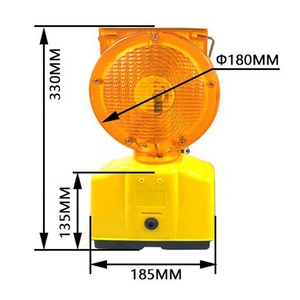
Solar Powered Road Construction Traffic Blinking Barricade Light
Compliance: EN 12352 Class L2H / CE
Storage: Deep-Cycle LiFePO4 (-40°C Tested)
Optics: High-Refractive Fresnel Lens
Explore Technical Specs →
Heavy Duty
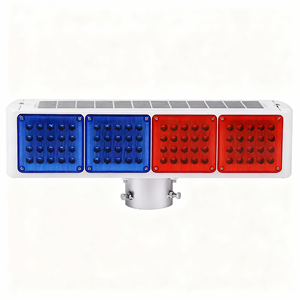
Aluminum Housing Dual-Sided Solar Warning Barrier Light
Housing: Cast Marine-Grade Aluminum (C5-M)
Visibility: >1000m Polar Night Range
Color Array: Amber / Red / Dual Aspect
Explore Technical Specs →
Handheld / Rapid
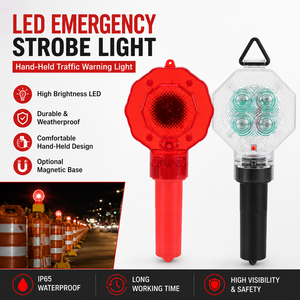
Portable Hand-Held LED Emergency Roadblock Strobe Beacon
Deployment: Rapid Emergency Taper Zone
Flash Rate: 60 FPM Synchronized / Quad Strobe
Impact Grade: IK09 Polycarbonate Body
Explore Technical Specs →
Magnetic Mount
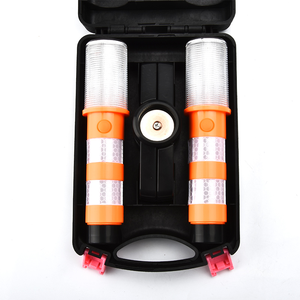
High-Intensity Magnetic LED Traffic Safety Hazard Beacon
Adhesion: High-Flux Neodymium Magnet Base
Photometrics: 3M High-Intensity Prismatic
Autonomy: 120 Continuous Discharge Hours
Explore Technical Specs →
ECE R65 / DIN
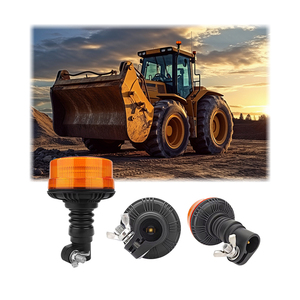
DIN-Pole Flexible Waterproof Amber LED Heavy Machinery Beacon
Certification: ECE R65 / E-Mark R10 (EMC)
Base Structure: Shock-Absorbing Flexible DIN
Protection: IP66 / IP68 Hermetic Seal
Explore Technical Specs →
Low Profile
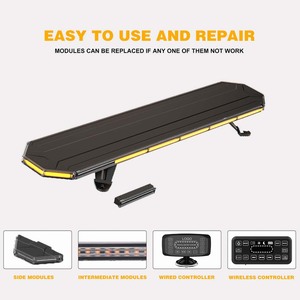
Low-Profile Service Vehicle Rooftop Hazard Flash Light
Aerodynamics: Low Wind Resistance Profile
Operating Temp: -40°C to +75°C Stable Output
Power Line: 10-30V DC Multi-Voltage Surge Proof
Explore Technical Specs →
Cone / Barricade
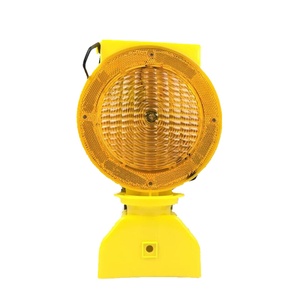
Solar Barricade & Traffic Cone Hazard Flasher Lamp
Mounting: Universal Cone Top & Barrier Bracket
Photocell: Automatic Dusk-to-Dawn Detection
Polymer: High-Impact UV-Stabilized Polycarbonate
Explore Technical Specs →
Tactical Road Flare

Submersible Crushproof Electronic LED Road Flare Disc
Load Rating: 30-Tonne Dynamic Vehicle Roll-Over
Submersion: IP68 Ingress Protection Waterproof
Flash Modes: 9 User-Selectable Visual Signatures
Explore Technical Specs →
Engineering Architectural Reliability for the Norwegian Civil Environment
Infrastructure construction across the Kingdom of Norway presents an operating envelope that defeats conventional commercial-grade warning luminaires. Civil engineering contracts administered by Statens vegvesen (Norwegian Public Roads Administration), Nye Veier, and municipal technical agencies demand uncompromising hardware verification. Work zone safety systems deployed across arterial highways such as the E6, E39 Coastal Highway Route, and alpine bypass routes encounter severe environmental extremes: continuous sub-zero thermodynamic cycles reaching below -40°C in inland regions like Innlandet and Finnmark, intense saline aerosol immersion along the Atlantic seaboard, and extended months of sub-Arctic polar darkness (mørketid).
As an established engineering and manufacturing enterprise, we configure warning beacons and solar flasher assemblies with proprietary solid-state architectures designed to meet European Standard EN 12352 (Traffic control equipment - Warning and safety light devices) classes L2H, L8H, and L8M, together with electromagnetic compatibility under EN 50293 and ECE Regulation 65. Our optical arrays feature high-efficiency Osram and Cree SMD emitters collimated through custom-tooled, optical-grade UV400-stabilized polycarbonate Fresnel lenses. This guarantees minimum luminous intensity values exceeding 1,500 candela in direct sunlight while maintaining balanced, non-glare warning signatures under low-lux Nordic winter blizzard conditions.
Sub-Zero LiFePO4 Energy Cores
Standard lithium-ion chemistries suffer catastrophic electrolyte freezing and irreversible dendritic plating at temperatures below 0°C. Our Scandinavian export configurations utilize internal thermal-regulated Lithium Iron Phosphate (LiFePO4) or low-ESR Supercapacitor hybrid modules engineered with smart charge-current attenuation down to -40°C, sustaining up to 3,000 deep discharge cycles.
Polar Night Power Autonomy
Between November and February, northern latitudes experience weeks of near-zero solar irradiance. Our solar construction warning systems incorporate oversized mono-crystalline photovoltaic arrays utilizing low-light anti-reflective glass coatings coupled with ultra-efficient MPPT controllers, generating verified operational reserves of 25 to 35 continuous dark-sky operating days.
Hermetic C5-M & IP68 Ingress Sealing
Coastal fjords subject roadway equipment to constant sodium chloride exposure, high-pressure salt fog, and mechanical slush blast from clearing equipment. Our luminaires utilize cast aluminum alloy enclosures treated with multi-stage anodization and thermoset fluoropolymer coatings certified for ISO 12944 C5-M marine exposure, hermetically sealed via poured polyurethane gaskets.
Compliance Benchmark
Statens vegvesen (Håndbok V720) Alignment Matrix
Engineered performance parameters comparing generic market flasher units against our dedicated Scandinavian industrial product line.
| Performance Vector |
Conventional Commercial Lights |
Our Norwegian Industrial Build |
Nordic Engineering Standard |
| Operating Temperature |
-10°C to +50°C (Battery failure below freezing) |
-40°C to +70°C Guaranteed |
Statens vegvesen V720 |
| Luminous Class |
EN 12352 Class L2L (<50 cd luminous power) |
Class L2H / L8H (>1,500 cd peak intensity) |
EN 12352 / Class L8H |
| Enclosure Protection |
IP54 Plastic clip-together casings |
Hermetic IP67 / IP68 Cast Alloy & Polycarbonate |
IEC 60529 / ISO 20653 |
| Corrosion Resistance |
Standard zinc-plated steel screws (rusts in months) |
316 Stainless fasteners + C5-M Marine Coating |
ISO 12944-6 C5-M |
| Photovoltaic Autonomy |
3 to 5 continuous overcast days |
Up to 30 Days Zero-Solar Reserve (Mørketid) |
Nordic Winter Field Duty |
| Optical Lens Integrity |
Low-grade ABS/polystyrene (yellows and cracks) |
Bayer Makrolon® UV400 High-Impact PC |
IK09 / IK10 Mechanical Shock |
Operational Field Deployments
Strategic Road Safety Applications Across Norwegian Terrains
Precision visual hazard warning systems engineered to secure critical infrastructure across fjords, mountain tunnels, and urban transit developments.
Tunnel Bore & Portal Maintenance
Norway maintains more than 1,200 road tunnels. Sub-surface drilling, water-and-frost shielding, and electrical system upgrades necessitate high-intensity synchronized LED barricade flashers capable of cutting through dense tunnel mist, diesel particulate haze, and concrete dust without blinding approaching traffic.
Fjord Bridge & Highway Construction
Flagship corridor works along the E39 Coastal Highway Route require warning beacons with extreme aerodynamic stability and salt-spray tolerance. Heavy-duty magnetic beacons and barrier lights mount directly to guardrails and temporary pontoon bridges, resisting North Sea wind gusts exceeding 35 m/s.
Alpine Mountain Pass Road Closures
Winter maintenance across high-altitude roads (such as Sognefjellet, Aurlandsfjellet, and Hardangervidda) relies on autonomous solar flasher barriers to indicate seasonal closures and temporary snow clearing convoys (kolonnekjøring), operating completely detached from municipal power grids.
Zero-Emission Urban Work Zones
Oslo municipality's strict mandates for fossil-free construction sites (Utslippsfrie byggeplasser) exclude the use of diesel-driven generator lighting. Our high-density solar storage lights and micro-grid battery beacons deliver continuous 24/7 active zone perimeter demarcation with zero direct emissions.
Emerging Scandinavian Trends Shaping Procurement Through 2030
The procurement landscape for roadway construction safety hardware in Scandinavia is undergoing structural shifts governed by legislative modernization, digitalization, and stringent lifecycle sustainability assessments under Norway's Public Procurement Act (Anskaffelsesloven).
1. Connected C-ITS & Wireless Sequential Mesh Arrays: Modern traffic mitigation along high-speed corridors mandates sequenced directional flash patterns that visually guide drivers away from closing lanes (taper guidance). Mechanical synchronization wires are obsolete on Norwegian highways due to snow plow snagging and icy conditions. Our smart sequential warning systems integrate self-configuring 2.4 GHz RF mesh networks with GPS microsecond clock synchronization, executing rhythmic wave-flashing sequences across up to 30 beacons automatically.
2. Circular Economy & Extended Field Serviceability: Norwegian contractors (such as Veidekke, Skanska Norge, AF Gruppen, and Mesta) prioritize total lifecycle cost (TCO) over short-term acquisition cost. European sustainability frameworks increasingly penalize disposable, single-use battery-powered hazard lamps. Our product architecture emphasizes modular engineering: solar modules, circuit boards, LED clusters, and optical lenses are individually field-serviceable with standard tools, supported by guaranteed 10-year factory spare parts availability.
3. Heavy-Impact Vibration Tolerance for Tracked Machinery: Heavy excavation, rock blasting, and asphalt trenching generate extreme low-frequency harmonic vibrations. Standard surface-mount electronics typically experience solder micro-fractures under these conditions. Our luminaires feature military-grade silicone potting on internal PCBs, locking all microcontrollers, inductors, and high-frequency driver chips against continuous mechanical fatigue.
Procurement Knowledge Base
Frequently Asked Questions by Norwegian Contractors & Road Authorities
Clear, direct answers regarding European technical compliance, Arctic thermal engineering, logistics to Norwegian ports, and factory custom manufacturing.
✓ Do your warning lights comply with Norwegian Statens vegvesen Handbok V720?
Yes. Our road construction warning fixtures are engineered directly to European Standard EN 12352 (Classes L2H, L8H, and L8M), which forms the regulatory basis for temporary traffic management hardware prescribed in Handbok V720 (Arbeid på og ved veg). Full independent test laboratory photometric, colorimetric, and EMC reports are supplied with all project quotes.
✓ How do your solar flashers function during the Polar Night (Mørketid)?
In regions above the Arctic Circle (Tromsø, Bodø, Alta), solar irradiance drops to zero for prolonged durations. We engineer our Norwegian-spec units with oversized energy storage modules (Lithium Iron Phosphate or Supercapacitor arrays) combined with high-efficiency optical drivers, delivering 25 to 35 continuous dark-sky operating days on a single pre-installation baseline charge.
✓ What is the import customs process for Norwegian commercial contractors?
We supply commercial shipments directly to Norwegian ports including Oslo, Bergen, Stavanger, and Trondheim under standard Incoterms (DAP, DDP, CIF, or FOB). All export documentation—including EUR.1 Movement Certificates, CE Declarations of Conformity, commercial invoices with HS codes, and packing lists—is pre-cleared for smooth Norwegian Customs (Tollvesenet) handling.
✓ Can our corporate branding or specific brackets be OEM customized?
As a vertically integrated manufacturing plant, we provide custom OEM housing colors (e.g., standard Norwegian high-visibility yellow or corporate brand colors), laser-etched company logos, and custom-tooled mechanical brackets designed to clamp securely onto standard Nordic guardrails, square profile crash barriers, or specific traffic cone tapers.
✓ What battery chemistries do you implement to avoid winter swelling and failure?
We strictly avoid standard consumer-grade NMC or pouch lithium cells in equipment intended for Northern Europe. We implement specialized prismatic or cylindrical LiFePO4 cells equipped with smart hardware BMS (Battery Management Systems) that prevent charging when cell temperatures drop below safe thresholds, or hybrid dry-film Supercapacitor banks immune to freeze-thaw damage.
✓ What is your factory production lead time and minimum order quantity (MOQ)?
For standard European configurations, our factory maintains rapid assembly lead times of 10 to 18 business days. We accommodate flexible initial trial orders for testing on specific pilot tenders (MOQs starting at 50 to 100 units depending on model complexity), scaling up to multi-thousand containerized deliveries for national highway concessionaires.
Direct Factory Integration: Engineering Excellence Without Trading Markups
Operating as a specialized, capital-intensive manufacturing facility with in-house surface-mount assembly (SMT) lines, precision injection tooling, and fully automated environmental testing laboratories, we deliver measurable technical and financial advantages over third-party trading intermediaries. Every warning light exported to our Scandinavian distribution partners and civil construction clients undergoes rigorous quality control protocols prior to packaging.
Our in-house validation facilities include a computer-controlled goniophotometer optical testing tunnel (verifying chromaticity coordinates and candela curves across horizontal and vertical viewing axes), an accelerated cyclic corrosion salt-spray chamber conforming to ASTM B117 / ISO 9227, and environmental thermal shock chambers cycling from -45°C to +85°C. With over two decades of international export experience servicing infrastructure agencies across 20+ countries, our technical engineering team provides detailed design submittals, photometric simulation files (IES format), and comprehensive tender compliance matrices directly aligned with your project requirements.
Whether you are outfitting a municipal utility repair fleet in Oslo, securing an offshore bridge construction site in Rogaland, or bidding on a national highway framework agreement with Statens vegvesen, our direct-from-factory supply ecosystem guarantees verified specifications, predictable delivery schedules, and substantial procurement savings.
Ready to Secure Your Norwegian Highway & Infrastructure Projects?
Connect directly with our senior optical and roadway safety engineering department. Obtain complete technical datasheets, EN 12352 test reports, photometric files, and competitive factory-direct pricing for your project bill of quantities.
Inquire Now
