Export Sales: +91 96012 58123[email protected]Exporting to 20+ Countries
CPEC & NHA Grade Road Safety Equipment
China Wholesale Solar Traffic Beacon Manufacturer & Suppliers for Pakistan Market
Engineered for extreme thermal resilience from Karachi to Gilgit. Factory-direct export of high-intensity solar flashing beacons, sequential hazard lights, and smart crosswalk guidance compliant with NHA and international transport standards.
IP68 & IK10Sandstorm & Impact Rated
Up to 75°CLiFePO4 High-Temp Survival
100% CPEC ReadyMotorway M-5/N-5 Tested
Direct B2BPort Qasim & Karachi C&F
Flagship Hardware Selection
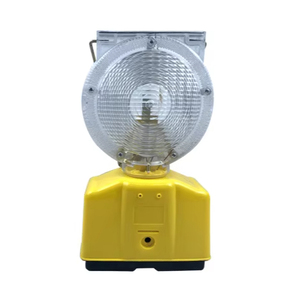
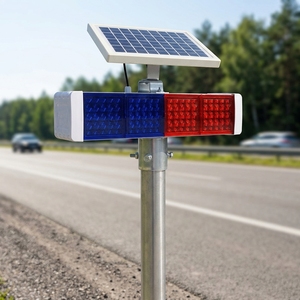
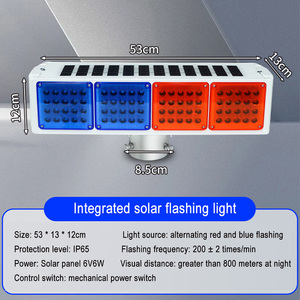
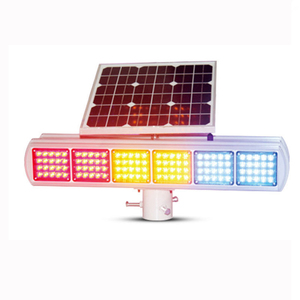
High-Performance Solar Traffic Beacons & Hazard Blinkers
Precision-manufactured off-grid luminous safety hardware built specifically for national highways, toll plaza bypasses, and hazardous industrial intersections across Pakistan.
Engineered for Pakistan’s Diverse Geography & Climate Zones
From the high-temperature deserts of Sindh to the fog-blanketed plains of Punjab and alpine corridors of Karakoram, solar traffic beacons must conquer unique operational hurdles.
CPEC Motorways & NHA Arteries
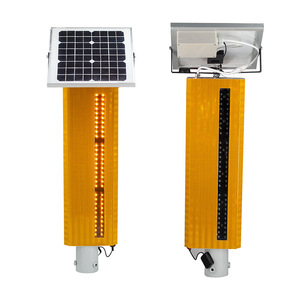
The high-speed M-5 (Multan–Sukkur), M-2 (Lahore–Islamabad), and national highway N-5 experience extreme traffic density. Our GPS sequential solar beacons provide uniform directional flashes ahead of highway exits, service area merges, and U-turn cuts, drastically lowering rear-end collisions during nocturnal hauls.
Punjab Winter Smog Corridors
Between November and February, agricultural stubble burning and humidity blanket Lahore, Faisalabad, and Multan in dense smog with visibility below 15 meters. Our beacons utilize 590nm Amber penetrating LEDs paired with Fresnel lenses, cutting through industrial particulate matter to alert motorists 800+ meters in advance.
Sindh & Balochistan Thermal Deserts
In Jacobabad, Sibi, and Turbat, summer pavement ambient temperatures surpass 52°C, causing conventional gel batteries to swell and explode. We configure our beacons with automotive-grade LiFePO4 chemistry and UV-stabilized GE Lexan polycarbonate housings that withstand prolonged surface heat up to 80°C.
Karakoram Highway (KKH) Passes
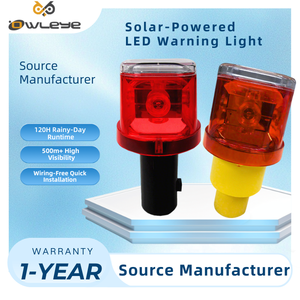
Connecting Gilgit-Baltistan with China, the KKH faces frequent rockfalls, landslides, and sub-zero blizzard conditions. Completely cable-free, self-contained solar beacons require zero grid trenching in bedrock, remaining active for up to 120 continuous hours without direct sunlight on snowy alpine passes.
Toll Plazas & Weigh Stations
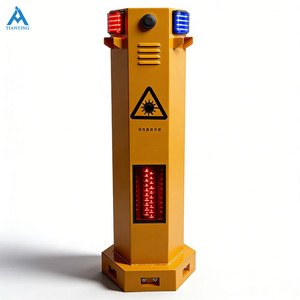
Manual toll gates and weighbridge plazas along regional arteries require high-impact luminous warnings to manage decelerating commercial logistics trucks. Rapid-pulse red and amber beacons clarify open lane channels, reducing plaza bottlenecks and physical barrier impact incidents.
Municipal Corridors & School Zones
City development authorities in Karachi (KDA), Lahore (LDA), and Rawalpindi (RDA) require stand-alone solar blinkers for uncontrolled mid-block zebra crossings and school perimeters, overcoming erratic municipal grid load-shedding with 24/7 off-grid dependability.
Engineering Whitepaper
Solar Traffic Beacon Procurement & Localization Trends in Pakistan
Why Tier-1 Pakistani EPC contractors, government infrastructure authorities, and electrical concessionaires are phasing out AC grid signals in favor of smart, integrated solar beacons.
1. Overcoming the Load-Shedding Bottleneck via Autonomous Off-Grid Infrastructure
Urban and rural road networks across Pakistan continue to confront periodic electrical load-shedding and high voltage fluctuations. When mains-powered (AC 220V) warning blinkers go dark at unlit rural intersections, catastrophic head-on and median collisions spike. Transitioning to autonomous solar beacons powered by high-efficiency monocrystalline solar panels eliminates reliance on the unstable utility grid. Equipped with intelligent MPPT charging controllers, these units capture ambient diffuse radiation even during overcast monsoon days, delivering an absolute zero-interruption safety buffer.
2. The Transition to LiFePO4: Mitigating High-Temperature Battery Degradation
Historically, highway contracts in Pakistan specified sealed lead-acid (VRLA) or gel batteries. However, in regions like Bahawalpur, D.G. Khan, and Sukkur, daytime cabinet temperatures easily cross 65°C. Lead-acid batteries degrade exponentially above 35°C, requiring costly replacements every 6 to 9 months. Modern Chinese manufacturing utilizes integrated Lithium Iron Phosphate (LiFePO4) cells paired with smart Battery Management Systems (BMS). LiFePO4 maintains structural integrity up to 75°C, delivers over 2,500 full charge cycles, and features low self-discharge, reducing highway concessionaire maintenance expenditure by upwards of 68%.
IP67 to IP68 Hermetically Sealed (Dust & Torrential Rainproof)
Operating Temp Range
-10°C to +50°C
-30°C to +75°C (Validated for Pakistan Deserts & Peaks)
3. Total Cost of Ownership (TCO) Analysis: Solar vs. Wired Mains Signals
For infrastructure engineers and project directors bidding on NHA, C&W, and provincial highway contracts, civil trenching and underground armored copper cabling constitute up to 55% of the total installation budget for intersection signaling. Factoring in wire theft, ground faults during floods, and ongoing electricity bills, wired beacons are financially unviable for remote links. Solar beacons arrive as completely autonomous plug-and-play assemblies that mount directly to standard 76mm or 89mm galvanized steel poles in under 20 minutes, slashing contractor mobilization and site labor costs by more than 70%.
Factory Direct Advantages
Why Pakistani EPCs and Importers Partner with Our China Facilities
Over 15 years of precision optoelectronic manufacturing, high-volume automated production lines, and tailored trade facilitation for Pakistani trade lanes.
Strict Tender Compliance
Every batch is manufactured to meet or exceed international standards (CE, RoHS, EN12352) as well as the technical specifications of Pakistan's National Highway Authority (NHA) and provincial Communication & Works (C&W) Departments.
Automated SMT & Testing
Our ISO9001-certified cleanrooms feature high-speed surface-mount technology (SMT) lines, photometric integrating spheres, environmental salt-fog chambers, and vibration test beds to guarantee zero field failures.
B2B Pricing & High Margins
Eliminate multi-tiered trading middlemen. Sourcing directly from our assembly plants unlocks true wholesale pricing, empowering local distributors and government contractors to quote competitively while preserving strong project margins.
Bespoke Engineering & OEM
Full customization covering housing color, lens diameter (200mm/300mm), LED wavelength, custom solar bracket sizing, laser branding, and multi-language carton labeling tailored to your local contract drawings.
Procurement Advisory
Frequently Asked Questions by Pakistani Buyers & Importers
Clear answers regarding shipping logistics, payment terms, customs clearance, and technical specs for projects across Pakistan.
What shipping options and lead times are available for shipments to Karachi or Dry Ports?
We routinely ship Full Container Loads (FCL) and Less than Container Loads (LCL) from Ningbo, Shanghai, or Shenzhen ports directly to Karachi Port (KICT/SAPT) and Port Qasim, with average ocean transit times of 14 to 20 days. For interior destinations such as Lahore, Islamabad, Faisalabad, or Peshawar, we provide inland bill of lading routing to dry ports (e.g., Mughalpura Lahore Dry Port). Air express options via DHL/FedEx are also maintained for fast-turnaround sample validation.
Can your solar traffic beacons withstand high-heat areas like Jacobabad or Sibi?
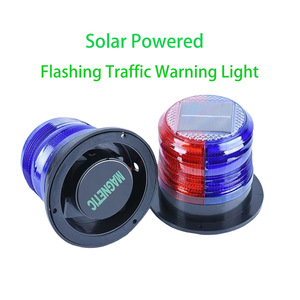
Yes. Products engineered for the Pakistan market feature high-temperature Lithium Iron Phosphate (LiFePO4) battery packs rated for continuous safe discharge up to 75°C. Enclosures are molded from virgin, UV-stabilized polycarbonate containing anti-aging additives that prevent yellowing, crazing, or thermal warping under the intense solar radiation of Sindh and Balochistan.
Do your products comply with the technical requirements of the National Highway Authority (NHA)?
Our products match all core parameters established in standard NHA specifications for hazard warning beacons, including luminous output, flash rate (typically 50 to 60 flashes per minute), chromaticity coordinates for amber and red light, and weatherproof IP ratings (IP65 to IP68). We provide complete third-party laboratory test reports, photometric datasheets, and factory inspection certificates to facilitate swift client and consultant approval.
What payment mechanisms are supported for B2B Pakistani clients?
We work through standard international trade instruments. While Telegraphic Transfer (T/T) is widely used for samples and wholesale orders, we also accommodate Irrevocable Letters of Credit (L/C at sight) opened through reputable Pakistani commercial banks for large infrastructure contracts, subject to state trade compliance guidelines.
How do the beacons perform during the heavy winter smog of Punjab?
Winter smog in Punjab features high concentrations of particulate matter (PM2.5/PM10) that scatter standard short-wavelength white or blue light. Our highway warning beacons utilize narrow-band amber LEDs centered at 590nm to 595nm, complemented by high-transmittance Fresnel polycarbonate lenses. This optical combination maximizes visual penetration through particulate moisture, delivering critical warning visual range exceeding 800 meters in low-visibility conditions.
What is the warranty period and how are replacement parts handled?
We provide a standard 2 to 3-year factory warranty on our industrial solar traffic beacon range. In the rare event of a module failure, we ship replacement LED circuit boards, solar panels, or modular battery packs via air express to minimize project downtime. Routine spare components can also be packed alongside bulk container orders for immediate site maintenance reserves.
Request Technical Data Sheets & Wholesale Project Quotation
Planning an upcoming highway tender, CPEC logistics route upgrade, or city intersection improvement project? Connect with our dedicated export engineering team today for customized pricing, photometric files, and sample units.