Highway Grade
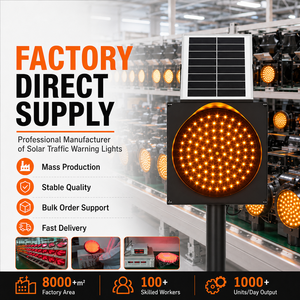

Explore our top-rated signal enclosures, solar flashing blinkers, road studs, and warning beacons certified for Highway Authority (KGM) projects across Turkey.
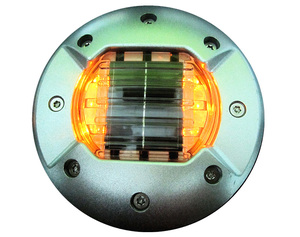
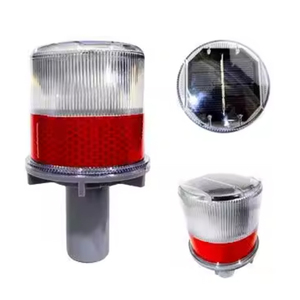
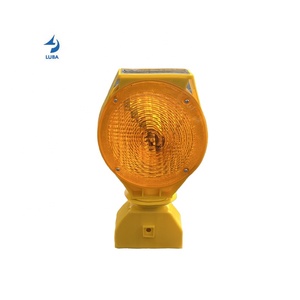
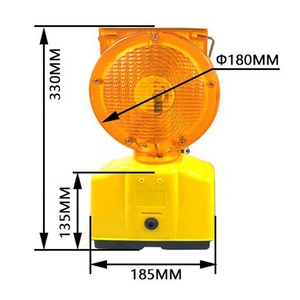
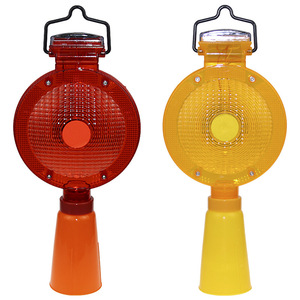
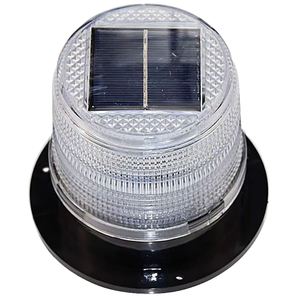
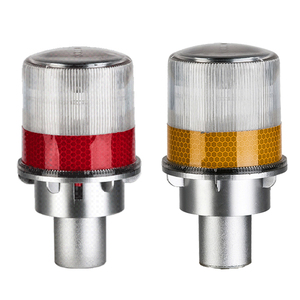
As Turkey continues its multi-billion dollar transportation modernization under the Karayolları Genel Müdürlüğü (KGM) masterplan—expanding high-speed otoyol networks, urban intelligent transportation systems (İTS) across Metropolitan Municipalities (İBB Istanbul, EGO Ankara, İZUM Izmir), and Eurasian trans-continental freight corridors—the operational reliability of road signal hardware is under rigorous scrutiny. Traffic signal light enclosures represent the critical first line of defense protecting complex optical matrices, solar charge controllers, and microprocessors against hostile atmospheric conditions.
For Turkish procurement officers, municipal contractors, and engineering, procurement, and construction (EPC) conglomerates, importing signal enclosures from top-tier Chinese original equipment manufacturers (OEMs) provides an unassailable strategic advantage. Chinese manufacturing ecosystems combine economies of scale with advanced polymer chemistry (UV-stabilized virgin polycarbonate) and metallurgical precision (ADC12 high-pressure die-cast aluminum alloys). However, procuring for the Turkish market requires navigating distinct regional challenges: high solar radiation in the Mediterranean coastal zones, severe thermal expansion shifts across the Anatolian Plateau, seismic vibrations on mountain passes, and strict conformity with European Standard TS EN 12368.
Information Gain Insight: Selecting traffic signal enclosures for Turkey isn't simply about IP ratings; it requires evaluating chemical stabilization against solar UV index levels exceeding 9.5 in Antalya, thermal fatigue resistance under -35°C to +45°C daily shifts in Erzurum, and structural wind loading compliance (EN 12368 Class V) for overhead gantry mounts on the Northern Marmara Highway.
Formulated with UV-400 anti-yellowing stabilizers to resist intense Mediterranean degradation, retaining 98% structural impact strength (IK08/IK09) over 10 years of continuous solar exposure.
Co-molded continuous EPDM and hydrophobic silicone sealing gaskets block fine Anatolian dust ingress and torrential black sea rains, preventing internal lens fogging and short circuits.
Stainless steel (SUS304) quick-release latches enable field technicians to access driver modules or swap LED optical boards in less than 90 seconds without specialized tooling.
Precision-engineered interlocking modules permit seamless assembly into 1-aspect, 2-aspect, 3-aspect, or 4-aspect configurations (200mm & 300mm standard lens diameters).
When selecting traffic signal light enclosures for projects in Turkey, engineers must choose between high-grade Polycarbonate (PC) and High-Pressure Die-Cast Aluminum (ADC12). Both materials offer distinct physical properties tailored for specific road topologies:
Extreme thermal fluctuations—such as daytime pavement temperatures exceeding +60°C dropping down to +15°C at night in Ankara—create severe internal pressure differentials inside sealed enclosures. Without pressure mitigation, moist air is sucked past seals, leading to internal moisture condensation that shortens LED array lifespan and obscures optical lenses.
Our premium signal enclosures feature integrated ePTFE hydrophobic breathers (Gore-Tex membrane equivalents). These membranes allow air molecules to pass freely to equalize internal pressure while permanently blocking liquid water and dust particulates (rated IP66/IP67). This passive thermal management maintains internal relative humidity below 45%, preventing dew-point condensation across all Turkish seasonal shifts.
Turkish municipal tenders strictly enforce compliance with standard TS EN 12368 ("Traffic control equipment - Signal heads"). Chinese exporters must ensure their enclosure designs complement the required optical and mechanical parameters:
| Compliance Parameter | TS EN 12368 Standard Requirement | China OEM Supply Specification | Turkish Project Benefit |
|---|---|---|---|
| Impact Resistance | Class IR1 (EN 60598-1) / IK07 minimum | Class IR3 / IK08 (PC Enclosure), IK10 (Cast Aluminum) | Vandalism resistance & protection against flying debris on high-speed roads. |
| Ingress Protection | IP55 Minimum according to EN 60529 | IP65 to IP66 Certified (EPDM Gaskets + Silicone Seals) | Prevents rain jet penetration during Bosporus storms & fine dust ingress in dry Anatolia. |
| Operating Temperature | Class A (-15°C to +60°C) or Class B (-40°C to +60°C) | Class B (-40°C to +75°C Extended Range) | Flawless performance from Erzurum winter freezing to Adana summer heat waves. |
| Wind Loading Capacity | Class V (Up to 150 km/h wind pressures) | Reinforced structural mounting ribs rated to 180 km/h | Ensures zero mechanical fatigue on high-rise overhead gantries and bridge crossings. |
| Sun Phantom Protection | Class 1, 2, or 3 (EN 12368 Clause 6.6) | Anti-glare sun visors (Tunnel / Cut-off type) with matte black lining | Prevents false signal readings caused by low-angle sunlight reflections during sunrise/sunset. |
Tailored enclosure configurations engineered for Turkey's diverse geography, climate zones, and urban infrastructure demands.
Integrated polycarbonate enclosures housing 300mm optical modules connected to adaptive traffic controllers in Istanbul, Ankara, and Izmir. Features quick-connect wire terminals for rapid installation during night lane-closures.
Heavy-duty die-cast aluminum signal housings with integrated red/green lane control indicators deployed at toll plazas on the Northern Marmara Highway and Eurasia Tunnel approaches.
Self-contained solar amber blinker enclosures mounted on rural median openings and sharp curves in Central Anatolia, eliminating costly utility grid trenching over vast distances.
Ultra-low temperature rated poly-carbonate housings with internal heating elements deployed along mountain highways in Eastern Anatolia to prevent snow buildup and ice freezing on lenses.
Portable, high-impact barricade warning light enclosures utilized by major Turkish contractors (e.g., Cengiz, Kolin, Kalyon) for temporary traffic management along road expansion projects.
Corrosion-proof marine-grade coated aluminum enclosures protecting optical warning beacons in saline coastal environments such as Ambarlı Port, Mersin Port, and Dilovası Industrial Zone.
The procurement landscape in Turkey is shifting rapidly under the influence of global sustainability targets and smart city mandates. Key market developments shaping supplier requirements include:
Turkish municipal traffic authorities are moving beyond static signal control. Modern signal enclosures are now expected to host auxiliary smart components—including ambient light sensors, pedestrian microwave detectors, and V2X (Vehicle-to-Everything) communication nodes. Chinese exporters who offer custom housing modifications—such as internal DIN-rail mounts, pre-drilled cable glands, and sensor windows—are securing the majority of tender awards.
In alignment with Turkey's European Green Deal integration goals, major infrastructure tenders increasingly award points for supply chain eco-friendly credentials. Leading Chinese manufacturers are responding by adopting 100% recyclable engineering polycarbonate and low-carbon aluminum smelting processes, accompanied by RoHS and REACH material compliance certifications.
Historically, Turkish contractors sourced European-branded signal heads through local distributors at high markups. Today, direct B2B procurement from certified Chinese OEM factories allows Turkish bidders to reduce hardware costs by 35% to 50% without compromising technical performance. Direct factory partnerships also guarantee custom color matching (RAL 9005 Jet Black, RAL 6005 Moss Green, or RAL 7016 Anthracite Grey) required by specific municipal aesthetic codes.
As a leading Chinese designer, manufacturer, and exporter of road safety equipment, our enterprise combines state-of-the-art manufacturing automation with deep expertise in international export standards. Here is how we empower Turkish contractors and distributors:
Answers to essential technical, logistics, and compliance questions regarding sourcing traffic signal enclosures from China to Turkey.
In Turkey, public tenders issued by KGM (General Directorate of Highways) and Metropolitan Municipalities require compliance with TS EN 12368 (Traffic Signal Heads) and CE marking (EMC Directive 2014/30/EU and Low Voltage Directive 2014/35/EU). Additionally, enclosures must meet IP65/IP66 ingress protection (EN 60529) and IK08/IK10 impact resistance ratings. Our products are fully tested and supplied with accredited lab reports to ensure smooth tender approval.
Our polycarbonate enclosures are manufactured using 100% virgin Bayer Makrolon or Sabic Lexan resin blended with high-grade UV-400 optical stabilizers. They possess a heat deflection temperature (HDT) exceeding +130°C, ensuring zero mechanical distortion, softening, or color fading even under extreme solar radiation in southern provinces like Antalya or Adana.
Yes. While standard colors are RAL 9005 (Jet Black) and RAL 6005 (Moss Green), we offer custom electrostatic powder coating for aluminum housings and custom masterbatch coloring for PC housings in any RAL shade. We also supply custom mounting brackets designed for 60mm, 76mm, 89mm, or 114mm signal poles common in Turkish road networks.
Standard production lead time for FCL orders is 15 to 20 days. Ocean freight transit times from major Chinese ports (Ningbo, Shanghai, Shenzhen) to Turkish ports—such as Ambarlı (Istanbul), Gemlik (Bursa), Alsancak/Aliağa (Izmir), and Mersin—typically take between 22 and 28 days via direct vessel routes.
Absolutely. We provide fast-track sample units (200mm and 300mm signal enclosures) sent via air express (DHL/FedEx) to Turkey within 5 to 7 business days. This allows your engineering team to inspect physical build quality, conduct lab testing, and submit physical samples to municipal tender boards.
For coastal applications along the Aegean, Mediterranean, and Black Sea coasts, our aluminum enclosures undergo chromate conversion pre-treatment followed by dual-layer architectural powder coating. All external hardware—including latches, screws, and hinge pins—are fabricated exclusively from marine-grade SUS304 or SUS316 stainless steel.
Connect with our technical engineering team today for instant factory-direct quotations, TS EN 12368 compliance certification files, and custom OEM sample requests.